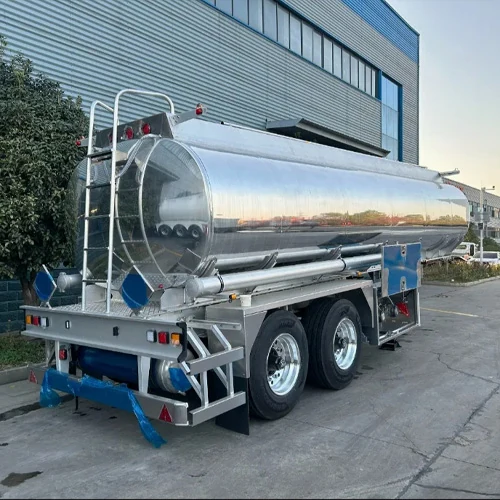
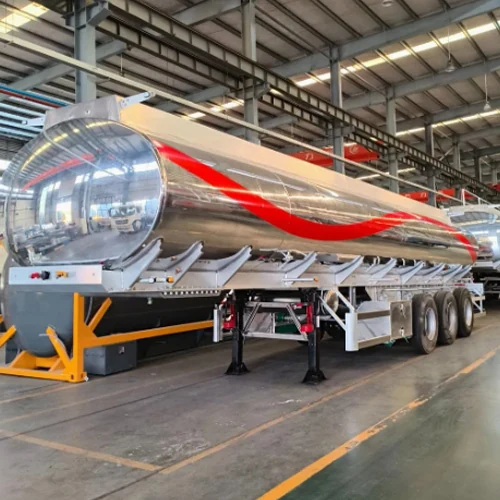
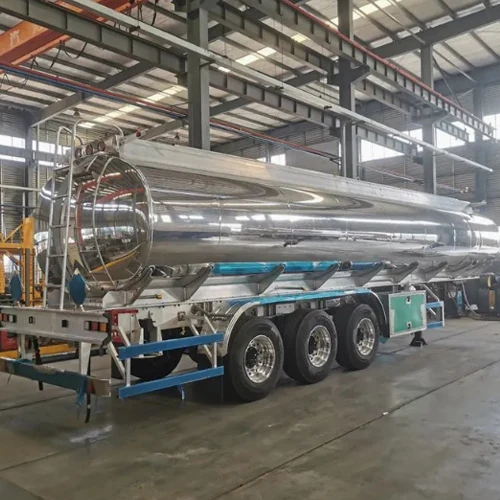
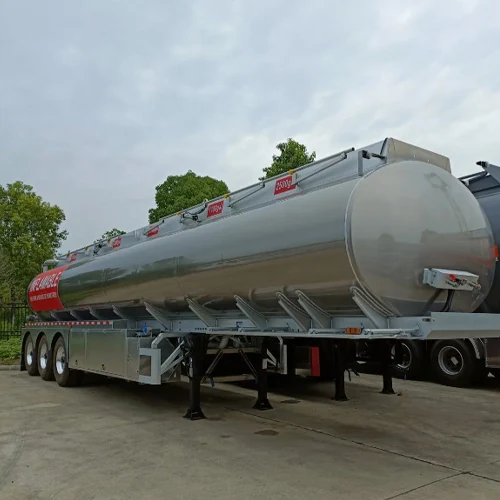
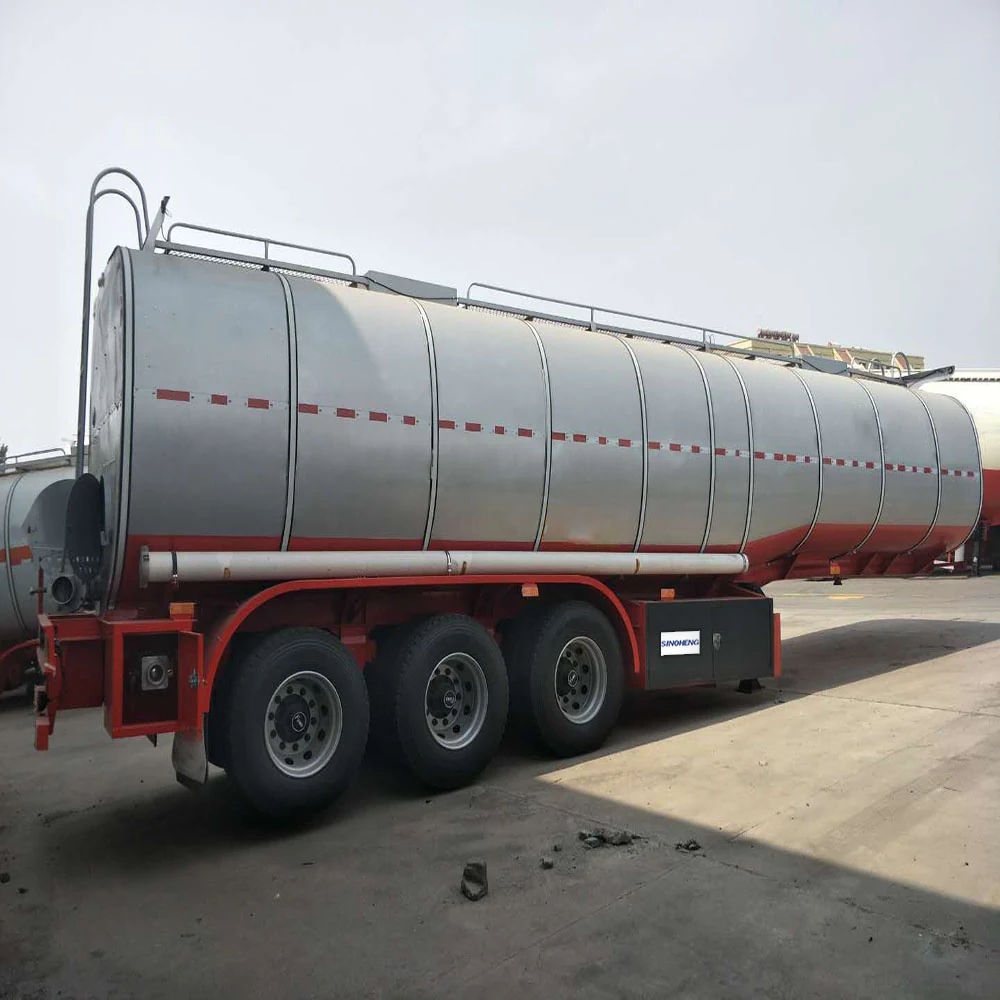
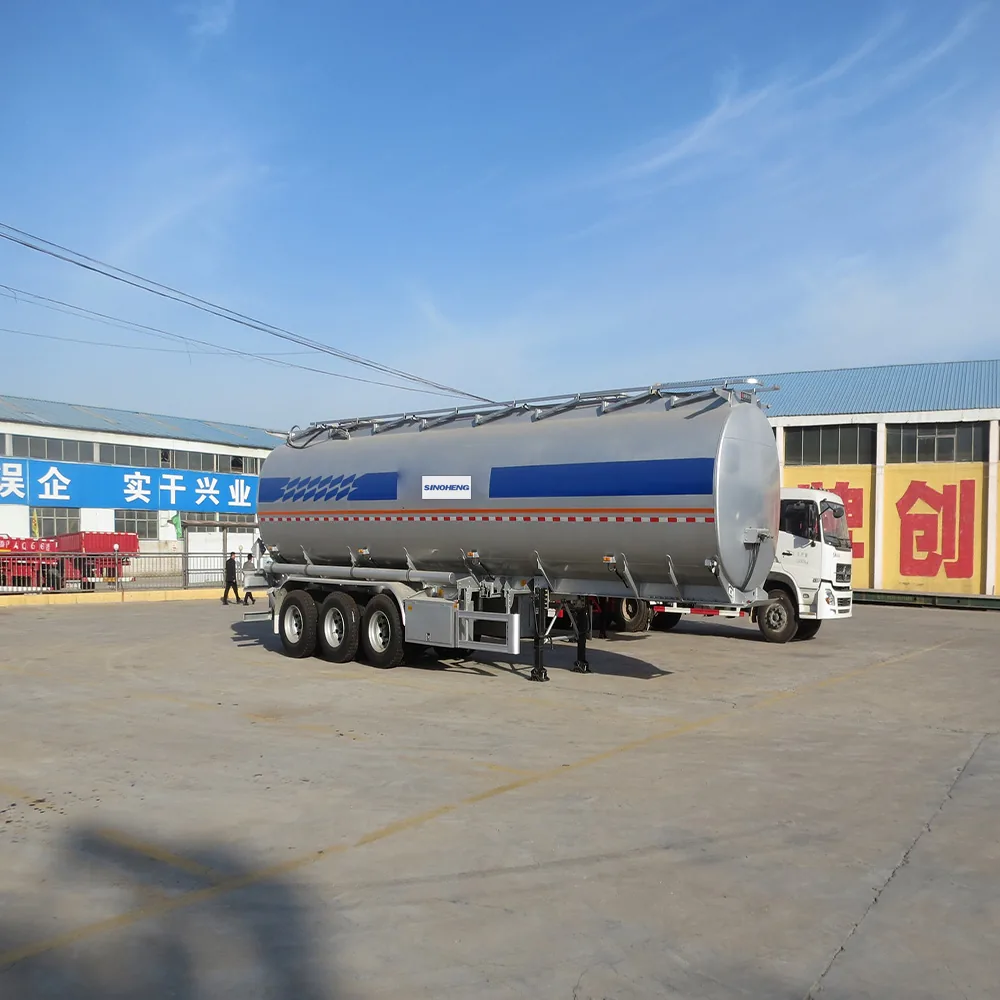
Stainless Aluminum Alloy Oil Semi-Trailer Tanker 3 Axles Carbon Steel Truck China Factory Direct Sale
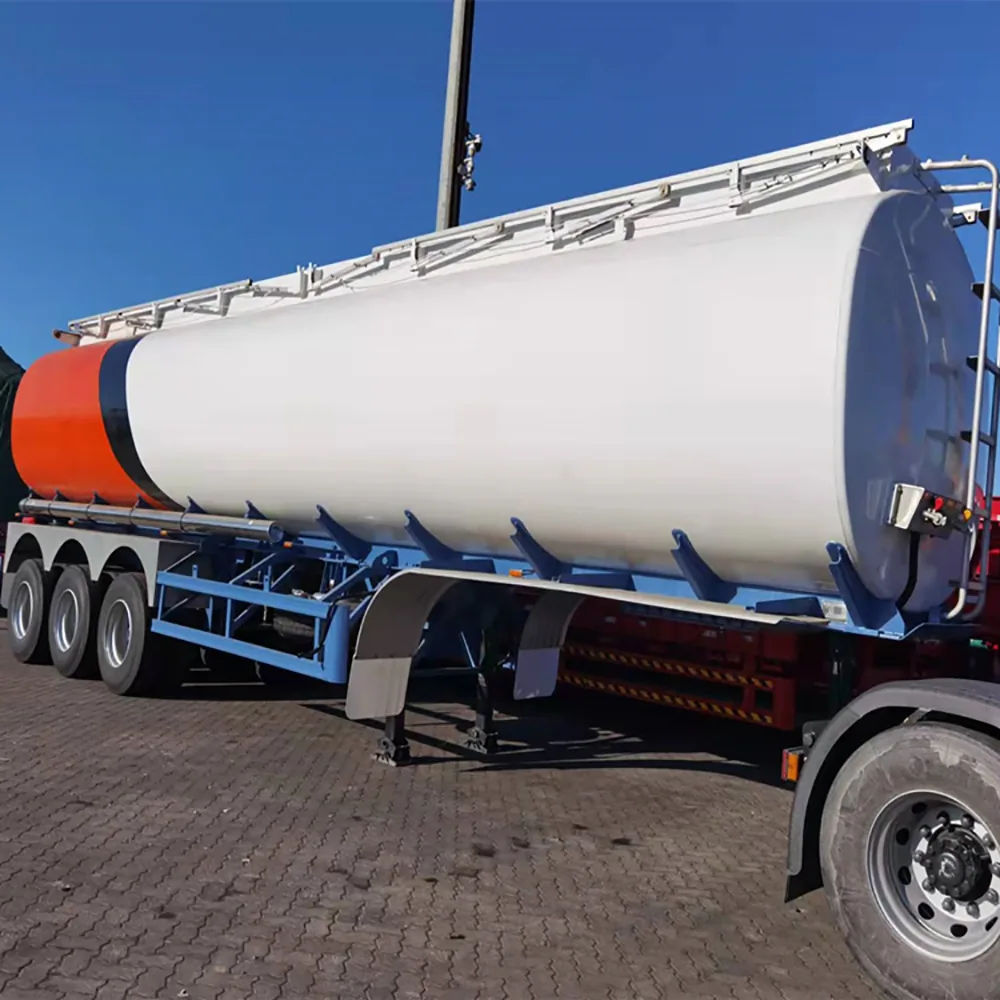
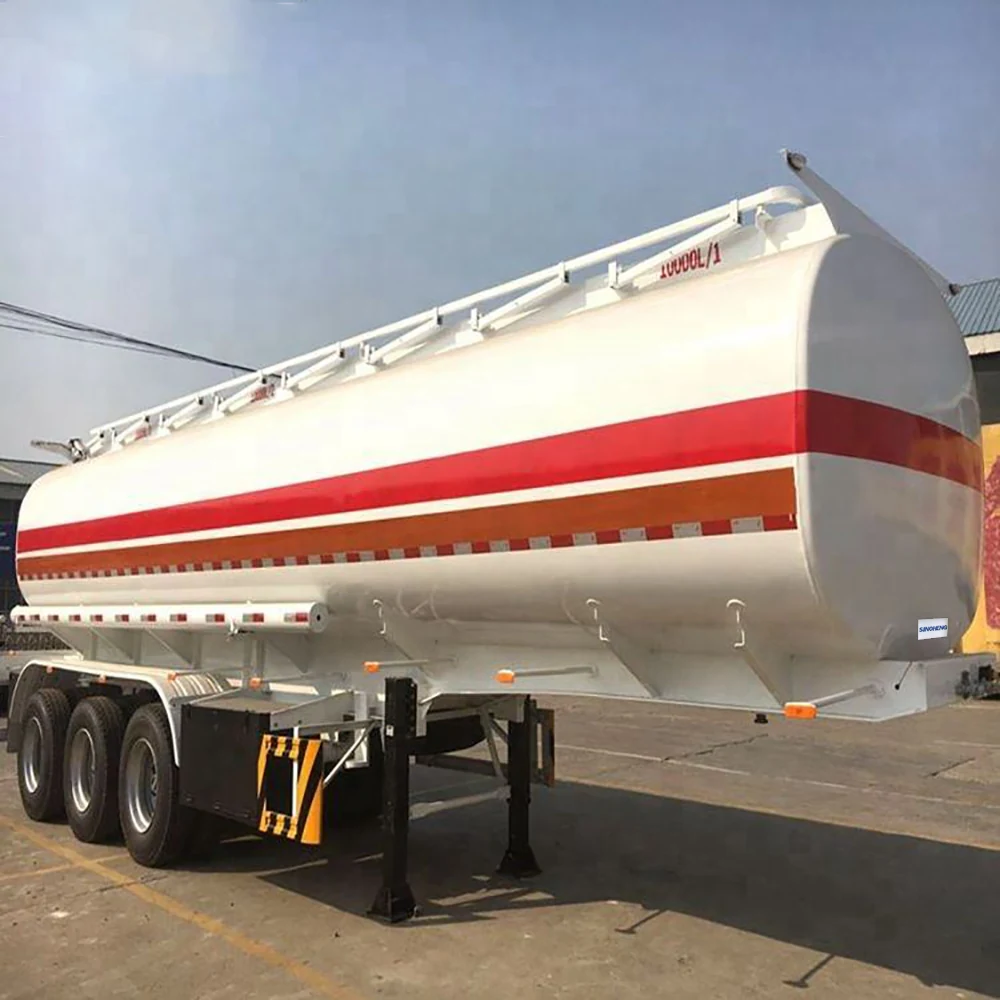
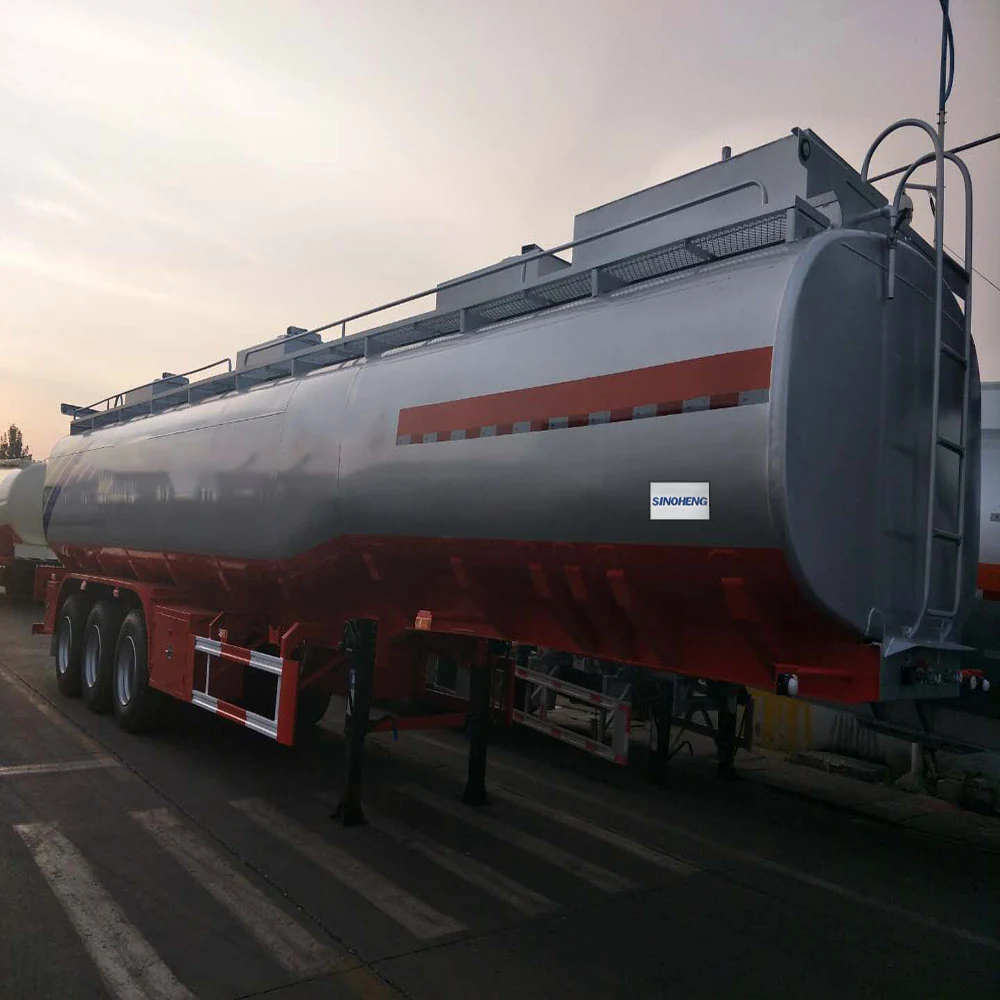
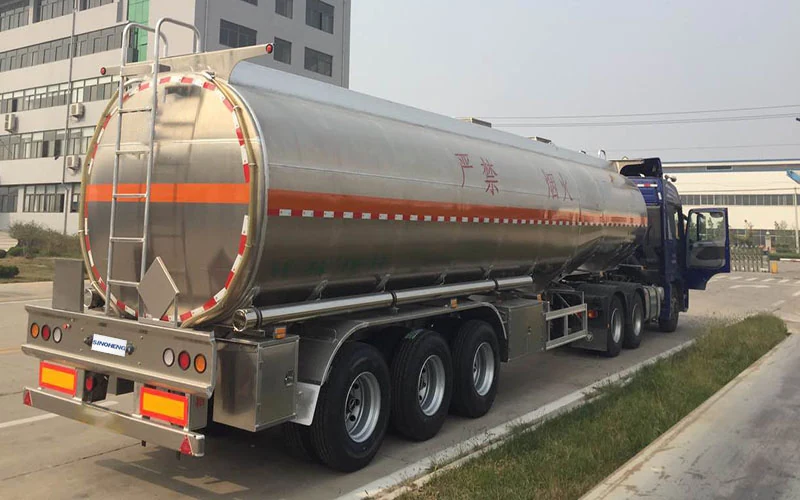
40-45cbm aluminium alloy fuel tanker on FUWA 13T axles, square gooseneck tank, ECE GCC ISO DOT tire certification.
View Specification
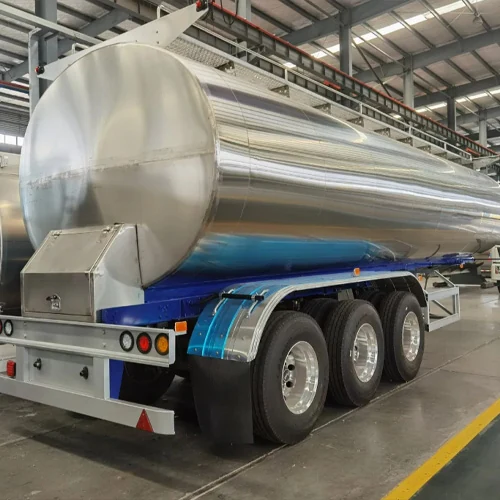
Aluminium alloy, carbon steel and stainless fuel tankers from 30 to 60 cubic metres, plus heated asphalt tankers, on two and three-axle chassis.
In fuel distribution, tare weight is money. Every kilogram of trailer is a kilogram of product you did not carry, and the difference compounds across every trip for the life of the vehicle.
Every model in this family, with full specifications taken from the manufacturer data sheet.
40-45cbm aluminium alloy fuel tanker on FUWA 13T axles, square gooseneck tank, ECE GCC ISO DOT tire certification.
View SpecificationTwo-axle 30-40cbm aluminium fuel tanker for weight-limited routes and smaller station drops.
View SpecificationMirror-face fuel tanker with Q235 4mm tank body, eight discharge valves and eight manhole covers for fast multi-point delivery.
View SpecificationThree-axle 40-45cbm carbon steel fuel tanker on a 11700mm chassis, air suspension available.
View SpecificationAluminium diesel tanker in 26000-30000 litre volumes with API manhole, safety valve and anti-leak monitor.
View SpecificationThree-axle aluminium diesel tanker, 12000x2500x3500mm, 30-60T capacity at 6500-8800kg tare.
View Specification60 cubic metre oil tanker, 13500*2490*3990mm, round or square tank with four aluminium manholes.
View Specification43 cubic metre carbon steel tank carrier, 31200kg payload at 8800kg tare, colour to your requirement.
View Specification43 cubic metre aluminium alloy tanker, 33400kg payload at only 6600kg tare.
View Specification43 cubic metre asphalt tank truck, 31000kg payload at 9000kg tare for heated bitumen transport.
View Specification46-60cbm aluminium alloy 5083 fuel tanker at 7700kg tare with a JOST D200T landing gear.
View SpecificationAluminium alloy builds down to 6600kg tare against 8800kg in carbon steel at the same 43 cubic metre volume
Volumes from 30 to 60 cubic metres so the tank fills as it reaches its weight limit
Multi-valve and multi-manhole builds for multi-drop and mixed-grade work
API manhole, safety valve and anti-leak monitor options for terminal bottom loading
Electrostatic conducting tape, twin fire extinguishers and enclosed valve boxes as standard on the main range
Fuel distribution economics are decided by two numbers: how many litres you carry per trip, and how many stops you can serve before you have…
Rear, side and U-shape tipping bodies, 2 to 6 axles, 30 to 80 tonnes
Deck heights 700-1100mm, ramp angles 13-35 degrees, up to 120 tonnes
Q370R pressure vessels and vacuum-insulated cryogenic tanks to -196 degrees
30 to 68 cubic metres pneumatic, V shape floors, BOHAI compressors
Aluminium saves roughly 2200kg of tare at 43 cubic metres, which is payload on every trip. Carbon steel costs less and can be repaired by any competent local workshop. If there is no aluminium welder where you operate, choose steel.
Work from your legal gross weight and the density of your product. A tank that hits the weight limit before it is full is carrying empty volume you paid for.
If you carry more than one grade or make several drops on a run, yes. A single compartment forces a full discharge at the first stop.
Terminals that operate bottom loading will not fill a tanker with non-compliant couplings. Tell us your loading terminals and we will specify the fittings.
Yes. An asphalt build carries insulation and heating provision so the bitumen stays pumpable. A fuel tanker cannot be used for asphalt without modification.
Tell us the country of use, cargo, load weight and axle limits and we will confirm the configuration and quote.