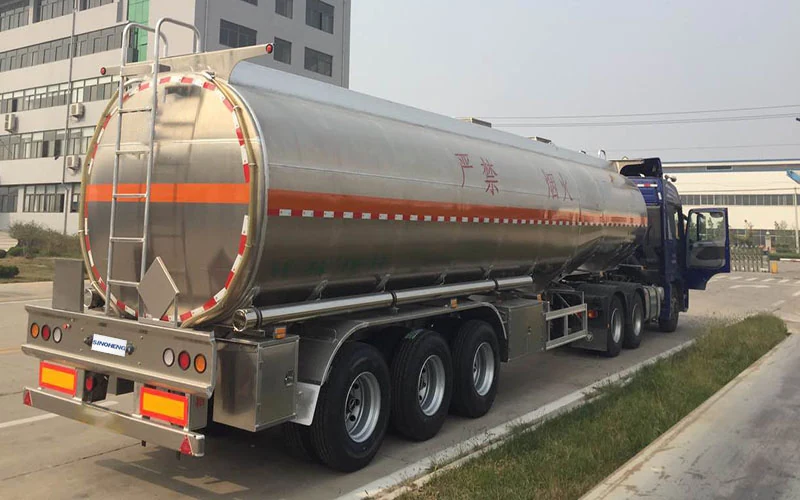
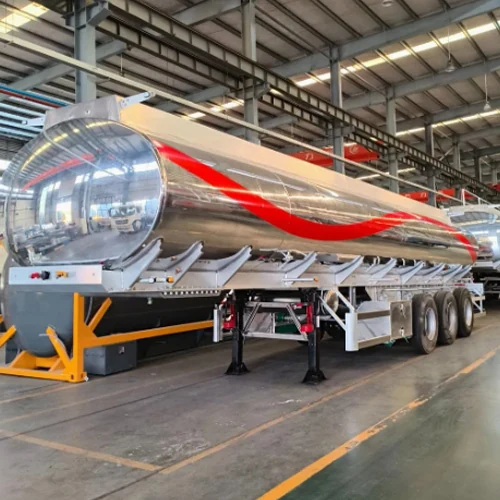
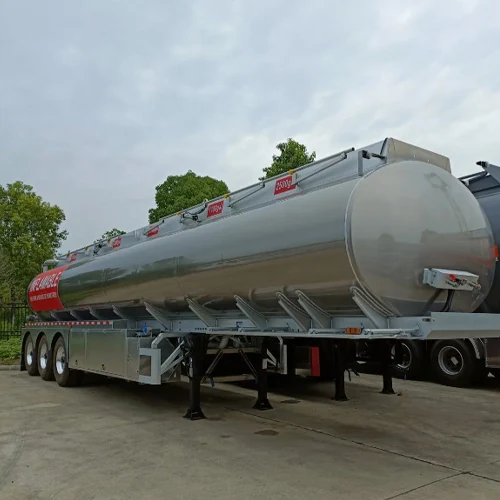
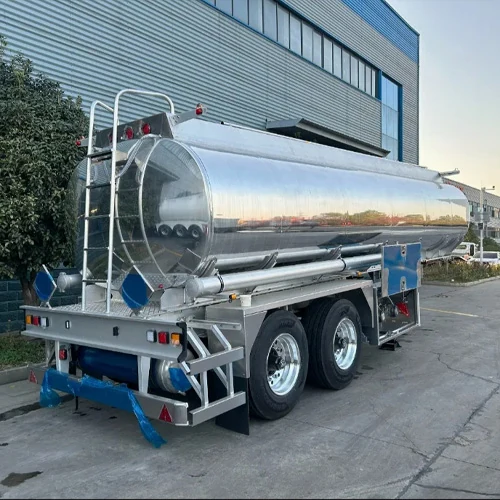
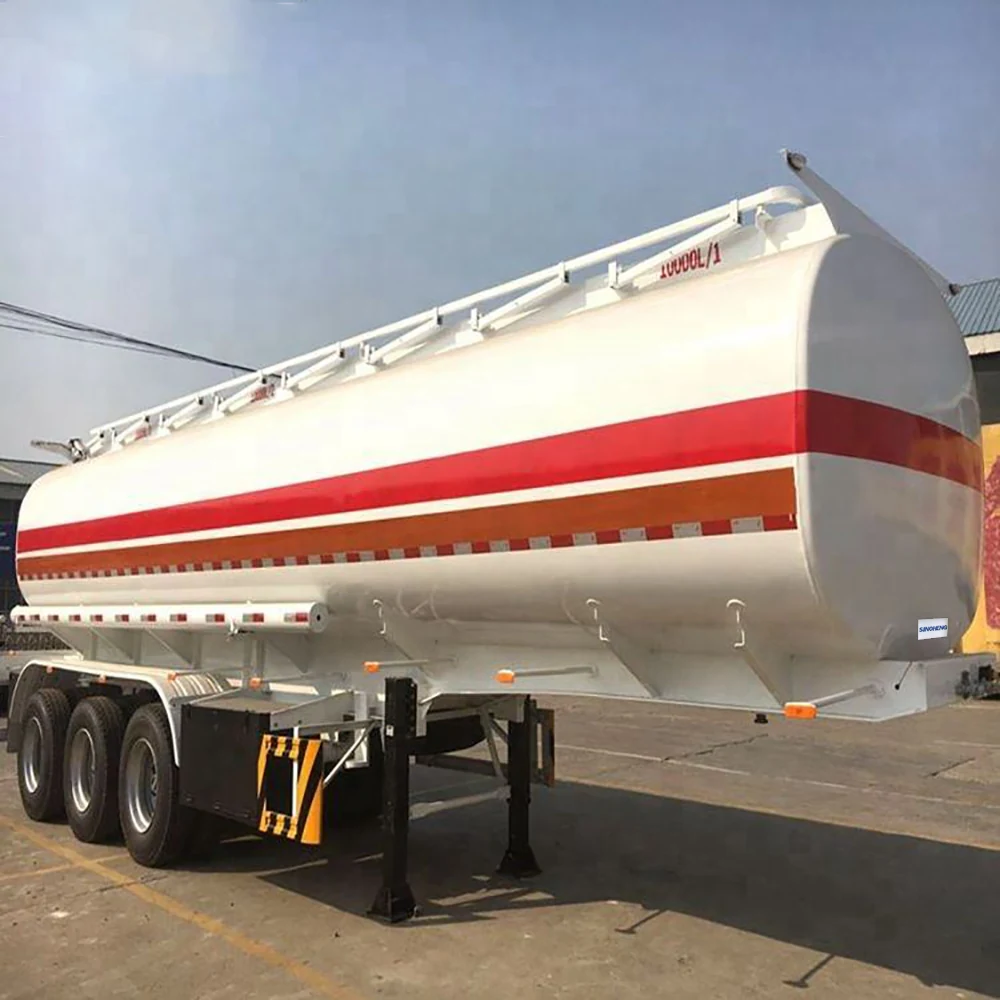
High Quality Fuel Tank Semi Trailer Oil Tanker Trailer China Factory for Sale
46-60cbm aluminium alloy 5083 fuel tanker at 7700kg tare with a JOST D200T landing gear.
View Specification
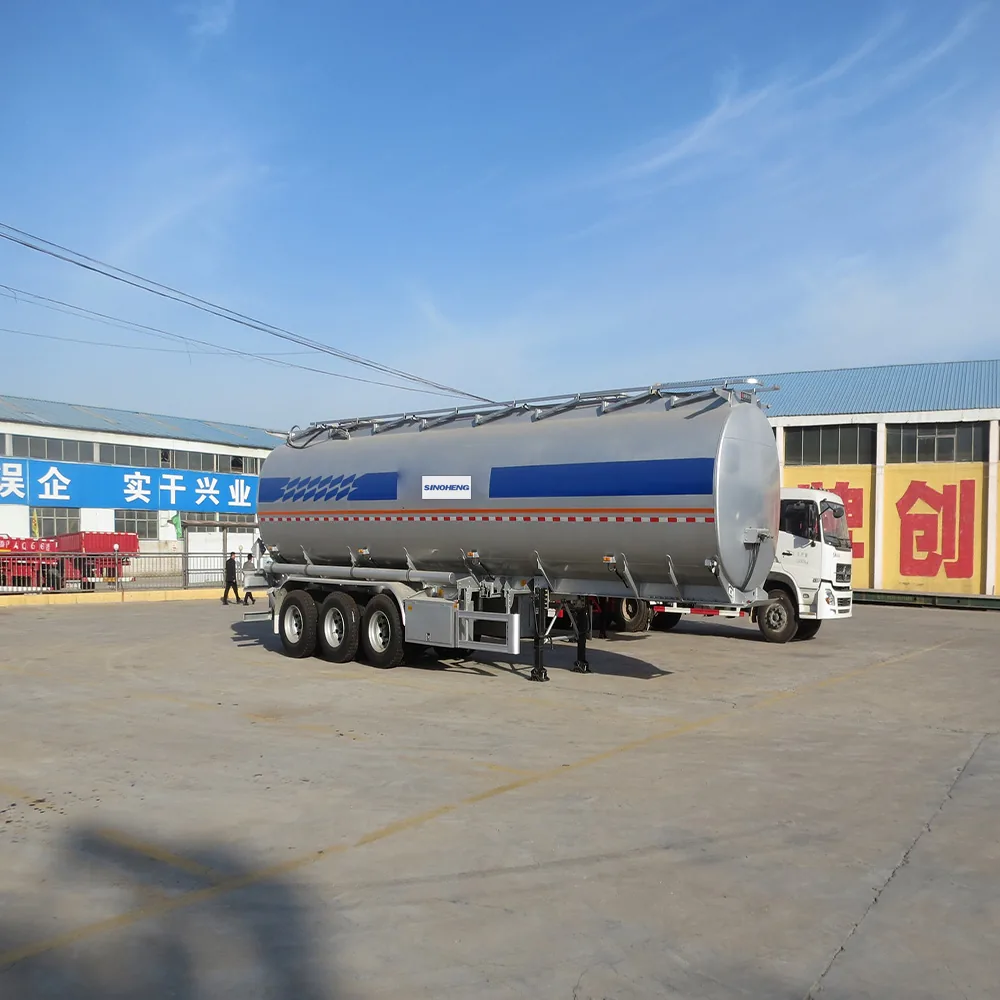
Fuel distribution economics are decided by two numbers: how many litres you carry per trip, and how many stops you can serve before you have to return to the terminal. Tare weight governs the first; compartment and valve layout governs the second.
Models from our range that suit this sector's duty cycle and conditions.
46-60cbm aluminium alloy 5083 fuel tanker at 7700kg tare with a JOST D200T landing gear.
View Specification43 cubic metre aluminium alloy tanker, 33400kg payload at only 6600kg tare.
View SpecificationMirror-face fuel tanker with Q235 4mm tank body, eight discharge valves and eight manhole covers for fast multi-point delivery.
View SpecificationAluminium diesel tanker in 26000-30000 litre volumes with API manhole, safety valve and anti-leak monitor.
View SpecificationTwo-axle 30-40cbm aluminium fuel tanker for weight-limited routes and smaller station drops.
View Specification60 cubic metre oil tanker, 13500*2490*3990mm, round or square tank with four aluminium manholes.
View Specification30 to 60 cubic metres, aluminium alloy from 6600kg tare, heated asphalt builds
A standard build is a compromise averaged across every market. Your axle limits, road surface, climate, cargo density and local parts supply are not average, and the gap between the average and your reality is where trailers break.
Buyers are usually given a model number and a price. What determines whether the trailer earns is the configuration behind that number, and it is easy to get wrong from a catalogue photograph.
Trailer shipping is not container shipping. Many models cannot go in a box at all, freight rates move while vehicle prices stay fixed, and import clearance depends on documentation that varies country by country.
The common failure is not a defective trailer, it is a trailer nobody can get parts for. Once a supplier changes model or loses interest, an otherwise sound vehicle becomes scrap over a single unavailable component.
About 2200kg at 43 cubic metres: 6600kg tare against 8800kg in carbon steel. Over a few hundred trips that difference pays for the alloy.
One for single-grade bulk transfer. For multi-drop or mixed-grade routes, as many as your drop pattern requires. Our mirror-face build carries eight discharge valves and eight manholes.
If your terminal operates bottom loading, yes, or they will not fill the tanker. Tell us your loading terminals and we will specify the fittings.
On the main range: two manholes, a double discharge valve in a valve box, ladder, roof coaming, anti-slip walkway, toolbox, electrostatic conducting tape and two fire extinguishers.
Individual models list ECE, GCC, CE, ISO9001, DOT, CCC, ISO/TS16949 and API markings. We confirm the exact documents applicable to your destination before shipment.
Send your operating conditions and we will match a model, confirm the configuration and quote within one to three days.