
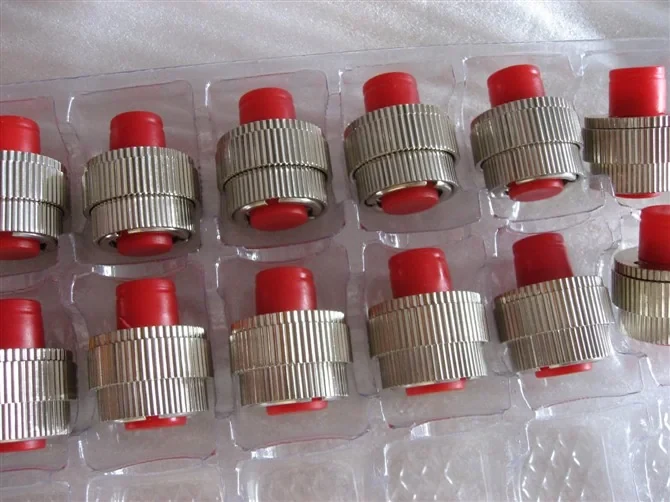
FC Tunable Attenuator
FC Tunable Attenuator is part of the fiber optic attenuator range built by Ever Expresslink Limited in Ningbo, China. It is built on the FC (Ferrule Connector) interface.
Controlled loss, for when a receiver is being overdriven
Interested in FC Tunable Attenuator
Email the model and quantity with your destination country. We reply with pricing, lead time and a datasheet.
Product Overview
FC Tunable Attenuator is part of the fiber optic attenuator range built by Ever Expresslink Limited in Ningbo, China. It is built on the FC (Ferrule Connector) interface.
FC uses a 2.5 mm zirconia ceramic ferrule inside a threaded metal coupling nut, so the mated pair is locked mechanically rather than held by a spring latch. FC needs the alignment key to seat in the adapter slot before the nut is tightened. Cross-threading a keyed FC is the single most common cause of high loss on an FC link.
It is one of 10 items in this range. A typical application is bringing a short DWDM or long-reach link into receiver range. What the range is built to give you there: fixed values for production use and tunable versions for the bench.
The problem it addresses is bit errors that look like contamination but are actually overload. A practical note that applies across this range: record the installed value in the link documentation. Specifications for a particular configuration are confirmed on the quotation rather than assumed from the designation.
Key Benefits
- Supplied as FC Tunable Attenuator, so the part you receive matches the designation you ordered against
- Known, stable loss instead of improvised fiber coils
- Fixed values for production use and tunable versions for the bench
- Male-to-female plug styles that drop straight into an existing port
- Available across the main connector types and both polish styles
Problems It Solves
- Ad-hoc attenuation methods that drift with temperature
- Receiver saturation on short links built with high-power transmitters
- Bit errors that look like contamination but are actually overload
- Test benches that need a repeatable, known loss rather than a coil of fiber
Application Scenarios
- Carrier transmission equipment
- Bringing a short DWDM or long-reach link into receiver range
- Balancing levels across a CATV optical distribution network
- Characterising receiver sensitivity on a test bench
- Simulating span loss during equipment qualification
Who It Is For
- Commissioning engineers bringing links into their power window
- Data-center teams running long-haul optics over short distances
- Test laboratories characterizing receivers
- CATV and RF-over-glass operators balancing distribution levels
Technical Features
- FC (Ferrule Connector) interface
- FC needs the alignment key to seat in the adapter slot before the nut is tightened. Cross-threading a keyed FC is the single most common cause of high loss on an FC link.
- Tunable versions with a continuously adjustable range
- MEMS variable versions for programmable bench work
- Male-to-female plug style for direct insertion into a port
- UPC and APC polish options
Materials
- Doped fiber or coated-ferrule attenuating element
- Zirconia ceramic ferrule
- Metal or thermoplastic housing
- Precision adjustment mechanism on tunable versions
Specifications
| Product Designation | FC tunable attenuator |
|---|---|
| Product Family | Fiber Optic Attenuator |
| Connector Interface | FC (Ferrule Connector) |
| Manufactured In | Ningbo, China |
| Warranty | One year against defects in materials and workmanship |
Values shown are those carried by the product designation. Dimensional and optical values for a specific order are confirmed on the quotation.
Manufacturing Process
- Attenuating element preparation to the target value
- Connector assembly and polish
- Attenuation calibration against a reference
- Return loss verification
- Marking, capping and packing
Quality Control
- Attenuation value verified per unit against a calibrated reference
- Return loss measured on every unit
- Wavelength response checked on sample units
- Temperature stability sampled per production lot
- Marking accuracy checked against the measured value
Customization Options
- Attenuation value to your specification
- Fixed, tunable or MEMS variable format
- Connector type and polish
- Low back-reflection versions
- Matched sets for multi-channel balancing
Compared With Other Options
| SC | SC seats faster with a push-pull motion; FC holds up better where the cabinet vibrates or ports get bumped |
|---|---|
| ST | ST twists on with a bayonet in a quarter turn; FC's threaded nut takes longer but resists loosening |
Handling FC Tunable Attenuator
Before You Order
- Measure the actual received power before choosing a value
- Choose the value that lands mid-window, not at the edge of the receiver range
- Install on the receive side rather than the transmit side
In Service
- Use APC versions on paths where return loss is critical
- Re-measure after installation to confirm the link is inside its window
- Record the installed value in the link documentation
Questions About FC Tunable Attenuator
What do you need from us to quote FC Tunable Attenuator?
The quantity, the destination and anything that has to match on your side: connector and polish at each end, fiber mode and core size, and length where the item is an assembly. If you are matching a part you already buy, send the sample and we will quote against it.
Can FC Tunable Attenuator be supplied with a different connector interface?
Yes. FC (Ferrule Connector) is what this designation carries, and the same family is stocked across the other mainstream connector standards. Tell us the port you have to mate with and we will confirm the equivalent part.
Do you supply APC attenuators?
Yes. Use APC on PON, CATV and RF-over-glass paths where back reflection has to stay low. The polish is specified per order.
Can an attenuator fix errors caused by a dirty connector?
No, and the two are easy to confuse. Clean and inspect first. Only when power is genuinely above the receiver's maximum input is an attenuator the right answer.
How do I choose the right attenuation value?
Measure the received power with a power meter, compare it against the receiver's specified input range, and pick the value that puts you near the middle of that range rather than at its edge.
More Fiber Optic Attenuator
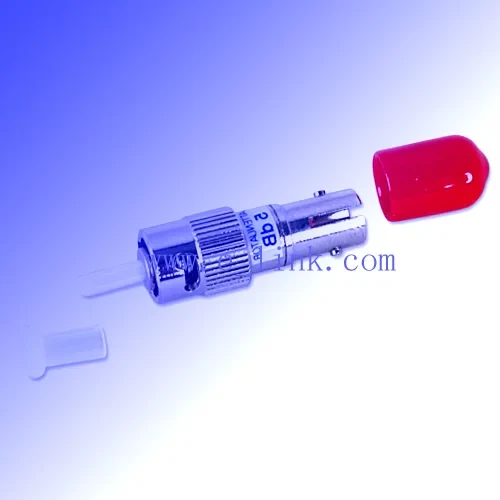
ST Attenuator
We supply both UPC ST fiber optic attenuator and APC ST fiber optic attenuator for single mode applications; they are with 1240nm to 1620nm compatible working.
View Details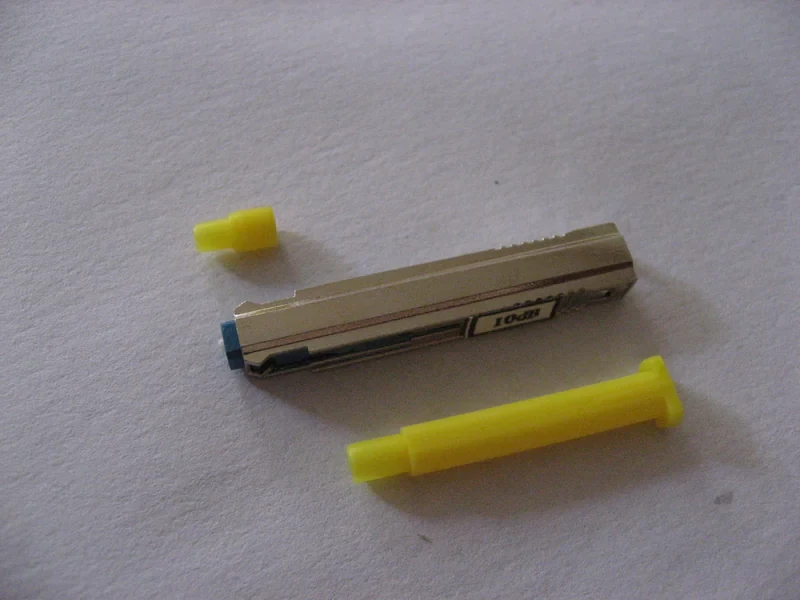
MU 4.5mm Attenuator
Multimode. Used for characterizing receiver sensitivity on a test bench.
View Details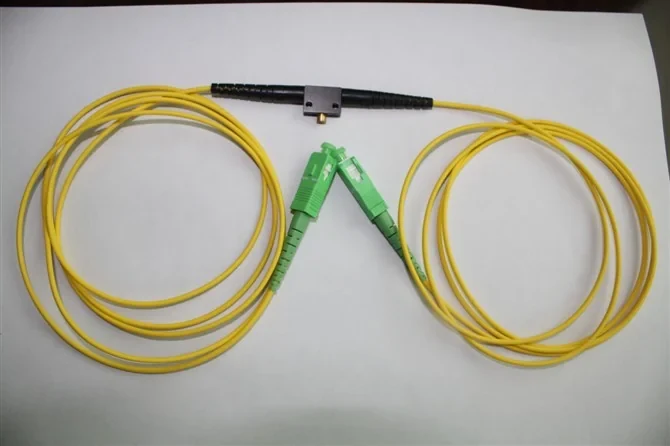
SC Tunable Attenuator
Used for bringing a short DWDM or long-reach link into receiver range.
View Details
MEMS Variable Optical Attenuator
Used for bringing a short DWDM or long-reach link into receiver range.
View DetailsGuides Cases and Industries
PLC and FBT Optical Splitters Compared
Two ways to divide light, why PON standardized on one of them, and how to check whether your budget can carry the split you want.
Buying GuideHow to Select a Fiber Optic Attenuator
Measure first, attenuate on the receive side, and record what you installed. The three rules that prevent most attenuator mistakes.
Process GuideInsertion Loss and Return Loss Explained
Two numbers on every test report, what each one is telling you, and how to build a link budget that survives being maintained.
Deployment ProfileCATV Optical Level Balancing
Bringing an optical distribution tree into level, and keeping reflections out of the picture
IndustryData Center and Enterprise LAN
High-density patching, structured cabling and building-to-building links
IndustryCATV and Broadcast Networks
Optical and coaxial distribution where return loss and level balance decide picture quality
Request Pricing For FC Tunable Attenuator
Tell us the quantity and destination. If you are matching a part you already buy, send the sample and we will quote against it.