
Low Pressure Molding
Low pressure molding is a moulding process using hot melt adhesives. It achieves superior sealing and better protection of electrical and electronic components, with higher productivity than potting.
Why This Process Is Chosen
The value of the process is what it does not do. It does not load the component, it does not cure chemically, and it does not tie up a fixture for hours. It encapsulates fragile and delicate components with no damage, no chemical reaction, a simple clean process, fast cycle times of 8 to 50 seconds, and it allows flexible and miniaturised product design.
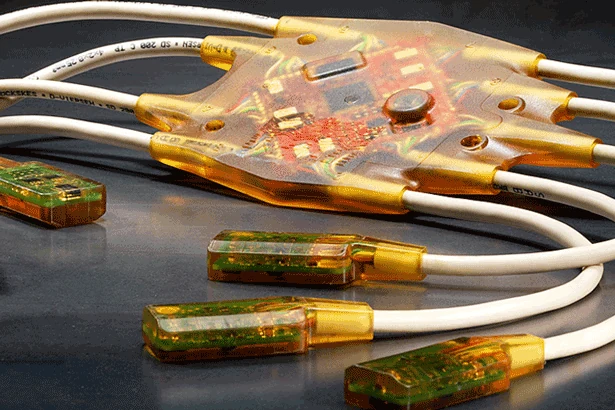
Electronic Component Encapsulation
The low pressure applied during the moulding process prevents damage to the sensitive electronic components and elements.
Connector Potting
Hot melts are used for sealing the plug and also for cable strain relief.
Grommet Injection Moulded In Place
This eliminates the time-consuming process of slipping the grommet on, which can cause repetitive strain injury. The moulding can also include strain relief, which enhances the appearance of the part.
From Enquiry To A Repeatable Production Setting
Each stage below is a decision that narrows the grade list. Working through them in order is faster than starting with a sample and adjusting afterwards.
Component Assessment
Which elements are fragile, where the wires exit, and how thick the encapsulation has to be. This is what sets the mould and the moulding pressure.
Low pressure is applied during moulding precisely so that sensitive elements are not damaged.
Resin Selection
Amber polyamide resin is based on natural fatty acids and shows good adhesion to plastics such as PA 6.6, ABS and PVC, with low temperature flexibility, a wide service temperature range and superior moulding properties. Black polyamide performs the same with a hidden finish. Polyolefin resin has superior adhesion to PP, PE and PET with low hardness and a wide service temperature range.
Housing material first, appearance second.
Viscosity Matching
UA-G182C sits at 5000-7000 mPa.s at 210 C for thin wall work. UA-G0175 sits at 18000 mPa.s where a thicker wall or a standing bead is needed.
Two grades cover the thin and thick ends of the same chemistry.
Mould And Shot Setup
Tank temperature, shot weight, gate position and cooling. Mould design decides whether the encapsulation is void free around a tall component.
Keep the melt at working temperature rather than cycling it.
Cycle And Release
Typical cycle times are 8 to 50 seconds depending on shot weight and cooling. The part is handled as soon as it releases — there is no cure wait.
That is where the productivity gain over potting comes from.
Inspection
Wall thickness, voids, adhesion to the housing and function test after encapsulation.
Thermoplastic encapsulation can be remelted if a unit has to be opened.
Products Used In Low Pressure Molding
 Hot Melt Resin
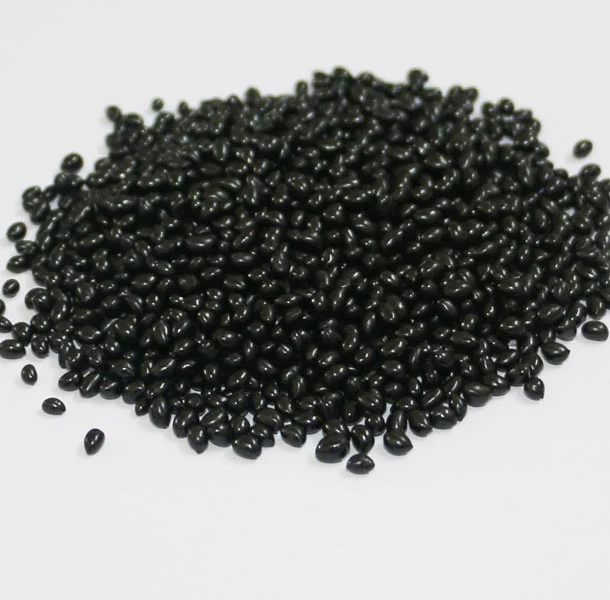
Black Polyamide Hot Melt Resin UA-G182C
Black polyamide resin for low pressure moulding of automotive and electronic assemblies
View Grade Data
Hot Melt Resin
Black Polyamide Hot Melt Resin UA-G182C
Black polyamide resin for low pressure moulding of automotive and electronic assemblies
View Grade Data
 Hot Melt Resin
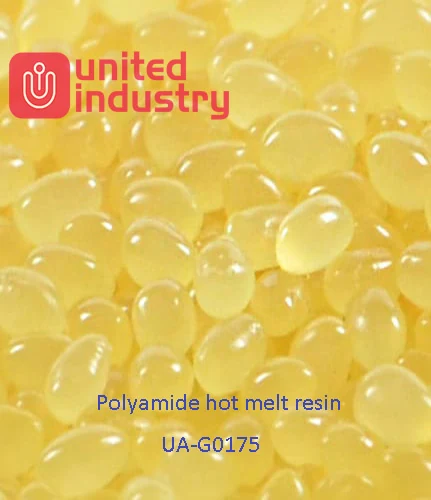
Polyamide Hot Melt Adhesive Resin UA-G0175
High viscosity polyamide resin for low pressure moulding and filter bonding
View Grade Data
Hot Melt Resin
Polyamide Hot Melt Adhesive Resin UA-G0175
High viscosity polyamide resin for low pressure moulding and filter bonding
View Grade DataIndustries Running This Process
Guides For This Process
Low Pressure Molding Of Electronics A Practical Process Guide
Low pressure molding encapsulates fragile components in 8 to 50 seconds with no chemical reaction. Here is what the process does, what it needs and where it fits against potting.
Material GuideWhat Is A Thermoplastic Hot Melt Adhesive And When To Use One
Hot melts bond by cooling, not by curing. That single difference explains most of what they are good at and most of what they are not.
Low Pressure Molding FAQ
What are the highlighted features of low pressure molding
It encapsulates fragile and delicate components, causes no damage to components, is not chemically reactive, is a simple and clean process, has fast cycle times of 8 to 50 seconds, and allows flexible and miniaturised product design.
Which resins do you supply for this process
Amber polyamide, black polyamide and polyolefin resin. White polyamide is also available.
What is connector potting
Using the hot melt to seal the plug and to provide cable strain relief in one moulded shot.
Can a grommet be moulded in place
Yes. That removes the time-consuming step of slipping the grommet on and can include the strain relief in the same operation.
How does it compare with two-part potting
No chemical reaction, no pot life and cycle times in seconds rather than hours.
Set Up Low Pressure Molding With The Right Grade
Describe the joint, the substrates and the temperature limits of your line, and we will come back with a grade and a starting parameter set.