
Heat Transfer Printing
Heat transfer printing applies heat-activated materials to textiles and other items with a heat press. The material carries a heat-sensitive adhesive on one side; when the press applies heat, the material adheres to the substrate. The end result is a decorated garment.
Why This Process Is Chosen
Decorating with a heat press is an easy, cost-effective way to enter the garment decoration industry, and it works for a wide variety of items — T-shirts, team uniforms, bags, fan wear, corporate workwear, small businesses, clubs, schools and fashion. What changes from job to job is not the press. It is the adhesive.

From Enquiry To A Repeatable Production Setting
Each stage below is a decision that narrows the grade list. Working through them in order is faster than starting with a sample and adjusting afterwards.
Artwork And Substrate Review
The fabric decides more than the artwork does. A cotton tee, a polyester jersey and a coated PU panel each need a different adhesive and a different press temperature.
Send the fabric and the wash requirement first. Polymer selection follows from those two.
Polymer Selection
TPU adhesive powders are high end, combining extreme elasticity with a soft touch leading to a transfer that will outlast the garment. PES powders are in big demand where high elasticity is not required and wash resistance prevails. PA powders are designed for the highest bonding strength with easy processing and a wide application range.
Three polymers, one decision: stretch, wash, or strength.
Form And Fraction
Powder for screen printed shapes, film for cut letters and numbers. Powder comes in 0-80, 80-180, 100-300 and 200-500 micron fractions; transfer film is cut from 20 mm to 1500 mm wide.
Match the fraction to the mesh already on your line instead of changing the mesh.
Base Paste
Where the process needs a paste rather than a dry powder, acrylic and polyurethane liquid resin provide the base for paste making.
The same supplier covers the powder and the paste base.
Press Parameter Setting
Time is how many seconds heat is applied. Temperature is the degree at which the design adheres. Pressure is the downward force. All three have to clear the melting range of the adhesive, not just approach it.
UT-1007 melts at 100-125 C; UT-1290 at 105-130 C; transfer film works at 140-170 C.
Wash And Stretch Validation
Test on the production fabric and the customer's wash cycle, and stretch the finished transfer rather than the transfer paper.
A transfer that passes on paper and fails on the body is a stretch problem, not a bond strength problem.
Products Used In Heat Transfer Printing
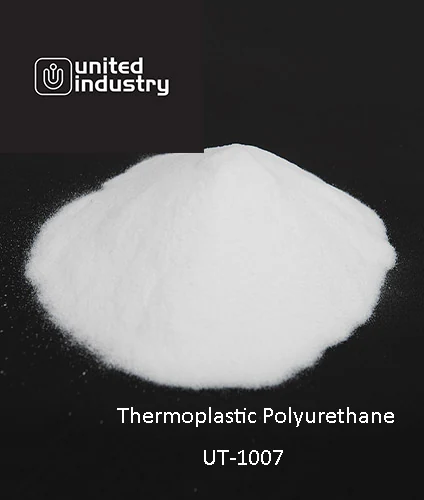 Thermoplastic Polyurethane Hot Melt Adhesives
Thermoplastic Polyurethane Powder UT-1007
Soft low melting TPU powder for screen heat transfer printing and shoe material
View Grade Data
Thermoplastic Polyurethane Hot Melt Adhesives
Thermoplastic Polyurethane Powder UT-1007
Soft low melting TPU powder for screen heat transfer printing and shoe material
View Grade Data
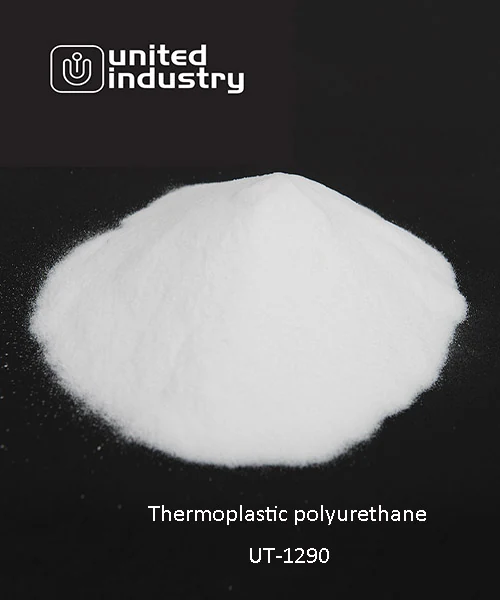 Thermoplastic Polyurethane Hot Melt Adhesives
Thermoplastic Polyurethane Powder UT-1290
Aliphatic polyester TPU powder for high elasticity transfers with better colour fastness
View Grade Data
Thermoplastic Polyurethane Hot Melt Adhesives
Thermoplastic Polyurethane Powder UT-1290
Aliphatic polyester TPU powder for high elasticity transfers with better colour fastness
View Grade Data
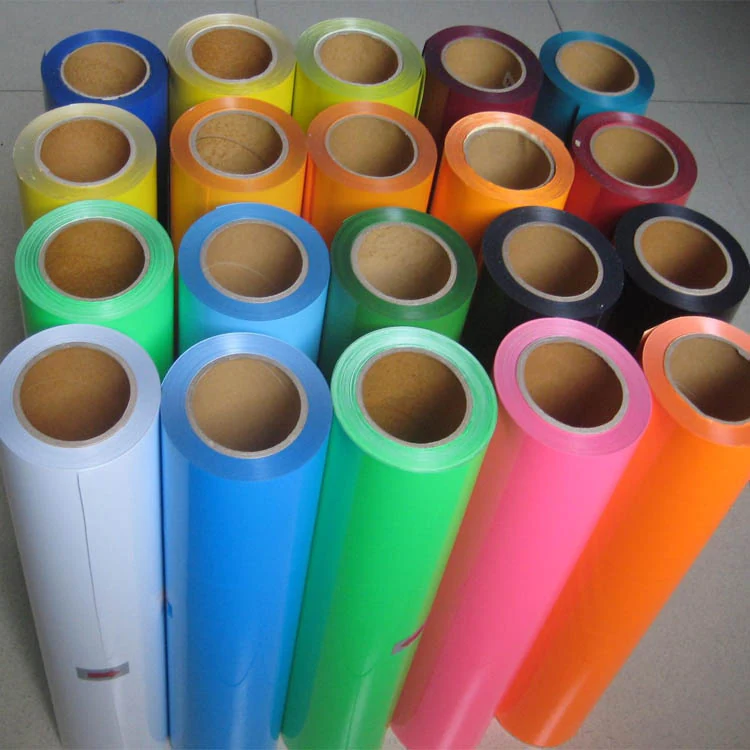 Thermoplastic Adhesive Film
Transfer Hot Melt Film
Wash resistant transfer film for fashion and sports suit heat transfer printing
View Grade Data
Thermoplastic Adhesive Film
Transfer Hot Melt Film
Wash resistant transfer film for fashion and sports suit heat transfer printing
View Grade Data
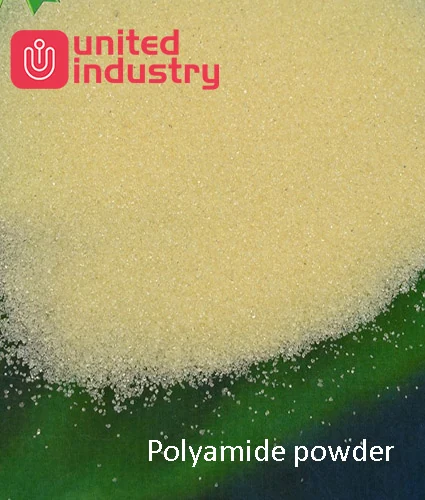 Polyamide (PA) Hot Melt Adhesives
Polyamide Hot Melt Powder
High strength polyamide powder for textile lamination and shoe fabric bonding
View Grade Data
Polyamide (PA) Hot Melt Adhesives
Polyamide Hot Melt Powder
High strength polyamide powder for textile lamination and shoe fabric bonding
View Grade DataIndustries Running This Process
Guides For This Process
Time Temperature And Pressure In Heat Transfer Printing
Three key components decide every heat press result. Every heat transfer material has its own instructions for all three, and most failures are one of them being wrong.
Buying GuideHow To Choose Hot Melt Powder Particle Size
Particle size decides whether powder passes your mesh cleanly and how much adhesive ends up on the substrate. Pick the fraction before you pick anything else.
Heat Transfer Printing FAQ
What exactly is heat transfer printing
It is the process of applying heat-applied materials to various items with a heat press. The material contains a heat-sensitive adhesive on one side and bonds to the substrate when heat is applied.
Which three parameters matter most
Time, temperature and pressure. Every heat transfer material has its own instructions for all three.
Which polymer for a stretch garment
TPU. It combines extreme elasticity with a soft touch.
Which polymer for maximum wash resistance
PES, where high elasticity is not required. It is in big demand for exactly that case.
Do you supply liquid resin for paste making
Yes — acrylic and polyurethane liquid resin as the base for paste making.
Set Up Heat Transfer Printing With The Right Grade
Describe the joint, the substrates and the temperature limits of your line, and we will come back with a grade and a starting parameter set.