
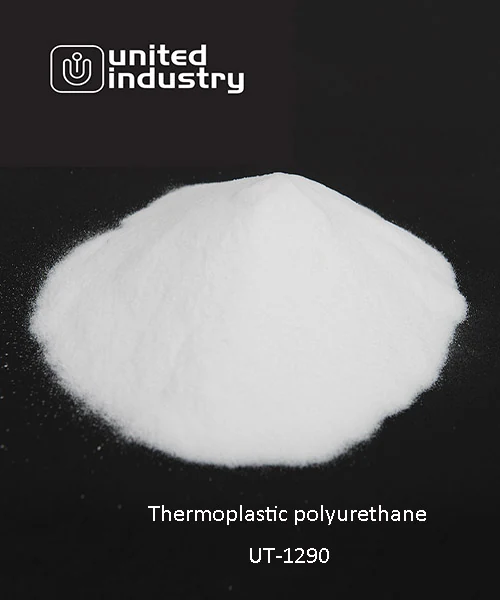
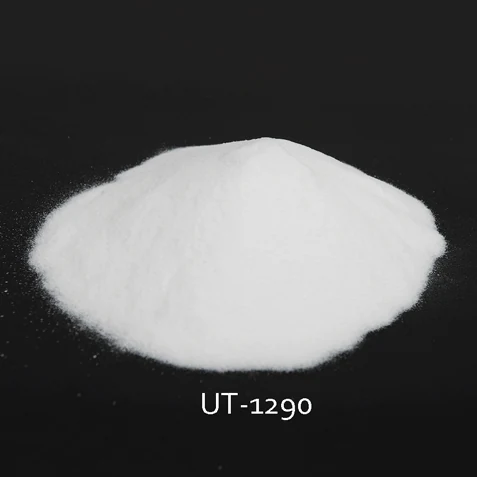
Thermoplastic Polyurethane Powder UT-1290
Aliphatic polyester TPU powder for high elasticity transfers with better colour fastness
| Material | Aliphatic polyester based thermoplastic polyurethane |
|---|---|
| Character | White powder |
| Flow Beginning Temperature | 100 C |
| Melting Range | 105-130 C |
What This Grade Is Built For
UT-1290 is an aliphatic polyester based thermoplastic polyurethane hot melt adhesive powder. Flow begins at 100 C with a melting range of 105-130 C. The aliphatic backbone is what buys the better colour fastness, which is why this grade is specified for screen heat transfer printing on high quality and high elasticity products where yellowing would be visible.
Key Benefits
- Aliphatic polyester TPU with better colour fastness — less yellowing on white and pastel prints
- Soft grade with high elasticity for stretch garments and swimwear
- Good adhesion strength to PVC, PU, fabric and genuine leather
- Melting range 105-130 C keeps the press temperature moderate
- Four particle fractions from 0-80 to 200-500 micron
Buyers Who Specify This Grade
- Transfer printers supplying premium apparel brands
- Producers of swimwear, activewear and compression garments
- Printers who have had complaints about transfers yellowing after storage or washing
What It Fixes On The Line
- Aromatic adhesives yellow over time and show through pale prints
- Stiff adhesives crack when the garment is stretched
- Transfers that pass the first wash but fail after repeated laundering
Application Scenarios
- Screen heat transfer printing on high quality garments
- High elasticity products such as swimwear and sportswear
- White and light coloured transfers where yellowing is unacceptable
- Fashion apparel transfers with a soft hand requirement
How It Behaves In Process
- Aliphatic polyester based thermoplastic polyurethane
- White powder
- Flow beginning temperature 100 C
- Melting range 105-130 C
- Density 1.2 g/cm3
- MFR 20 g/10 min at 150 C and 2.16 kg
What It Is Made Of
Aliphatic polyester based thermoplastic polyurethane elastomer.
Customisation
- Particle fractions cut to requirement.
Published Data For Thermoplastic Polyurethane Powder UT-1290
Only values published for this grade are listed. Where a value is grade specific rather than fixed, the data sheet issued with your quotation carries it.
| Material | Aliphatic polyester based thermoplastic polyurethane |
|---|---|
| Character | White powder |
| Flow Beginning Temperature | 100 C |
| Melting Range | 105-130 C |
| Density | 1.2 g/cm3 |
| MFR (150 C, 2.16 kg) | 20 g/10 min |
| Particle Size | 0-80, 80-180, 100-300, 200-500 micron |
How This Grade Is Applied
Step 01
Print the base layer on transfer paper
Step 02
Apply UT-1290 powder to the wet print
Step 03
Shake off the excess and dry or cure the transfer
Step 04
Heat press above the melting range and cool before peeling
Quality Control
Melting range, MFR and particle size are checked per batch. Colour fastness behaviour is the reason this grade exists, so it is worth running your own storage test on the finished transfer.
Use Guide
- Use on light and white prints where yellowing would be visible
- Press above 130 C to clear the melting range fully
- Store sealed and dry; clumped powder gives an uneven deposit
- Test elasticity by stretching the finished transfer, not the transfer paper
How It Compares With The Alternatives
| Compared with | What changes |
|---|---|
| UT-1007 TPU powder | UT-1007 flows 5 C lower and is the general purpose soft grade covering shoe material as well. UT-1290 is the colour fastness and elasticity grade. |
| Polyamide hot melt powder | PA is stronger and stiffer; it is not the grade for a stretch garment. |
| TPU hot melt film | Film gives a uniform coat over the whole area. Powder follows the printed shape only. |
Where This Grade Fits
Application Notes Featuring This Grade
Matching Transfer Powder Fraction To Screen Mesh
Most transfer powder complaints are not about the polymer. They are about a particle fraction that does not suit the mesh already on the line.
Application NoteKeeping A Transfer Intact On A High Stretch Garment
A transfer that passes the peel test on the press table and cracks on the body is not a bond strength problem. It is an elongation problem.
Related Products
 Thermoplastic Polyurethane Hot Melt Adhesives
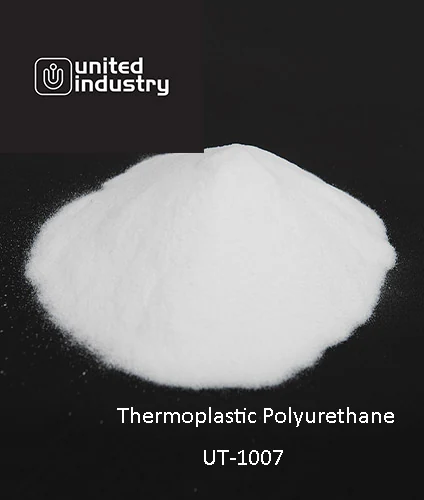
Thermoplastic Polyurethane Powder UT-1007
Soft low melting TPU powder for screen heat transfer printing and shoe material
View Grade Data
Thermoplastic Polyurethane Hot Melt Adhesives
Thermoplastic Polyurethane Powder UT-1007
Soft low melting TPU powder for screen heat transfer printing and shoe material
View Grade Data
 Thermoplastic Adhesive Film
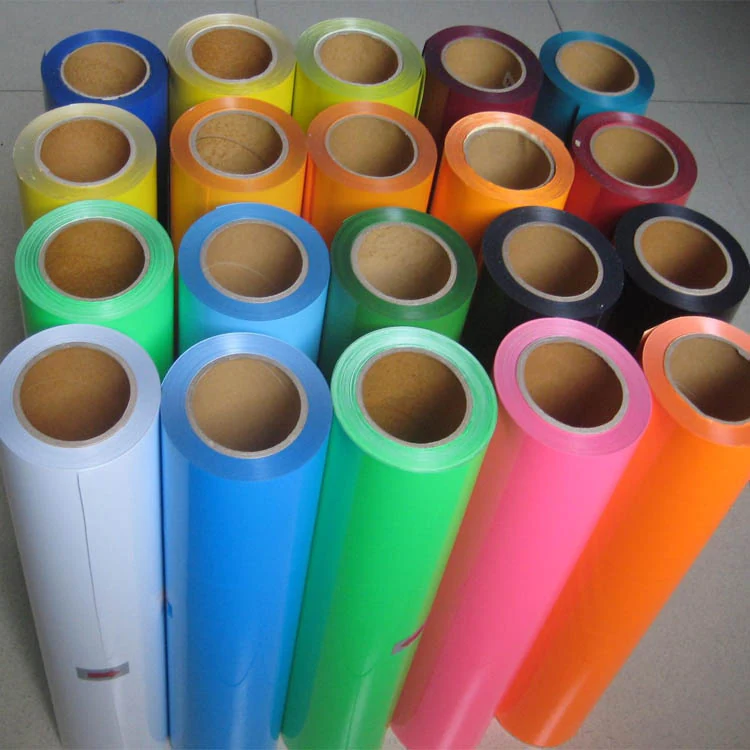
Transfer Hot Melt Film
Wash resistant transfer film for fashion and sports suit heat transfer printing
View Grade Data
Thermoplastic Adhesive Film
Transfer Hot Melt Film
Wash resistant transfer film for fashion and sports suit heat transfer printing
View Grade Data
 Polyamide (PA) Hot Melt Adhesives
Polyamide Hot Melt Powder
High strength polyamide powder for textile lamination and shoe fabric bonding
View Grade Data
Polyamide (PA) Hot Melt Adhesives
Polyamide Hot Melt Powder
High strength polyamide powder for textile lamination and shoe fabric bonding
View Grade DataGuides That Explain This Grade
Time Temperature And Pressure In Heat Transfer Printing
Three key components decide every heat press result. Every heat transfer material has its own instructions for all three, and most failures are one of them being wrong.
Buying GuideHow To Choose Hot Melt Powder Particle Size
Particle size decides whether powder passes your mesh cleanly and how much adhesive ends up on the substrate. Pick the fraction before you pick anything else.
Thermoplastic Polyurethane Powder UT-1290 FAQ
Why is UT-1290 better for colour fastness
It is based on aliphatic polyester TPU. Aliphatic polyurethanes resist yellowing better than aromatic ones, which matters under white and pastel prints.
Is it suitable for swimwear
It is specified for screen heat transfer printing on high quality and high elasticity products, which is exactly that class of garment. Confirm with a chlorine and wash trial on your own fabric.
Can I use the same press settings as UT-1007
Not quite — UT-1290 begins to flow at 100 C against 95 C, and its melting range runs 5 C higher at both ends.
What particle sizes are available
0-80, 80-180, 100-300 and 200-500 micron, or cut to requirement.
Do you supply a data sheet
Yes, on request by email.
Request Data Or A Sample Of Thermoplastic Polyurethane Powder UT-1290
Data sheets are grade specific and issued by email. Tell us the substrates and your process temperature limit and the right sheet comes back with the quotation.