
Keeping A Transfer Intact On A High Stretch Garment
A transfer that passes the peel test on the press table and cracks on the body is not a bond strength problem. It is an elongation problem.
What The Assembly Has To Survive
Swimwear and compression garments stretch far beyond what a rigid adhesive film can follow. The print survives the press, survives the first wash, and then cracks across the chest the first time somebody puts the garment on.
Why The Obvious Approach Fails
- Rigid adhesives crack at the first significant stretch
- Hard transfers ruin the hand feel of a premium garment
- White and pastel transfers yellow in storage and on the shelf
- The fabric cannot take a high press temperature
Grade Selection And Why
UT-1290 aliphatic polyester TPU powder. TPU adhesive powders combine extreme elasticity with a soft touch, leading to a transfer that will outlast the garment, and the aliphatic backbone of UT-1290 is what gives the better colour fastness on pale prints.
How The Job Runs
Step 01
Print the base layer on the transfer paper
Step 02
Apply UT-1290 powder to the wet print and shake off the excess
Step 03
Dry or cure the transfer
Step 04
Heat press above the 105-130 C melting range
Step 05
Stretch and wash test the finished garment, not the transfer paper
Quality Control
Stretch the applied transfer to the garment's working elongation and inspect the adhesive line, then run the customer's wash cycle. Density is 1.2 g/cm3 and MFR is 20 g/10 min at 150 C, which are the values to hold constant between batches.
Result
The transfer follows the fabric instead of resisting it, and the pale print stays pale.
Customer Benefit
Returns from cracked prints and yellowed whites stop being a line item.
Products In This Application Note
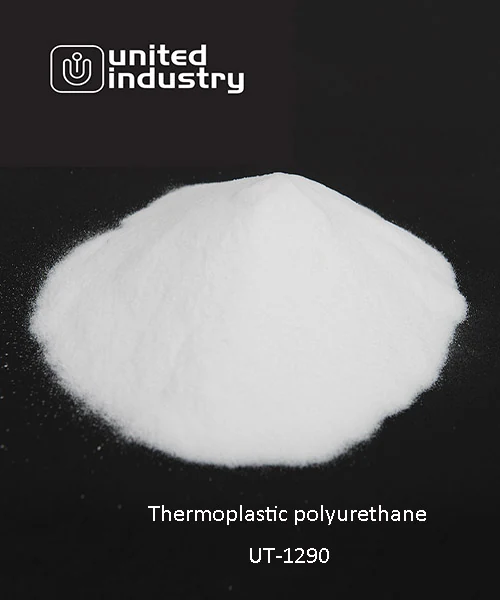 Thermoplastic Polyurethane Hot Melt Adhesives
Thermoplastic Polyurethane Powder UT-1290
Aliphatic polyester TPU powder for high elasticity transfers with better colour fastness
View Grade Data
Thermoplastic Polyurethane Hot Melt Adhesives
Thermoplastic Polyurethane Powder UT-1290
Aliphatic polyester TPU powder for high elasticity transfers with better colour fastness
View Grade Data
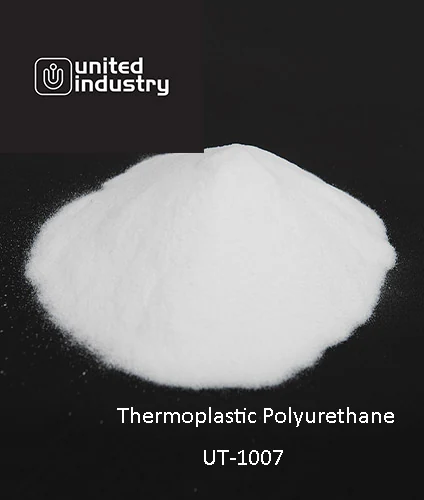 Thermoplastic Polyurethane Hot Melt Adhesives
Thermoplastic Polyurethane Powder UT-1007
Soft low melting TPU powder for screen heat transfer printing and shoe material
View Grade Data
Thermoplastic Polyurethane Hot Melt Adhesives
Thermoplastic Polyurethane Powder UT-1007
Soft low melting TPU powder for screen heat transfer printing and shoe material
View Grade Data
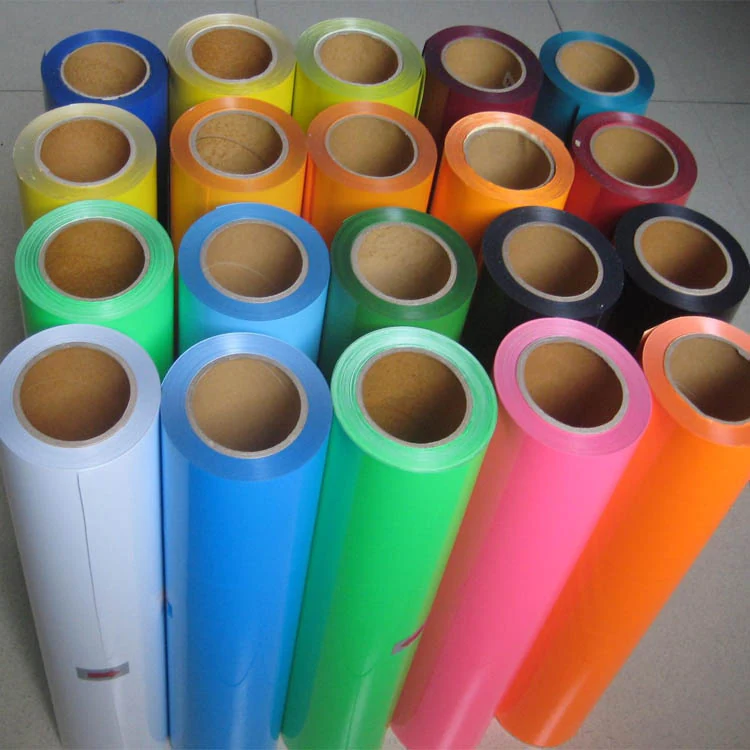 Thermoplastic Adhesive Film
Transfer Hot Melt Film
Wash resistant transfer film for fashion and sports suit heat transfer printing
View Grade Data
Thermoplastic Adhesive Film
Transfer Hot Melt Film
Wash resistant transfer film for fashion and sports suit heat transfer printing
View Grade DataQuestions About This Application Note
Is this a named customer project
No. This is an application reference built from the published process data for the grades named on this page. It describes a typical setup rather than a specific customer project, so treat the parameters as a starting point for your own trial.
Can you supply these grades for a trial
Yes. Sample requests are handled by email — state your substrates and process temperature limits.
Will the same parameters work on my line
Treat them as a starting point. Press condition, substrate and geometry all shift the window, which is why a trial comes before a production order.
Which grade should I start with
The products listed on this page are the ones this application uses. If none fits, tell us the joint and we will look wider.
Have A Similar Joint To Solve
Send the substrates, the service temperature and the process limits of your line. We will say which grade to trial and what to watch for.