
How To Choose Hot Melt Powder Particle Size
Particle size decides whether powder passes your mesh cleanly and how much adhesive ends up on the substrate. Pick the fraction before you pick anything else.
Why The Fraction Matters More Than The Brand
A hot melt powder has two independent properties: what the polymer is, and how finely it is cut. Most complaints that sound like adhesive problems — blocked screens, dusty scatter heads, thin deposits, patchy wash results — are the second property being wrong while the first is perfectly fine.
Changing polymer to fix a sizing problem wastes a trial and usually introduces a new issue.
The Standard Fractions
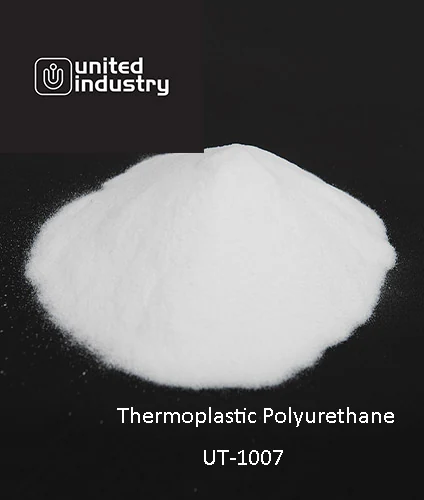
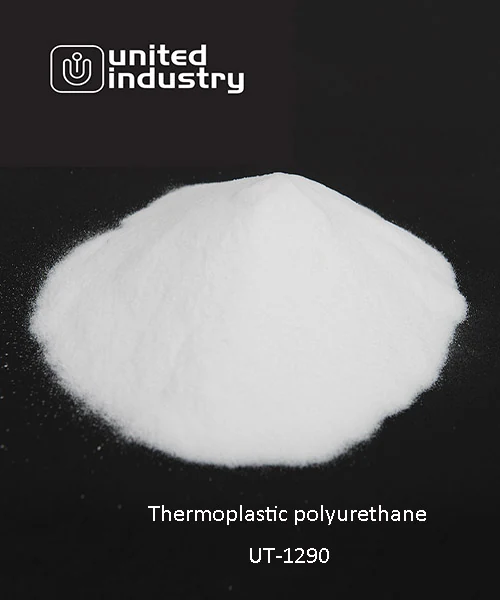
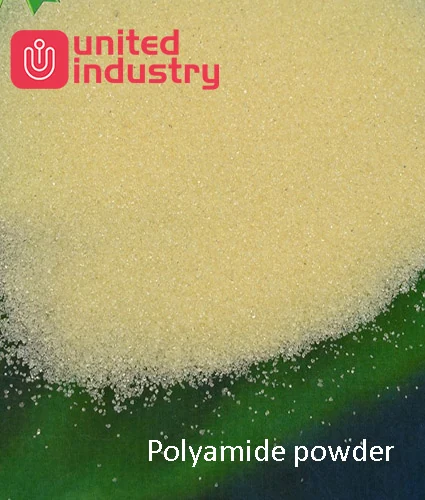
The TPU powders UT-1007 and UT-1290 are supplied in 0-80, 80-180, 100-300 and 200-500 micron. The polyamide lamination powder is supplied in 0-80, 80-170 and 180-420 micron, or as requirement. Where none of the standard cuts suits a line, we cut to requirement rather than asking the line to change.
See Thermoplastic Polyurethane Powder UT-1007
Matching Fraction To Mesh
Fine fractions suit fine mesh and thin deposits; coarse fractions suit heavier deposits and open screens. A powder that is too fine for the process blows around the scatter head and drifts; a powder too coarse for the mesh will not pass at all, or passes unevenly and leaves gaps that show up in the wash test.
Fraction And Coat Weight
Coarser fractions lay down more adhesive per unit area at the same coverage. If a wash test fails marginally, moving one fraction coarser is often a smaller change than raising press temperature — and it does not risk marking the fabric.
Storage Is Part Of The Specification
Damp powder clumps, and clumped powder behaves like a much coarser cut. Both polyamide and TPU powders should be kept sealed and dry. A line that suddenly starts blocking screens after a humid week is usually looking at a storage problem, not a supply problem.
A Short Ordering Checklist
List every mesh count in use. Assign a fraction to each. Order by fraction as well as by grade name. Keep fractions separated and sealed. Re-run the wash test after any change of fraction, because the deposit weight has changed even though the polymer has not.
| Powder | Standard fractions | Typical use |
|---|---|---|
| UT-1007 TPU | 0-80, 80-180, 100-300, 200-500 micron | Screen transfer printing, shoe material |
| UT-1290 TPU | 0-80, 80-180, 100-300, 200-500 micron | High elasticity and colour fast transfers |
| Polyamide powder | 0-80, 80-170, 180-420 micron | Lamination, heat transfer, shoe fabric |
Grades Discussed In This Guide
 Thermoplastic Polyurethane Hot Melt Adhesives
Thermoplastic Polyurethane Powder UT-1007
Soft low melting TPU powder for screen heat transfer printing and shoe material
View Grade Data
Thermoplastic Polyurethane Hot Melt Adhesives
Thermoplastic Polyurethane Powder UT-1007
Soft low melting TPU powder for screen heat transfer printing and shoe material
View Grade Data
 Thermoplastic Polyurethane Hot Melt Adhesives
Thermoplastic Polyurethane Powder UT-1290
Aliphatic polyester TPU powder for high elasticity transfers with better colour fastness
View Grade Data
Thermoplastic Polyurethane Hot Melt Adhesives
Thermoplastic Polyurethane Powder UT-1290
Aliphatic polyester TPU powder for high elasticity transfers with better colour fastness
View Grade Data
 Polyamide (PA) Hot Melt Adhesives
Polyamide Hot Melt Powder
High strength polyamide powder for textile lamination and shoe fabric bonding
View Grade Data
Polyamide (PA) Hot Melt Adhesives
Polyamide Hot Melt Powder
High strength polyamide powder for textile lamination and shoe fabric bonding
View Grade DataRelated Guides
Time Temperature And Pressure In Heat Transfer Printing
Three key components decide every heat press result. Every heat transfer material has its own instructions for all three, and most failures are one of them being wrong.
Comparison GuidePolyamide Versus TPU Versus Copolyester For Heat Applied Adhesives
Three polymers, three different questions. Strength, stretch or wash — pick the one that decides your failure mode and the rest follows.
Questions On This Topic
Which fraction is best for fine screen printing
The finest available, 0-80 micron, for fine mesh and thin deposits.
Can you cut a size that is not on the list
Yes. The polyamide powder is listed as available in the standard fractions or as requirement, and the TPU fractions can be cut too.
Does fraction change the melting range
No. The melting range belongs to the polymer, not the cut. What changes is how the powder handles and how much lands on the substrate.
Why has my powder started clumping
Moisture. Keep it sealed and dry — clumped powder behaves like a coarser fraction and blocks fine screens.
Apply This To Your Own Line
Send the substrates, the service temperature and the process limits. A grade recommendation is usually one email, not a meeting.