
Matching Transfer Powder Fraction To Screen Mesh
Most transfer powder complaints are not about the polymer. They are about a particle fraction that does not suit the mesh already on the line.
What The Assembly Has To Survive
A printer running several mesh counts keeps one powder in stock. On the fine mesh it blocks; on the coarse mesh the deposit is too thin and the wash test fails. The polymer is correct; the cut is not.
Why The Obvious Approach Fails
- Fine powder blocks a fine screen and blows around the scatter head
- Coarse powder leaves a thin, uneven deposit on a fine mesh
- Buying one fraction for every job guarantees that most jobs are compromised
- Damp powder clumps and makes both problems worse
Grade Selection And Why
Four standard fractions rather than one: 0-80, 80-180, 100-300 and 200-500 micron on the TPU powders, and 0-80, 80-170 and 180-420 micron on the polyamide lamination powder — with a custom cut where none of them fits.
How The Job Runs
Step 01
List every mesh count actually in use on the line
Step 02
Assign a fraction to each: fine fractions for fine mesh and thin deposits, coarse for heavy deposits
Step 03
Order by fraction rather than by product name alone
Step 04
Keep each fraction sealed and dry between runs
Step 05
Re-run the wash test after any fraction change
Quality Control
Deposit weight per unit area and wash resistance on the production fabric. Keep the polymer fixed while changing the fraction so the variable under test is only the cut.
Result
The screen stops blocking and the deposit weight becomes repeatable, without changing the mesh or the press.
Customer Benefit
Fewer reprints, and the adhesive stops being blamed for a sizing problem.
Products In This Application Note
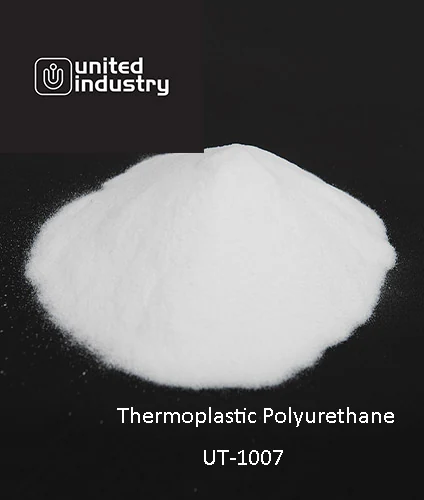 Thermoplastic Polyurethane Hot Melt Adhesives
Thermoplastic Polyurethane Powder UT-1007
Soft low melting TPU powder for screen heat transfer printing and shoe material
View Grade Data
Thermoplastic Polyurethane Hot Melt Adhesives
Thermoplastic Polyurethane Powder UT-1007
Soft low melting TPU powder for screen heat transfer printing and shoe material
View Grade Data
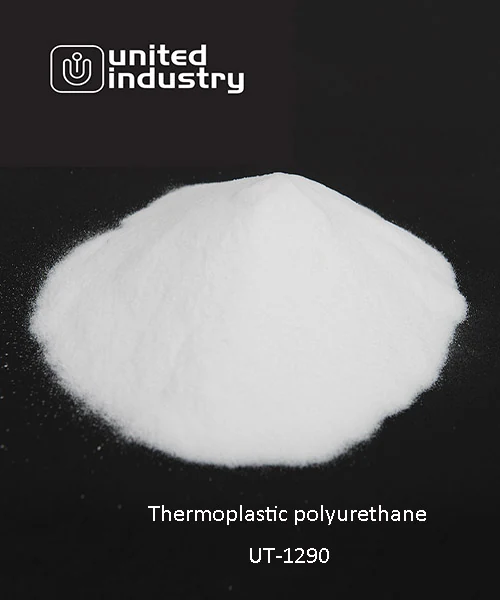 Thermoplastic Polyurethane Hot Melt Adhesives
Thermoplastic Polyurethane Powder UT-1290
Aliphatic polyester TPU powder for high elasticity transfers with better colour fastness
View Grade Data
Thermoplastic Polyurethane Hot Melt Adhesives
Thermoplastic Polyurethane Powder UT-1290
Aliphatic polyester TPU powder for high elasticity transfers with better colour fastness
View Grade Data
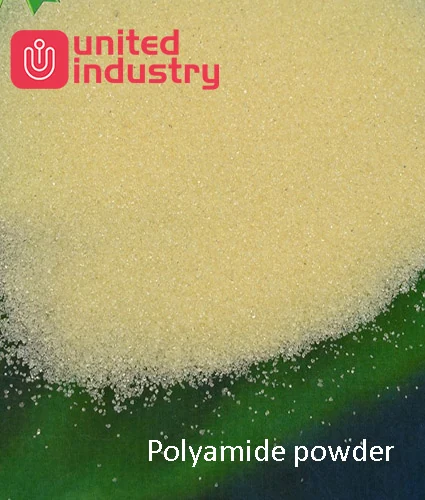 Polyamide (PA) Hot Melt Adhesives
Polyamide Hot Melt Powder
High strength polyamide powder for textile lamination and shoe fabric bonding
View Grade Data
Polyamide (PA) Hot Melt Adhesives
Polyamide Hot Melt Powder
High strength polyamide powder for textile lamination and shoe fabric bonding
View Grade DataQuestions About This Application Note
Is this a named customer project
No. This is an application reference built from the published process data for the grades named on this page. It describes a typical setup rather than a specific customer project, so treat the parameters as a starting point for your own trial.
Can you supply these grades for a trial
Yes. Sample requests are handled by email — state your substrates and process temperature limits.
Will the same parameters work on my line
Treat them as a starting point. Press condition, substrate and geometry all shift the window, which is why a trial comes before a production order.
Which grade should I start with
The products listed on this page are the ones this application uses. If none fits, tell us the joint and we will look wider.
Have A Similar Joint To Solve
Send the substrates, the service temperature and the process limits of your line. We will say which grade to trial and what to watch for.