
Low Pressure Molding Of Electronics A Practical Process Guide
Low pressure molding encapsulates fragile components in 8 to 50 seconds with no chemical reaction. Here is what the process does, what it needs and where it fits against potting.
What The Process Is
Low pressure molding is a moulding process using hot melt adhesives. It achieves superior sealing and better protection of electrical and electronic components with higher productivity. The purpose is to protect electronics against moisture, dust, dirt and vibration.
The defining features are consistent: it encapsulates fragile and delicate components, causes no damage to components, is not chemically reactive, is a simple and clean process, has fast cycle times of 8 to 50 seconds, and it allows flexible and miniaturised product design.
Why Low Pressure Matters
It is the low pressure applied during the moulding process that prevents damage to the sensitive electronic components and elements. Standard injection moulding pressure would displace wire bonds, crack ceramic components and lift fine pitch parts off the board.
This is also the reason the material is a hot melt rather than an engineering thermoplastic: the melt viscosity is low enough to fill the cavity at a pressure the assembly survives.
The Three Main Application Groups
Electronic component encapsulation is the first, protecting the board itself. Connector potting is the second — hot melts are used for sealing the plug and also for cable strain relief. Grommet injection moulded in place is the third, which eliminates the time-consuming process of slipping the grommet on, a step that can cause repetitive strain injury; the moulding can also include the strain relief.
Choosing The Resin
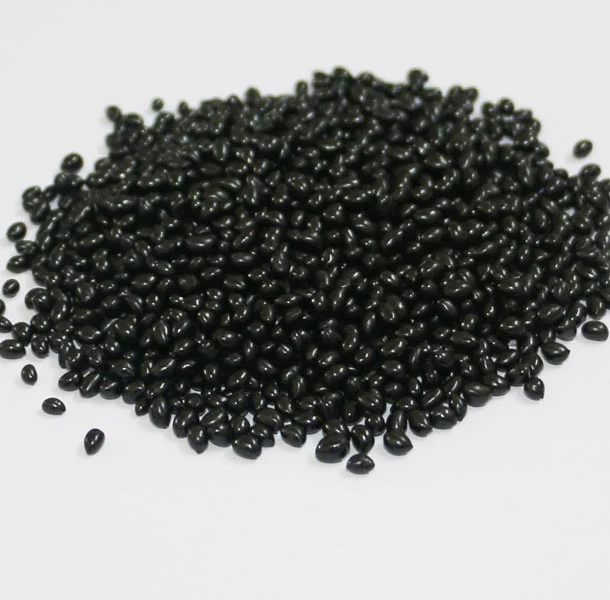
Amber polyamide resin is a thermoplastic hot melt based on natural fatty acids. It shows good adhesion to plastics like PA 6.6, ABS and PVC, low temperature flexibility, a wide service temperature range and superior moulding properties. Black polyamide resin performs the same and simply hides the assembly, which gives more options in the finished product. Polyolefin resin is the alternative where the housing is PP, PE or PET — it has superior adhesion to those, with low hardness, low temperature flexibility and a wide service temperature range.
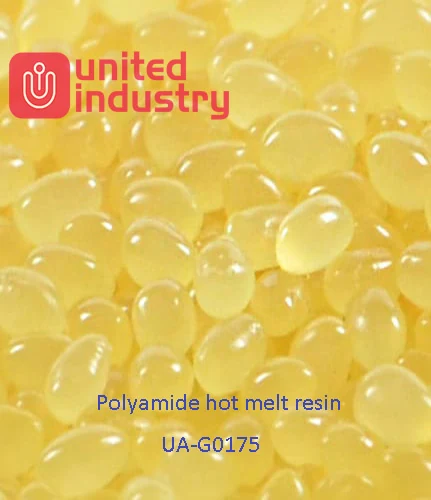
Between the two polyamide grades listed here, viscosity is the separator: UA-G182C at 5000-7000 mPa.s at 210 C for thin wall encapsulation, UA-G0175 at 18000 mPa.s where a thicker wall or a standing bead is needed.
See Black Polyamide Hot Melt Resin UA-G182C
Automotive Electronics Applications
Low pressure molding can be applied to various automotive electronic systems and devices, such as tyre pressure monitoring systems (TPMS), PCBs for seat occupant sensors, belt lock sensors, ECUs for motorcycles, air quality sensors, antennas for RF devices and smart entry (E-Key) systems.
These share a profile: small, sensitive, and exposed to a temperature range far wider than a consumer product. Special polyamide hot melts are capable of passing the -45 C to +135 C temperature tests required in the electrical and electronic sector for the automobile industry.
Compared With Two-Part Potting
Potting cures chemically. That means a pot life, a mixing ratio, an exotherm, cure shrinkage onto the component, waste disposal, and fixtures occupied for the whole cure schedule. Low pressure molding sets on cooling in 8 to 50 seconds and is re-meltable, so a unit can be opened for failure analysis.
Potting still wins where the service temperature exceeds what a thermoplastic can hold. That is the honest boundary between the two processes.
Grades Discussed In This Guide
 Hot Melt Resin
Black Polyamide Hot Melt Resin UA-G182C
Black polyamide resin for low pressure moulding of automotive and electronic assemblies
View Grade Data
Hot Melt Resin
Black Polyamide Hot Melt Resin UA-G182C
Black polyamide resin for low pressure moulding of automotive and electronic assemblies
View Grade Data
 Hot Melt Resin
Polyamide Hot Melt Adhesive Resin UA-G0175
High viscosity polyamide resin for low pressure moulding and filter bonding
View Grade Data
Hot Melt Resin
Polyamide Hot Melt Adhesive Resin UA-G0175
High viscosity polyamide resin for low pressure moulding and filter bonding
View Grade DataRelated Guides
What Is A Thermoplastic Hot Melt Adhesive And When To Use One
Hot melts bond by cooling, not by curing. That single difference explains most of what they are good at and most of what they are not.
Comparison GuidePolyamide Versus TPU Versus Copolyester For Heat Applied Adhesives
Three polymers, three different questions. Strength, stretch or wash — pick the one that decides your failure mode and the rest follows.
Questions On This Topic
How fast is a low pressure moulding cycle
Typically 8 to 50 seconds, depending on shot weight and cooling.
Will the process damage a populated PCB
The low pressure applied during moulding is what prevents damage to sensitive components and elements — that is the point of the process.
Which resin for an ABS housing
Polyamide. It shows good adhesion to plastics like PA 6.6, ABS and PVC.
Which resin for a polypropylene housing
Polyolefin resin, which has superior adhesion to PP, PE and PET.
Can the encapsulation be opened later
Yes. It is thermoplastic, so it can be remelted, unlike a cured potting compound.
Apply This To Your Own Line
Send the substrates, the service temperature and the process limits. A grade recommendation is usually one email, not a meeting.