
Polyamide Versus TPU Versus Copolyester For Heat Applied Adhesives
Three polymers, three different questions. Strength, stretch or wash — pick the one that decides your failure mode and the rest follows.
The Decision In One Sentence Each
Polyamide when the bond must hold strength at temperature. Thermoplastic polyurethane when the bond must stretch. Copolyester when the bond must survive repeated laundering and elasticity is not required.
Everything below is detail on those three sentences.
Polyamide — The Strength And Heat Grade
PA adhesives are specially designed for the highest bonding strength requirement, with easy processing and a wide application range, which together give an outstanding cost economy. They hold very high heat stability and stay reliable at low temperature, and special grades pass -45 C to +135 C automotive electronic testing.
Our polyamide lamination powder melts at 105-120 C with high viscosity, supplied in 0-80, 80-170 and 180-420 micron fractions. The trade-off is stiffness: polyamide does not stretch the way TPU does, so it is the wrong choice under a print on swimwear.
TPU — The Elasticity And Hand Feel Grade
TPU adhesive powders are high end, combining extreme elasticity with a soft touch, leading to a transfer that will outlast the garment. TPU also has a wide heated temperature range in process.
UT-1007 begins to flow at 95 C with a melting range of 100-125 C; UT-1290 begins at 100 C with a range of 105-130 C and is aliphatic polyester based for better colour fastness. Both have a density of 1.2 g/cm3, an MFR of 20 g/10 min at 150 C and 2.16 kg, and four particle fractions. Both bond well to PVC, PU, fabric and genuine leather.
See Thermoplastic Polyurethane Powder UT-1007
Copolyester — The Wash Resistance Grade
PES adhesives are in big demand for applications of high bonding strength and water wash resistance, and are recommended where elasticity is not so much required. In footwear the same chemistry appears as the copolyester counter adhesive, chosen because it softens at a lower temperature than polyamide and is therefore kinder to heat sensitive uppers.
See Copolyester Shoe Counter Adhesive
A Practical Selection Table
Use the failure you are trying to avoid as the entry point rather than the substrate.
| If the failure is | Choose | Typical grade |
|---|---|---|
| The transfer cracks when stretched | TPU | UT-1007 or UT-1290 powder |
| The edge lifts after industrial washing | PES | Copolyester powder or film |
| The joint peels under load or at temperature | PA | Polyamide hot melt powder |
| Pale prints yellow in storage | Aliphatic TPU | UT-1290 powder |
| The upper marks at lasting temperature | PES | Copolyester counter adhesive |
| The counter loses shape in wear | PA | Polyamide back counter adhesive |
Grades Discussed In This Guide
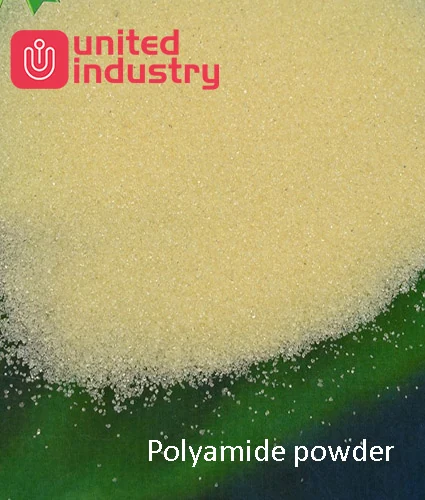 Polyamide (PA) Hot Melt Adhesives
Polyamide Hot Melt Powder
High strength polyamide powder for textile lamination and shoe fabric bonding
View Grade Data
Polyamide (PA) Hot Melt Adhesives
Polyamide Hot Melt Powder
High strength polyamide powder for textile lamination and shoe fabric bonding
View Grade Data
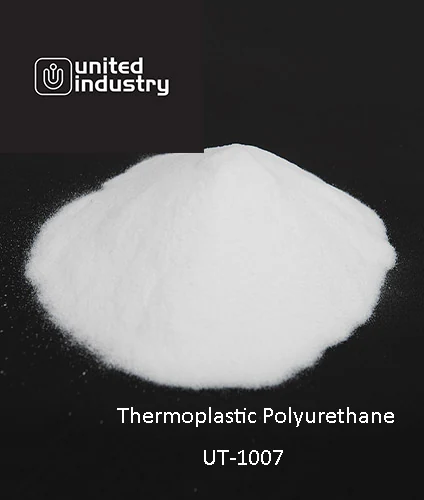 Thermoplastic Polyurethane Hot Melt Adhesives
Thermoplastic Polyurethane Powder UT-1007
Soft low melting TPU powder for screen heat transfer printing and shoe material
View Grade Data
Thermoplastic Polyurethane Hot Melt Adhesives
Thermoplastic Polyurethane Powder UT-1007
Soft low melting TPU powder for screen heat transfer printing and shoe material
View Grade Data
 Shoes Hot Melt Adhesives
Copolyester Shoe Counter Adhesive
Copolyester counter adhesive for toe puffs counters and lining bonding
View Grade Data
Shoes Hot Melt Adhesives
Copolyester Shoe Counter Adhesive
Copolyester counter adhesive for toe puffs counters and lining bonding
View Grade DataRelated Guides
What Is A Thermoplastic Hot Melt Adhesive And When To Use One
Hot melts bond by cooling, not by curing. That single difference explains most of what they are good at and most of what they are not.
Buying GuideHow To Choose Hot Melt Powder Particle Size
Particle size decides whether powder passes your mesh cleanly and how much adhesive ends up on the substrate. Pick the fraction before you pick anything else.
Questions On This Topic
Can I use one polymer for everything
You can, and most lines that do are compromising on at least one job. The three failure modes pull in different directions.
Which has the widest processing window
TPU has a wide heated temperature range in process, which is part of why it is forgiving on mixed lines.
Is polyamide always stronger than copolyester
Polyamide is the grade specified for the highest bonding strength requirement. Copolyester is specified where wash resistance prevails, which is a different test.
Do you supply all three
Yes — polyamide, thermoplastic polyurethane and copolyester, in powder and film, plus polyolefin in resin form.
Apply This To Your Own Line
Send the substrates, the service temperature and the process limits. A grade recommendation is usually one email, not a meeting.