
PU Foam Guns
Ten PU foam guns from a 125 g plastic body to a chrome-plated metal gun, with PTFE-coated and standard barrels
Canister foam guns built around the one thing that kills them, cured foam in the barrel
Everything about a foam gun's service life comes down to what happens between uses. Foam cures in the barrel, the gun is thrown away, and the real cost of foaming is gun replacement rather than canisters. The ten guns in this range attack that directly with coated barrels, sealing tail plugs and metal valve assemblies.
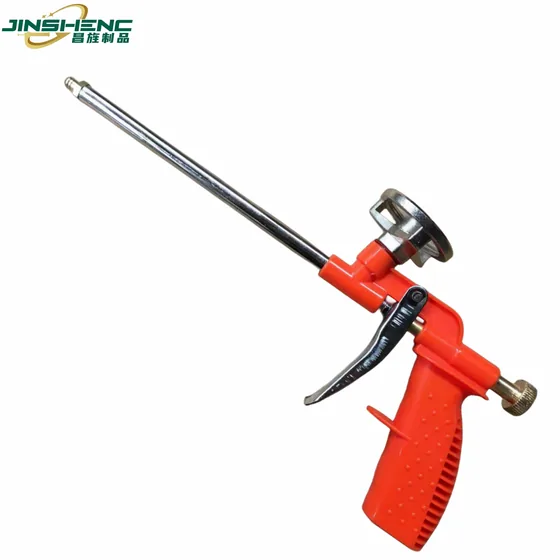
The JS8621-D barrel is PTFE coated inside and outside, so foam does not adhere and solvent flushing is not required after every use. For a crew that will not clean tools, this is the difference between a season and a week.
Air in the barrel cures the residue. Most models in the range take an aluminium alloy tail plug that is tightened after use to cut airflow, which slows curing and buys time before the next job.
A blocked nozzle is a scrapped gun. Copper nozzles on JS8621-B, JS8621-D and JS8621-E, aluminium on JS8621-C and alloy on JS8621-A are all specified to keep flow smooth rather than to save a few cents.
The canister thread carries pressure. JS8621-B, JS8621-C and JS8621-D use an aluminium alloy locking mechanism with a thickened rotary valve instead of a plastic collar.
Ten PU foam guns from a 125 g plastic body to a chrome-plated metal gun, with PTFE-coated and standard barrels
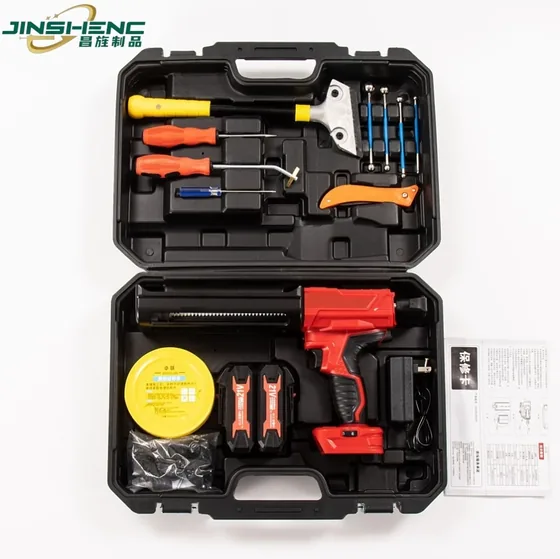
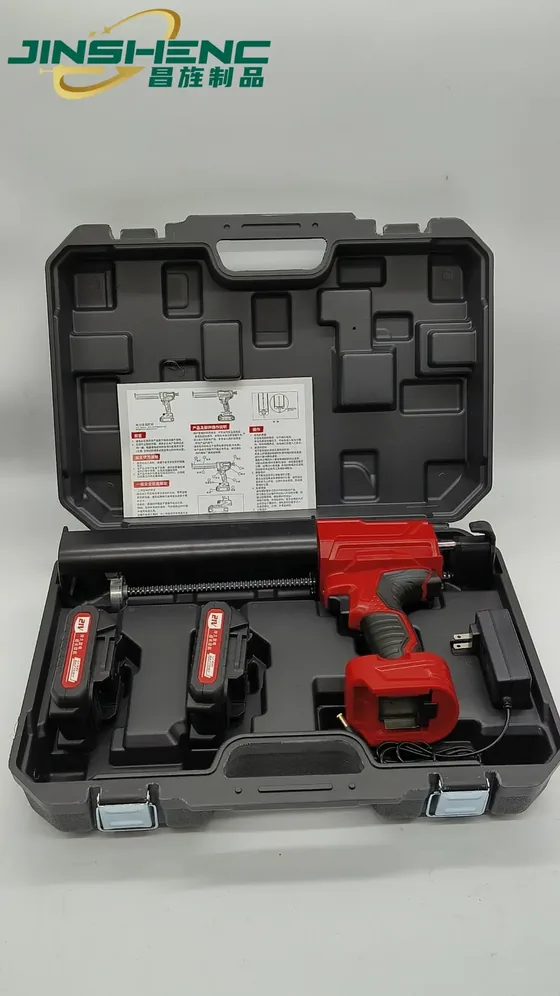
Air-driven 9, 15 and 18 inch guns and 16 V and 21 V lithium battery guns up to 6500 N thrust
If guns get flushed, a standard barrel is fine and cheaper. If they do not, the PTFE coated barrel pays for itself in a month.
125-190 g plastic for light and occasional work, 210-350 g metal for daily site use with adjustable output and better sealing.
Copper, aluminium or alloy nozzle, and metal or plastic locking mechanism, are the two choices that decide service life.
Thread fit and flow both depend on the canister. Samples go out so you can test with the product you actually sell.
Many foam brands bundle a gun with the canister. Colour, logo and blister or carton packing are all specified at order.
The ratio is built into the gun's linkage, so a 1:1 gun cannot dispense a 1:4 product. Match the gun to the cartridge, every time.
Foam guns are almost never worn out. They are written off because foam cured inside the barrel. Two specification choices change that.
How to build a mixed order from published carton dimensions, and what the minimum order quantity actually applies to.
It stops foam adhering to the barrel wall, so routine cleaning solvent is not needed after each use. Tightening the tail plug afterwards to cut airflow is still the right habit and is what the aluminium alloy plug is for.
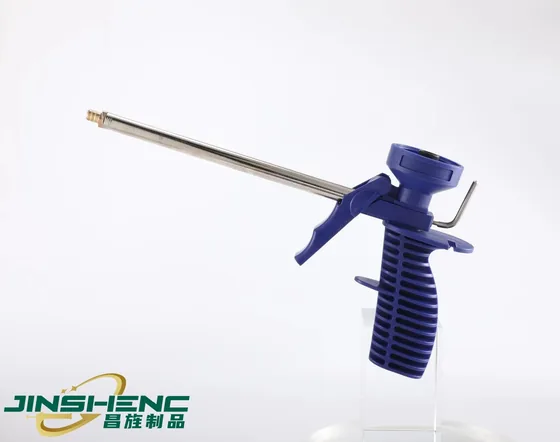
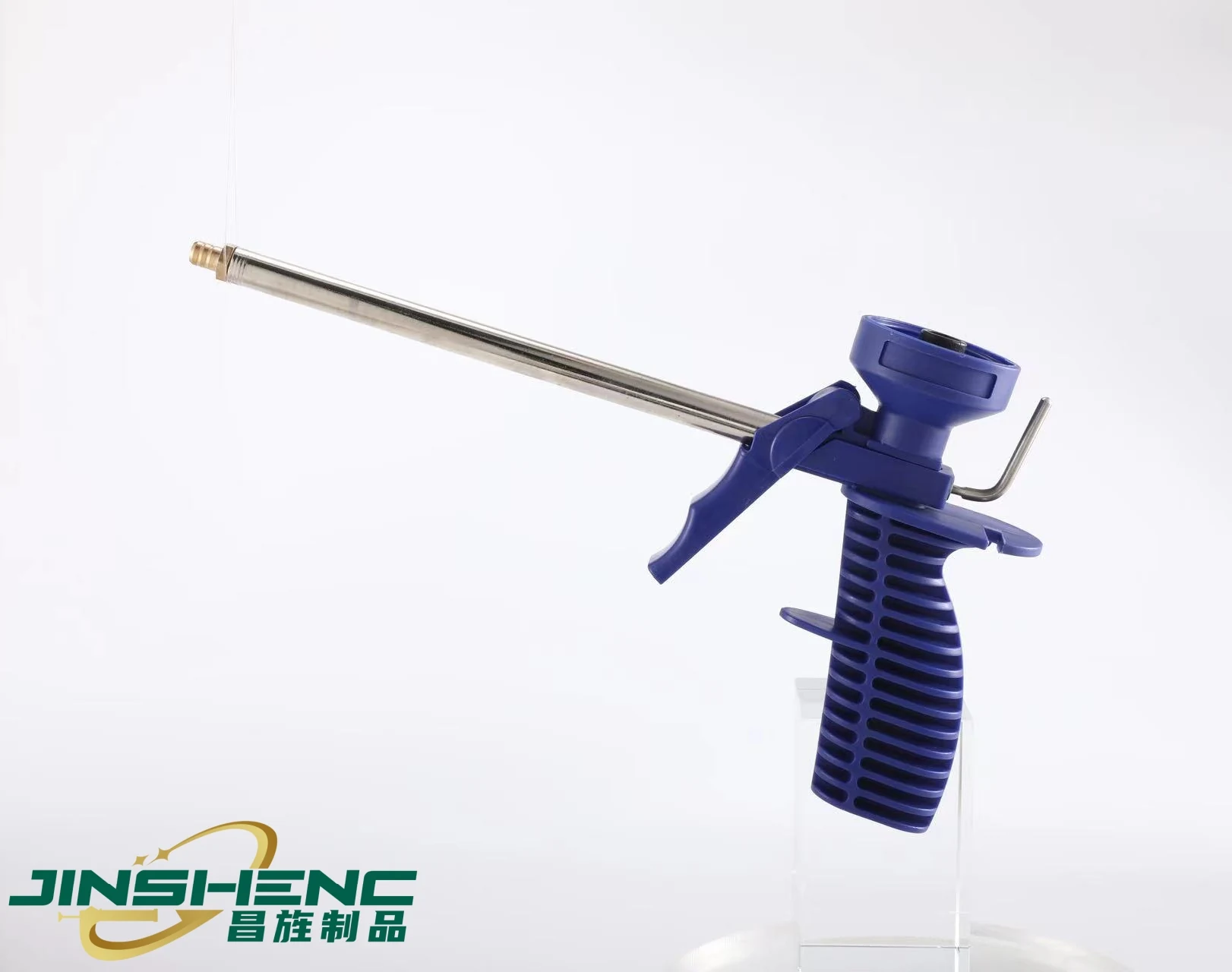
JS8621 Blue Plastic Foam Gun at 125 g, packed two per poly bag and 60 per carton. JS8621-A at 130 g adds an alloy nozzle and a carbon steel canister lock.
On the metal-bodied models, yes. An anti-slip threaded adjuster sets foam flow independently of trigger position, so a narrow gap gets a narrow bead rather than relying on operator feel.
JS8621-F is offered with either a silver tube or a Teflon coated tube on the same red handle, in addition to JS8621-D. Ask us which models can be coated for your order.
Most models are two pieces per inner box and 40 per carton at 38 x 34 x 52 cm. The plastic JS8621 is two per poly bag and 60 per carton at 62.5 x 27 x 42 cm.
Tell us the products your crews use and the problems they keep hitting, and we will name models rather than categories.