
Safety And Buying Guide
Glass Suction Cup Load Ratings Explained
Horizontal and vertical suction are different numbers for good physical reasons. Reading the wrong one is how a lifter fails.
Every cup in our range publishes two load figures, horizontal suction and vertical suction, and they are never the same. Buyers who take the larger figure and apply it in the other orientation are the reason suction cups have a reputation for letting go.
Why There Are Two Numbers
A vacuum pad resists two different kinds of load. Lifting a panel that is lying flat pulls the pad straight off the glass, in tension. Carrying a panel upright loads the pad in shear, sliding along the surface. Rubber does not behave the same way in both, so the safe load is not the same in both.
| Model | Claws | Horizontal suction | Vertical suction | Net weight |
|---|---|---|---|---|
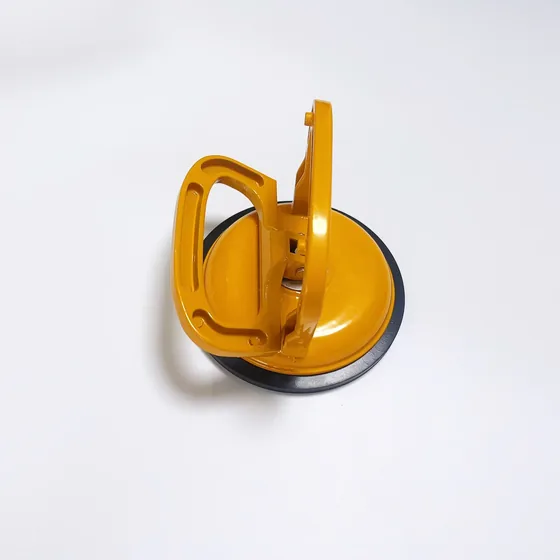
| JS8640 | 1 | 40 KG | 30 KG | 320 g |
| JS8641 | 1 | 50 KG | 30 KG | 425 g |
| JS8642 | 2 | 90 KG | 70 KG | 750 g |
| JS8642-1 | 2 | 100 KG | 120 KG | - |
| JS8642-4 | 2 | 140 KG | 120 KG | 1000 g |
| JS8642-5 | 2 | 180 KG | 150 KG | 1000 g |
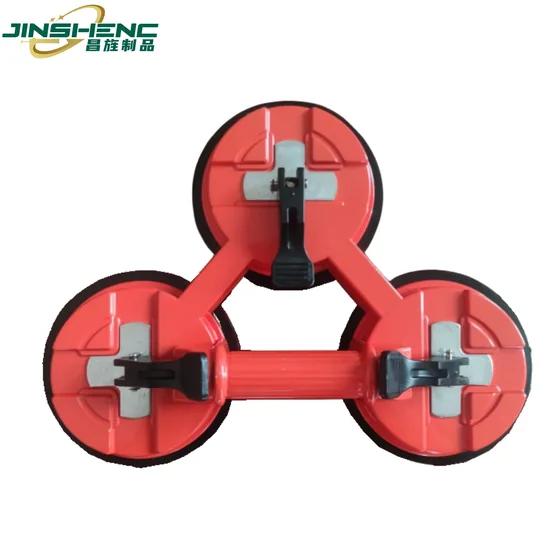
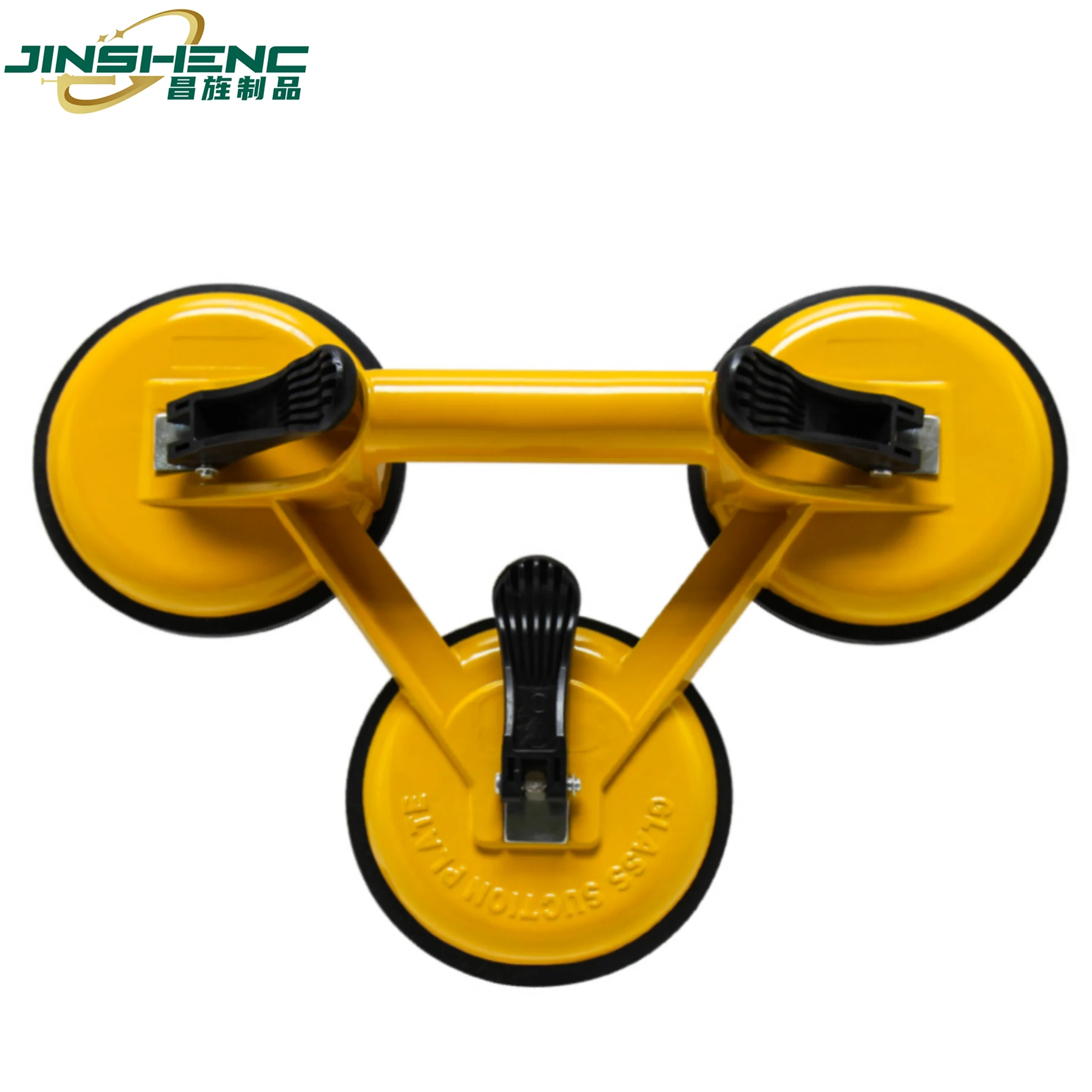
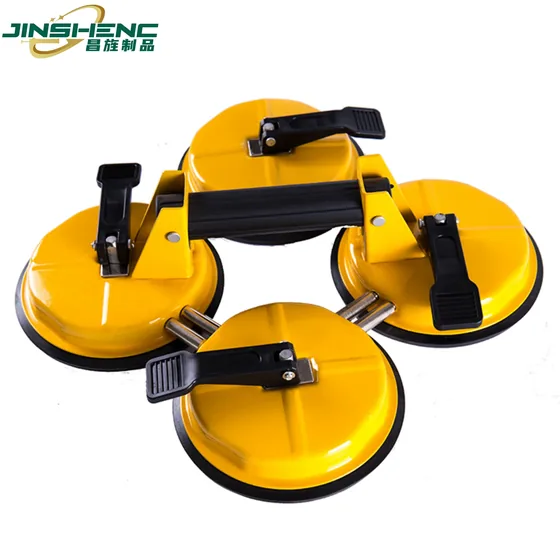
| JS8643 | 3 | 115 KG | 100 KG | 1050 g |
| JS8643-1 | 3 | 145 KG | 155 KG | - |
| JS8643-2 | 3 | 235 KG | 250 KG | - |
| JS8644 | 4 | 205 KG | 220 KG | - |
On the single and dual-claw models the horizontal figure is higher. On several of the articulating and three-claw models the vertical figure is higher, because the frame geometry changes how load reaches the pads. This is exactly why you cannot assume one number from the other.
Sizing A Cup Honestly
- Work out the panel weight, not the panel size.
- Decide the orientation it will actually be carried in, and use that column.
- Apply a margin. The published figure is a laboratory condition, not a site condition.
- Check the surface. These cups need a smooth, clean, non-porous surface to reach their rating.
- If the panel is curved or will be handled at an angle, specify an articulating model.
Anything that interrupts the seal derates the cup: dust, water, frost, a textured or coated surface, a fingerprint of silicone. None of that appears in a rating table, and all of it appears on a real site.
What Actually Wears Out
The pad. A vacuum lifter's body will outlast several pads, and a hardened pad that no longer conforms to the glass is the most common cause of a failure. Our pads are thickened nitrile rubber, compressed from odourless material and chosen for oil, abrasion and heat resistance; the three-claw models use a 7 mm pad.
Pads are available as spares, and for a rental fleet or a glass shop they should be ordered with the tools rather than after the first failure. Inspect for hardening, cracking and embedded grit, and replace on condition rather than on a schedule.
When To Choose An Articulating Model
A fixed cup needs a flat plane. If the work involves curved glass, angled setting, or lifting a panel and then rotating it, an articulating model earns its cost: JS8642-2 has an all-directional aluminium alloy knob, and JS8644 uses a four-claw iron alloy articulating link that grips at multiple angles.
One Thing We Will Not Claim
These figures are our own ratings. We hold no third-party lifting certification for these models, and we will not imply otherwise. If your market requires certified lifting equipment, tell us before you order so we can tell you honestly what documentation exists.
FAQ
Questions On This Guide
Which number do I use for carrying glass upright?
Vertical suction. For JS8643 that is 100 KG, not the 115 KG horizontal figure. Then apply a margin for surface condition.
Can I use these on textured or coated glass?
The ratings assume a smooth, clean, non-porous surface. On a textured or coated surface the pad may not seal fully and the rating does not apply. Test on the actual material before relying on it.
How often should pads be replaced?
On condition, not on a calendar. Replace when the rubber has hardened, cracked, or picked up embedded grit that stops it sealing. Pads are stocked as spare parts for every model.
Related products
Models Referenced In This Guide
Product families
Families This Guide Covers
Vacuum Glass Suction Cups
Single, dual, three and four-claw vacuum lifters rated from 30 KG to 250 KG vertical suction
Put This Into A Specification
Send us the job and we will translate it into model numbers, minimums and a carton plan.