
Maintenance Guide
Why PU Foam Guns Fail And What To Specify Instead
Foam guns are almost never worn out. They are written off because foam cured inside the barrel. Two specification choices change that.
Ask an insulation contractor how many foam guns they got through last year and the number will be higher than the wear on any of them justifies. Foam guns are not worn out, they are written off, and almost always for the same reason: polyurethane cured inside the barrel between one job and the next.
The Failure Mechanism
Canister foam cures on contact with moisture in the air. When a gun is put down with residue in the barrel and air reaching it, that residue sets. The next canister cannot push through it, the operator forces it, and the gun is finished. Cleaning solvent prevents it, but a crew at the end of a long day frequently does not use any.
Specification Choice One: A Barrel Foam Will Not Stick To
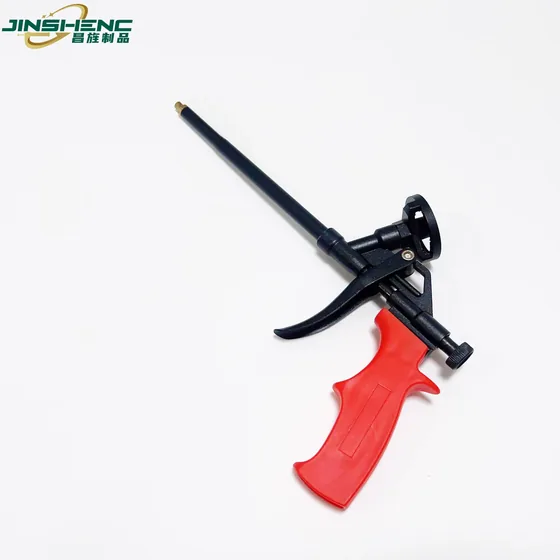
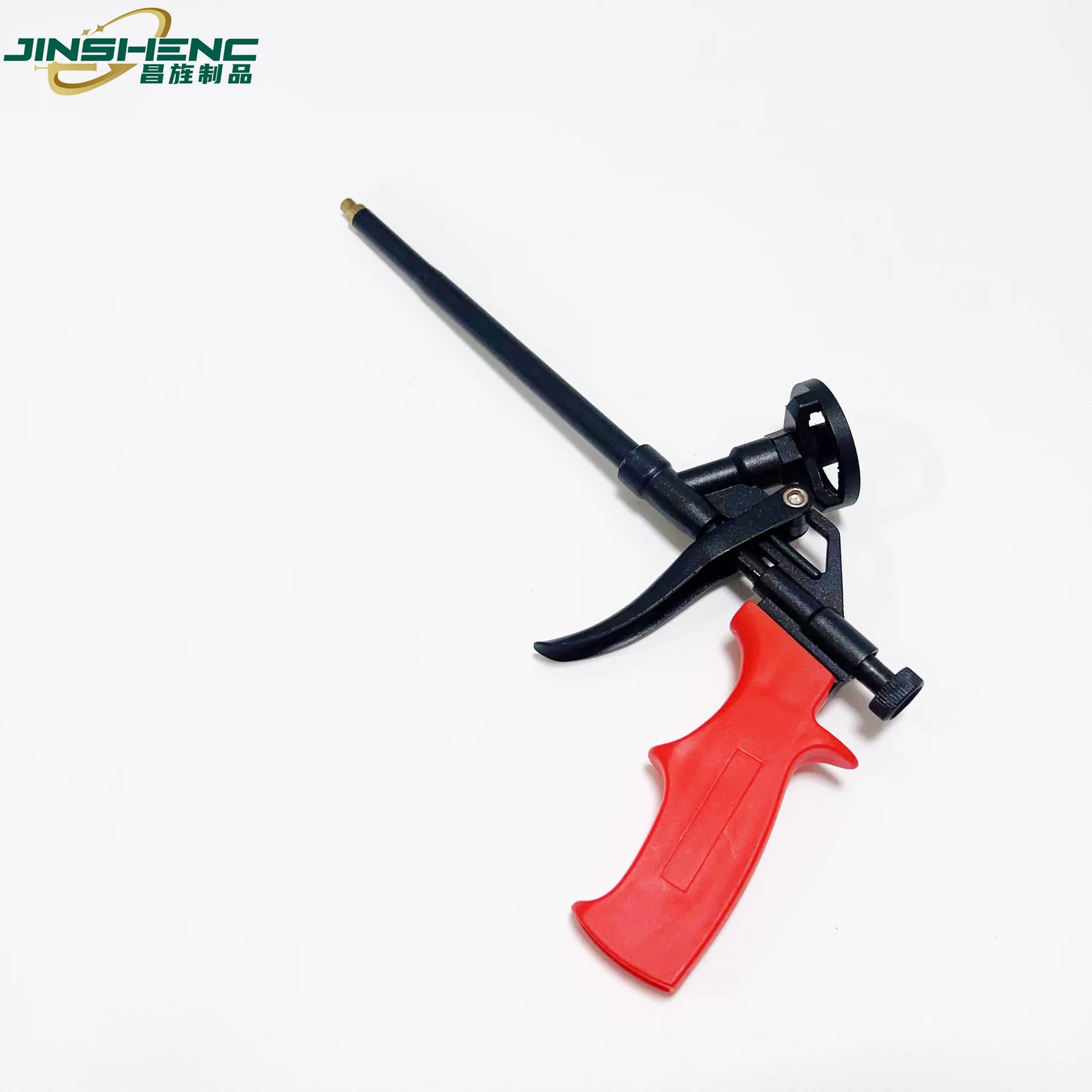
JS8621-D is PTFE coated inside and outside the barrel. Foam does not adhere to PTFE, so residue does not bond to the barrel wall and routine cleaning solvent is not required after each use. For a crew whose cleaning discipline is unreliable, this is the single change that most affects how many guns you buy next year.
The same gun pairs the coated barrel with a stainless steel barrel body, a copper nozzle and a nylon handle at 260 g. JS8621-F is also offered with either a silver tube or a Teflon coated tube on the same handle, so a coated barrel is available at more than one price point.
Specification Choice Two: Keep Air Out Between Jobs
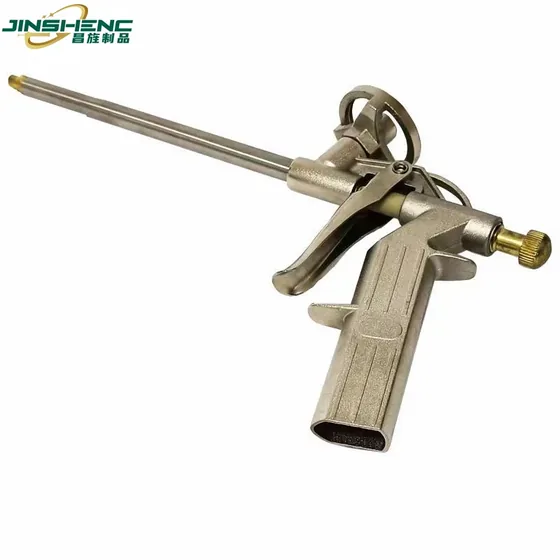
Most metal-bodied guns in the range take an aluminium alloy tail plug. Tightening it after use restricts airflow into the barrel, which slows the curing of whatever residue is in there and buys time before the next job. It is a ten-second habit that changes the outcome, and it only works if the plug is metal and seals properly.
The Other Two Things Worth Paying For
- Nozzle material. A blocked nozzle scraps a gun as effectively as a blocked barrel. Copper on JS8621-B, JS8621-D and JS8621-E; aluminium on JS8621-C; alloy on JS8621-A. All chosen for flow rather than for cost.
- Canister locking mechanism. This joint carries pressure. JS8621-B, JS8621-C and JS8621-D use an aluminium alloy locking mechanism with a thickened rotary valve rather than a plastic collar, and JS8621-A uses carbon steel.
A Site Routine That Works
- Leave the canister attached between jobs on the same day. An attached canister keeps the barrel pressurised and air out.
- Tighten the aluminium tail plug whenever the gun is set down for more than a few minutes.
- Set output at the adjuster rather than by feathering the trigger, so less foam sits in the nozzle.
- Flush with cleaner before the canister comes off, not after, and never leave an empty gun open overnight.
- On a PTFE coated gun, skip the routine flush but still tighten the plug.
If you supply contractors rather than end users, the honest sales argument is total cost. A coated gun at a higher unit price against three uncoated guns a year is an easy calculation for a buyer to check, and it is the kind of claim they will trust because they can test it.
Matching The Tier To The Customer
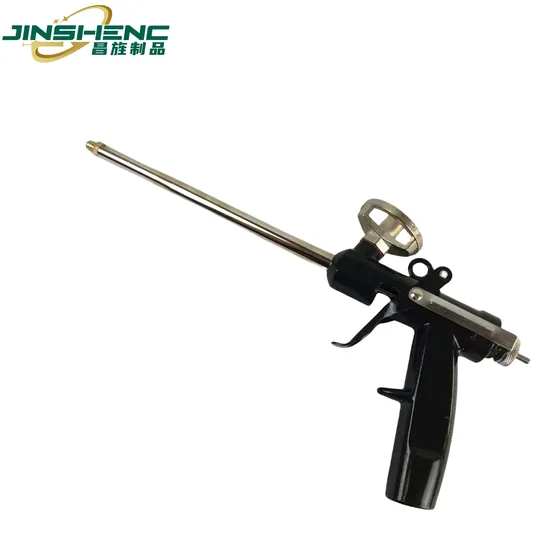
Plastic-bodied guns at 125 g to 190 g are for light and occasional use and should be priced as consumables. Metal bodies at 210 g to 350 g carry the adjustable output, the better sealing and the metal valve assemblies, and should be sold on service life. Sandblasted and chrome-plated JS8621-E sits at the top, resisting oxidation and rust and staying smooth enough to wipe clean.
FAQ
Questions On This Guide
Does a PTFE coated gun never need cleaning?
It removes the need for routine cleaning solvent after each use, because foam does not adhere to the barrel. Tightening the tail plug when the gun is set down is still the right habit.
Can existing models be retrofitted with a coated barrel?
Coating is applied in production, not retrofitted. JS8621-D and the coated version of JS8621-F are the models to order if you want it.
Do these guns fit standard canisters?
Yes, they use the standard threaded canister fitting. If your canister supplier uses a non-standard thread, send the specification and we will confirm before you order.
Related products
Models Referenced In This Guide
Product families
Families This Guide Covers
PU Foam Guns
Ten PU foam guns from a 125 g plastic body to a chrome-plated metal gun, with PTFE-coated and standard barrels
Put This Into A Specification
Send us the job and we will translate it into model numbers, minimums and a carton plan.