
PU Foam Guns
JS8621-C Plastic spray PU polyurethane foam gun
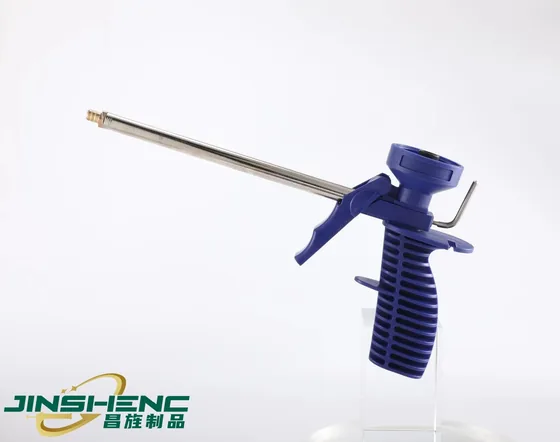
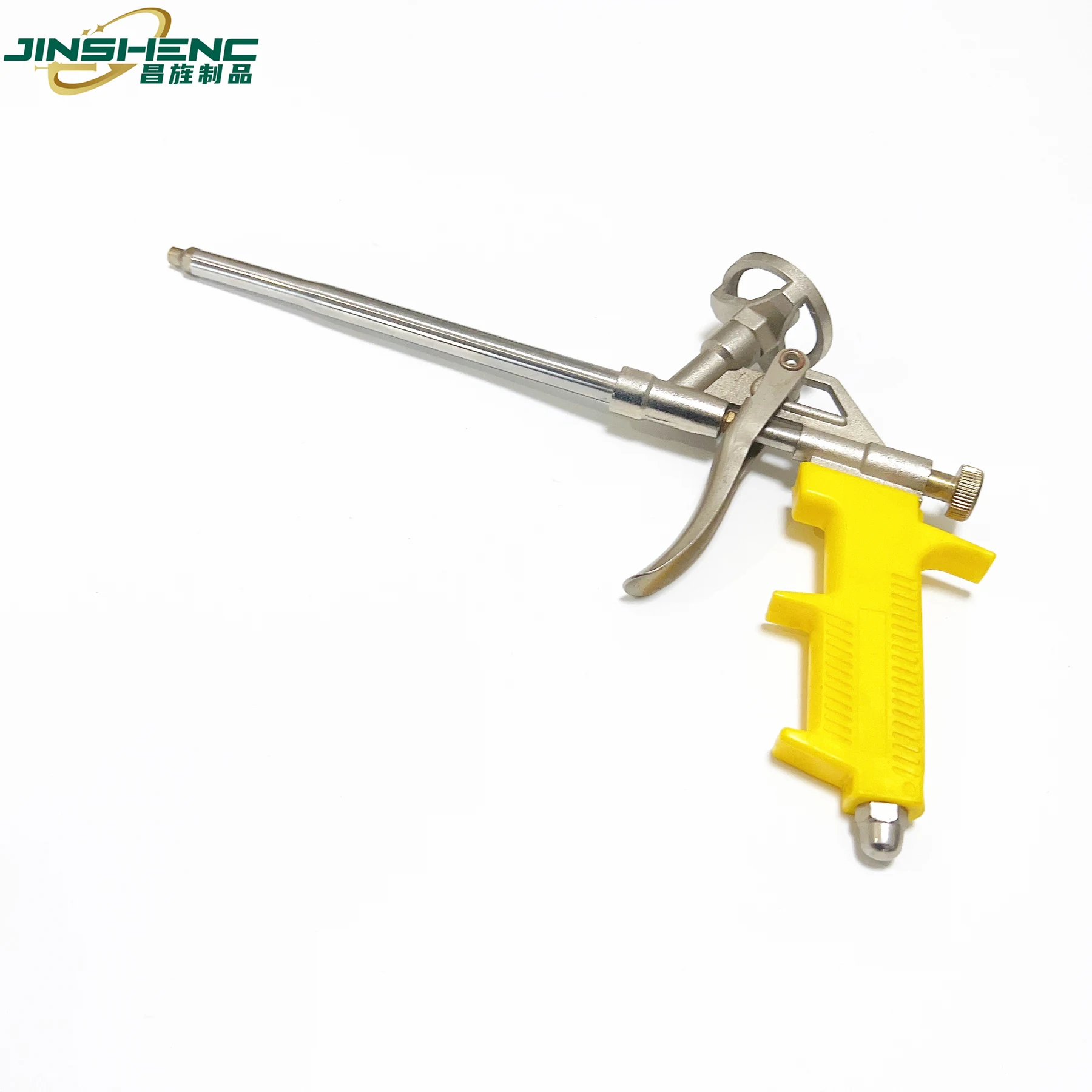
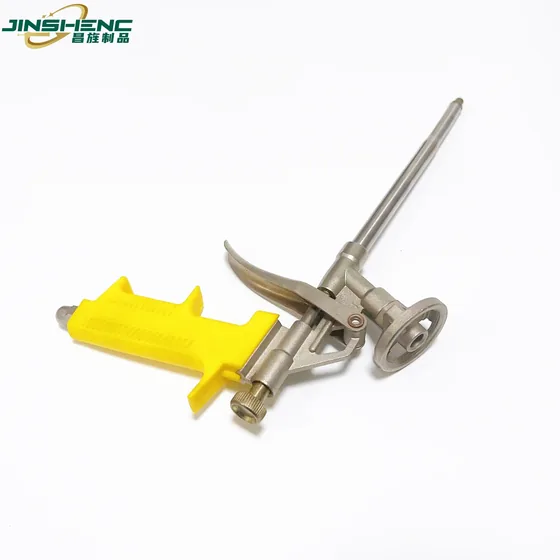
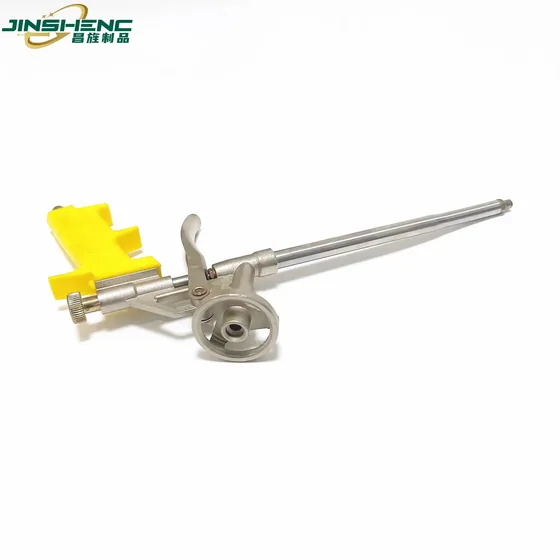
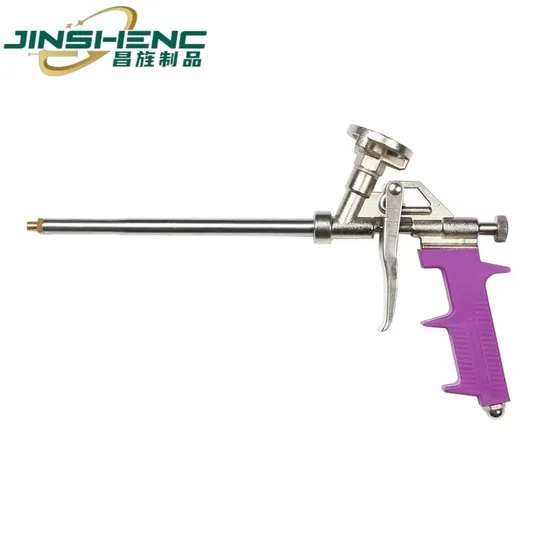
The first gun in the range with a metal barrel: a stainless steel barrel and an aluminium nozzle on a polypropylene handle, at 190 g, with an aluminium alloy locking mechanism and an aluminium alloy tail plug.
Product Overview
The first gun in the range with a metal barrel: a stainless steel barrel and an aluminium nozzle on a polypropylene handle, at 190 g, with an aluminium alloy locking mechanism and an aluminium alloy tail plug. The plastic handle keeps the cost down; everything that touches foam or pressure is metal.
Key benefits
Why Buyers Choose This Model
Stainless Steel Barrel
Durability and corrosion resistance where the foam actually runs, which is the difference between a gun that survives a season and one that does not.
Aluminium Alloy Tail Plug
Tightening the tail plug after use reduces air flow into the barrel, which slows curing of the residue inside and makes the next clean possible.
Aluminium Alloy Locking Mechanism
The canister joint carries pressure, and a metal locking mechanism rather than a plastic collar is what keeps it safe.
Polypropylene Handle
A deliberate cost choice: the handle does not touch foam or pressure, so it is the right place to save money.
Application scenarios
Where It Is Used
- Regular trade insulation and sealing work
- Crews who flush the gun but want metal where it counts
- Window and door perimeter foaming
- Distributor ranges bridging plastic and metal tiers
Who it is for
The Buyers This Model Suits
Regular Trade Users
Foams often enough to need a metal barrel but not often enough to need a coated one.
Distributors Bridging Tiers
This is the model between the plastic guns and the all-metal ones, and it makes the ladder make sense.
Installers Working To A Budget
Gets stainless barrel and metal valve assembly without paying for a metal handle.
Problems it solves
What It Fixes
Plastic Barrels Distorting
The barrel is where foam and pressure meet. Stainless steel there removes the most common weak point in a cheap gun.
Air Curing Residue Between Jobs
The aluminium tail plug is tightened after use to cut airflow, which slows the cure and buys time.
Plastic Collars On A Pressurised Joint
An aluminium alloy locking mechanism secures the canister properly.
Technical features
How It Is Built
Handle
The foam gun is equipped with a polypropylene handle, effectively reducing costs while maintaining usability.
Alloy Locking Mechanism
The aluminum alloy locking mechanism ensures secure attachment of foam canisters, enhancing safety and convenience.
Alloy Tail Plug
After application, tightening the aluminum alloy tail plug reduces air flow, facilitating easy cleaning for future use.
Ergonomic Wrench Design
The ergonomic wrench design provides excellent grip and comfort for prolonged tasks.
Specifications
Published Figures For This Model
Every value below comes from our own product specification. Where a figure is not published we leave it out rather than estimating it.
| Net Weight | 190g |
|---|---|
| Packing | 2PCS/inner box, 40pcs/ CTN |
| Color | yellow, or customized |
| Carton Size | 38*34*52 |
| Barrel | The stainless steel barrel guarantees durability and corrosion resistance, ensuring optimal performance over extended usage |
| Nozzle | The aluminum nozzle promotes smooth and precise adhesive flow, preventing blockages and ensuring accurate application |
| Colour options | yellow, or customized |
| Packing | 2PCS/inner box, 40pcs/ CTN |
| Minimum order | 2 000pcs for a customised version |
| Customisation | Colour, packing method, carton appearance and logo |
Materials and manufacturing
How This Model Is Made
Parts for the JS8621-C are produced in our own workshops in Jinli Town, Zhaoqing. This model uses both routes: its moulded components come off our five horizontal and three vertical injection moulding machines, and its metal parts come off our fifteen automatic punching machines, nine automatic lathes and three welding machines. Tooling is designed and cut in our own mould room, which is why a change to this model does not queue behind another factory's schedule.
Quality Control
- Every model is weighed against its declared net weight during production, so the carton weight on your packing list matches what arrives.
- Stamped parts are produced in house on 15 automatic punching machines and 9 automatic lathes, so dimensional consistency is controlled at source rather than inspected on arrival.
- Moulded parts come off 5 horizontal and 3 vertical injection moulding machines running up to 10,000 mould open-and-close cycles per day, with tooling maintained in our own mould room.
- The quality management system was certified to ISO 9001:2015 in August 2023, with a certificate valid to 31 July 2026.
- Cartons are counted against the packing list as they are loaded into the container at our own factory door.
Certifications
The quality management system was certified to ISO 9001:2015 in August 2023, under standard GB/T19001-2016, for the manufacture and sale of glass caulking guns and sealant guns. The certificate on file runs to 31 July 2026; ask us for the current renewal status before relying on it. A TUV Rheinland assessment was obtained in 2016.
Customisation Options
- Aluminium Tube Anodizing And Colouring: More than 10 colours available; the surface can be given a frosted texture.
- Aluminium Tube Painting: Up to 10 colours with customisable patterns.
- Aluminium Tube Laser Engraving: Engraved logos, text and patterns on stamped fittings and aluminium tubes.
- Self-Adhesive Logo Labels: Applied to the product in the position the buyer specifies.
- Multi-Colour Logo Printing: Paint screen printing in any colour, with several colours printed at once.
- Tag And Product Screen Printing: Screen printed tags and product markings, multi-colour capable.
Use guide
Getting The Best Out Of It
Step 1
Shake the canister and fit it with the aluminium alloy lock fully engaged.
Step 2
Keep the gun upright with the canister above so the valve stays fed.
Step 3
Fill to roughly half depth and allow the foam to expand into the gap.
Step 4
Flush with cleaner, then tighten the aluminium tail plug before setting the gun down.
Comparison
How It Compares In Our Range
The metal-barrel tier, differentiated by handle and nozzle material.
| JS8621-B | All-aluminium handle and a copper nozzle at 275 g, the next step up. |
|---|---|
| JS8621-D | PTFE coated barrel with a copper nozzle and nylon handle at 260 g. |
| JS8621-A | 130 g plastic body with an alloy nozzle, cheaper and lighter. |
FAQ
JS8621-C Questions
What is the barrel made of?
Stainless steel, for durability and corrosion resistance over extended use. The nozzle is aluminium and the handle is polypropylene.
What does the tail plug do?
Tightening it after application reduces air flow into the barrel, which slows the curing of foam residue and makes the gun easier to clean for the next job.
Why a plastic handle on a metal-barrel gun?
The handle does not contact foam or pressure, so a polypropylene handle reduces cost without affecting where the gun actually fails. JS8621-B is the all-aluminium alternative.
How is it packed?
Two pieces per inner box, 40 pieces per master carton at 38 x 34 x 52 cm. Stock colour is yellow.
What is the minimum order quantity?
2,000 pieces for a customised version, per colour.
Related products
Other Models In PU Foam Guns
Industries
Trades That Use This Model
Insulation And PU Foam Application
Canister foam guns built around the one thing that kills them, cured foam in the barrel
Window And Door Manufacturing
Glazing, perimeter foaming and gap filling for window and door plants and installers
Construction Sealing And Waterproofing
Cartridge, sausage and powered guns for joint sealing and waterproofing trades
Further reading
Guides That Cover This Model
Why PU Foam Guns Fail And What To Specify Instead
Foam guns are almost never worn out. They are written off because foam cured inside the barrel. Two specification choices change that.
Quote The JS8621-C
Send the quantity and your colour and packing requirements, and we will confirm the minimum and a production date.