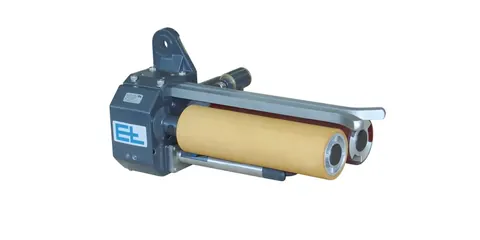
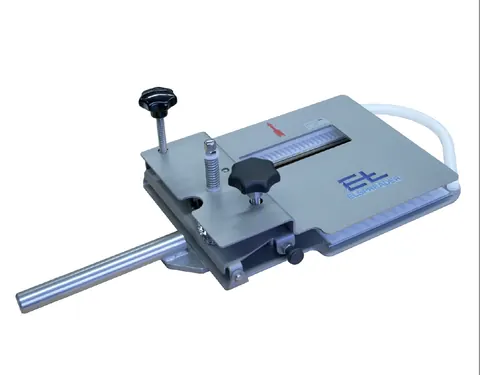
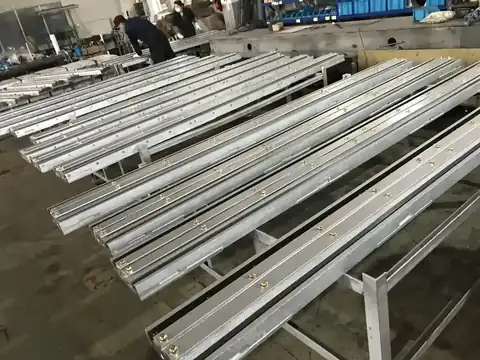
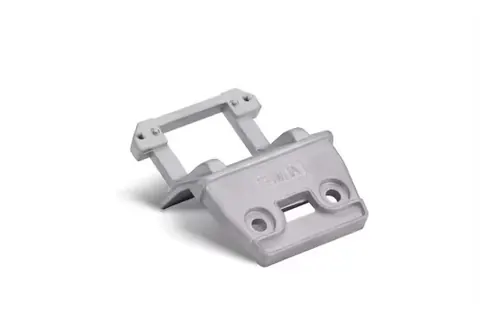
EHWHA Pin Plate Holder
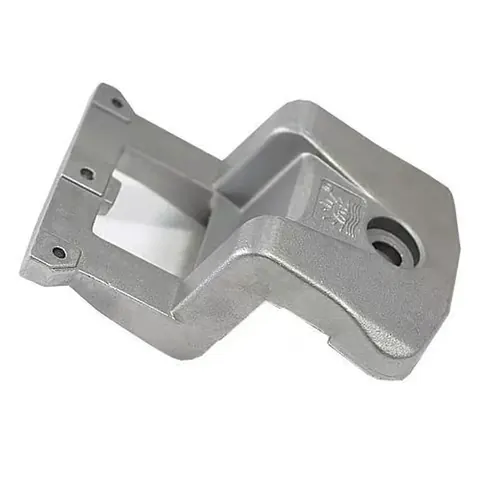
Pin plate holder matched to EHWHA frames, the part that carries the plate on the chain.
View Details
By Machine Brand
By Part Type
Wear Parts and Equipment
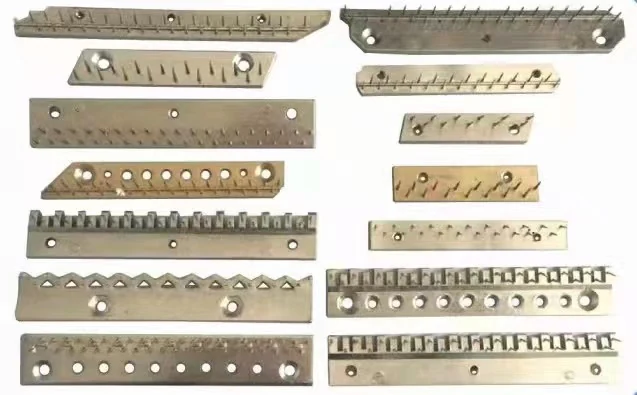
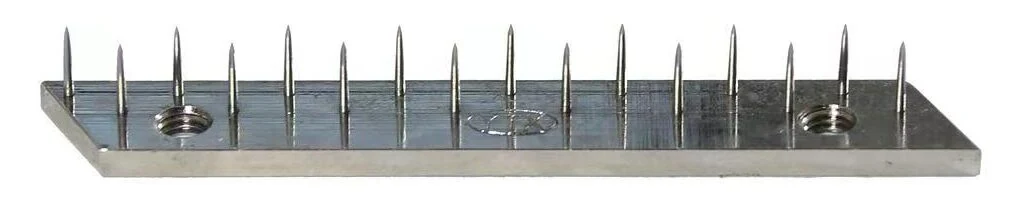
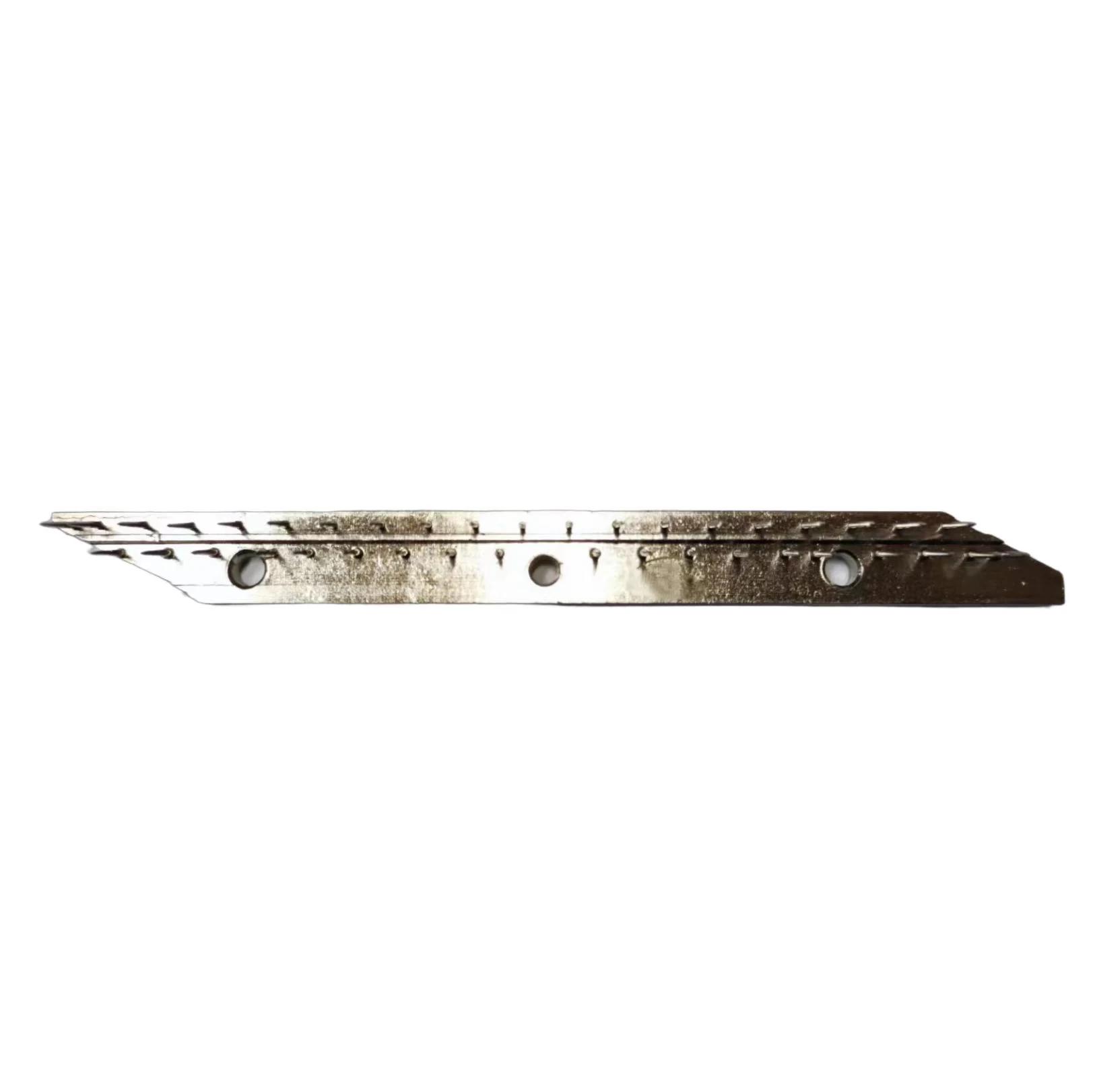
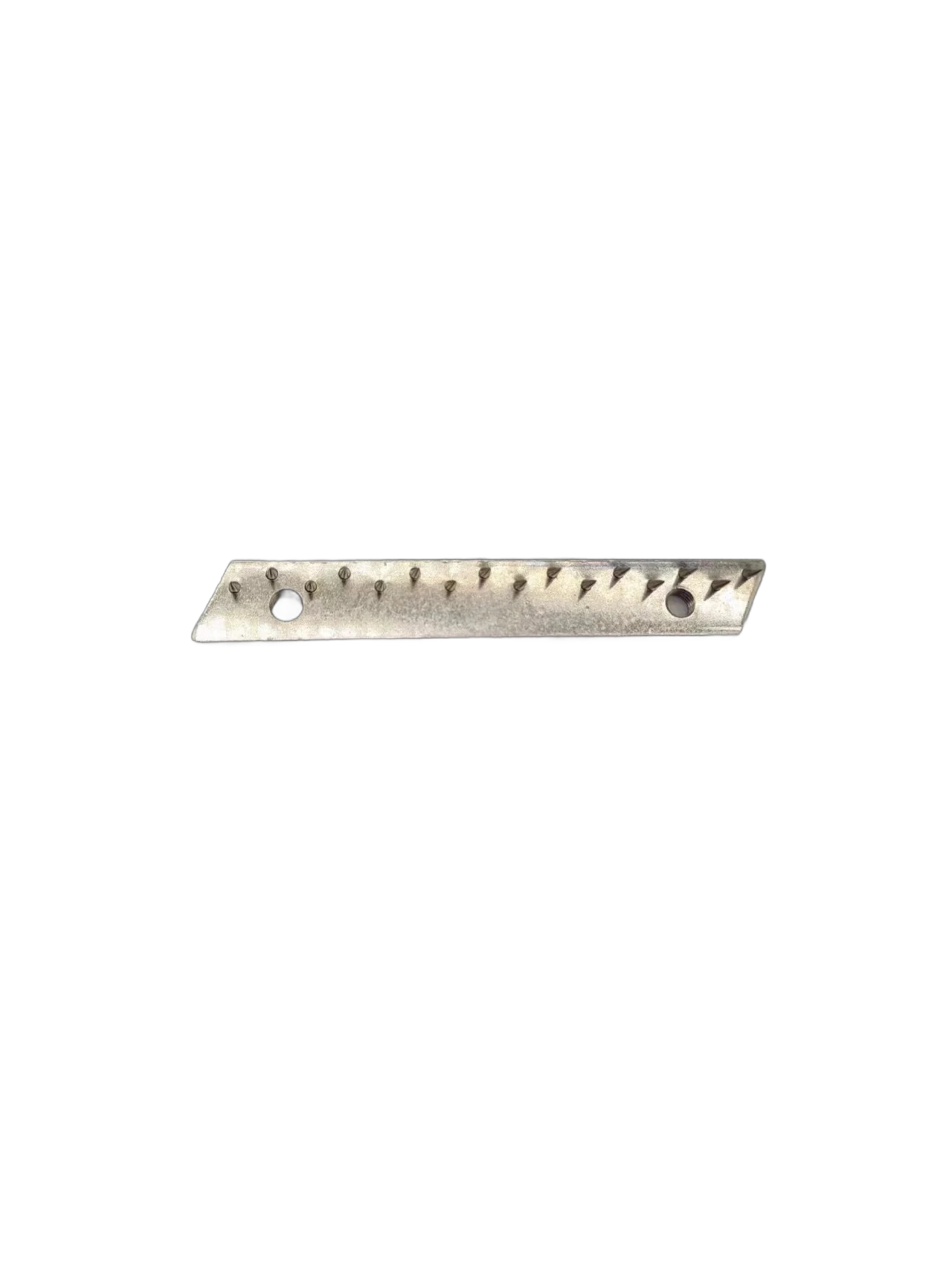
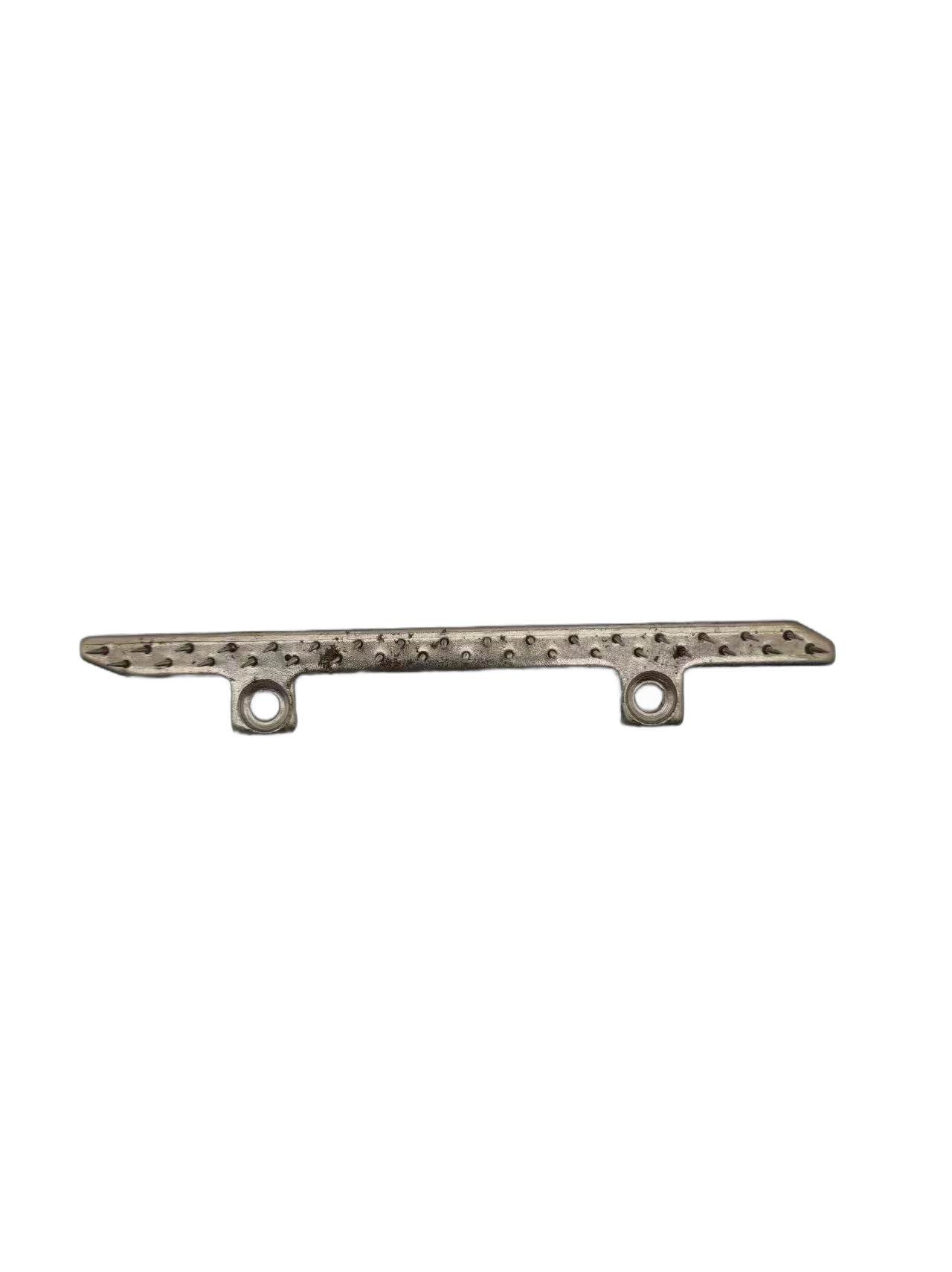
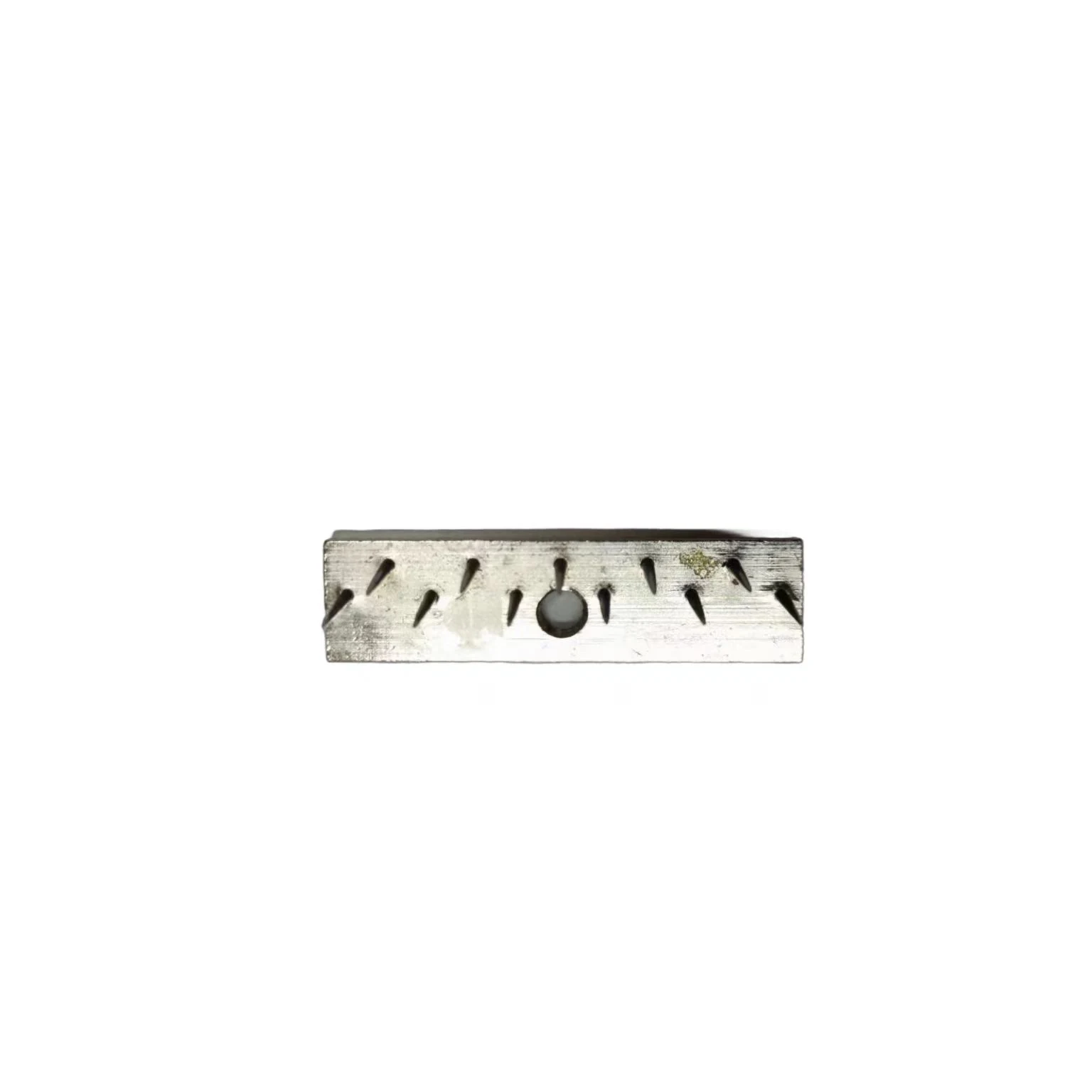
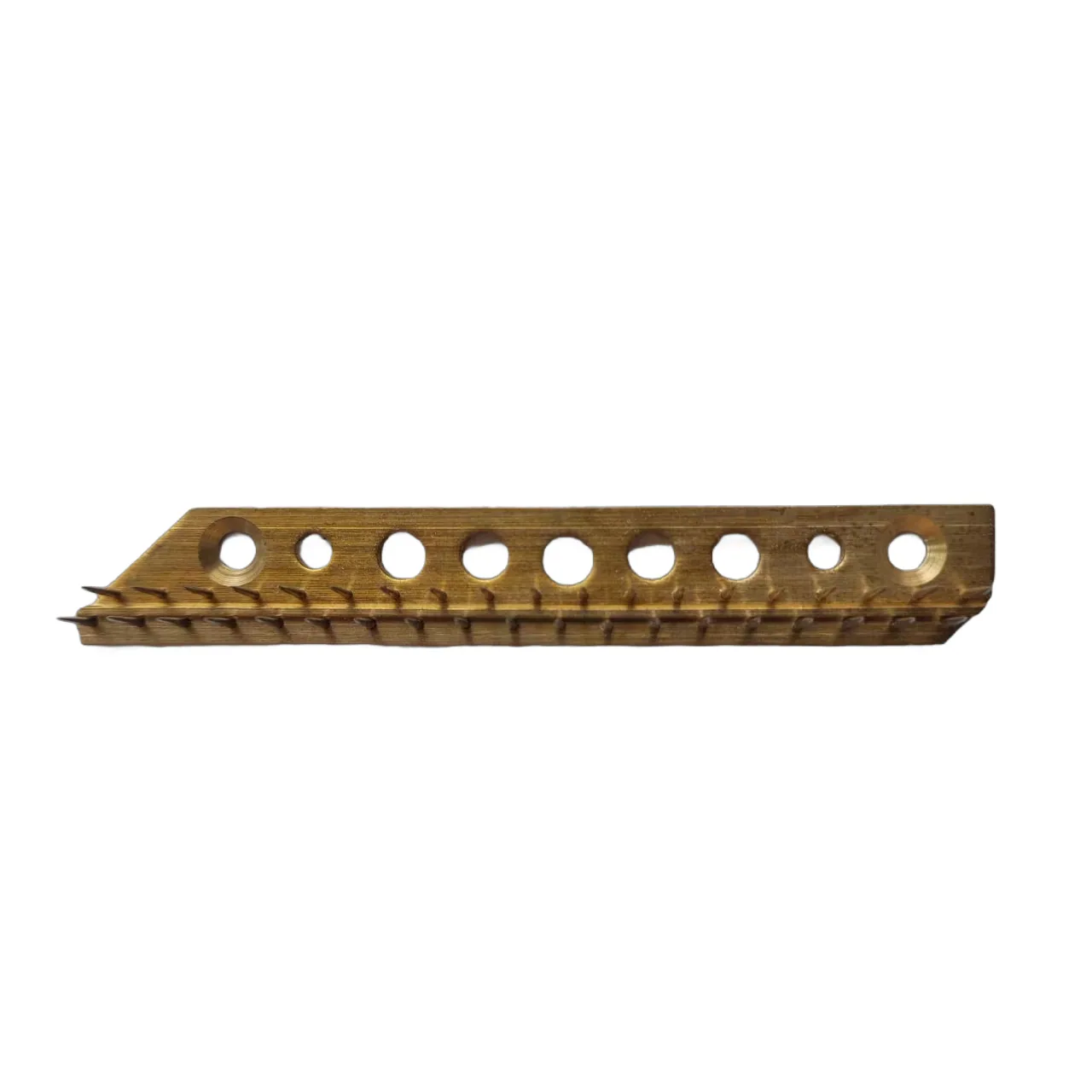
The standard pin plate: two rows of roughly 5 mm pins at 3 to 4 pins per cm on a hardened base plate.
A pin plate is the part that actually holds the cloth on a pin stenter. The common pin stenter carries pins about 5 mm long, mounted in two rows at roughly three to four pins per centimetre along the base plate. The pins are thicker near the base so the fabric never rests directly on the hot base plate.
The plate sits on a pin plate holder, and the holder is attached to the chain. A press wheel pushes the fabric down onto the pins so it stays there and travels forward with the chain. Because pinning grips the cloth harder than a clip can, it lets you raise fabric tension and run faster: up to 100 m/min.
| Pin length | approx 5 mm |
|---|---|
| Pin rows | 2 |
| Pin density | approx 3-4 pins/cm |
| Max fabric speed enabled | up to 100 m/min |
| Finish | silver and yellow |
| Origin | Zhejiang, China |
| Lead time | within 7 days for standard items |
| Origin | Shaoxing, Zhejiang, China |
Pin plates versus clips: clips leave no pin marks in the selvedge and suit thicker fabrics, but pins allow higher tension and faster running, and customers generally accept the pinholes that come with pin stenters. Within pin plates, the differences are pin length, density and base profile, all of which follow the machine and the article.
Match the new plate against the removed one for pin height and base profile before fitting
Fit plates in sequence and check that adjacent plates sit at the same height
Set the press wheel so it pushes the cloth fully onto the pins without bearing on the plate
Inspect for bent pins at every maintenance stop and replace the plate rather than straightening pins
Renew a full section at once so pin height stays consistent along the chain
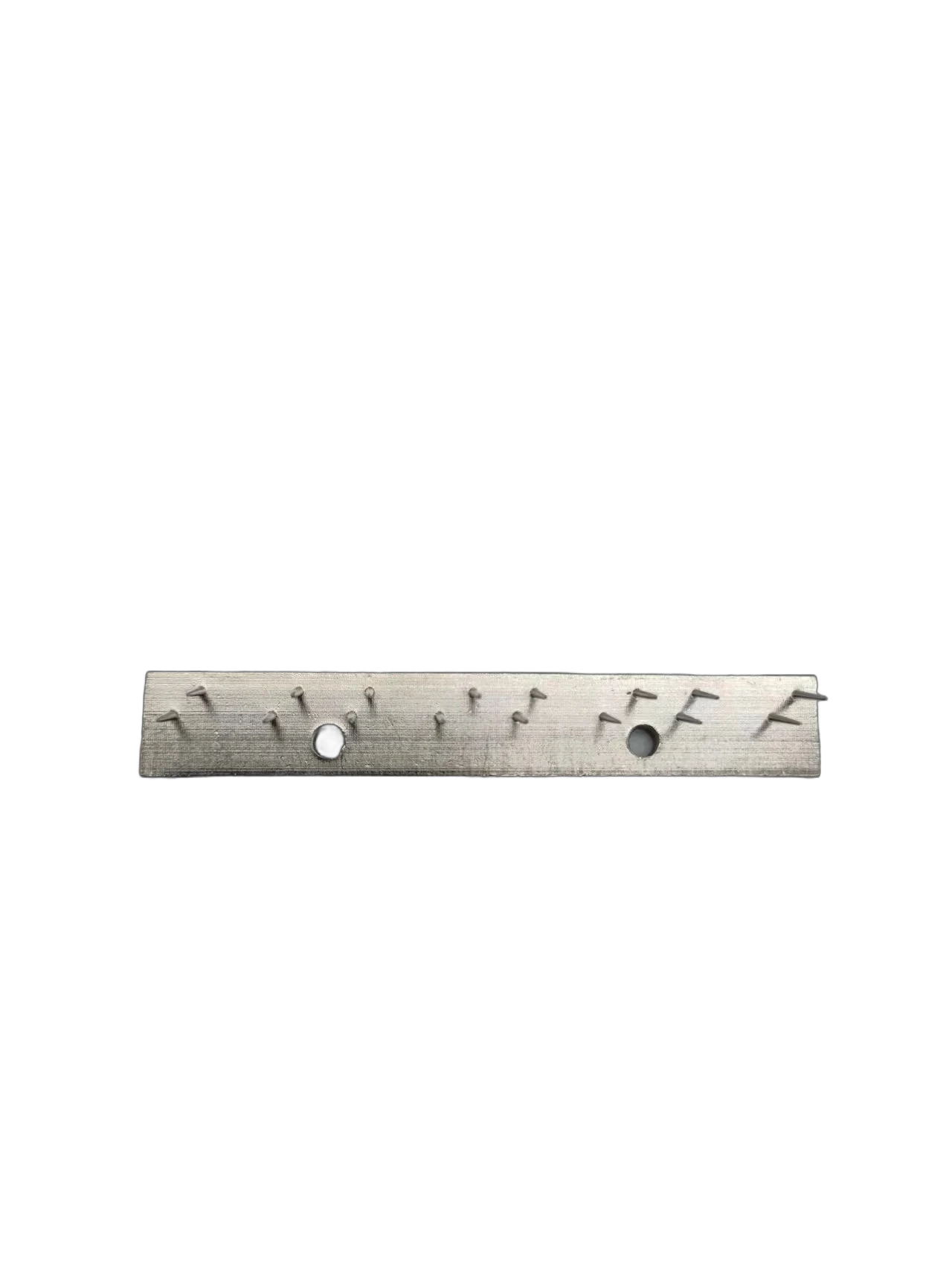
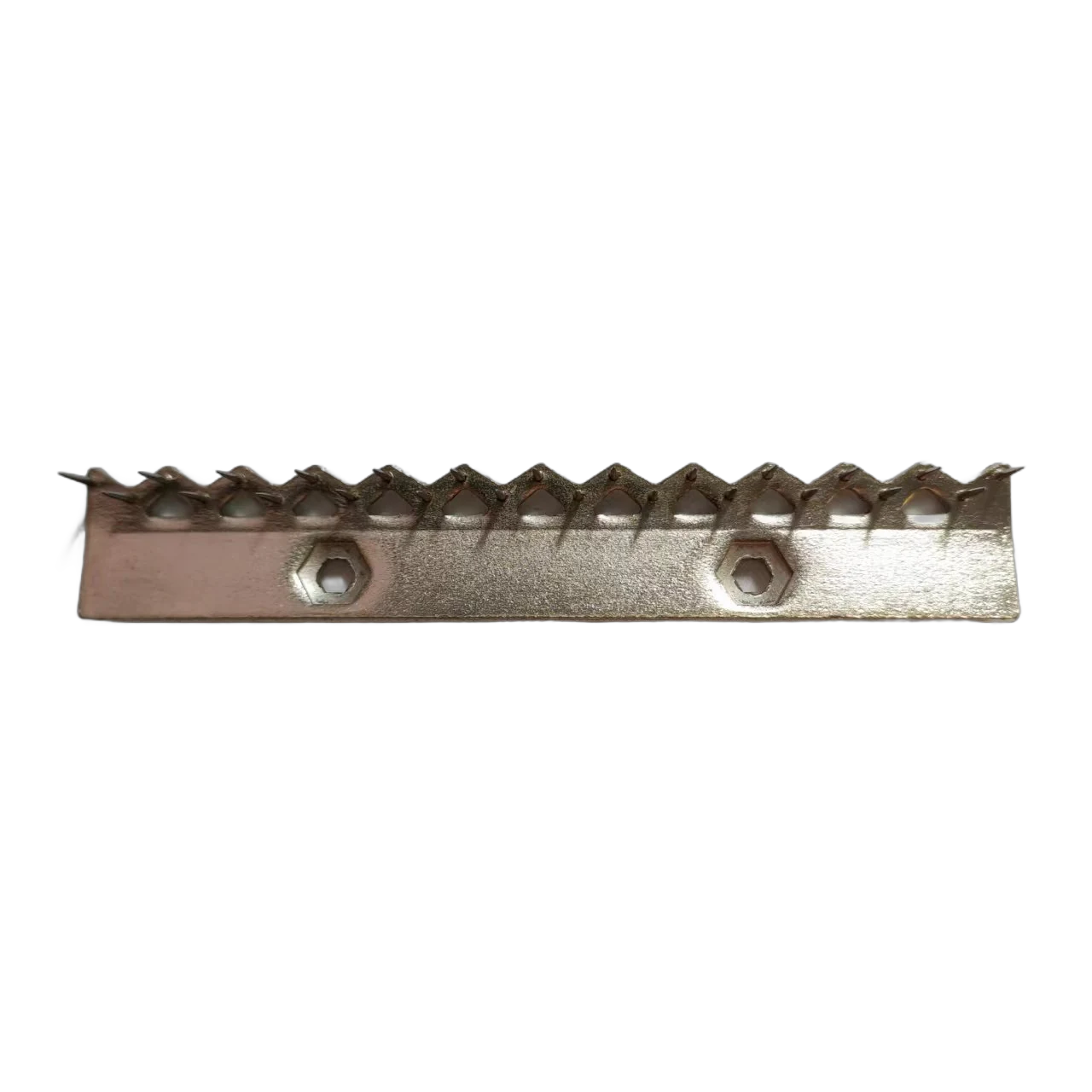
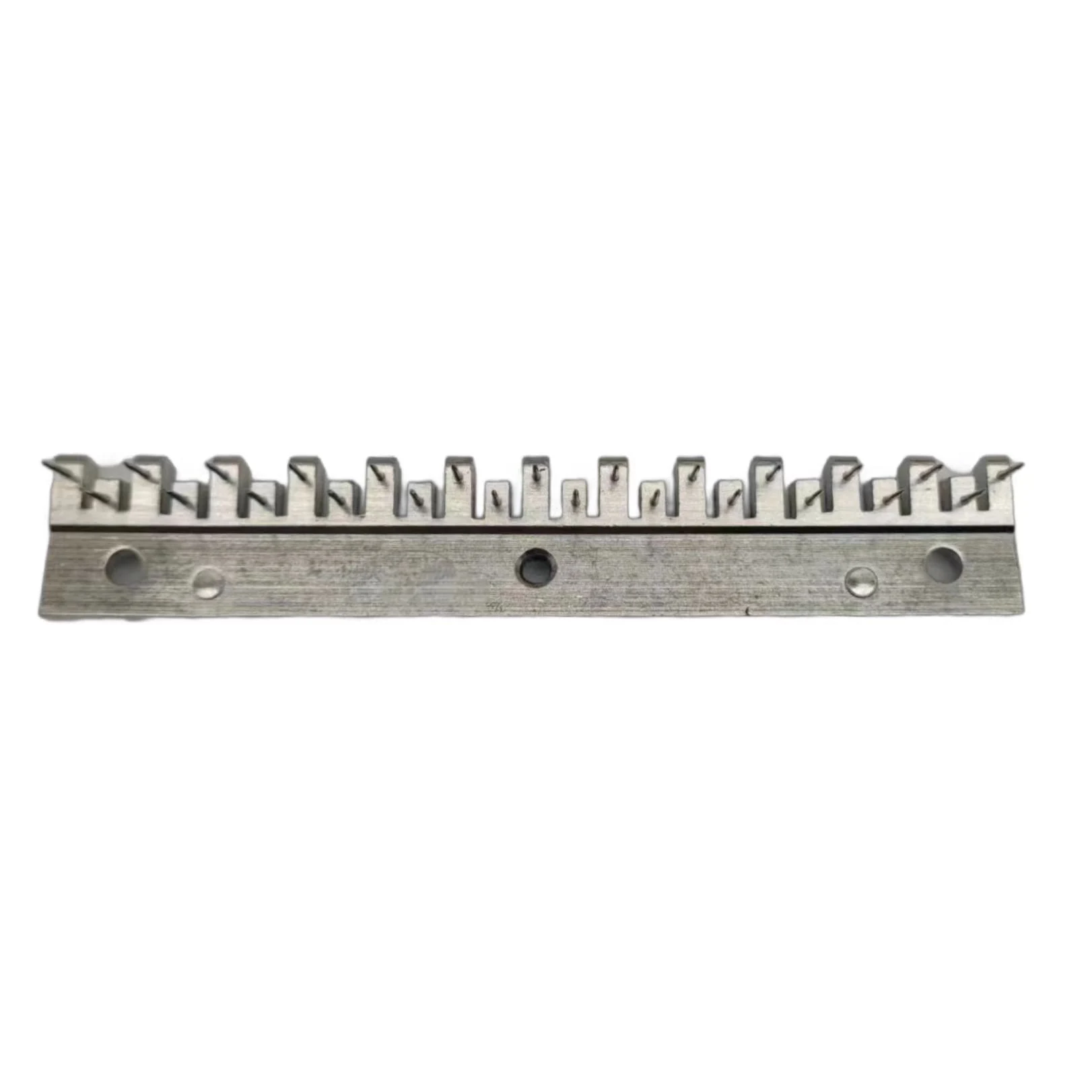
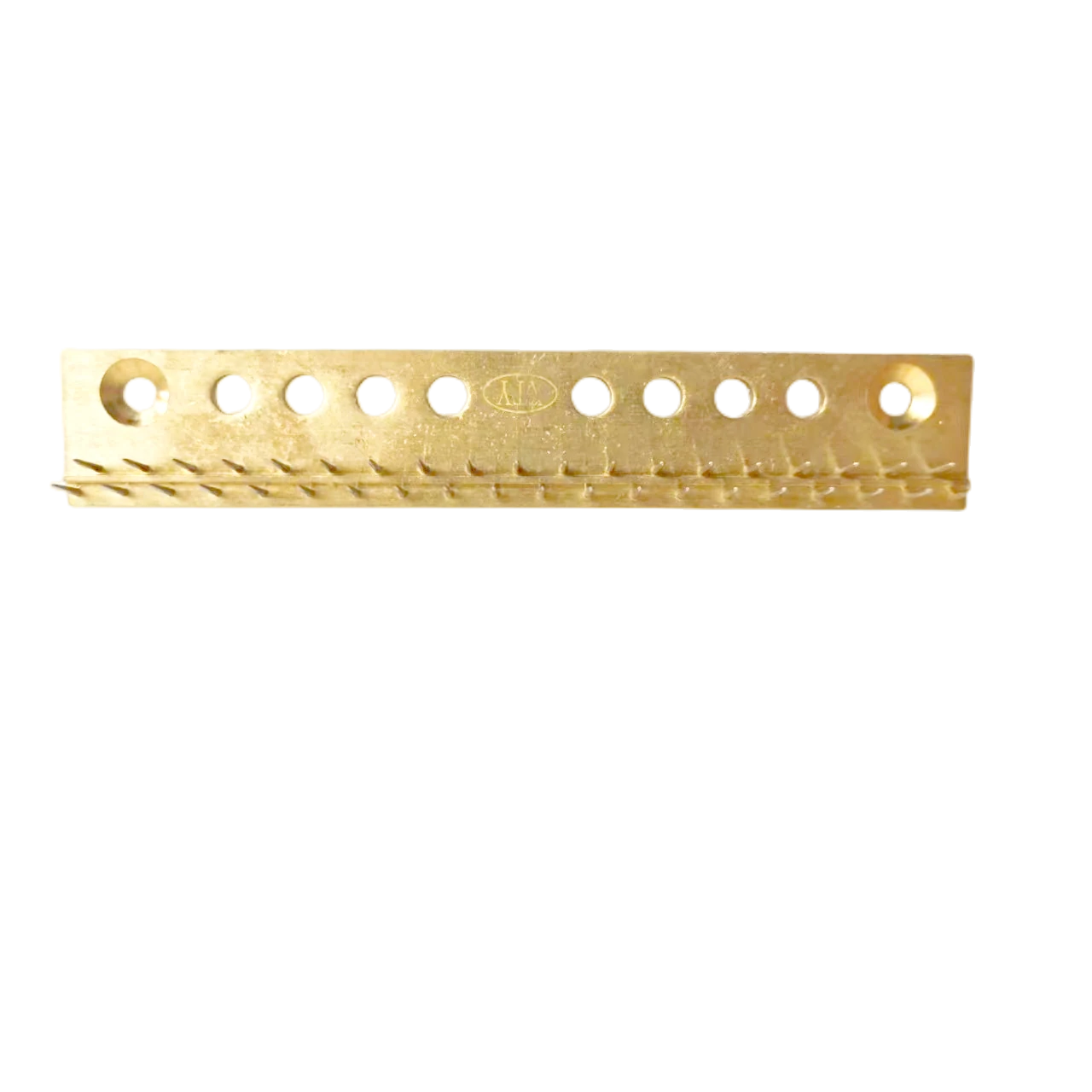
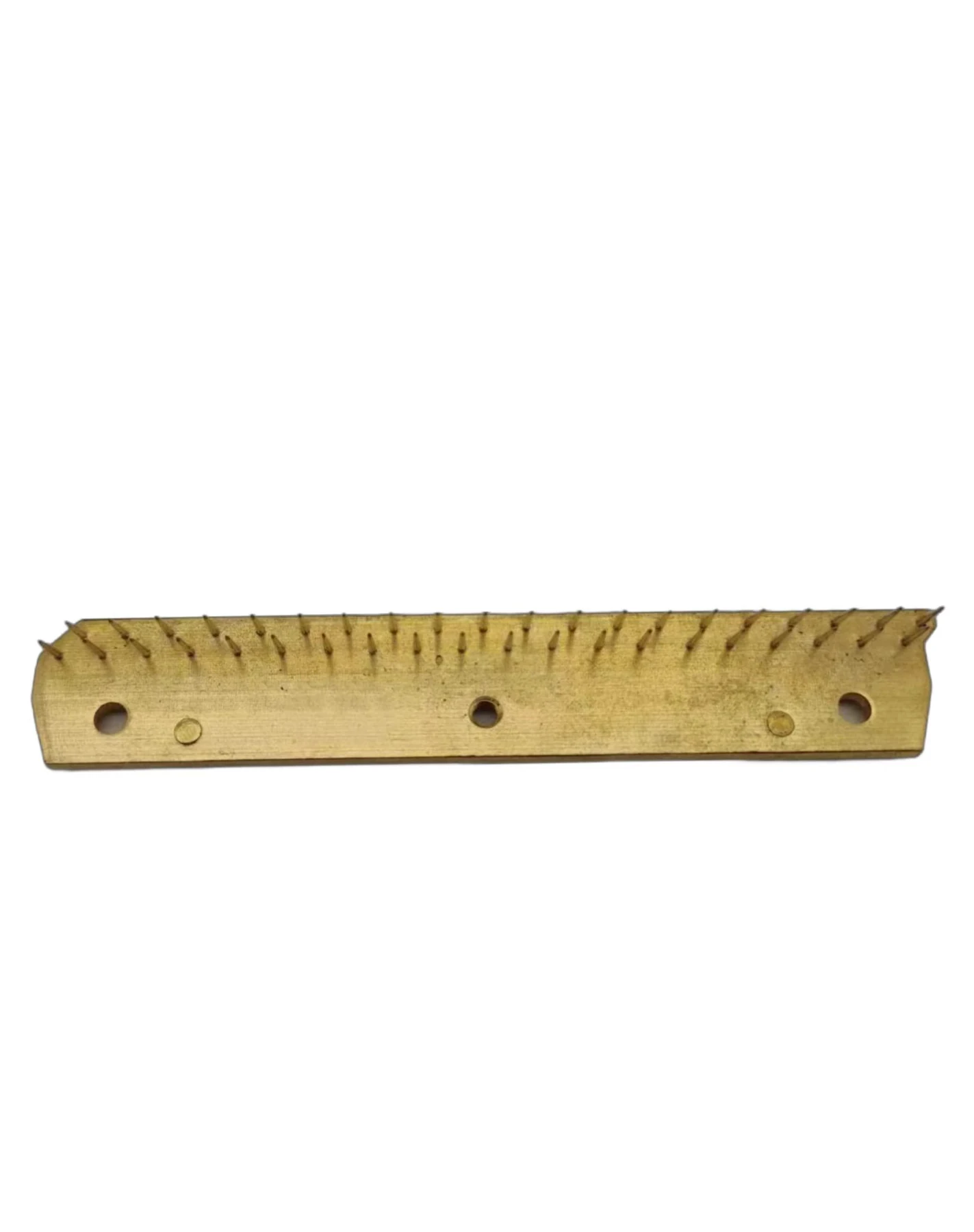
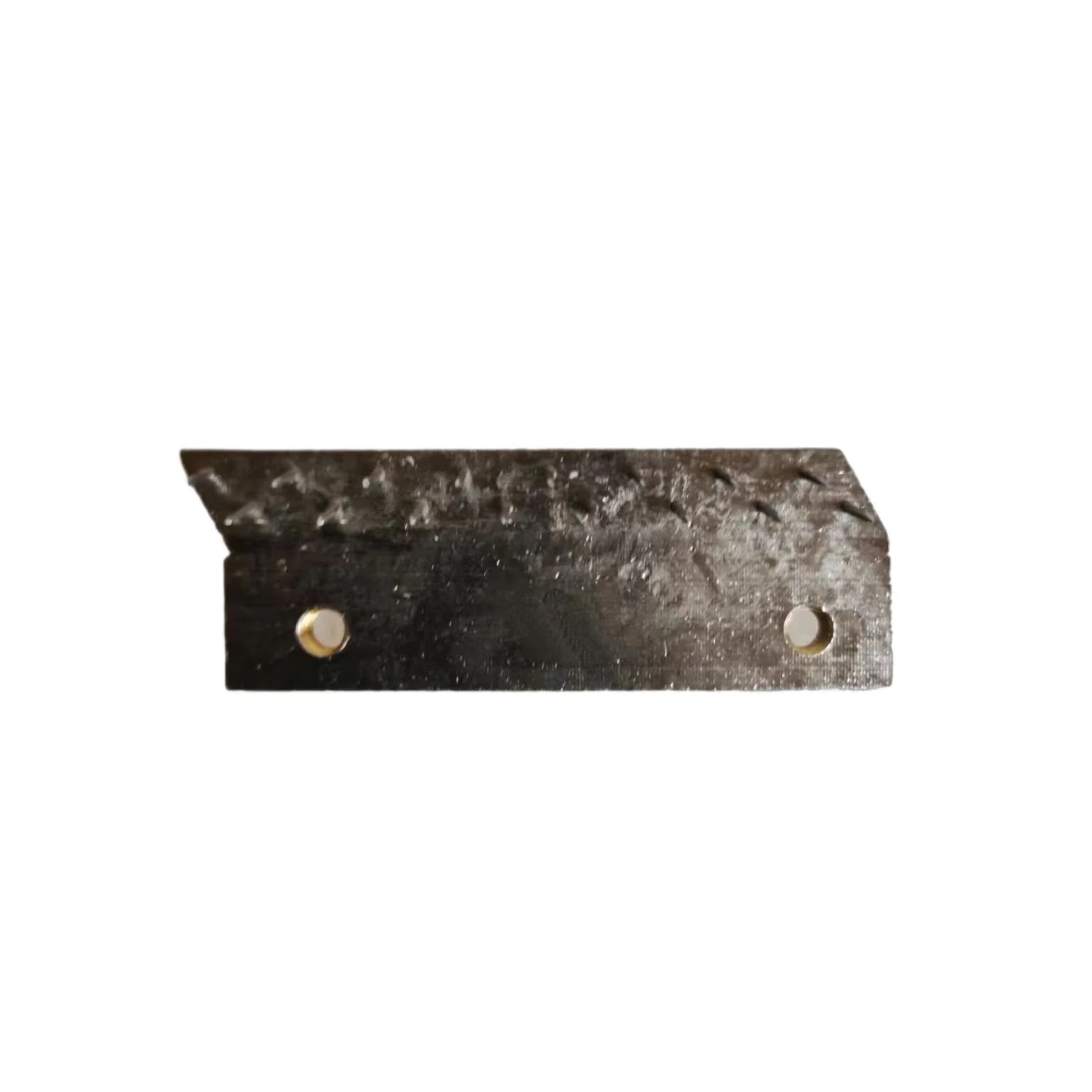
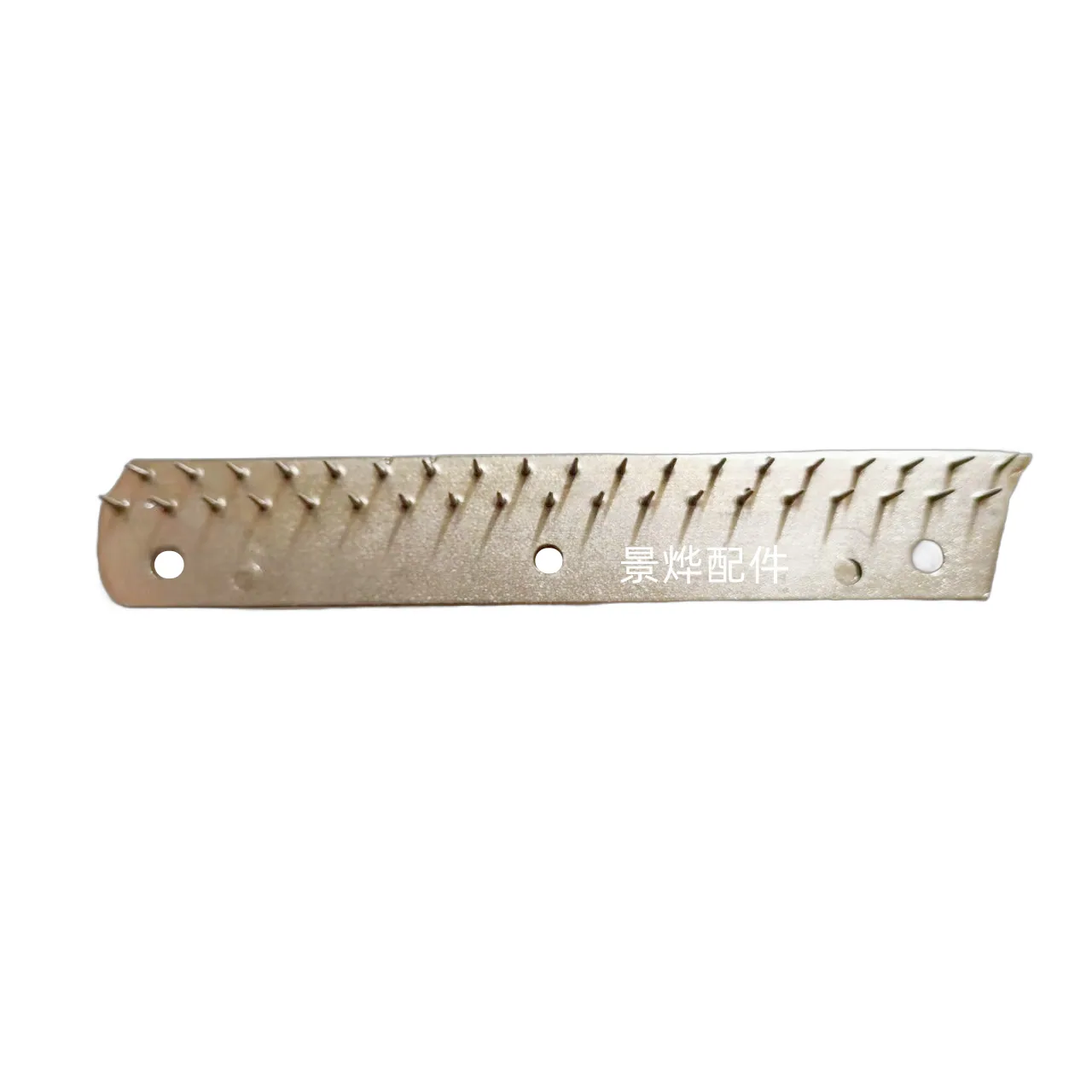
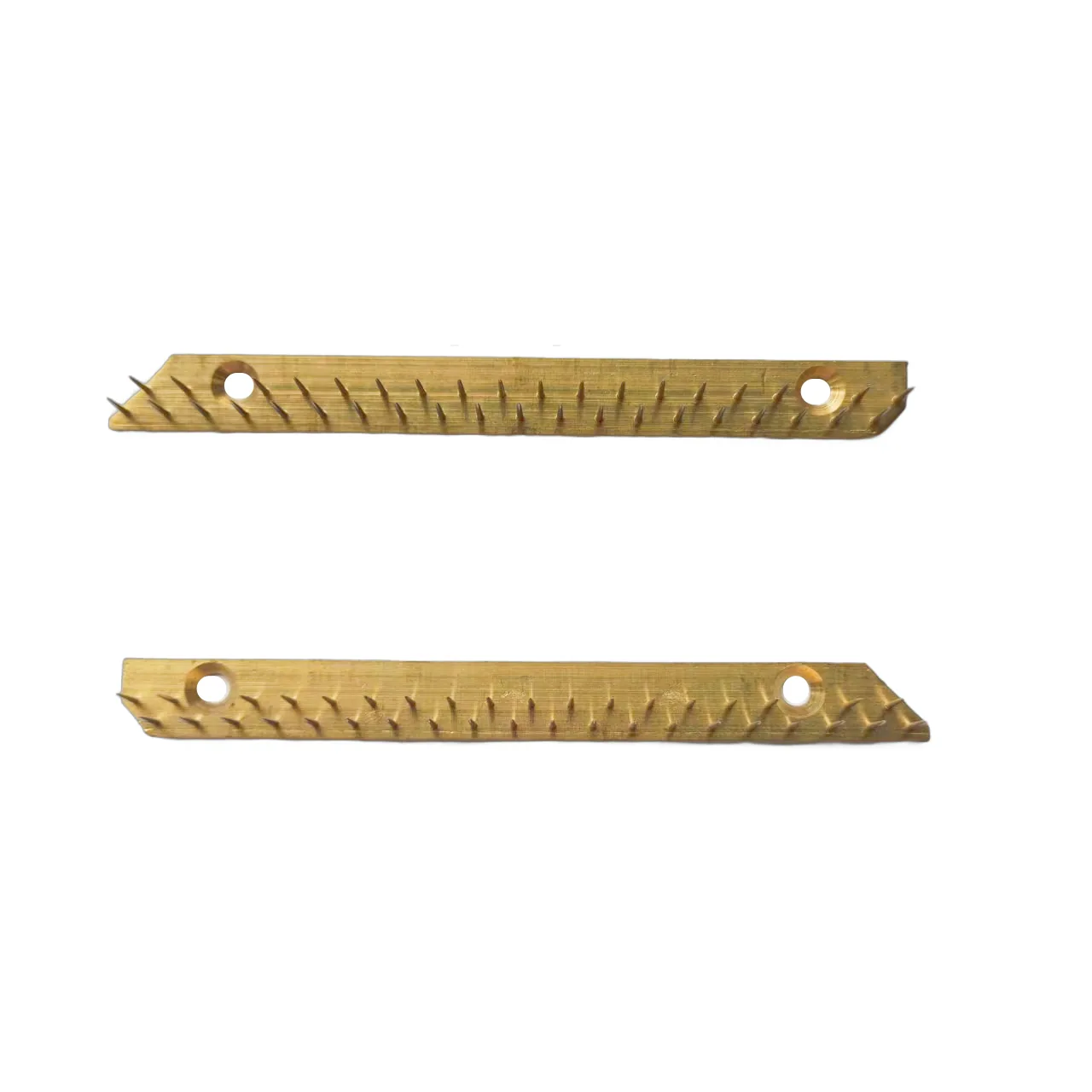
About 5 mm, mounted in two rows at roughly three to four pins per centimetre. That is the common pin stenter arrangement and it is what we supply unless you specify otherwise.
Pinning increases the tension you can hold on the fabric, so the cloth runs faster. On our customers' lines this reaches 100 m/min.
Pin stenters leave pinholes in the selvedge. Clip stenters do not, but they cannot hold the same tension. In practice customers accept pinholes in the selvedge on pin stentered goods.
Yes. Send a plate or a dimensioned photo and we match pin length, density and base profile.
Pin plates are normally ordered by the metre of chain or by section. Tell us the frame width and how much of the bed you are renewing and we quote accordingly.
Boxed in layers with the pin faces protected, then palletised. Pins are the part that damages in transit, so the packing is built around protecting them.
Pin plate holder matched to EHWHA frames, the part that carries the plate on the chain.
View Details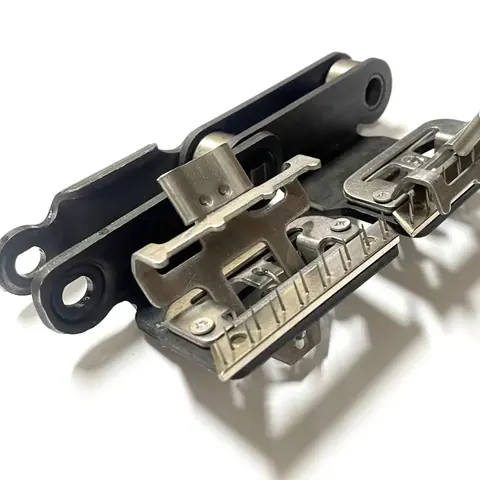
Complete Bruckner chain section with pin plates and holders already mounted.
View Details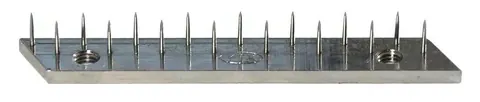
Pin plate supplied assembled with its Bruckner holder, ready to fit to the chain.
View Details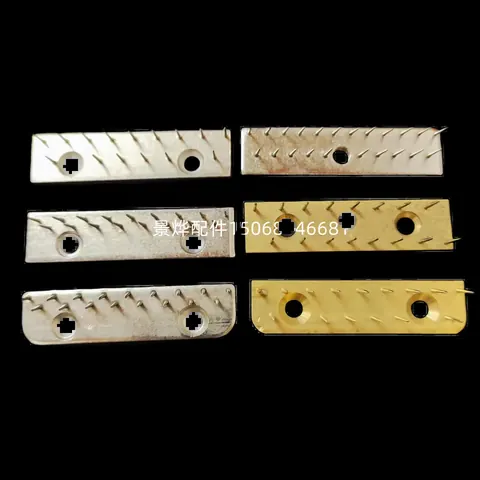
The small-size 642 pin plate for narrow beds and tight pin positions.
View DetailsThe stenter heat-sets and dries fabric by stretching it to width and holding it there under controlled heat.
Entry section, clip or pin chains, rails, heating chambers, exhaust, blowers, temperature control, width adjustment and weft straightener.
Clips leave no pin marks and suit thicker fabrics; pins hold more tension and run faster, to 100 m per minute.
Seat profiles and geometry changed across frame generations, so the part itself is more reliable than a model number. We identify it and quote the matching specification.