Pin Plate For Stenter Machines
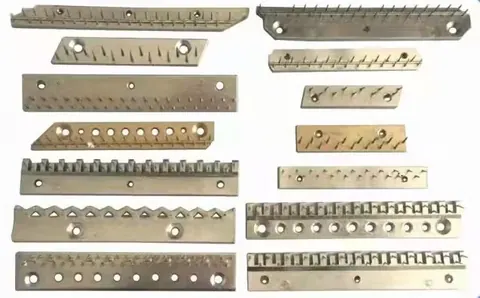
The standard pin plate: two rows of roughly 5 mm pins at 3 to 4 pins per cm on a hardened base plate.
View Details
By Machine Brand
By Part Type
Wear Parts and Equipment
Entry section, clip or pin chains, rails, heating chambers, exhaust, blowers, temperature control, width adjustment and weft straightener.
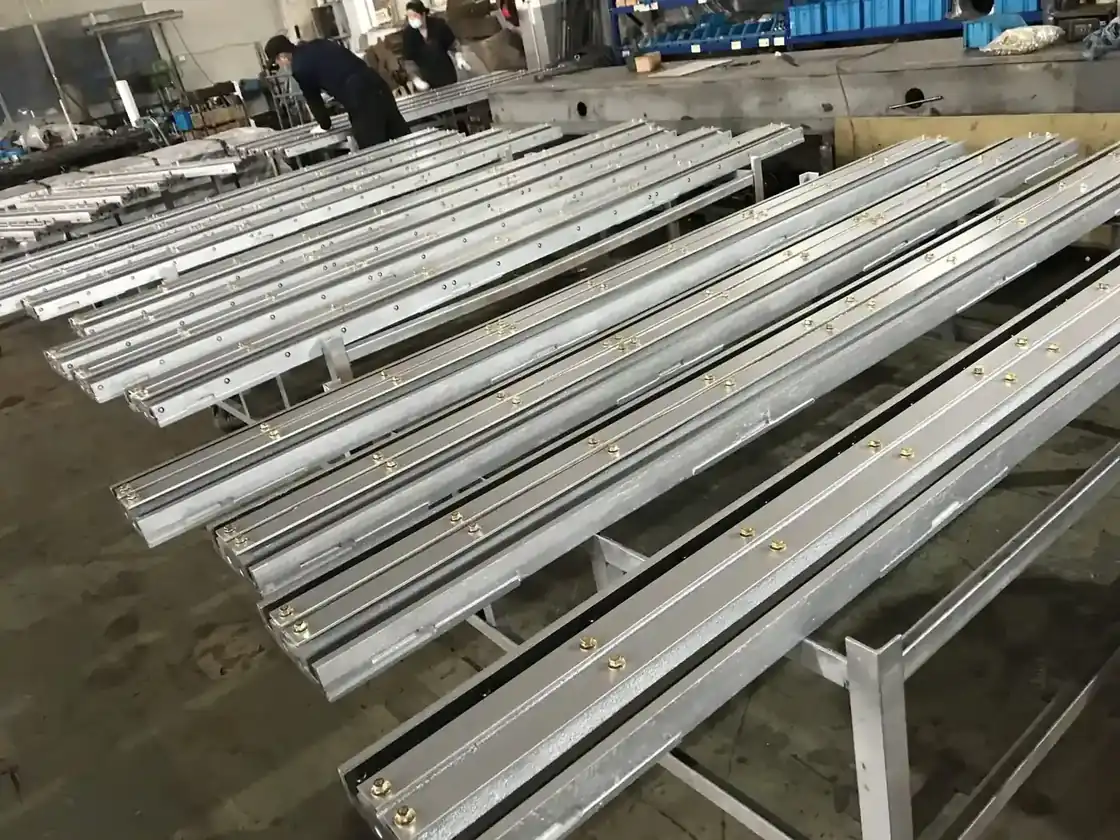
This is where the fabric is fed into the machine. The fabric passes through guide rollers that ensure smooth and aligned entry for consistent processing. It is also where the selvedge uncurlers sit, because an edge that arrives rolled will be held rolled.
Clip chains or pin chains are positioned on both sides of the machine and hold the edges of the fabric as it moves through. Depending on the fabric type, clips or pins are used to grip the fabric without damaging it.
These chains maintain the fabric's width and prevent distortion during stretching and heat setting. They are also the single largest consumable on the machine.
The rails guide the clip chains along the length of the machine. Adjustable rails allow control over fabric width, so the material is stretched to the required dimensions as it moves through.
Rail condition decides chain life. A new chain on a worn rail does not last, which is why a rail inspection belongs in every chain service.
The heating chambers are the heart of the stenter. They use hot air or steam to dry and heat set the fabric, and they are equipped with temperature control systems so the fabric is exposed to precise heat levels based on its requirements.
The exhaust extracts moisture and fumes from the fabric, maintaining an efficient drying environment and preventing the build-up of unwanted particles in the machine.
Blower fans circulate hot air within the heating chambers, ensuring heat is distributed evenly across the fabric surface for uniform drying and heat setting.
A vital part of the machine, the temperature control system maintains precise heat settings inside the chambers. It regulates air temperature and ensures the fabric is treated consistently depending on its material and processing requirements.
This ensures the fabric is stretched to the desired width. It works together with the clip or pin chains and the rail system to adjust and control fabric width throughout the process. On many frames it is driven by a lead rod, and the adjustable nut on that lead rod is a wear part in its own right.
This part corrects distortions in the fabric, keeping the weft square as the cloth passes through.
The ones that touch the cloth or carry it: pin plates, clips, chain bushes and sleeves, brush wheels and cutting blades. They are consumables rather than failures.
They guide the clip chains along the length of the machine and set the fabric width. Adjustable rails allow control over the width as the material moves through.
Proper alignment prevents fabric distortion and maintains even tension. Misalignment shows on the cloth before it shows on the machine.
It is the adjustable nut on the setting machine lead rod, and it helps the guide rail to be widened. PEEK versions are self-lubricating and do not need molybdenum disulfide.
The standard pin plate: two rows of roughly 5 mm pins at 3 to 4 pins per cm on a hardened base plate.
View Details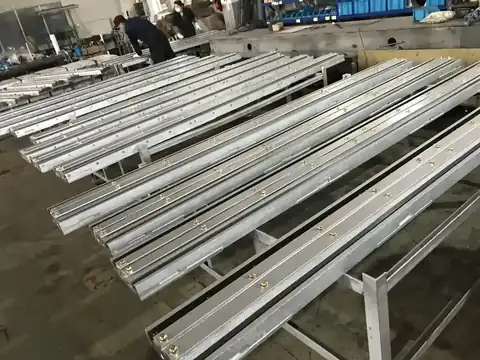
High quality steel or alloy guide rail for LK frames, adjustable and convertible to Monforts profile.
View Details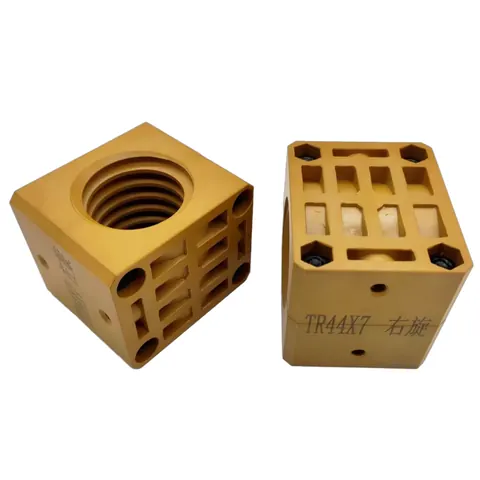
Self-lubricating adjustable nut for the guide rod that widens the rail, in sizes 44x7, 44x6 and 45x6.
View Details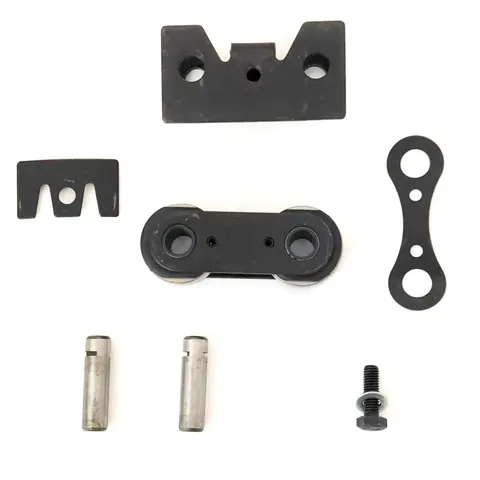
Loose chain components for Monforts oil-free guide frames: connectors, pins, PEEK bushes, dust covers and wear sleeves.
View DetailsThe stenter heat-sets and dries fabric by stretching it to width and holding it there under controlled heat.
Clips leave no pin marks and suit thicker fabrics; pins hold more tension and run faster, to 100 m per minute.
Self-lubrication, high temperature resistance and low noise are why PEEK took over the wear interfaces.
Send the machine brand and a photo of the part. We identify the specification and quote it, usually the same day.