
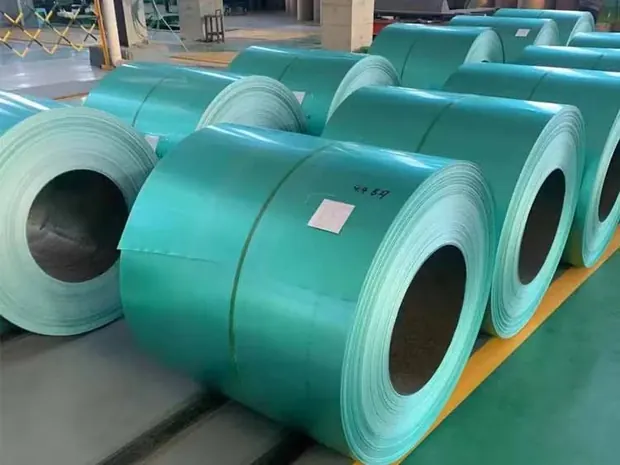
Galvanized Steel Coil
Full width zinc coated coil in structural and commercial grades for roll forming lines
SpecificationsIndustries
Solutions
Resources
Company
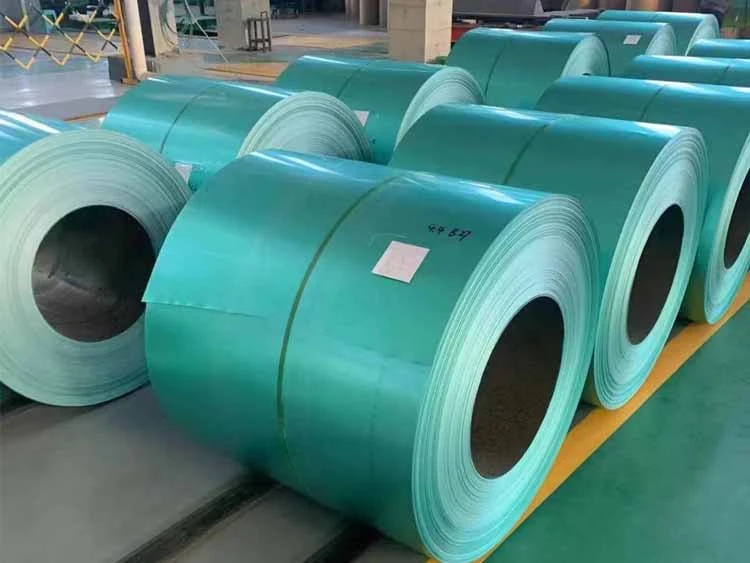
GI is zinc coated coil, GL is aluminum zinc coated coil, and PPGI and PPGL are the same two substrates with the paint system already applied at the mill.
GI is zinc coated coil, GL is aluminum zinc coated coil, and PPGI and PPGL are the same two substrates with the paint system already applied at the mill. The coating chemistry decides how the coil behaves outdoors and at cut edges, while the G or Z designation decides how much coating you are actually buying. Zn-Al-Mg sits above all of them on corrosion resistance and is stated at 10 to 20 times that of hot dip galvanized steel coil.
GI is galvanized coil, a steel substrate carrying a zinc coating applied either by hot dipping or by an electro process. GL is galvalume, where the coating is an aluminum zinc alloy instead of zinc alone. PPGI and PPGL are the pre painted versions of those two, supplied with the paint already on the substrate so a roll former can run finished panels without a paint line.
The prefix tells you nothing about the steel underneath. The same substrate grades appear across all four products, which is why the grade and the coating weight both have to be named on the order.
Zinc protects steel sacrificially, which is why a scratch in a galvanized panel does not immediately undercut. An aluminum zinc coating trades some of that sacrificial action for a more stable barrier, and galvalume steel coil is listed as having higher corrosion resistance than standard galvanized steel coil in outdoor environments, resisting corrosion better when exposed to snow, ice and rain.
That difference shows up on roofing and exterior wall panels long before it shows up in a salt spray report. A cladding job that sits under repeated wet and dry cycles is the case where galvalume earns its price over plain galvanized.
Coating weight is ordered in one of two systems and both are quoted here. The G system runs G20 G30 G40 G60 and G90. The Z system runs Z40 Z60 Z80 Z100 Z120 Z150 and then Z275 and Z350 at the heavy end.
A coil is only as durable as the coating layer on it, so a buyer who names the substrate grade but leaves the coating weight blank is leaving the most important variable to the mill. Fix the designation on the purchase order and the comparison between two quotations becomes meaningful.
The structural grades quoted across these coils are G250 G350 G450 and G550, alongside A36 SS400 S275jr S235 A653 Q195 Q215 Q235B Q345B SGCC and DX51D. The soft end forms deep profiles without splitting. The hard end holds a thin high rib profile that would otherwise buckle.
Galvalume and pre painted galvalume also list Q195 Q215 Q235B Q345B S235JR S355JR SS400 SS490 SM400 SM490 G350 and G550, which covers most European Japanese and Chinese drawing designations without a substitution letter.
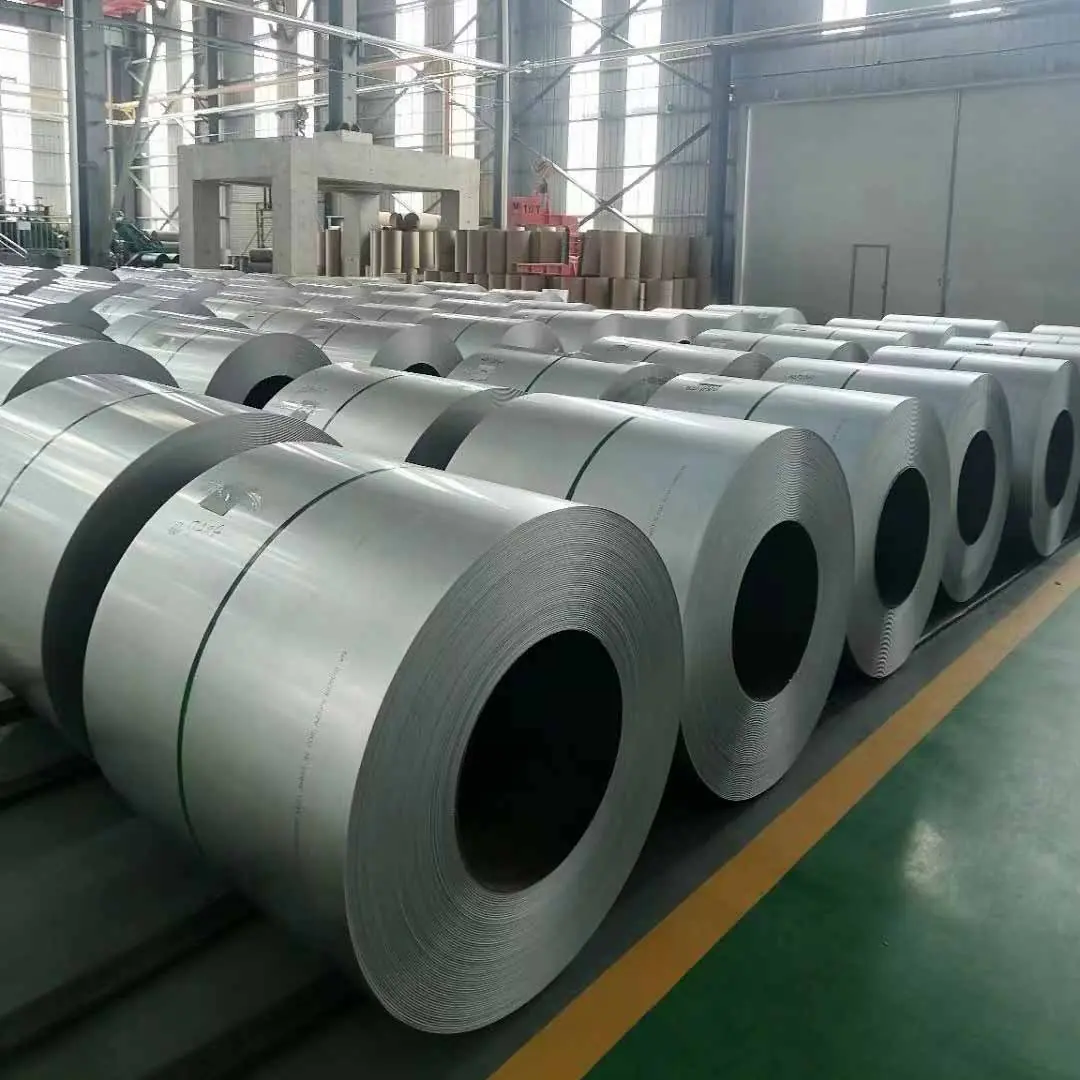
Zn-Al-Mg coil, also called AZM or zinc aluminum magnesium coated coil, adds magnesium and a small amount of silicon to the zinc aluminum coating. The stated corrosion resistance is 10 to 20 times that of hot dip galvanized steel coil at less coating adhesion, which is the point of the product.
It also self heals at cut edges. Magnesium aluminum and zinc dissolving at a scratch form a dense film of zinc hydroxide, alkaline zinc chloride and magnesium hydroxide that covers the exposed steel and separates it from the corrosive medium. Paintability is similar to galvalume and welding is slightly worse than hot rolled and cold rolled sheet but workable with a reasonable procedure, with the weld repairable using zinc aluminum paint.
Work backwards from where the panel ends up. Interior framing and ceiling sections take a light zinc coating on a soft grade. Roof sheets on an inland warehouse take a mid Z coating on GI or PPGI. Coastal cladding, agricultural buildings with ammonia exposure and solar mounting rails are where galvalume or Zn-Al-Mg justify the step up.
Color is a separate decision from corrosion. Pre painted coil removes a paint booth and a rework rate from your line, but the metallic coating underneath is still what decides service life.
A complete coated coil line reads as coating type, substrate grade, coating weight designation, thickness, width, coil dimensions and finish. Anything left off becomes a mill decision. Thickness on the coated coil range is listed from 0.1mm and is customized as required, so the gauge belongs on the order line rather than in a follow up email.
Ask for the mill test certificate with the shipment so the grade and coating weight are documented for the building file. Certification available on request covers ISO9001, BV, SGS and RoHS.
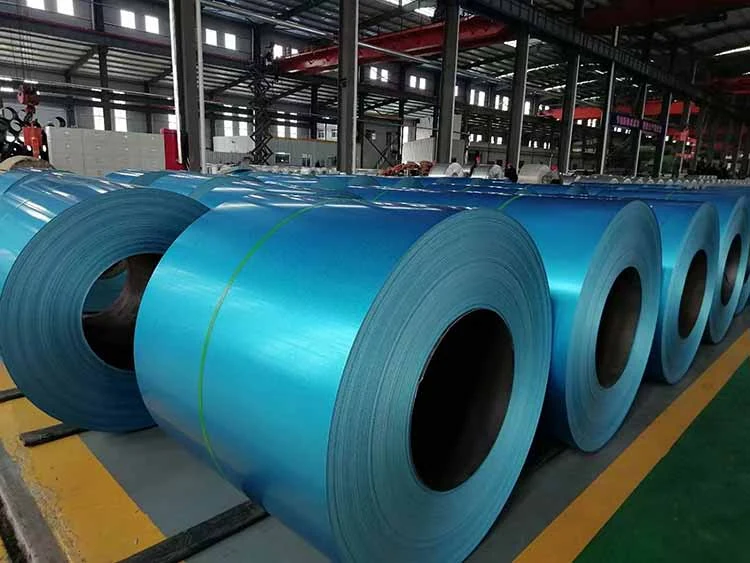
Full width zinc coated coil in structural and commercial grades for roll forming lines
Specifications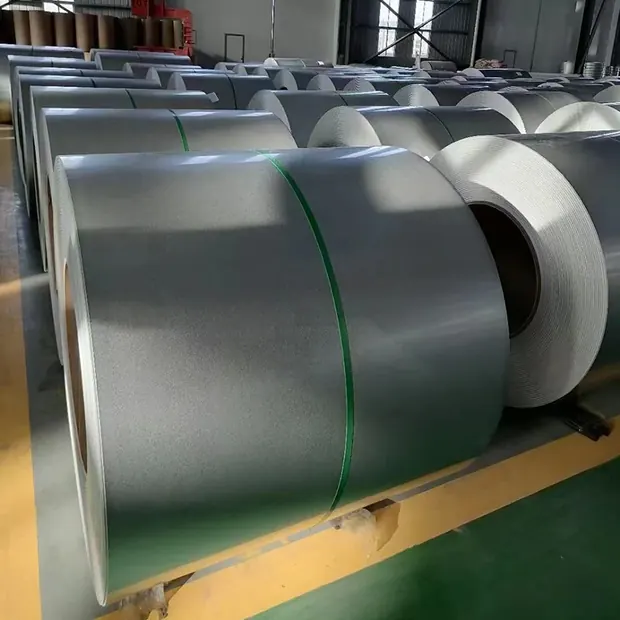
Aluminum zinc coated coil for roofing wall cladding and outdoor formed sections
SpecificationsColor finished galvanized coil that leaves the roll former ready to install
Specifications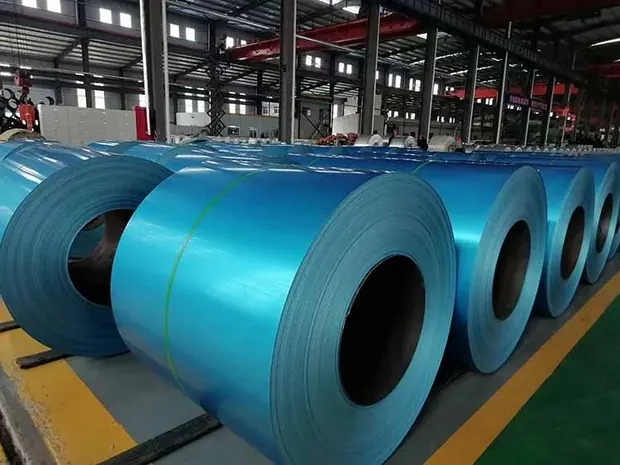
Aluminum zinc coated coil with a factory color finish for exterior paneling and roofing
SpecificationsZinc coated and colour coated coil for roll formers who want the finish applied at the mill rather than in the workshop
Read moreAluminum zinc coated coil for exterior roofing and wall panels that stay outdoors in snow ice and rain
Read more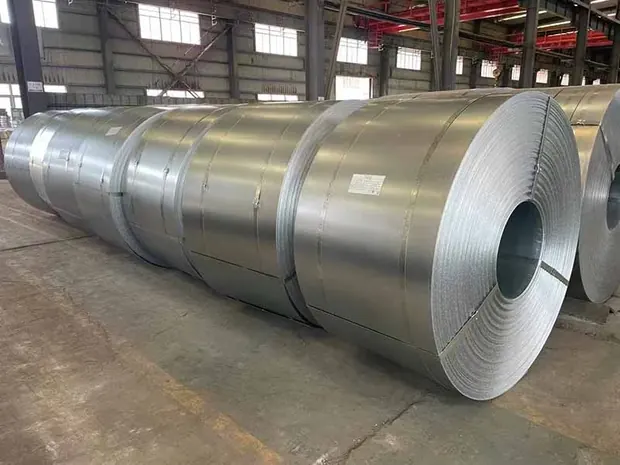
The zinc aluminum magnesium coated line inside the steel coil range for outdoor structures that outlive a plain zinc coa
Read more
Construction and infrastructure buyers order steel by the part it becomes: mild steel plate for base plates gussets and
Read more
Energy projects are audited on documents as much as on steel. A boiler header, a cooling water line, a coal transfer chu
Read moreNot always. Galvalume is listed as having higher corrosion resistance than standard galvanized steel coil in outdoor environments and resists snow ice and rain better, so it wins on exposed roofing and cladding. For interior sections and painted indoor parts the extra cost buys nothing you can use.
It depends on exposure, not on the product name. The Z system runs from Z40 through Z150 and up to Z275 and Z350, so the coating weight can follow the environment. Tell us the location and whether the panel is exposed and we will quote against a specific designation.
Yes. Pre painted galvanized coil lists G250 G350 G450 G550 A36 SS400 S275 S235 Q195 Q215 Q235B Q345B SGCC and DX51D, the same family carried in bare galvanized coil, so the forming behavior on your line does not change when you move to a painted coil.
The corrosion resistance of the zinc aluminum magnesium coating is stated at 10 to 20 times that of hot dip galvanized steel coil, and the coating self heals at scratches and cut sections. Actual service life depends on the atmosphere the component stands in.
Yes, with care. Weldability is slightly worse than hot rolled and cold rolled sheet but a reasonable welding procedure still achieves the expected strength, and the welded area can be repaired with zinc aluminum paint to restore a coating similar to the original.
Galvanized steel strip is supplied from the same coating range, so narrow widths for framing and small roll formed profiles arrive already slit instead of costing you a pass and edge scrap in your own shop.
If you are still asking "Is galvalume always better than galvanized coil?" send us the sizes and the duty and we will answer it against your actual order.