Why The Tube Decides Everything
In a peristaltic pump the rollers squeeze a flexible tube. The liquid touches nothing else, so the tube alone determines chemical compatibility, delivered volume and how long the pump runs before service.
That is the main advantage of the principle. Changing duty means changing a consumable rather than a pump.
Bore And Wall Set The Flow
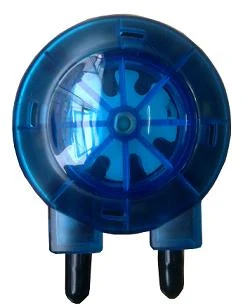
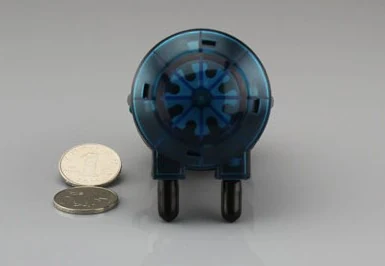
Delivered volume per revolution follows the internal bore and the roller geometry. On the SK165 head, tube thickness is 1 mm or 1.6 mm, maximum tube size is 4.8 mm and maximum flow is 165 ml per minute at up to 200 rpm.
Running a small tube fast wears it out. Running a larger tube slower usually gives the same flow with longer life.
| Tube thickness options | 1 mm and 1.6 mm |
|---|---|
| Maximum tube size | 4.8 mm |
| Maximum flow | 165 ml per minute |
| Maximum speed | 200 rpm |
See the SK165 Peristaltic Pump specification →
Material Follows The Chemistry
Choose the tube compound against the actual solution, not the chemical family. Concentration and temperature change compatibility as much as the chemical name does.
- State the chemical, its concentration and its temperature when ordering tubes
- Ask about both compatibility and flex life, since a compound can resist a chemical and still crack under flexing
- Keep at least one spare set on site for every pump in service
- Record the date of each change so the interval is based on evidence, not memory
What Shortens Tube Life
High speed, high back pressure, over tightened rollers and chemical attack all shorten life, usually in that order. A pump running at 200 rpm to deliver a rate a bigger tube could achieve at 60 rpm is working four times as hard.
Suction line restrictions are a hidden cause: a partially blocked foot valve makes the tube collapse and recover on every revolution.
See the Tube Pump With Stepper Motor specification →
When Precision Matters More Than Flow
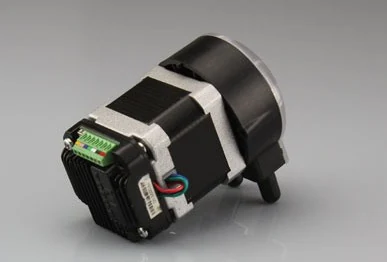
Where a controller has to command an exact volume, the stepper motor version turns rotation into counted steps. That is what instrument builders use for sampling and reagent dosing.
In that case tube consistency matters more than tube life. Change on a fixed schedule rather than waiting for a failure.