
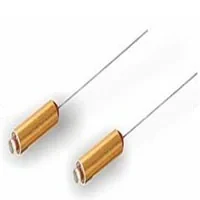
Optical Fiber Collimator
Optical Fiber Collimator is part of the passive component range built by Ever Expresslink Limited in Ningbo, China.
Circulators, isolators and collimators for optical system builders
Interested in Optical Fiber Collimator
Email the model and quantity with your destination country. We reply with pricing, lead time and a datasheet.
Product Overview
Optical Fiber Collimator is part of the passive component range built by Ever Expresslink Limited in Ningbo, China.
It is one of 3 items in this range. A typical application is building a bidirectional link on one fiber with a circulator. What the range is built to give you there: fiber-to-free-space coupling with repeatable beam geometry.
The problem it addresses is bidirectional paths that need directional routing rather than splitting. A practical note that applies across this range: avoid exceeding the stated optical power handling. Specifications for a particular configuration are confirmed on the quotation rather than assumed from the designation.
Key Benefits
- Supplied as Optical Fiber Collimator, so the part you receive matches the designation you ordered against
- Directional routing without electrical control
- Fiber-to-free-space coupling with repeatable beam geometry
- Fiber pigtail and connector options to suit the bench or the module
- Component-level supply from the same source as the rest of the optical build
Problems It Solves
- Component-level sourcing spread across many small suppliers
- Amplifier designs needing isolation at defined points in the chain
- Laser instability caused by back-reflected light re-entering the cavity
- Bidirectional paths that need directional routing rather than splitting
Application Scenarios
- Coupling fiber into a free-space optical bench
- OTDR and reflectometry front-end design
- Fiber sensing interrogator construction
- Isolating a pump laser inside an amplifier module
Who It Is For
- Optical sensing system developers
- Research laboratories and universities
- OEM integrators building bidirectional optical links
- Optical amplifier and laser module designers
Technical Features
- Low insertion loss in the forward direction
- Polarisation-independent designs on standard isolator and circulator versions
- Fiber pigtailed or connectorised output
- Defined operating wavelength band per part
Materials
- Optical crystal and magnet assembly on isolators and circulators
- Graded-index or aspheric lens on collimators
- Silica fiber pigtails
- Metal housing
- Epoxy-free optical path where the design requires it
Specifications
| Product Designation | Optical Fiber Collimator |
|---|---|
| Product Family | Passive Component |
| Manufactured In | Ningbo, China |
| Warranty | One year against defects in materials and workmanship |
Values shown are those carried by the product designation. Dimensional and optical values for a specific order are confirmed on the quotation.
Manufacturing Process
- Optical element alignment and fixing
- Fiber pigtail attachment and alignment
- Housing assembly and sealing
- Optical performance test across the band
- Burn-in and final inspection on applicable types
Quality Control
- Insertion loss and isolation measured per unit
- Directivity measured on circulators
- Beam profile checked on collimators
- Wavelength response verified across the stated band
- Mechanical and environmental sampling per lot
Customization Options
- Operating wavelength band
- Pigtail length, fiber type and connector
- Housing dimensions for module integration
- Port configuration on circulators
- Beam waist and working distance on collimators
Handling Optical Fiber Collimator
Before You Order
- Confirm the operating wavelength band before selecting a part
- Observe the directional marking on isolators and circulators
- Keep pigtails above their minimum bend radius inside the module
In Service
- Clean connectorised ports before every mating
- Mount collimators on a stable optical mount, not on the fiber
- Avoid exceeding the stated optical power handling
Questions About Optical Fiber Collimator
What do you need from us to quote Optical Fiber Collimator?
The quantity, the destination and anything that has to match on your side: connector and polish at each end, fiber mode and core size, and length where the item is an assembly. If you are matching a part you already buy, send the sample and we will quote against it.
Can these be supplied with connectors instead of bare pigtails?
Yes. Pigtail length, fiber type and connector are all specified per order, including unterminated tails for direct splicing into a module.
Do you supply these at prototype quantities?
Yes, component-level parts can be quoted in small quantities for development work, with volume pricing once a design goes to production.
What does an optical isolator actually do?
It lets light pass in one direction and blocks it in the other, so reflected light cannot travel back into a laser and destabilise it. It is standard practice in amplifier and transmitter design.
When would I use a circulator instead of a splitter?
A splitter divides power in both directions. A circulator routes light by the port it entered, so you can run send and receive on one fiber without paying the splitting loss twice.
Guides Cases and Industries
How to Select a Fiber Optic Attenuator
Measure first, attenuate on the receive side, and record what you installed. The three rules that prevent most attenuator mistakes.
Comparison ArticlePLC and FBT Optical Splitters Compared
Two ways to divide light, why PON standardized on one of them, and how to check whether your budget can carry the split you want.
IndustryIndustrial and Medical Optical Links
Fiber links in environments where electrical noise, isolation or geometry rules out copper
IndustryTest Measurement and OEM Integration
Component-level supply for instrument builders and cable assembly houses
Request Pricing For Optical Fiber Collimator
Tell us the quantity and destination. If you are matching a part you already buy, send the sample and we will quote against it.