
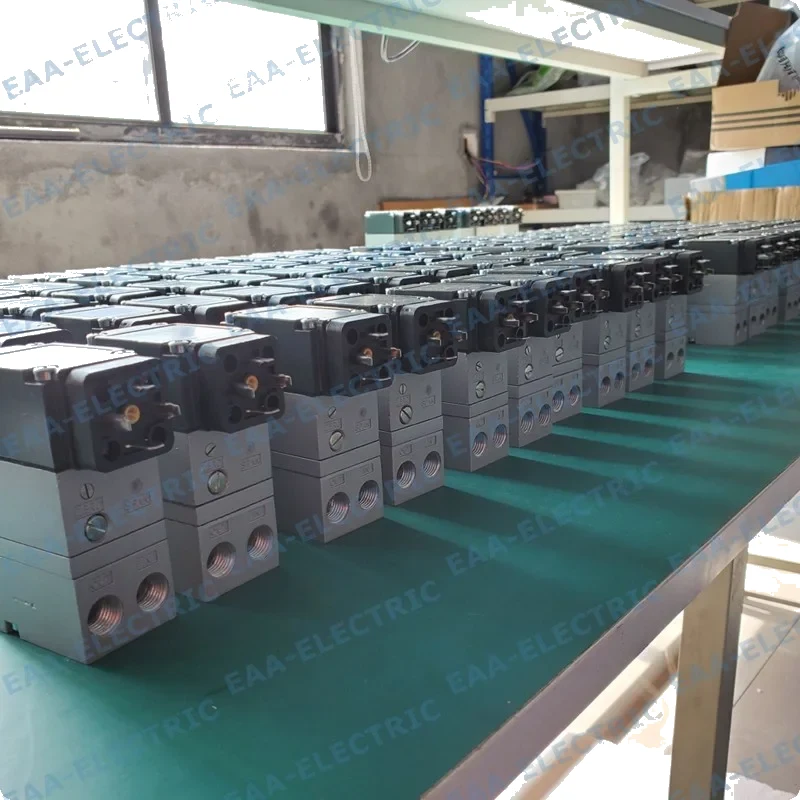
I/P And E/P Transducers Built To Drop Into Imported Instrument Loops
Eighteen catalogued models across five patterns. Same footprint, same 1/4 NPT and 1/2 NPT ports, same front-face zero and span screws, so the replacement goes back on the bracket that is already there.
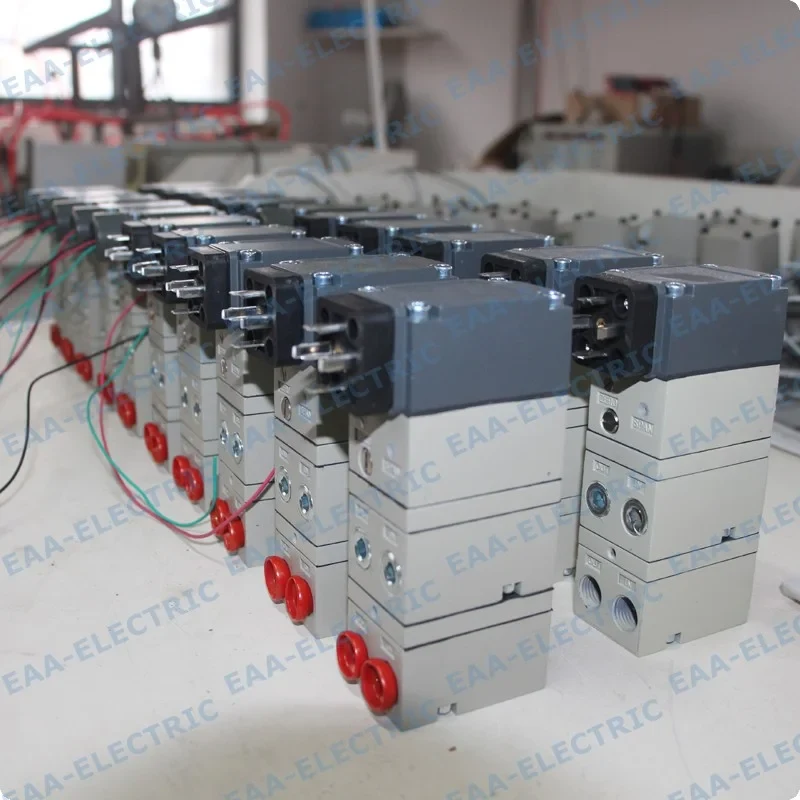
Piezoelectric Precision At 0.25% Full Scale To ISA S51.1
The T7800 family holds output regardless of vibration or mounting position through internal electronic feedback, with 0.02% deadband and no measurable supply pressure effect.
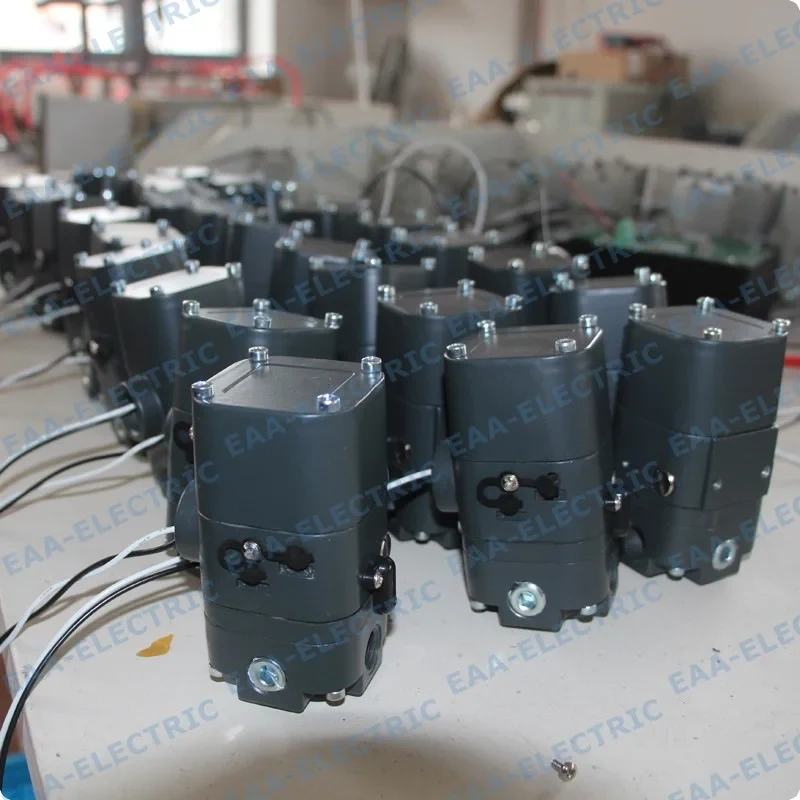
Customer Label Customer Range Built And Tested On Our Own Benches
Sixteen photographed customer orders, each one a batch built in a single run, calibrated against a standard current generator and a 0.1 class pressure gauge before packing.
Signal Conversion Between A Control Room And A Pneumatic Valve
I/P and E/P transducers that turn a 4-20 mA, 0-5 V, 1-9 V or 0-10 V control signal into a proportional 3-15, 3-27, 6-30, 0-60 or 0-120 psi pneumatic output.
Who it is for
Instrument engineers, valve automation workshops, EPC contractors and OEM builders who maintain control loops originally fitted with Controlair, Marsh Bellofram, Fairchild, Flowserve and EPC pattern transducers.
What it solves
A failed transducer stops a control valve. The original part often carries a long import lead time and a price that does not match the job. EAA builds the same patterns, with the same port sizes, signal ranges and mounting, so the replacement goes back on the existing bracket and the loop is recalibrated the same day.
Why buy here
Eighteen catalogued models across five patterns, CE EMC verification by Intertek, an on-site supplier audit by Bureau Veritas, and OEM private-label runs photographed on our own benches.
One Workshop Covering The Transducer Patterns Already In Your Plant
A mixed instrument population becomes one purchase order and one contact instead of four import channels.
Controlair Type Transducer
EAA-500 and EAA-550 series I/P and E/P transducers on the Controlair pattern
6 models →
02Marsh Bellofram Type Transducer
EAA-T1000 and EAA-T1500 force balance transducers with integral volume boosters
3 models →
03Fairchild Type Transducer
T6000 modular transducers and the T7800 piezoelectric precision family
7 models →
04Flowserve Type Transducer
PT700 two-wire piezoelectric microvalve transducer with ATEX intrinsic safety
1 models →
05EPC Type Transducer
EAA's own EPC1000 direct-acting converter with a pneumatic power amplifying relay
1 models →
All Eighteen Models With Published Selection Tables
Every model here is ordered against a part-number table or a coding system, so input signal, output range and impedance are fixed before the unit is built.
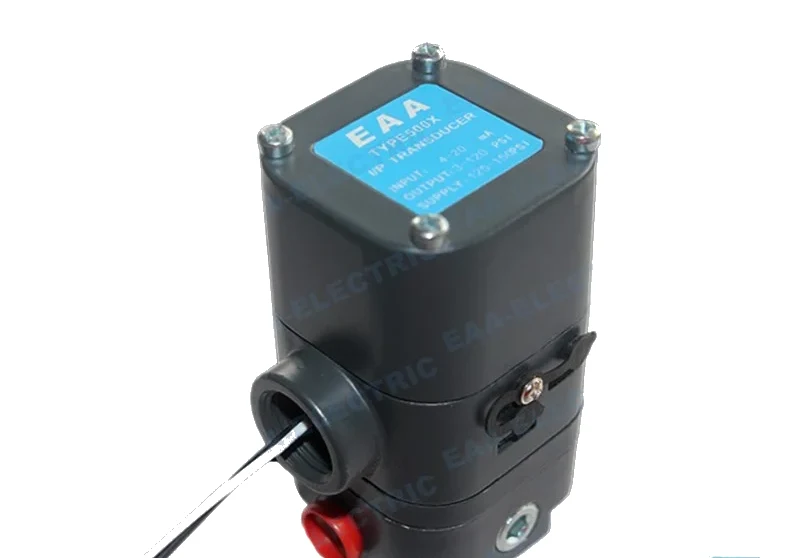 Controlair Type Transducer
500AC Electro Pneumatic Transducer
500-AC configuration, 4-20 mA in, 3-15 psi out, 180 ohms
View specifications →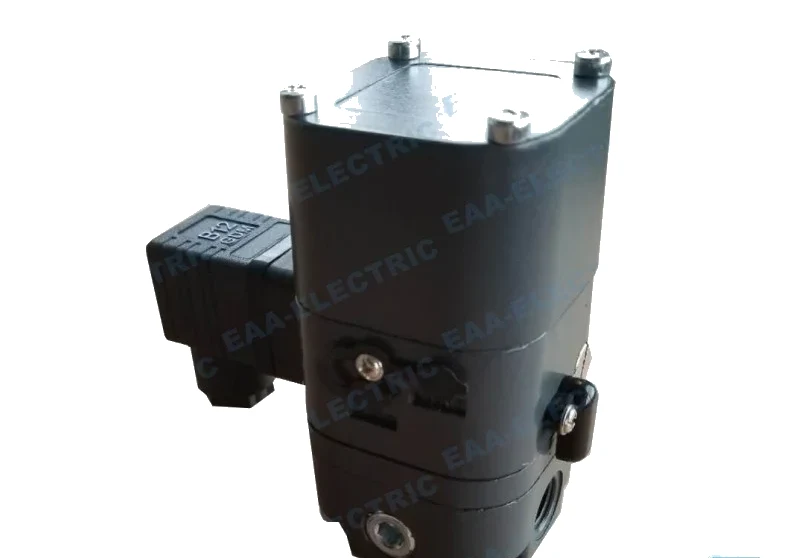 Controlair Type Transducer
500ACD Electro Pneumatic Transducer
500-AC range with a plug-in electrical termination
View specifications →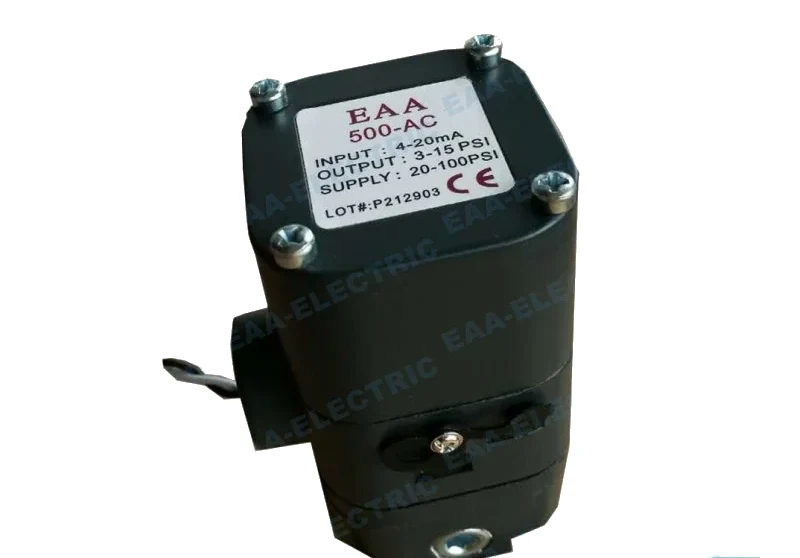 Controlair Type Transducer
500X Electro Pneumatic Converter
Controlair pattern E/P converter, 0-5 V, 1-9 V and 0-10 V inputs
View specifications →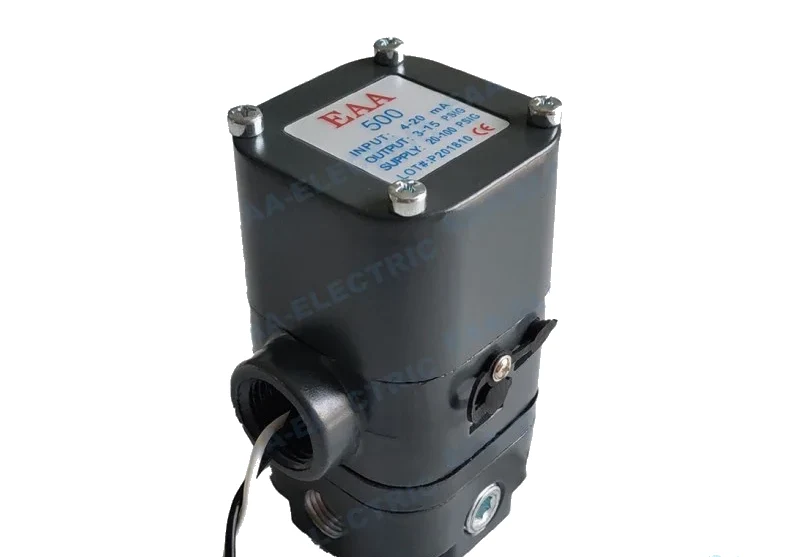 Controlair Type Transducer
500X Electro Pneumatic Transducer
Controlair pattern I/P transducer, 4-20 mA in, 3-15 to 3-120 psi out
View specifications →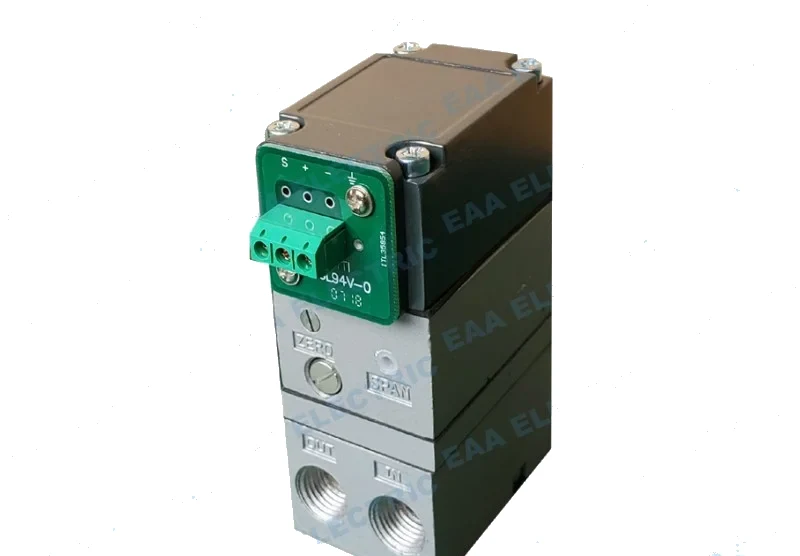 Controlair Type Transducer
550ACT Electro Pneumatic Transducer
550-A-C-T built configuration: 4-20 mA, 3-15 psig, terminal block
View specifications →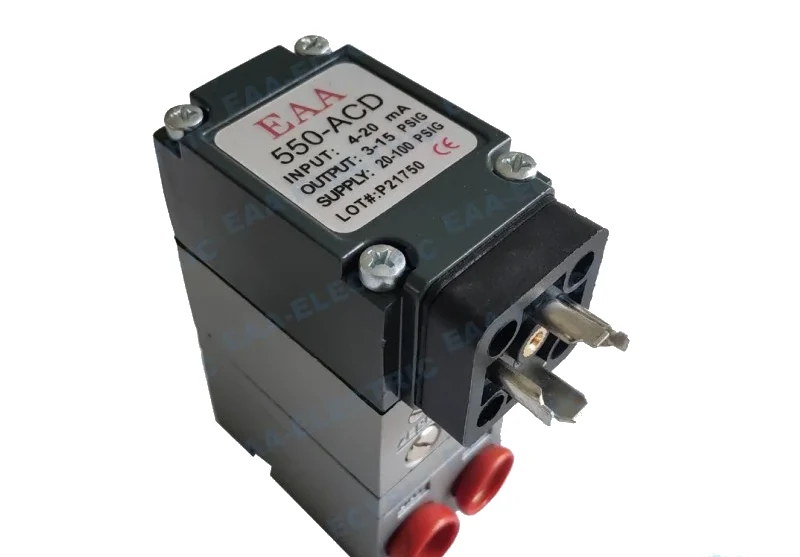 Controlair Type Transducer
550X Electro Pneumatic Transducer
Miniature EAA-550 series electronic pressure regulator, coded ordering
View specifications →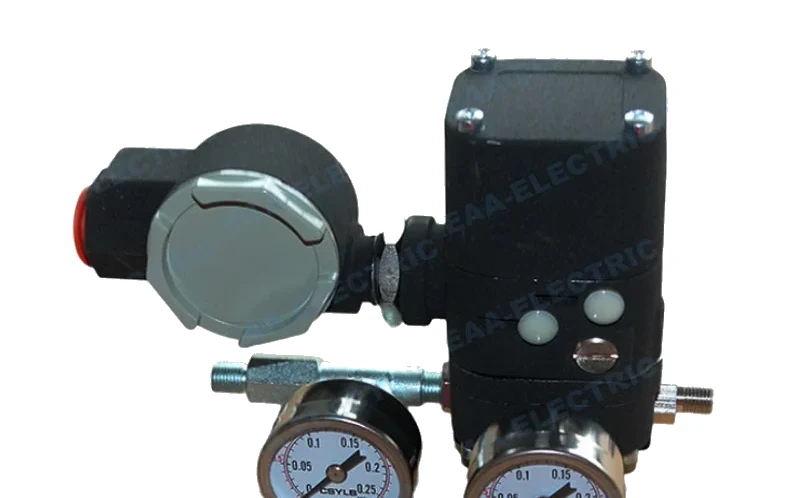 EPC Type Transducer
EPC1000 Electro Pneumatic Transducer
Direct moving E/P converter with a power amplifying relay, EAA's own EPC pattern
View specifications →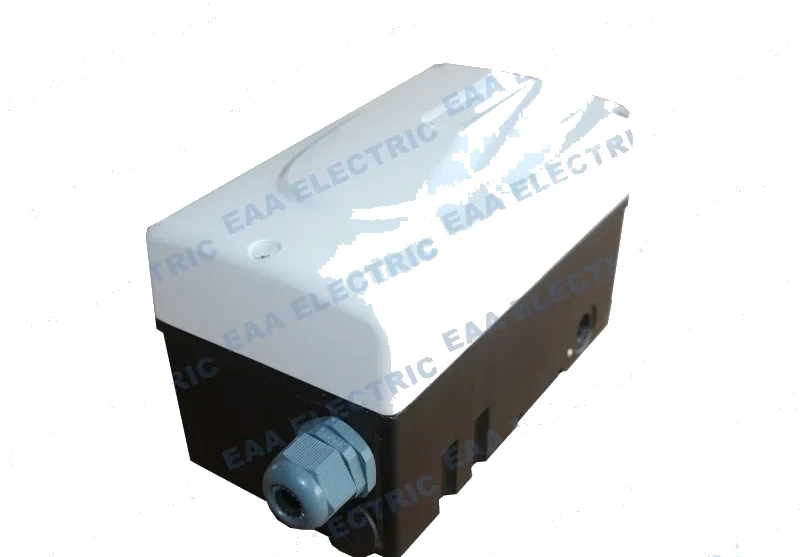 Flowserve Type Transducer
PT700 Electro Pneumatic Transducer
Two-wire piezoelectric microvalve transducer, ATEX EEx ia IIC T4, IP66
View specifications →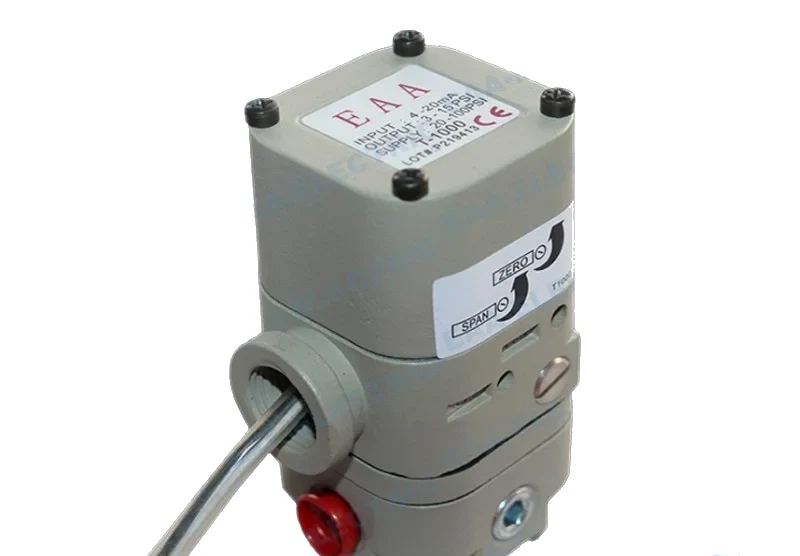 Marsh Bellofram Type Transducer
T1000 Electro Pneumatic Transducer
Force balance I/P transducer with a built-in volume booster, four build classes
View specifications →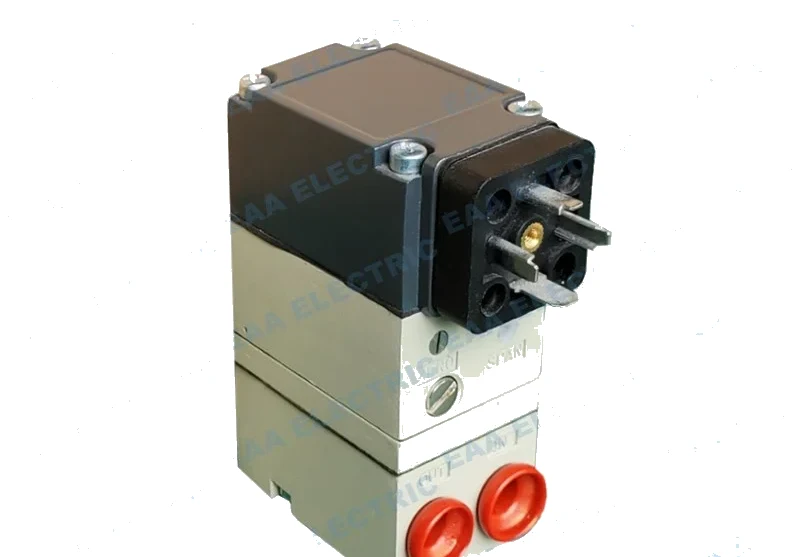 Marsh Bellofram Type Transducer
T1500 Electro Pneumatic Converter
Zero based T1500 build, 0-15 to 0-120 psig, regulates down to 0 psig
View specifications →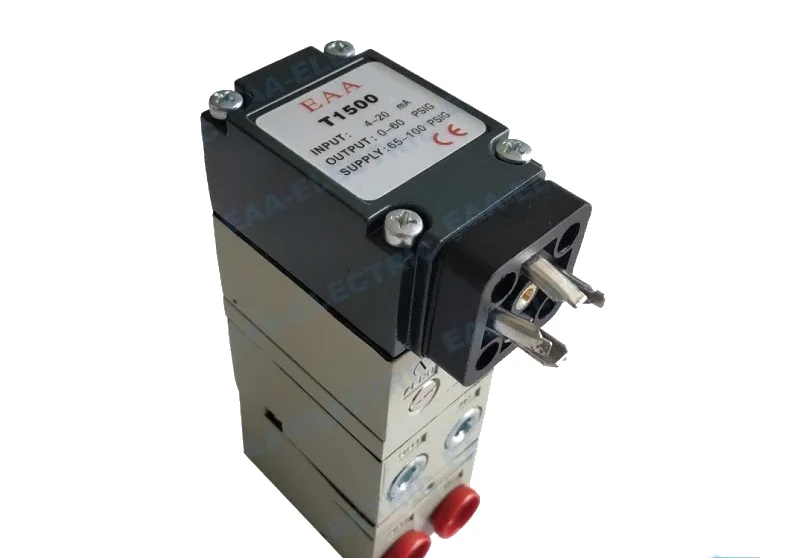 Marsh Bellofram Type Transducer
T1500 Electro Pneumatic Transducer
Compact force balance transducer, manifold mountable, 3-15 to 6-30 psig
View specifications →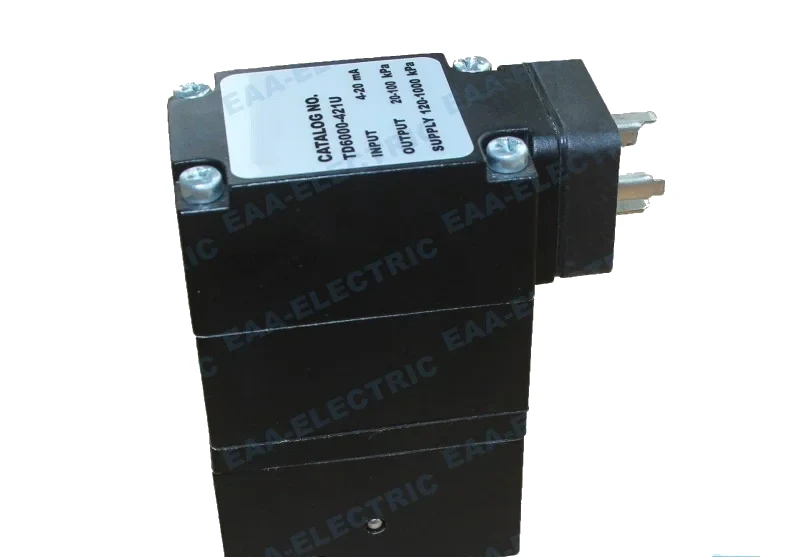 Fairchild Type Transducer
T6000 Electro Pneumatic Transducer
Modular precision transducer, six input and six output ranges, conduit termination
View specifications →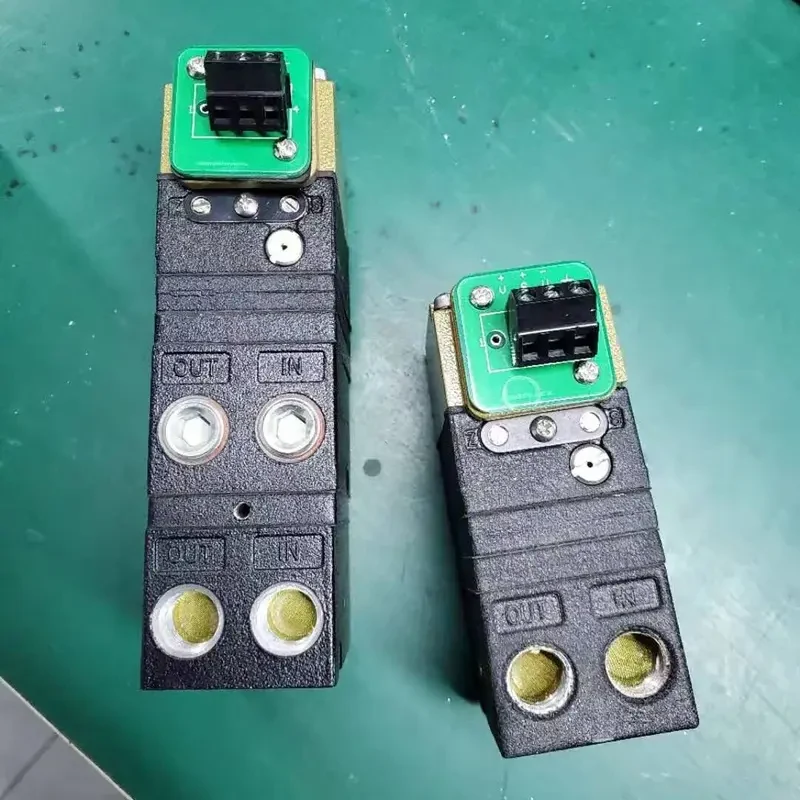 Fairchild Type Transducer
T7800 Electro Pneumatic Transducer
Piezoelectric precision transducer, 0.25% full scale accuracy, NEMA 4X and IP65
View specifications →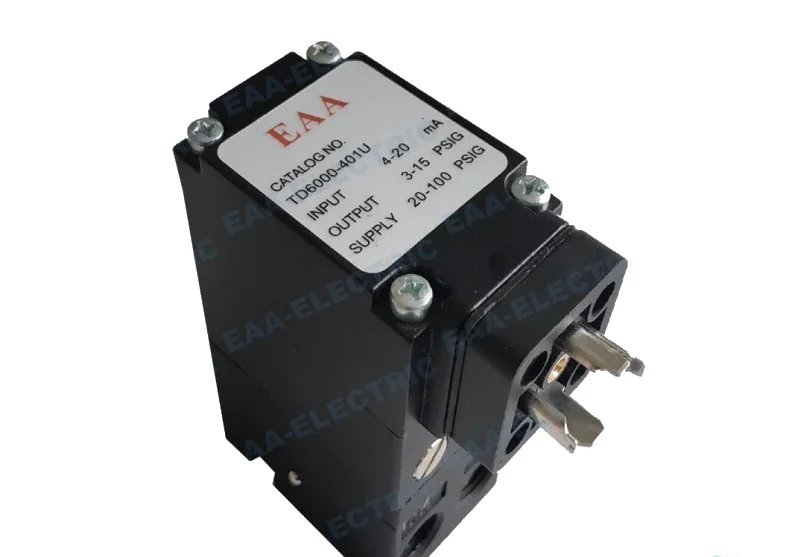 Fairchild Type Transducer
TD6000 Electro Pneumatic Transducer
T6000 series with a DIN 43650 connection, same modular mounting
View specifications →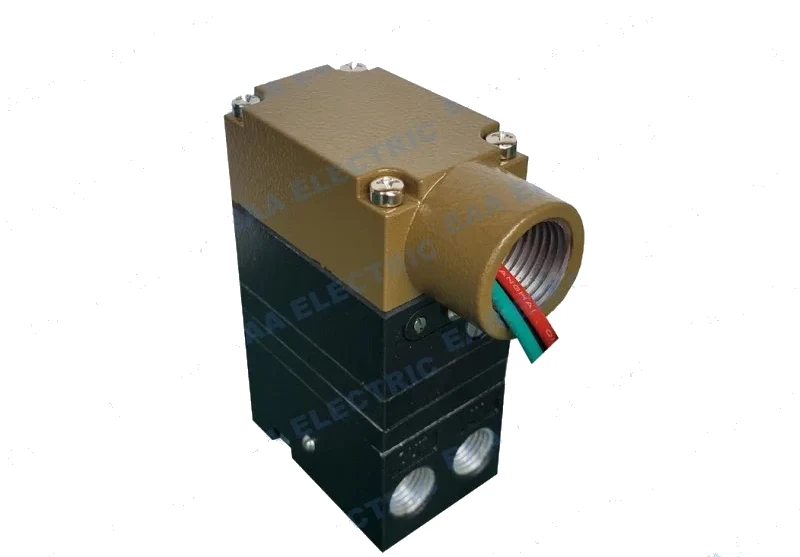 Fairchild Type Transducer
TA7800 Electro Pneumatic Transducer
Extended range T7800 with a 1/2 inch NPT conduit fitting and pigtail
View specifications →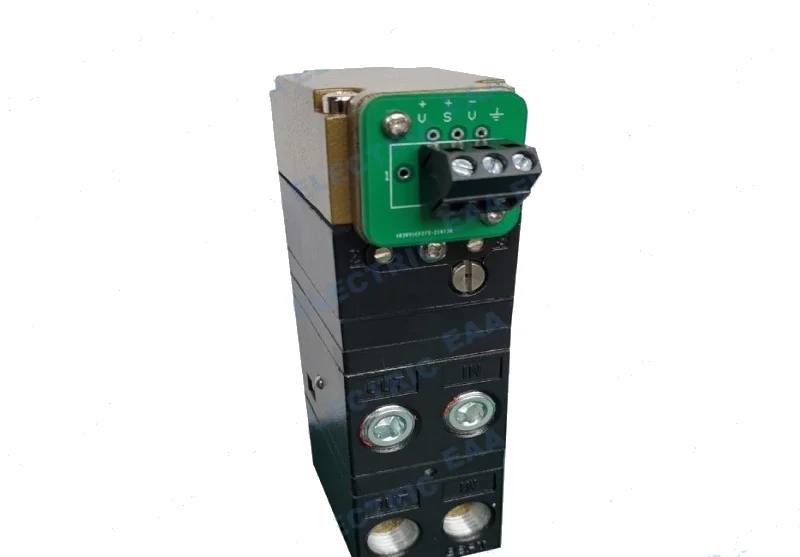 Fairchild Type Transducer
TT7800 Electro Pneumatic Converter
T7800 with a terminal block, standard and extended range, voltage or current input
View specifications →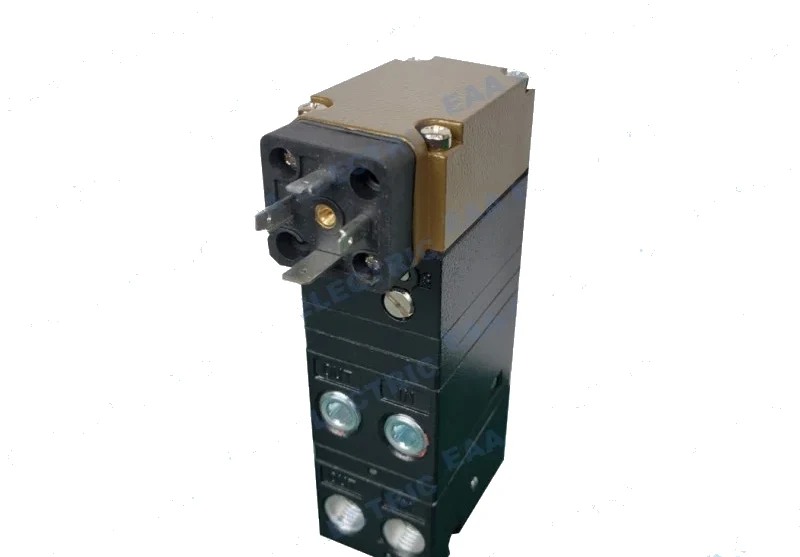 Fairchild Type Transducer
TD7800 Electro Pneumatic Converter
DIN 43650 T7800 on a three-wire voltage input, standard and extended range
View specifications →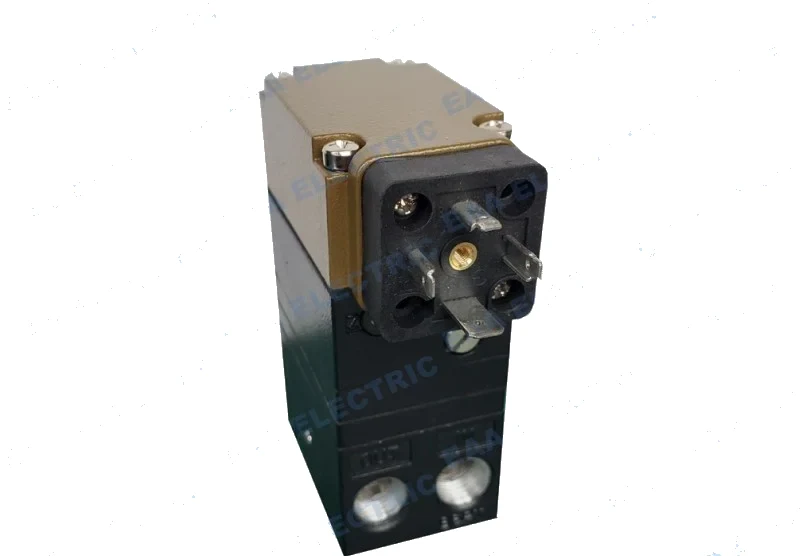 Fairchild Type Transducer
TD7800 Electro Pneumatic Transducer
T7800 with a DIN 43650 connection, 4-20 mA two-wire precision transducer
View specifications →Where These Instruments Go To Work
Application lists taken from the datasheets themselves, not from a marketing brochure.
Petrochemical And Refining
I/P conversion on control valves across refinery and petrochemical units
Chemical Processing
Signal conversion on dosing, reactor and transfer control valves
Power And Energy Management
Damper, louver and valve control on boilers, turbines and energy systems
HVAC And Building Services
Air handling dampers, valves and actuators in building plant rooms
Pulp Paper And Textile
Tension, web and process control on paper handling and textile lines
Six Things That Decide A Transducer Order
Five patterns, one supplier
Controlair 500X and 550X, Marsh Bellofram T1000 and T1500, Fairchild T6000 and T7800, Flowserve PT700 and the EAA EPC1000 are all built in the same workshop, so a mixed plant keeps one purchase order and one contact.
Interchangeable dimensions and ports
Models keep the pattern's 1/4 NPT and 1/2 NPT pneumatic and electrical ports, the front-face zero and span screws and the original mounting footprint, so existing brackets, manifolds and tubing are reused.
Documented signal and output ranges
Every model is supplied against a published part-number table, not a verbal description. The input signal, output range in psi, BAR and kPa, and the coil impedance are fixed at the order stage.
CE EMC verification on file
Intertek verified the transducer families to EN 55011 and EN 61000-6-2 under the EMC Directive. The verification and report numbers are quoted on request for tender files.
OEM and private-label runs
Sixteen photographed customer orders on this site are OEM batches: customer label, customer range, customer packing, built and bench-tested in our own workshop.
Bench calibration before shipping
Each unit is set against a standard current generator, a pneumatic barostat and a 0.1 class pressure gauge, and the zero and span are recorded before packing.
Every Unit Is Calibrated Before It Is Packed
The source procedure EAA publishes for its transducers, summarised for the workshop.
The instruments used
- A standard current signal generator
- A standard pneumatic barostat
- A 0.1 class standard pressure gauge
- A millimetre ruler for the valve stem travel
Instrument air has to be regulated, dry and clean. The T-1500 datasheet asks for a dew point below 35 F, no particle larger than three microns and a maximum oil content of 1 ppm, and every unused port plugged.
- Connect the loopWire the standard current signal generator to the transducer junction box. Feed the barostat from the instrument air header and take its output to the transducer air inlet.
- Set the supplyAdjust the barostat output to a constant 140 kPa. Instrument air into the transducer has to sit steady near 0.14 MPa, clean and dry, which is why a filter regulator belongs on the inlet.
- Mark the starting pointTake the standard pressure gauge into the line between the transducer and the pneumatic control valve. Measure the valve travel indicator with the ruler and mark the initial position.
- Set zero at 4 mAOutput 4 mA from the generator. The gauge should settle at 20 kPa. Trim it with the zero knob and record the valve stem position.
- Set span at 20 mAOutput 20 mA. The gauge should settle at 100 kPa. Trim it with the span knob and record the valve stem position. Repeat the zero and span points until both hold.
- Check linearityTest 8 mA, 12 mA and 16 mA and compare the transducer output against the valve opening at each point.
- Find the dead bandRaise the current slowly from 4 mA until the valve stem visibly moves. Note the current and the pneumatic output at that moment, then repeat the test downwards.
How An Order Usually Starts
Four routes into the catalogue, depending on whether you are replacing an instrument, specifying a new loop or buying under your own label.
Replacing An Imported Transducer
Identify the failed unit, match the pattern, get the loop back on line
OEM And Private Label Production
Customer label, customer range, customer packing, built and tested in our workshop
Valve Actuator Signal Conversion
Turning a control room signal into the air a pneumatic valve can act on
Split Range And High Flow Control
One signal driving two elements, and actuators that need more air than usual
Customer Orders Photographed On Our Own Benches
Sixteen batches, each built in one run and calibrated unit by unit before packing.
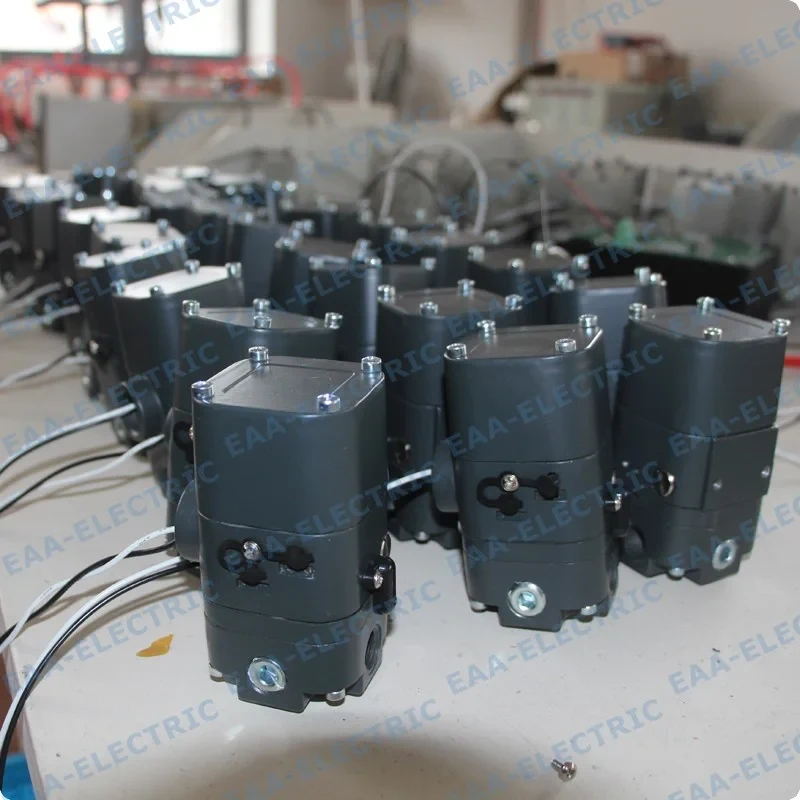 OEM batch
500AC Electro Pneumatic Converter Order
500-AC configuration, 4-20 mA input, 3-15 psi (0.2-1.0 BAR) output, 180 ohms
Read the case →OEM batch500AC Electro Pneumatic Transducer OEM Order
500-AC configuration supplied under the customer's own brand
Read the case →OEM batch500AC Electro Pneumatic Transducer Order
500-AC configuration, standard EAA nameplate
Read the case →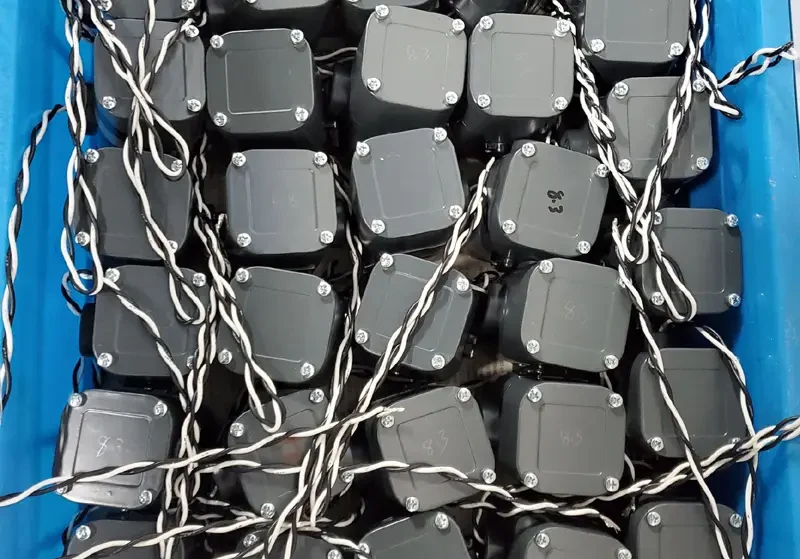 OEM batch
500AH Electro Pneumatic Converter OEM Order
500-AH configuration, 4-20 mA input, 3-120 psi (0.2-8.2 BAR) output, 260 ohms
Read the case →The Engineering Behind The Instrument
Working principle, selection, calibration and maintenance, written from the notes and datasheets EAA publishes.
How An Electro Pneumatic Transducer Works
The force balance principle behind an I/P transducer: coil, lever, baffle, nozzle, power amplifier and feedback bellows, and why 4-20 mA becomes 20-100 kPa.
PRODUCT GUIDEPrinciple And Composition Of An I/P Transducer
Nozzle baffle mechanism and pneumatic power amplifier explained: how an electrical signal becomes a physical displacement and then a controlled air pressure.
INDUSTRY ARTICLEThe Role Of An Electro Pneumatic Transducer In A Control Loop
Why a pneumatic control valve needs a conversion instrument at all, and where the transducer sits between the control room and the final element.
Questions Buyers Ask Before Ordering
Which transducer patterns do you build
Controlair 500X and 550X, Marsh Bellofram T1000 and T1500, Fairchild T6000 and T7800, Flowserve PT700 and the EAA EPC1000. Eighteen models in total.
Will your unit fit our existing bracket
The patterns keep the original footprint and the 1/4 NPT and 1/2 NPT pneumatic and electrical porting, which is what makes a drop-in replacement possible.
What do you need from us to quote
The nameplate data from the failed unit: input signal, output range and supply pressure. Add the electrical termination and the area classification and the specification is complete.
Do you supply under our own brand
Yes. Sixteen of the orders shown on this site are OEM batches carrying customer nameplates, customer part numbering and customer packing.
What certification can you provide
Intertek verified the transducer families to EN 55011 and EN 61000-6-2 under the EMC Directive, verification V007060856-1. Bureau Veritas carried out an on-site supplier audit for Made-in-China.com, report MIC-ASI2031344, on 29 August 2020.
Where do you ship
The supplier audit records export experience in Europe, Southeast Asia, the Middle East and East Asia including Japan and South Korea.
Send Us The Nameplate And We Will Send Back A Part Number
Input signal, output range and supply pressure are all we need to identify the replacement. Photographs of the failed unit help.