
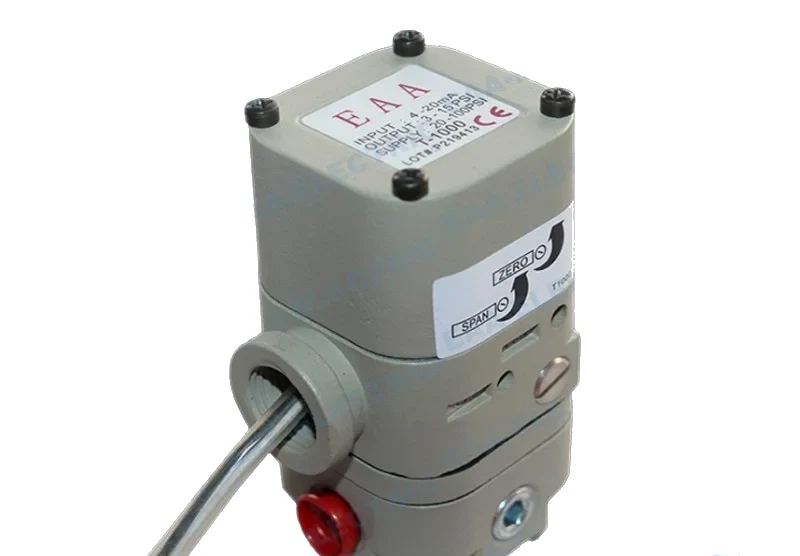
 Marsh Bellofram Type Transducer
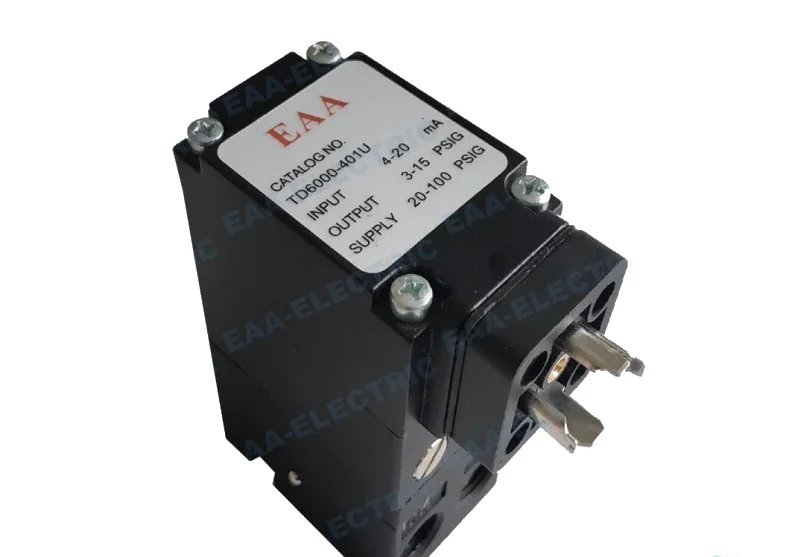 Fairchild Type Transducer
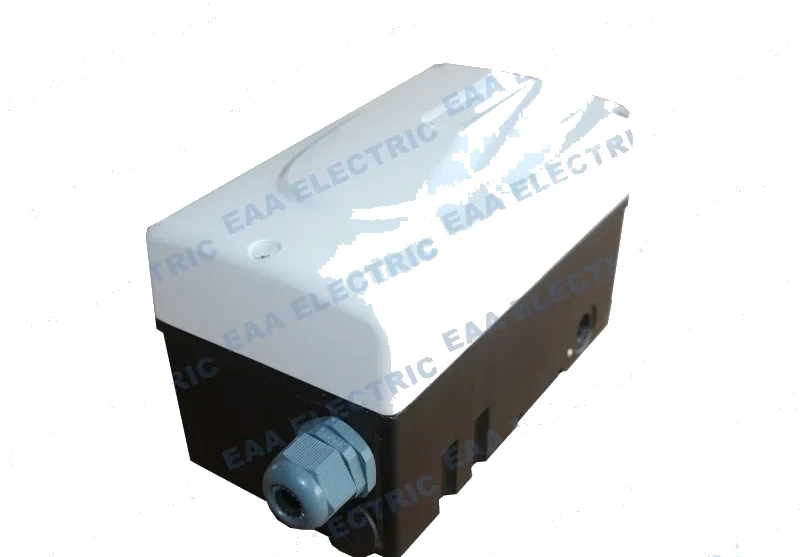 Flowserve Type Transducer
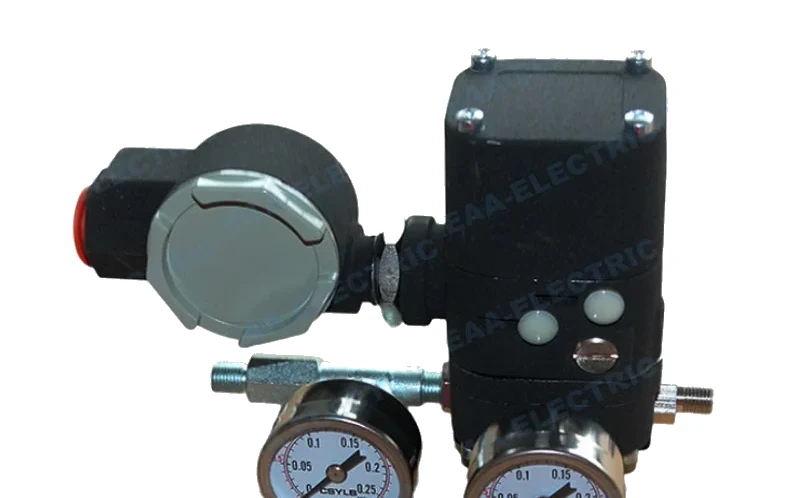 EPC Type Transducer
500AC Electro Pneumatic Transducer
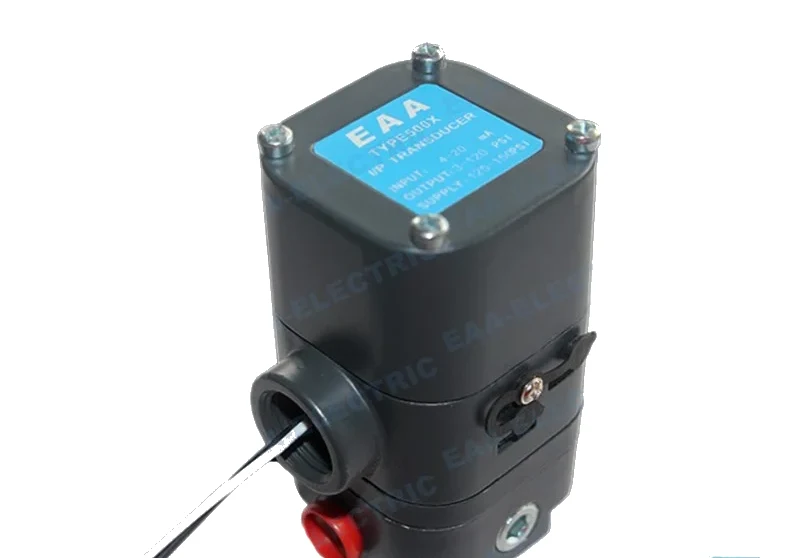
The 500AC is the most ordered configuration in the EAA-500 family: 4-20 mA in, 3-15 psi (0.2-1.0 BAR) out, 180 ohms coil impedance. It is the unit that matches a standard 20-100 kPa actuator spring, which is why it is the one most plants keep on the shelf.
What This Model Is
Type EAA-500 I/P and E/P transducers convert a current or voltage input signal to a linearly proportional pneumatic output pressure. The AC configuration is the 4-20 mA to 3-15 psi variant of that family. The instrument is designed for control applications that require a high degree of reliability and repeatability at an economical cost, and the nameplate carries the input, output and supply range so the unit can be identified on the valve without opening a file.
How It Works
As a standard instrument the transducer is calibrated individually for accuracy. In service it is normally calibrated jointly with the regulating valve it is connected to, which reduces the workload and gives a result that reflects how the pair behaves together rather than how each behaves alone.
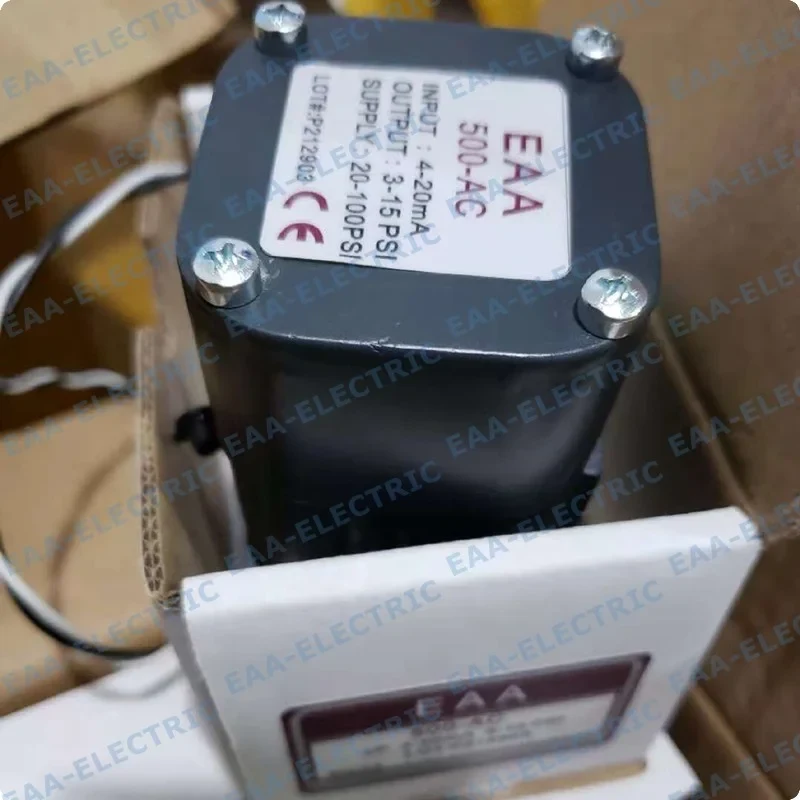
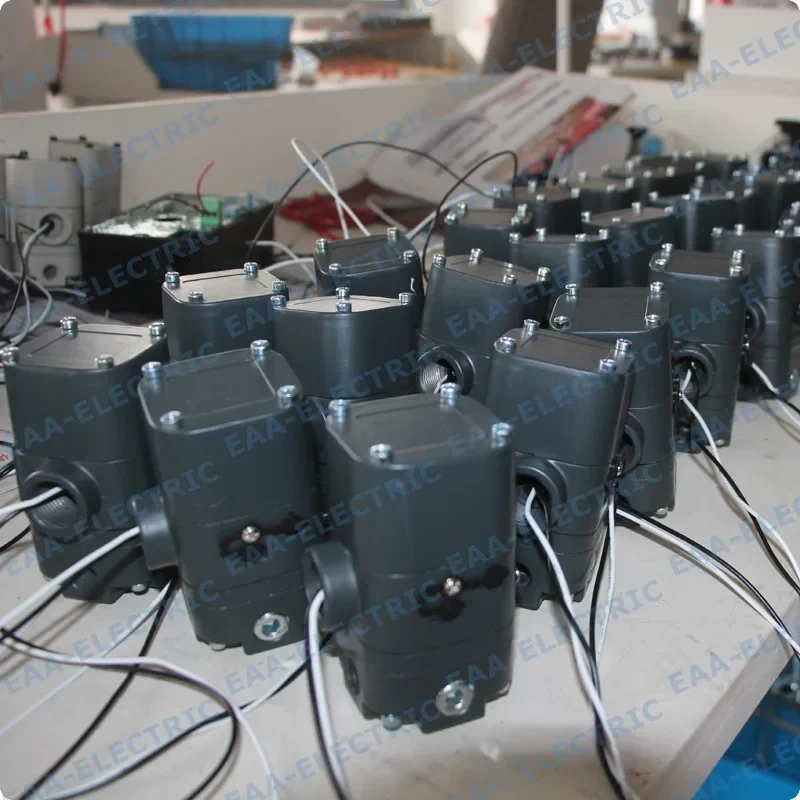
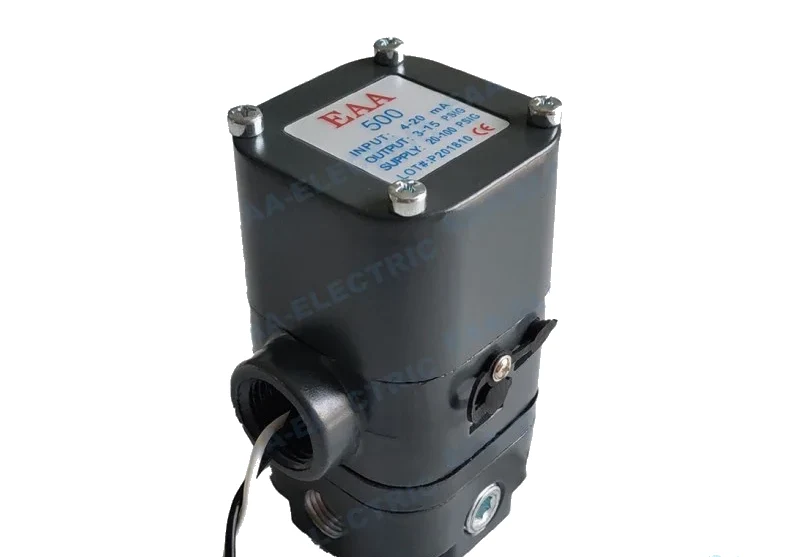
500AC Electro Pneumatic Transducer On Our Benches
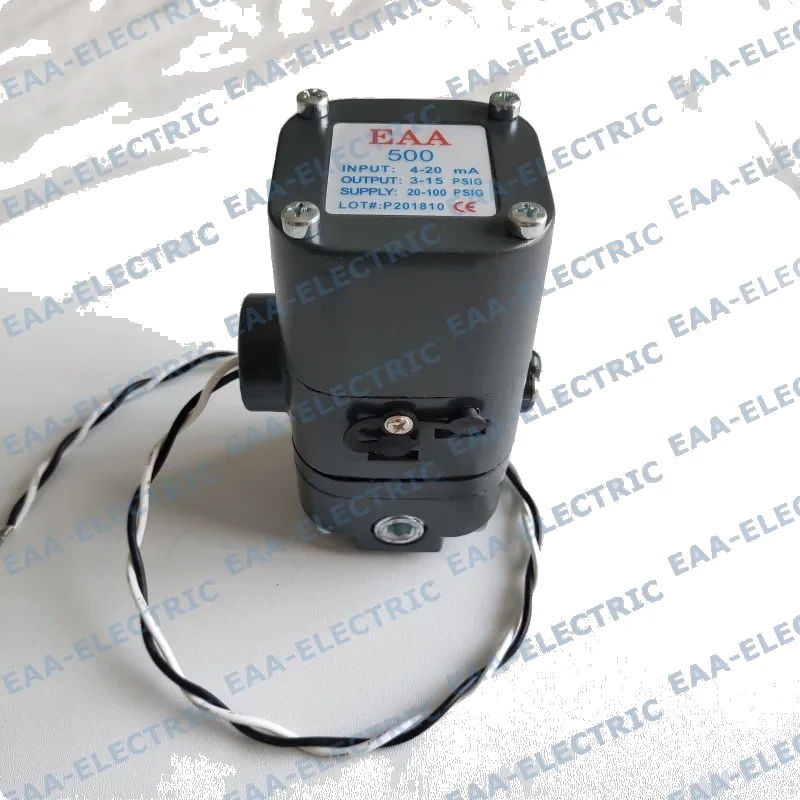
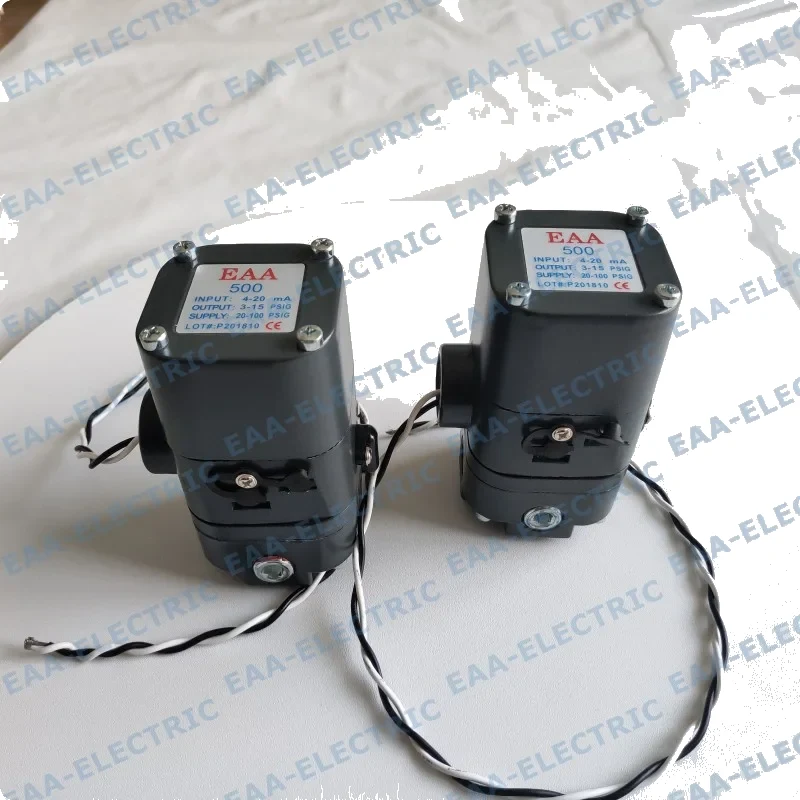
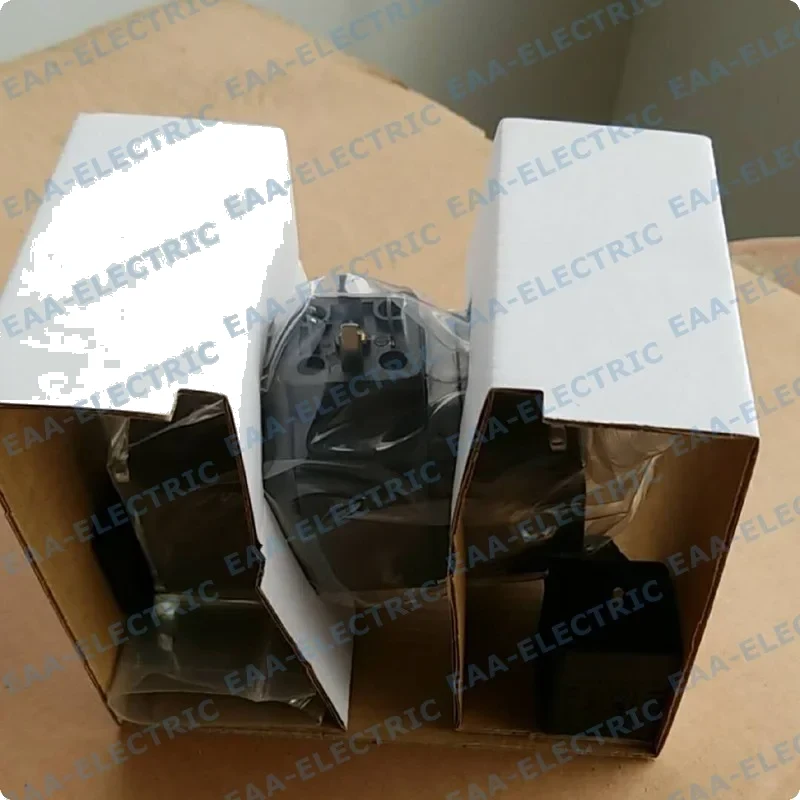
Studio and workshop photographs of the units as built, not renderings.
What You Get From This Model
The standard pairing, already in stock
3-15 psi output against a 20-100 kPa spring is the arrangement most pneumatic control valves are built around, so the 500-AC is the default spare.
180 ohms is an easy load
A 4-20 mA controller output drives 180 ohms without extra supply, which keeps the loop wiring simple.
Joint calibration is quick
Zero at 4 mA to 20 kPa, span at 20 mA to 100 kPa, two knobs on the front face, no cover to remove.
Nameplate data on the unit
Input, output and supply pressure are printed on the label, so the next technician does not have to guess the configuration.
Where It Is Used
- Standard pneumatic globe and ball valve actuators
- Retrofit of a failed 500 series unit in an existing loop
- New skid work where the actuator uses a 20-100 kPa spring
- OEM packages that ship with a fixed 4-20 mA to 3-15 psi stage
Who Orders It
- Plant instrument stores holding one standard I/P spare
- Contractors commissioning valve packages on a fixed spring range
- OEM builders standardising on one configuration across a product line
- Distributors supplying a general purpose I/P for stock
What This Model Fixes
Every valve in the plant needs a different spare
Standardising on the 3-15 psi configuration where the springs allow it cuts the number of part numbers held in the store.
Calibration drifts after a rebuild
The documented zero and span procedure with a 0.1 class gauge gives a repeatable result after each valve service.
The unit on the valve cannot be identified
The printed nameplate carries the input, output and supply ranges.
Features And Specifications
Every figure below is transcribed from the datasheet EAA publishes for this series. Anything not published is not listed.
- 4-20 mA input, 3-15 psi (0.2-1.0 BAR) output
- 180 ohms coil impedance
- Integral pneumatic volume booster
- Front-face zero and span adjustment
- 1/4 NPT and 1/2 NPT porting
- Individually calibrated before despatch
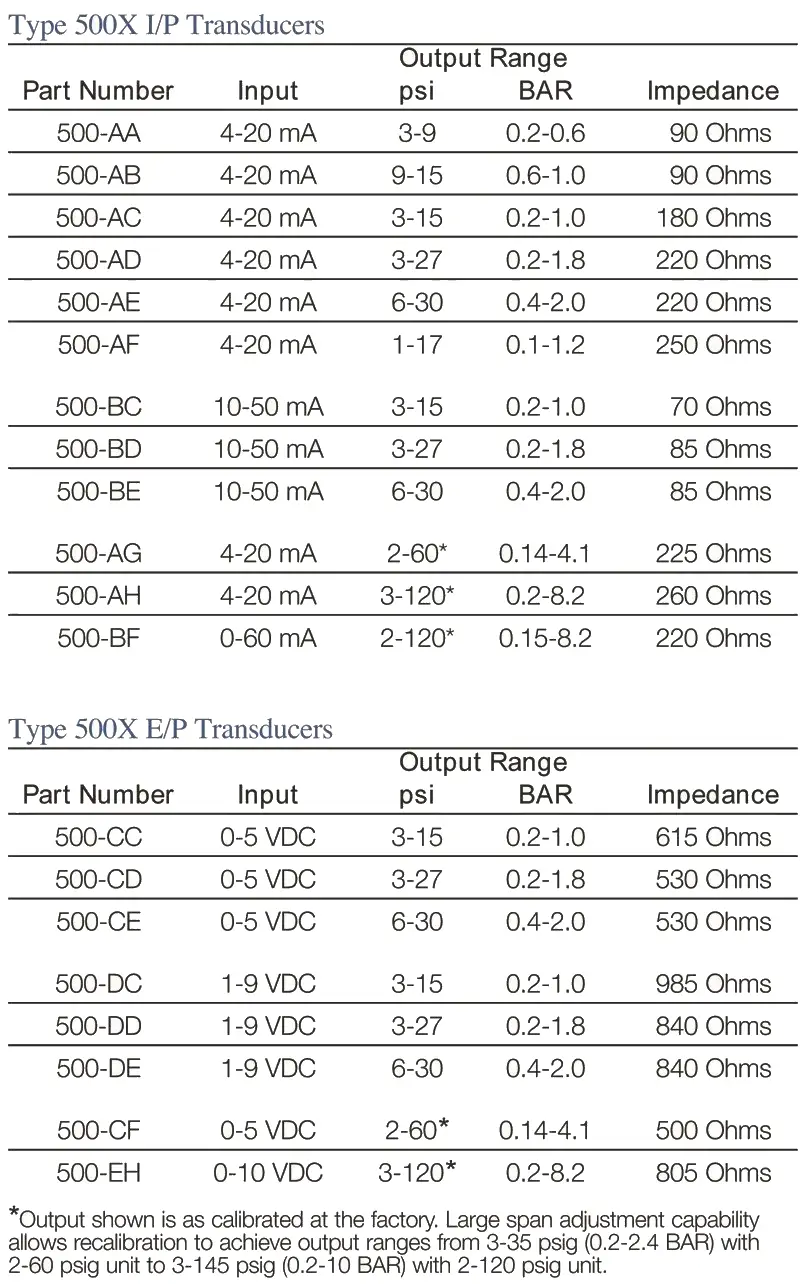
| Part number | Input | Output psi | Output BAR | Impedance |
|---|---|---|---|---|
| 500-AA | 4-20 mA | 3-9 | 0.2-0.6 | 90 Ohms |
| 500-AB | 4-20 mA | 9-15 | 0.6-1.0 | 90 Ohms |
| 500-AC | 4-20 mA | 3-15 | 0.2-1.0 | 180 Ohms |
| 500-AD | 4-20 mA | 3-27 | 0.2-1.8 | 220 Ohms |
| 500-AE | 4-20 mA | 6-30 | 0.4-2.0 | 220 Ohms |
| 500-AF | 4-20 mA | 1-17 | 0.1-1.2 | 250 Ohms |
| 500-BC | 10-50 mA | 3-15 | 0.2-1.0 | 70 Ohms |
| 500-BD | 10-50 mA | 3-27 | 0.2-1.8 | 85 Ohms |
| 500-BE | 10-50 mA | 6-30 | 0.4-2.0 | 85 Ohms |
| 500-AG | 4-20 mA | 2-60* | 0.14-4.1 | 225 Ohms |
| 500-AH | 4-20 mA | 3-120* | 0.2-8.2 | 260 Ohms |
| 500-BF | 0-60 mA | 2-120* | 0.15-8.2 | 220 Ohms |
| Part number | Input | Output psi | Output BAR | Impedance |
|---|---|---|---|---|
| 500-CC | 0-5 VDC | 3-15 | 0.2-1.0 | 615 Ohms |
| 500-CD | 0-5 VDC | 3-27 | 0.2-1.8 | 530 Ohms |
| 500-CE | 0-5 VDC | 6-30 | 0.4-2.0 | 530 Ohms |
| 500-DC | 1-9 VDC | 3-15 | 0.2-1.0 | 985 Ohms |
| 500-DD | 1-9 VDC | 3-27 | 0.2-1.8 | 840 Ohms |
| 500-DE | 1-9 VDC | 6-30 | 0.4-2.0 | 840 Ohms |
| 500-CF | 0-5 VDC | 2-60* | 0.14-4.1 | 500 Ohms |
| 500-EH | 0-10 VDC | 3-120* | 0.2-8.2 | 805 Ohms |
* Output shown is as calibrated at the factory. The large span adjustment range allows recalibration to 3-35 psig (0.2-2.4 BAR) on the 2-60 psig unit and to 3-145 psig (0.2-10 BAR) on the 2-120 psig unit.
Selecting Installing And Calibrating
- Prepare the instrumentsA standard current signal generator, a standard pneumatic barostat, a 0.1 class standard pressure gauge and a millimetre ruler.
- Set the supplyConnect the barostat between the instrument air header and the transducer inlet, and adjust its output to a constant 140 kPa.
- Zero and spanAt 4 mA trim the gauge to 20 kPa with the zero knob. At 20 mA trim it to 100 kPa with the span knob. Repeat until both points hold.
- Check the middleTest 8 mA, 12 mA and 16 mA and compare the output against the valve opening at each point, then test the dead band in both directions.
How It Compares With The Alternatives
The 500AC and the 500ACD are the same instrument in different configurations: the AC is the plain 4-20 mA to 3-15 psi unit, the ACD adds the connector variant used where a plug-in electrical termination is preferred over a conduit and pigtail. Where a stiffer spring is used, the 500-AD at 3-27 psi or the 500-AE at 6-30 psi takes over.
| Model | Distinguishing specification | Best suited to |
|---|---|---|
| 500AC Electro Pneumatic Transducer | 4-20 mA to 3-15 psi, 180 ohms | Standard 20-100 kPa actuator springs |
| 500ACD Electro Pneumatic Transducer | Same range, connector termination | Panels and skids wired with plug-in connectors |
| 500X Electro Pneumatic Transducer | Full 12-code current range table | Non-standard spring ranges |
Related cases
Related articles
Industry applications
Other Models Worth Comparing
 Controlair Type Transducer
500X Electro Pneumatic Transducer
Controlair pattern I/P transducer, 4-20 mA in, 3-15 to 3-120 psi out
View specifications →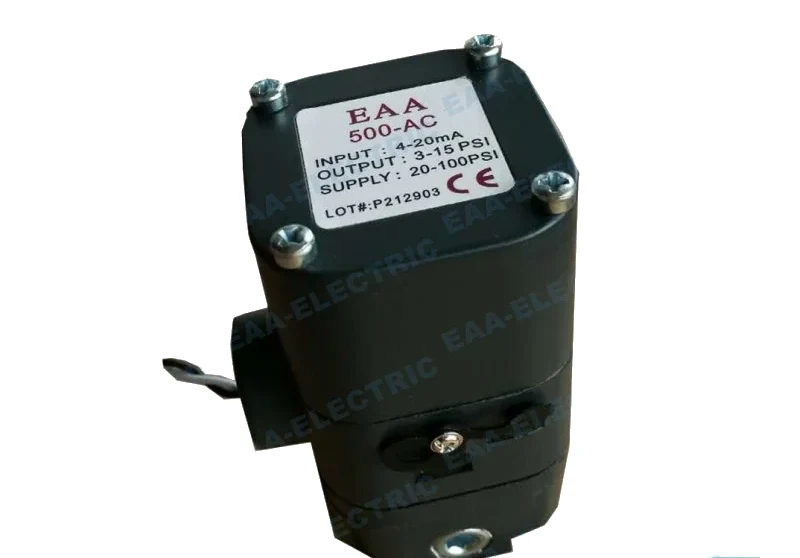 Controlair Type Transducer
500X Electro Pneumatic Converter
Controlair pattern E/P converter, 0-5 V, 1-9 V and 0-10 V inputs
View specifications →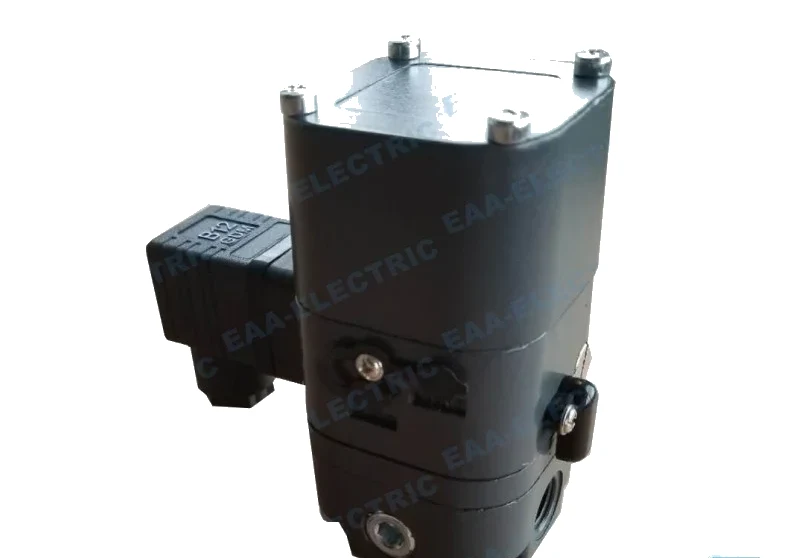 Controlair Type Transducer
500ACD Electro Pneumatic Transducer
500-AC range with a plug-in electrical termination
View specifications →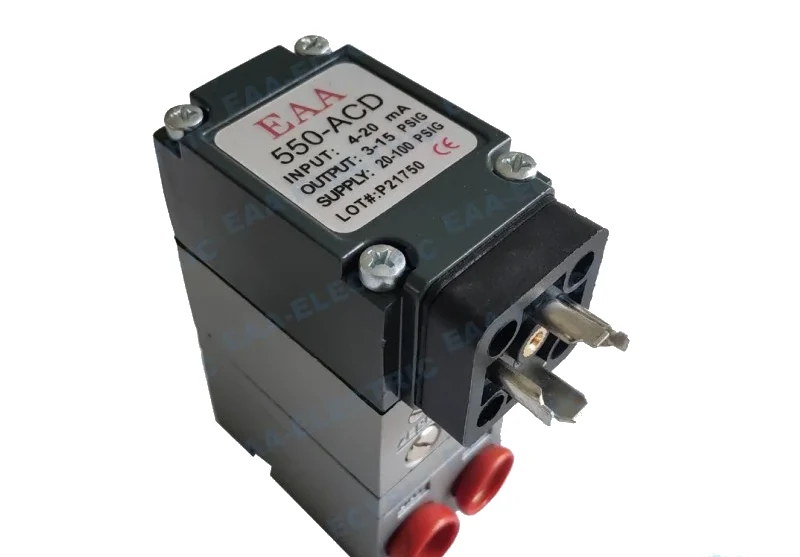 Controlair Type Transducer
550X Electro Pneumatic Transducer
Miniature EAA-550 series electronic pressure regulator, coded ordering
View specifications →Questions About The 500AC Electro Pneumatic Transducer
What does AC mean in the part number
It is the configuration code from the 500X selection table. A is the 4-20 mA input and C is the 3-15 psi (0.2-1.0 BAR) output. The published impedance for that combination is 180 ohms.
Will it drive a 20-100 kPa spring actuator
Yes, that is the pairing it is built for. 4 mA gives 20 kPa and 20 mA gives 100 kPa after calibration.
What supply pressure does it take
Instrument air held steady near 0.14 MPa at the inlet, clean and dry, through a filter regulator.
How often should it be recalibrated
Whenever the valve is serviced. Joint calibration with the valve is normal practice and is faster than calibrating the instrument alone.
Is the nameplate data the same as the order code
Yes. The label carries the input, output and supply pressure so the configuration on the valve can be read off without paperwork.
Request A Price For The 500AC
Tell us the input signal, the output range and the electrical termination, and the quotation comes back against the published part number.