
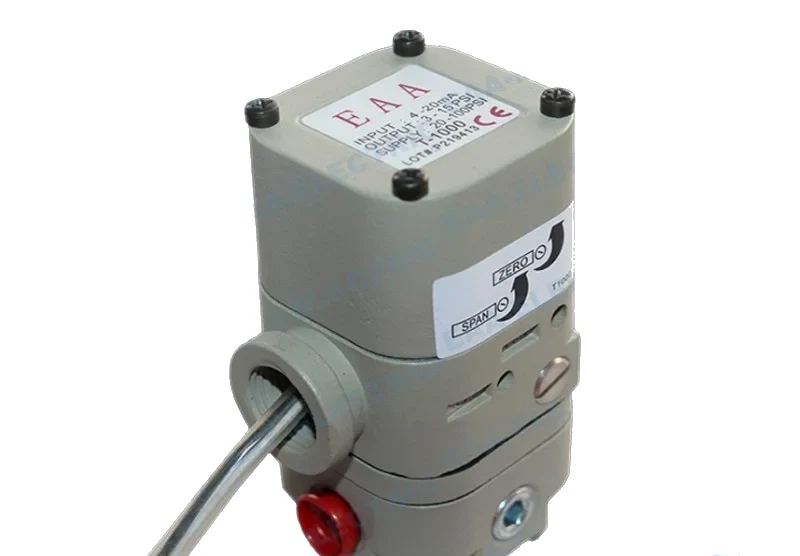
 Marsh Bellofram Type Transducer
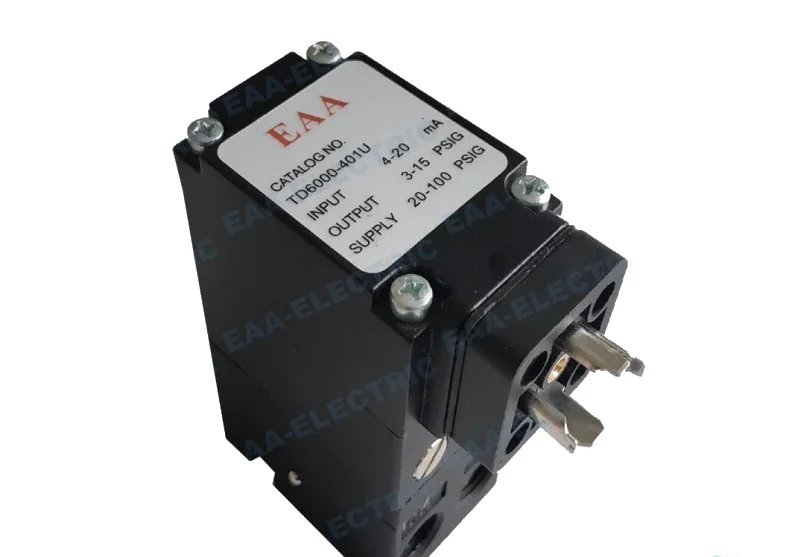 Fairchild Type Transducer
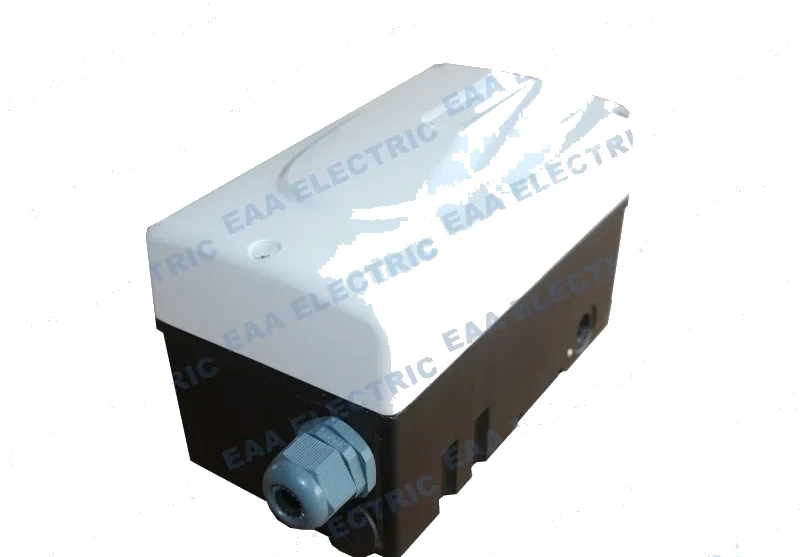 Flowserve Type Transducer
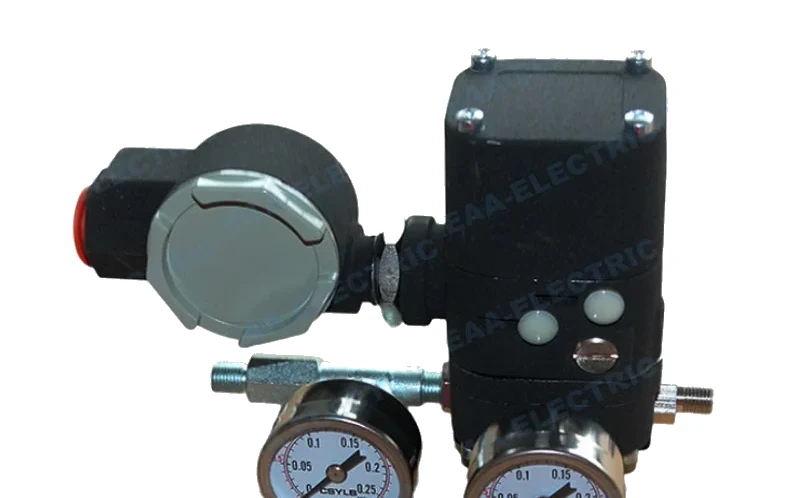 EPC Type Transducer
500X Electro Pneumatic Transducer
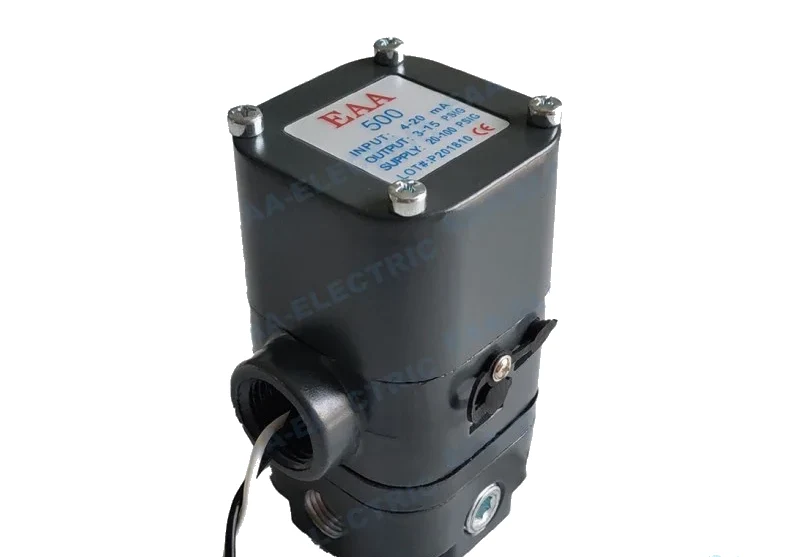
The 500X is an EAA-500 series I/P transducer built to the Controlair 500X pattern. It takes a current input and holds a linearly proportional air pressure on the output, with an integral power amplifier so the signal can drive a control valve directly. It is the standard replacement when a 500 series unit fails in an existing loop.
What This Model Is
Type EAA-500 I/P and E/P transducers convert a current or voltage input signal to a linearly proportional pneumatic output pressure. The instrument is designed for control applications that need a high degree of reliability and repeatability at an economical cost. The 500X is the current-input member of that family and is ordered against the published part-number table, so the input range, the output range in psi and BAR, and the coil impedance are all fixed before the unit is built.
How It Works
The core of the instrument is a nozzle and baffle mechanism working into a pneumatic power amplifier. An electrical signal is turned into a physical displacement of the baffle by electromagnetic conversion. The baffle is a thin metal disc; moving it towards or away from the nozzle raises or lowers the nozzle back pressure, and that back pressure is amplified to become the output. Pneumatic signal control is regulating a high-power compressed air flow, and the principle is the same as the electronic circuits it replaces.
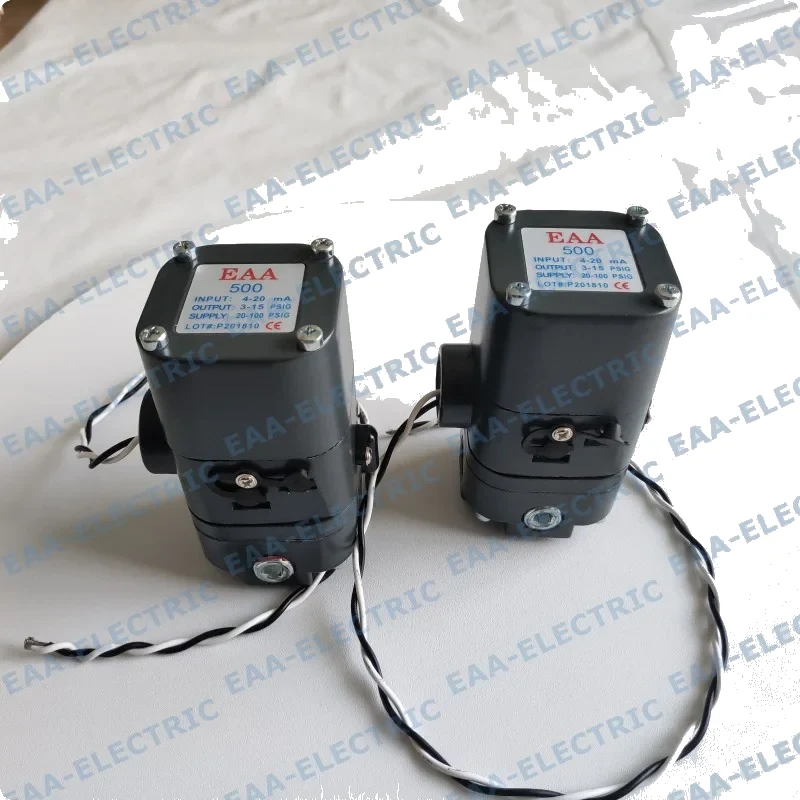
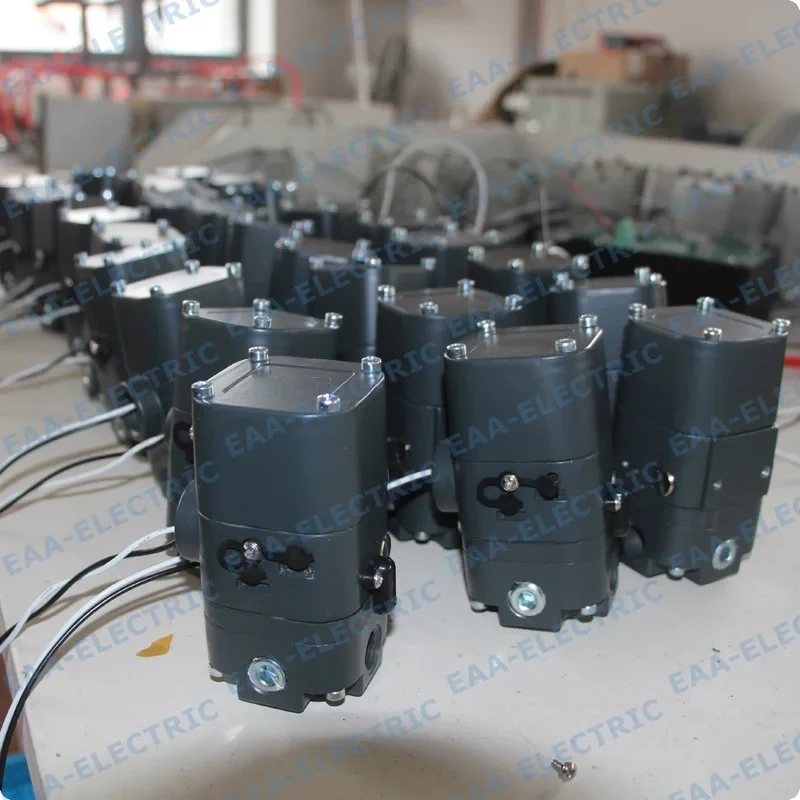
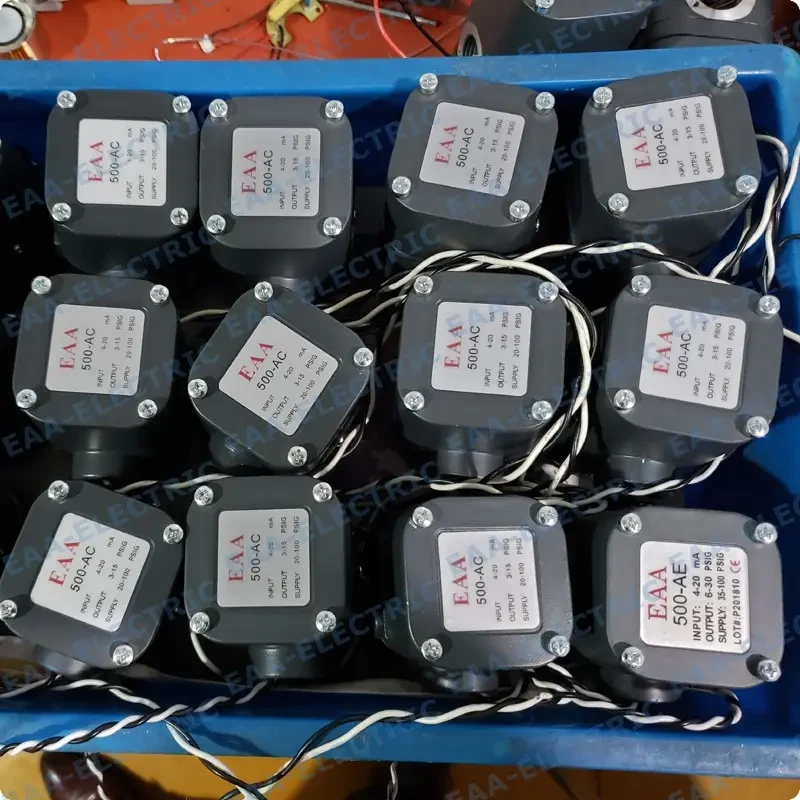
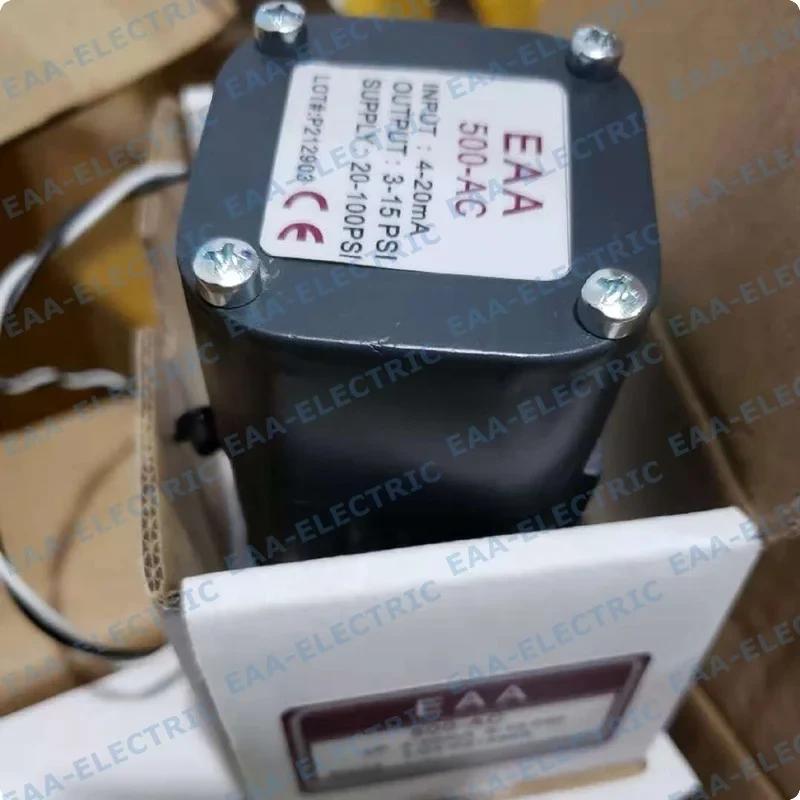
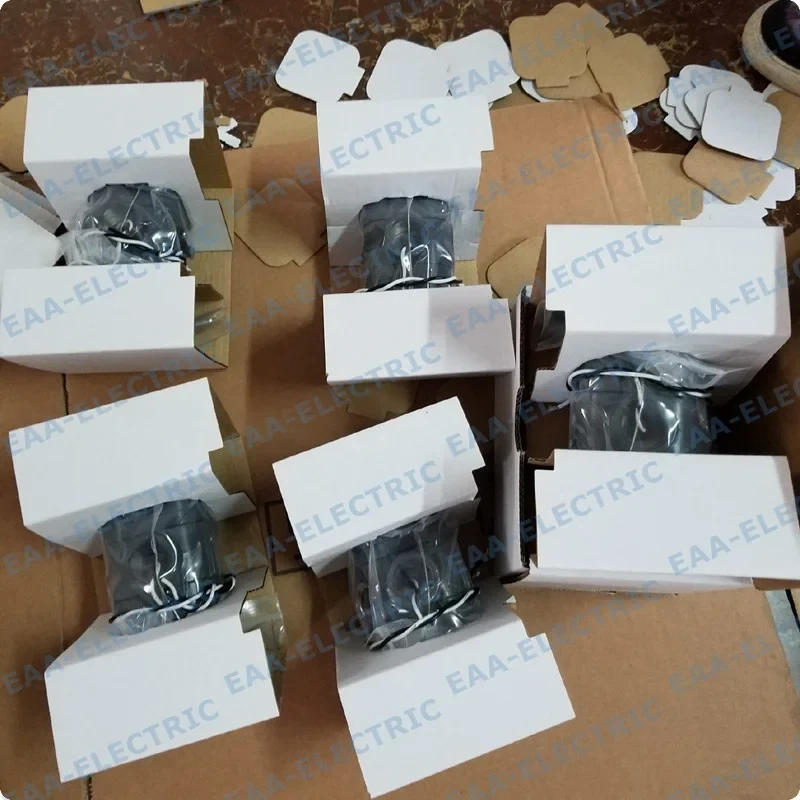
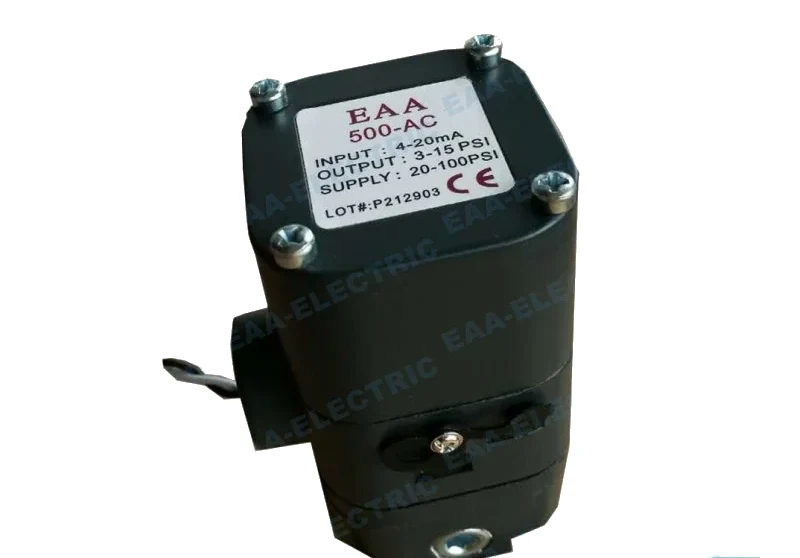
500X Electro Pneumatic Transducer On Our Benches
Studio and workshop photographs of the units as built, not renderings.
What You Get From This Model
Goes back on the existing bracket
Port sizes, footprint and the front-face zero and span screws follow the 500X pattern, so the failed unit comes off and the replacement goes on without reworking the pipework.
Twelve current ranges on one table
From 3-9 psi at 90 ohms up to 3-120 psi at 260 ohms, and 10-50 mA and 0-60 mA inputs as well as 4-20 mA, so an odd legacy loop is still catalogued.
Recalibration headroom
The span adjustment is wide enough to take the 2-60 psig unit out to 3-35 psig and the 2-120 psig unit out to 3-145 psig, which covers most spring ranges found in the field.
Amplifier built in
The integral pneumatic power amplifier means the transducer drives an actuator without a separate booster relay in the line.
Where It Is Used
- Pneumatic control valve actuators on process lines
- Damper and louver drives on furnace and dryer air paths
- Feeding a pneumatic valve positioner from a DCS current output
- Air cylinders, clutches and brakes that take a modulating air signal
Who Orders It
- Instrument maintenance teams holding 500 series spares
- Valve automation workshops assembling actuator packages
- EPC contractors specifying I/P conversion on a new skid
- OEM machine builders who need a repeatable I/P stage
What This Model Fixes
The original part has a long import lead time
A control valve stays open-loop while the order ships. The EAA 500X is built to the same pattern and held against the same part-number table.
The spare on the shelf is the wrong range
Because the table fixes input, output and impedance at order stage, the range that goes into the store is the range the loop needs.
The replacement will not fit the bracket
Keeping the pattern footprint and the 1/4 NPT and 1/2 NPT ports means the tubing and the mounting hardware are reused.
Features And Specifications
Every figure below is transcribed from the datasheet EAA publishes for this series. Anything not published is not listed.
- Current input, linearly proportional pneumatic output
- Nozzle and baffle primary section with a pneumatic power amplifier
- External zero and span adjustment on the front face
- 1/4 NPT and 1/2 NPT pneumatic and electrical porting
- Twelve catalogued I/P part numbers
- Factory calibrated, then bench checked before packing
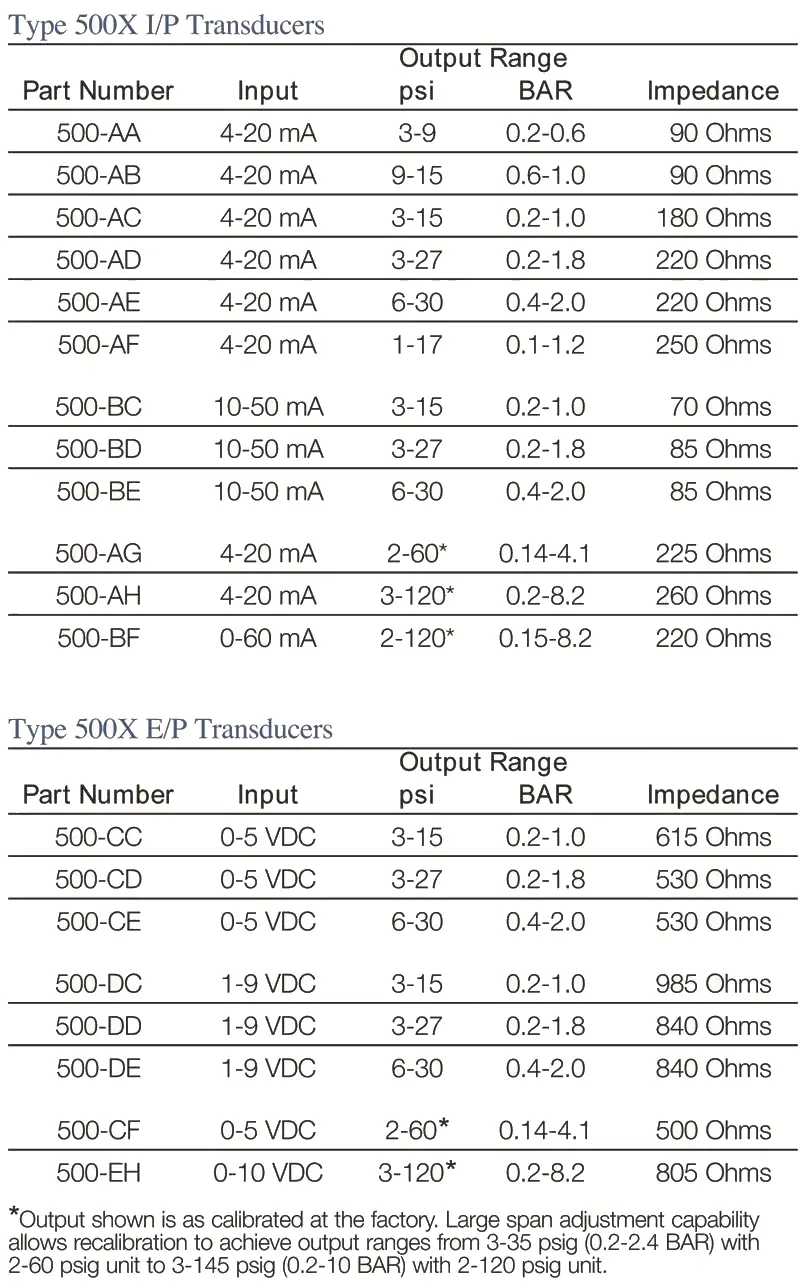
| Part number | Input | Output psi | Output BAR | Impedance |
|---|---|---|---|---|
| 500-AA | 4-20 mA | 3-9 | 0.2-0.6 | 90 Ohms |
| 500-AB | 4-20 mA | 9-15 | 0.6-1.0 | 90 Ohms |
| 500-AC | 4-20 mA | 3-15 | 0.2-1.0 | 180 Ohms |
| 500-AD | 4-20 mA | 3-27 | 0.2-1.8 | 220 Ohms |
| 500-AE | 4-20 mA | 6-30 | 0.4-2.0 | 220 Ohms |
| 500-AF | 4-20 mA | 1-17 | 0.1-1.2 | 250 Ohms |
| 500-BC | 10-50 mA | 3-15 | 0.2-1.0 | 70 Ohms |
| 500-BD | 10-50 mA | 3-27 | 0.2-1.8 | 85 Ohms |
| 500-BE | 10-50 mA | 6-30 | 0.4-2.0 | 85 Ohms |
| 500-AG | 4-20 mA | 2-60* | 0.14-4.1 | 225 Ohms |
| 500-AH | 4-20 mA | 3-120* | 0.2-8.2 | 260 Ohms |
| 500-BF | 0-60 mA | 2-120* | 0.15-8.2 | 220 Ohms |
| Part number | Input | Output psi | Output BAR | Impedance |
|---|---|---|---|---|
| 500-CC | 0-5 VDC | 3-15 | 0.2-1.0 | 615 Ohms |
| 500-CD | 0-5 VDC | 3-27 | 0.2-1.8 | 530 Ohms |
| 500-CE | 0-5 VDC | 6-30 | 0.4-2.0 | 530 Ohms |
| 500-DC | 1-9 VDC | 3-15 | 0.2-1.0 | 985 Ohms |
| 500-DD | 1-9 VDC | 3-27 | 0.2-1.8 | 840 Ohms |
| 500-DE | 1-9 VDC | 6-30 | 0.4-2.0 | 840 Ohms |
| 500-CF | 0-5 VDC | 2-60* | 0.14-4.1 | 500 Ohms |
| 500-EH | 0-10 VDC | 3-120* | 0.2-8.2 | 805 Ohms |
* Output shown is as calibrated at the factory. The large span adjustment range allows recalibration to 3-35 psig (0.2-2.4 BAR) on the 2-60 psig unit and to 3-145 psig (0.2-10 BAR) on the 2-120 psig unit.
Selecting Installing And Calibrating
- Check the spring range firstMatch the output range on the part number to the actuator spring range. A 3-15 psi unit on a 20-100 kPa spring is the normal pairing.
- Fit a filter regulatorInstrument air into the transducer has to be steady near 0.14 MPa and free of moisture and dirt. Put the filter and regulator on the inlet, not somewhere upstream.
- Calibrate zero and spanSet 4 mA to 20 kPa on the zero knob and 20 mA to 100 kPa on the span knob, then repeat until both points hold.
- Log the dead bandRaise the current slowly from 4 mA until the stem moves, and write down the current and the air pressure. That figure is the baseline for the next service.
How It Compares With The Alternatives
Against a valve positioner the 500X is simpler and cheaper, but it is an open-loop instrument. It has no position feedback from the valve stem, so control accuracy on a stiff or badly packed valve is lower than a positioner would give. Choose the 500X where the loop needs a clean pressure signal, and a positioner where the valve itself needs to be forced to a position.
| Model | Distinguishing specification | Best suited to |
|---|---|---|
| 500X Electro Pneumatic Transducer | Current input, 12 catalogued ranges | General purpose I/P conversion |
| 500X Electro Pneumatic Converter | Voltage input, 8 catalogued ranges | Loops with a 0-5 V, 1-9 V or 0-10 V output |
| 550X Electro Pneumatic Transducer | Miniature body, coded ordering | Space-limited mounting and DIN rail manifolds |
Related cases
Related articles
Industry applications
Other Models Worth Comparing
 Controlair Type Transducer
500X Electro Pneumatic Converter
Controlair pattern E/P converter, 0-5 V, 1-9 V and 0-10 V inputs
View specifications →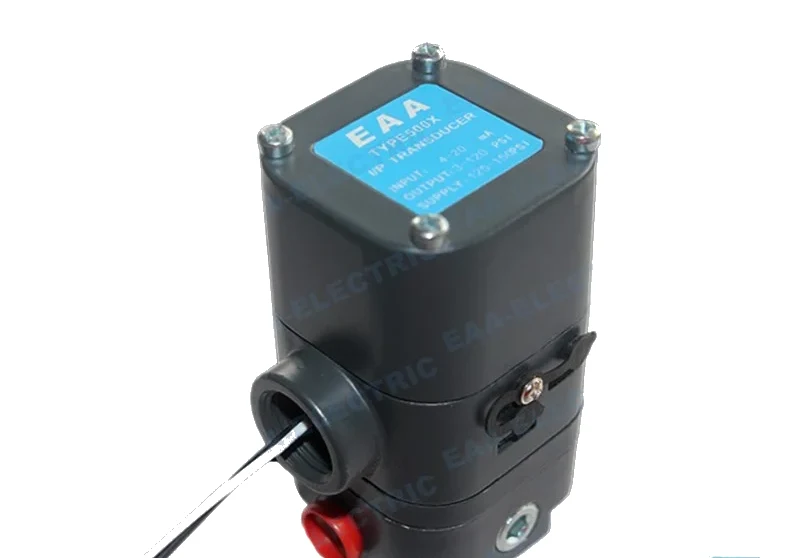 Controlair Type Transducer
500AC Electro Pneumatic Transducer
500-AC configuration, 4-20 mA in, 3-15 psi out, 180 ohms
View specifications →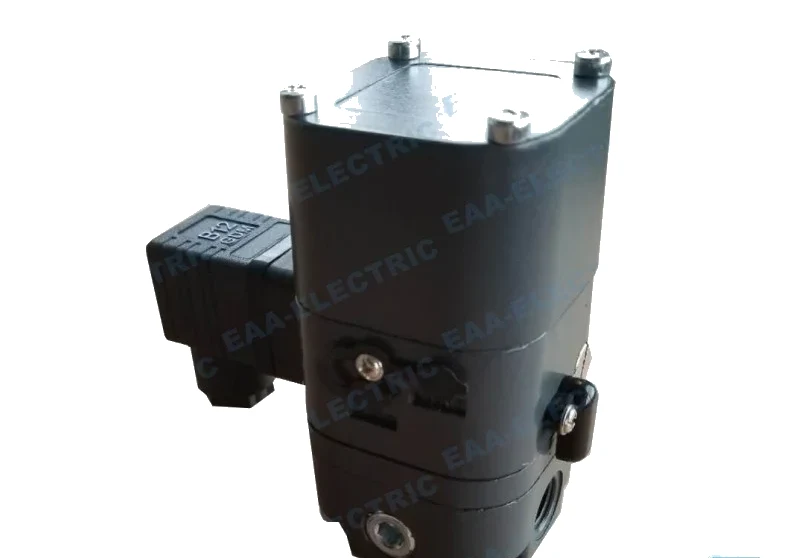 Controlair Type Transducer
500ACD Electro Pneumatic Transducer
500-AC range with a plug-in electrical termination
View specifications →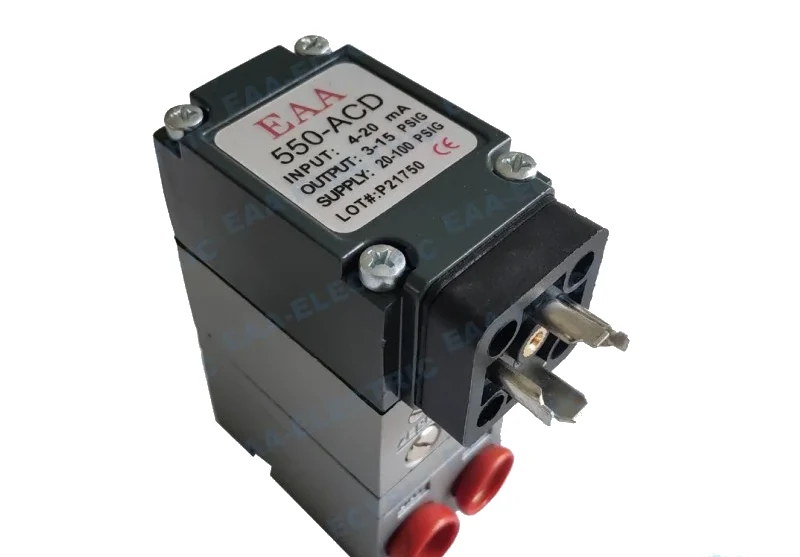 Controlair Type Transducer
550X Electro Pneumatic Transducer
Miniature EAA-550 series electronic pressure regulator, coded ordering
View specifications →Questions About The 500X Electro Pneumatic Transducer
What input signal does the 500X accept
The I/P table lists 4-20 mA, 10-50 mA and 0-60 mA units. The 4-20 mA models run from 500-AA to 500-AH. State the loop signal when you order and the part number follows.
Which output range should I order
Match the actuator spring. 3-15 psi (0.2-1.0 BAR) is the common pairing with a 20-100 kPa spring, and 3-27 psi or 6-30 psi units are stocked for stiffer springs.
Can the range be changed after delivery
Within limits. The span adjustment takes the 2-60 psig unit to 3-35 psig and the 2-120 psig unit to 3-145 psig. Moving further than that needs a different part number.
Does it need a separate booster relay
No. The pneumatic power amplifier is built into the instrument, which is what lets it feed an actuator directly.
What air supply does it need
Clean dry instrument air held steady near 0.14 MPa at the inlet, through a filter regulator fitted at the transducer.
Request A Price For The 500X
Tell us the input signal, the output range and the electrical termination, and the quotation comes back against the published part number.