
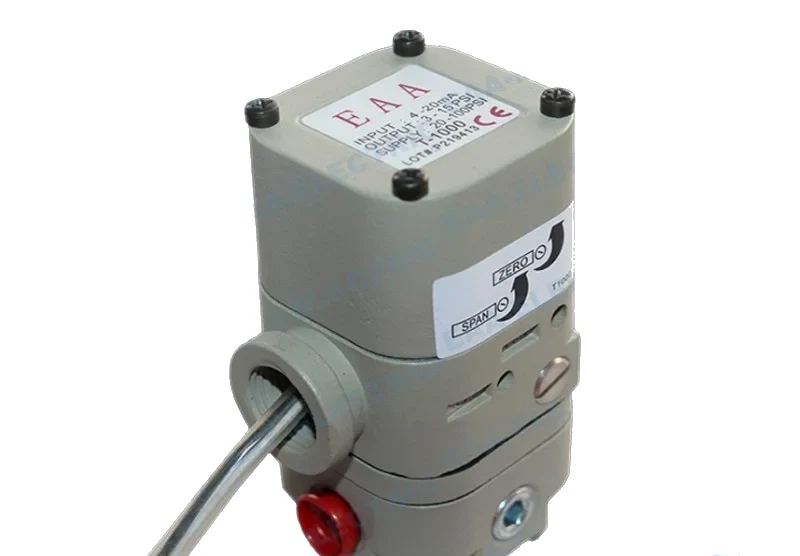
 Marsh Bellofram Type Transducer
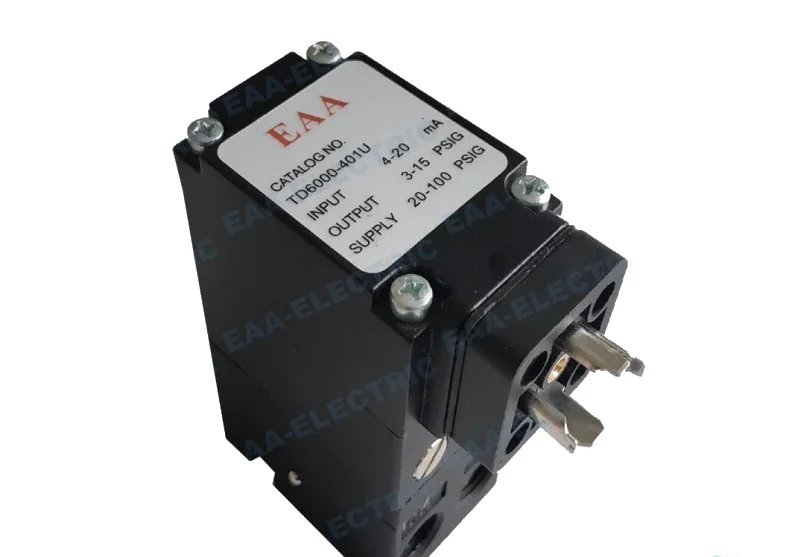 Fairchild Type Transducer
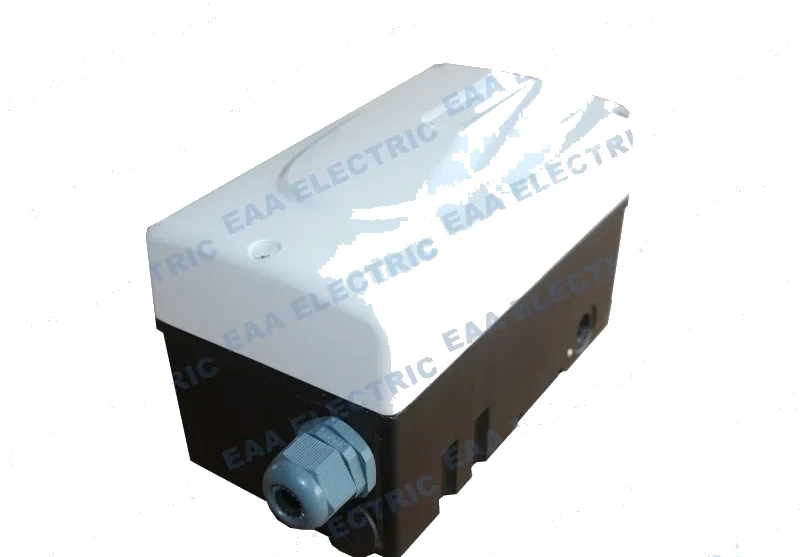 Flowserve Type Transducer
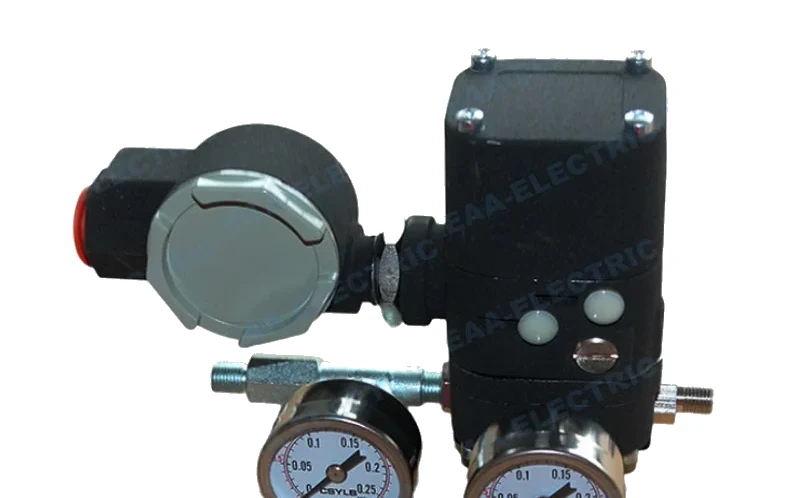 EPC Type Transducer
Valve Actuator Signal Conversion
A pneumatic control valve receives a pneumatic signal to act, and never touches the electrical signal used in industrial control. The field therefore needs a conversion instrument mounted on the valve that takes the electrical signal from the control room and turns it into the gas signal the valve recognises.
Step By Step
- Establish the signal4-20 mA, 10-50 mA, 0-60 mA, or 0-5 V, 1-5 V, 1-9 V, 0-10 V. The input decides whether an I/P or an E/P part number is ordered.
- Establish the springThe output range must match the actuator spring compression coefficient, or the valve will not travel through its full stroke.
- Size the flowA large actuator needs a transducer that passes the air. The T1000 gives 12 to 24 SCFM; the T1500 gives 6.5 to 9.0 SCFM.
- Condition the airFit a filter and pressure reducing device at the transducer inlet so the instrument air is constant near 0.14 MPa and free of impurities.
- Mount and calibrateMount first, calibrate second. Zero at the bottom of the signal range, span at the top, then check the intermediate points and the dead band.
- Record the resultWrite down the dead band and the stem positions at each calibration point. That record is the baseline for the next service.
Deliverables
- A transducer matched to the signal, the spring and the flow
- The published datasheet for the selected model
- A documented calibration procedure with instrument list
- Air preparation guidance for the inlet
Where To Send It
WhatsApp 0086-158-5856-3760 or email [email protected]. Photographs of the nameplate and the installation are the fastest way to get an accurate answer.
Products This Process Draws On
 Controlair Type Transducer
500AC Electro Pneumatic Transducer
500-AC configuration, 4-20 mA in, 3-15 psi out, 180 ohms
View specifications →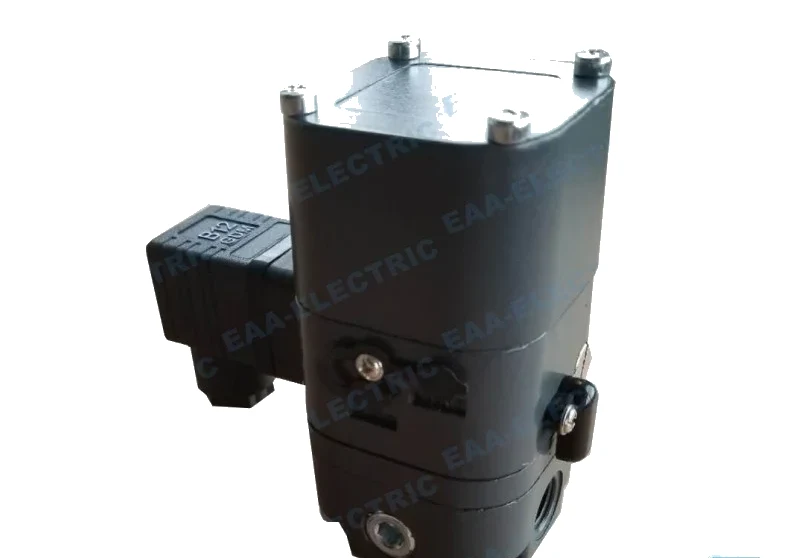 Controlair Type Transducer
500ACD Electro Pneumatic Transducer
500-AC range with a plug-in electrical termination
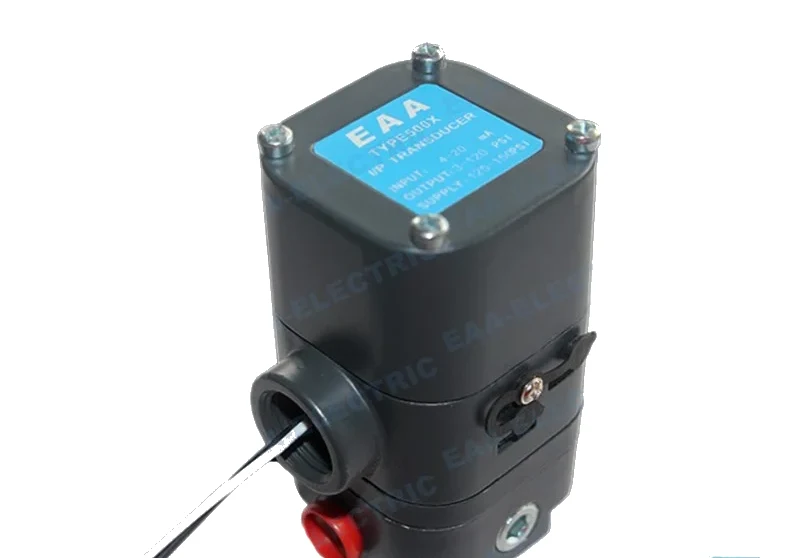
View specifications →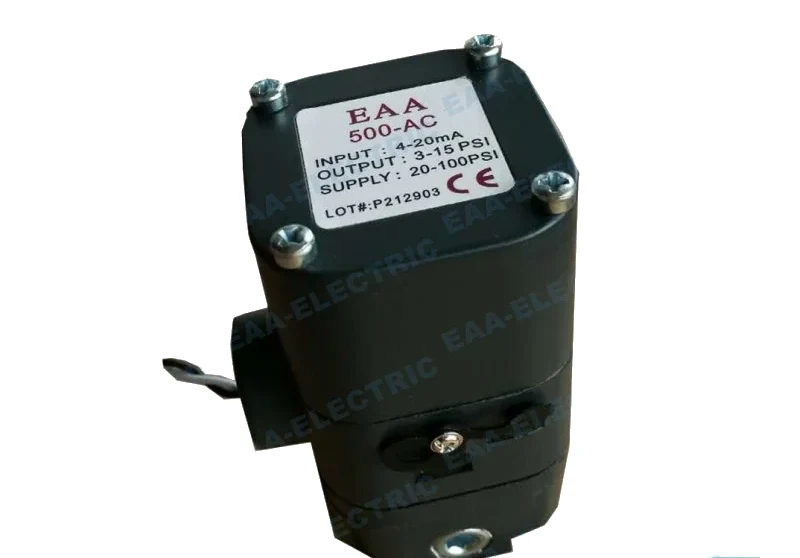 Controlair Type Transducer
500X Electro Pneumatic Converter
Controlair pattern E/P converter, 0-5 V, 1-9 V and 0-10 V inputs
View specifications →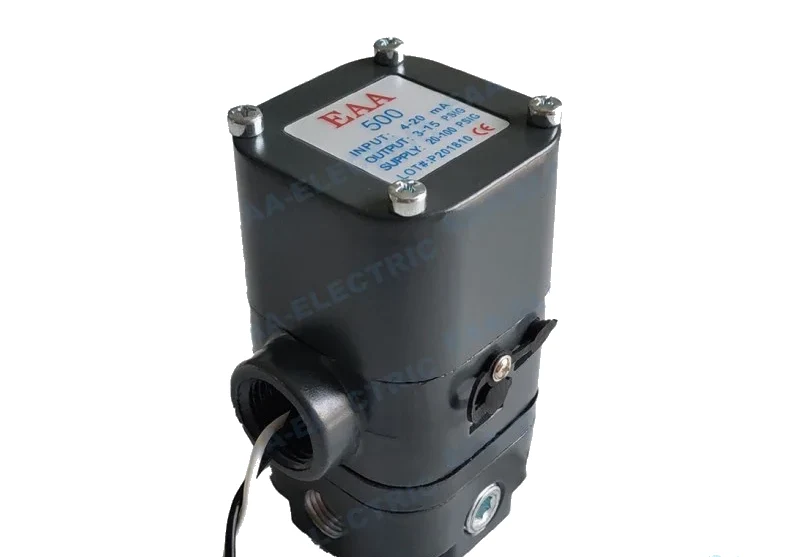 Controlair Type Transducer
500X Electro Pneumatic Transducer
Controlair pattern I/P transducer, 4-20 mA in, 3-15 to 3-120 psi out
View specifications →Questions About This Process
Why does the valve not open fully
Usually a selection problem rather than a calibration problem. If the spring compression coefficient is outside the transducer output range, full-open and full-close actions cannot be realised.
Do I need a positioner as well as a transducer
Not always. A transducer produces a clean signal pressure; a positioner forces the stem to a position. On a stiff or badly packed valve the positioner earns its place. On a straightforward loop the transducer is enough.
How steady does the air supply have to be
Steady near 0.14 MPa at the transducer inlet, which is why the filter regulator belongs at the instrument rather than somewhere upstream.
Begin With A Specification Not A Guess
Send what you have, even if it is only a photograph of a nameplate, and we will tell you what is missing before quoting.