
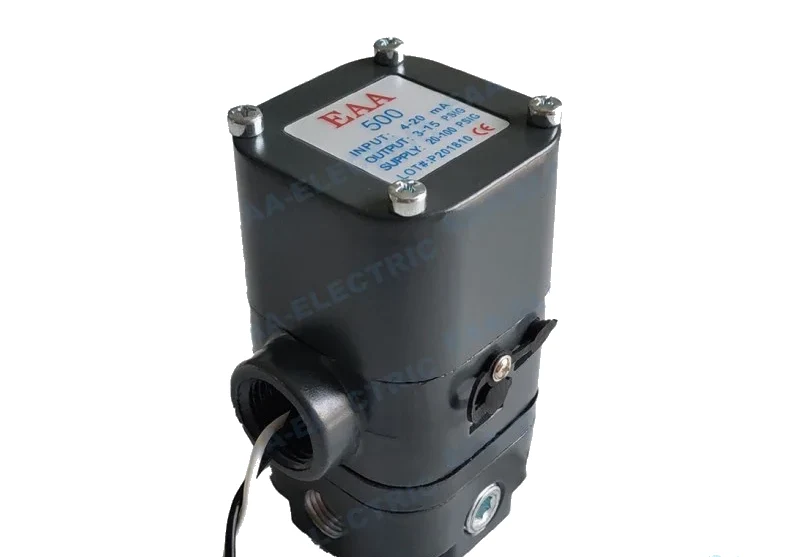
 Controlair Type Transducer
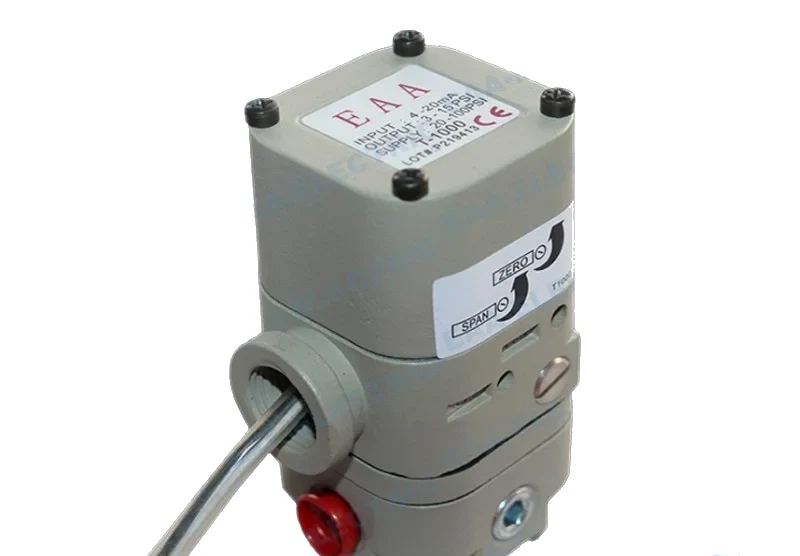 Marsh Bellofram Type Transducer
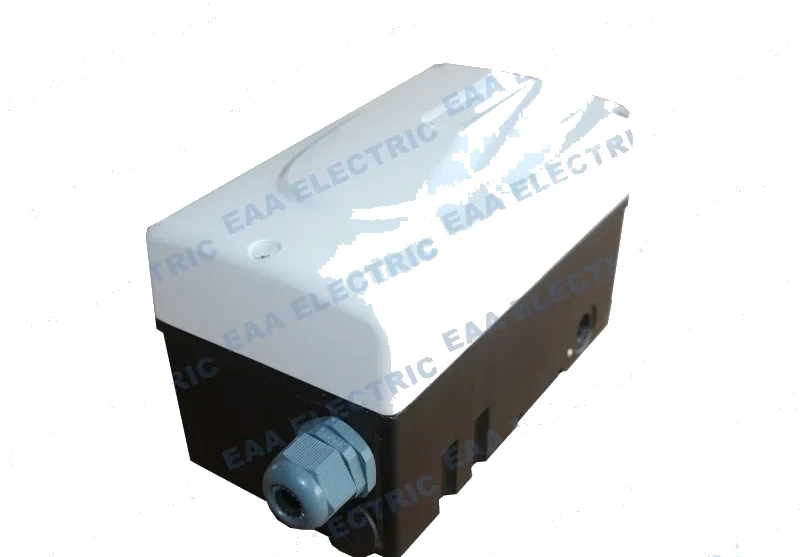 Flowserve Type Transducer
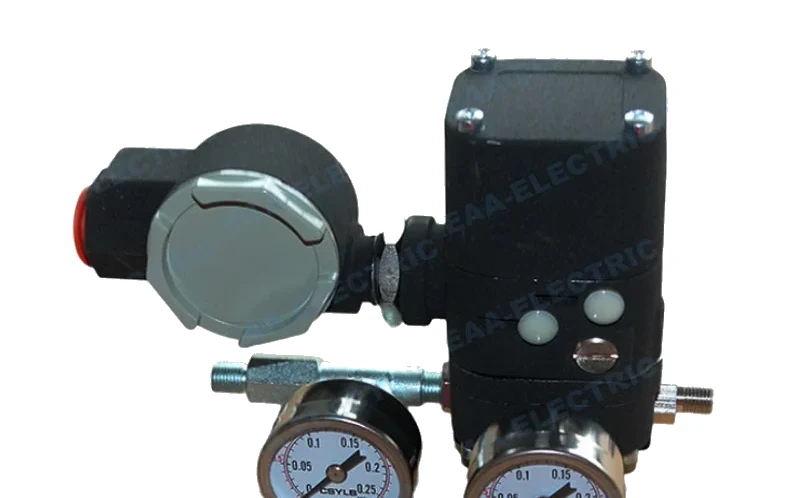 EPC Type Transducer
T7800 Electro Pneumatic Transducer
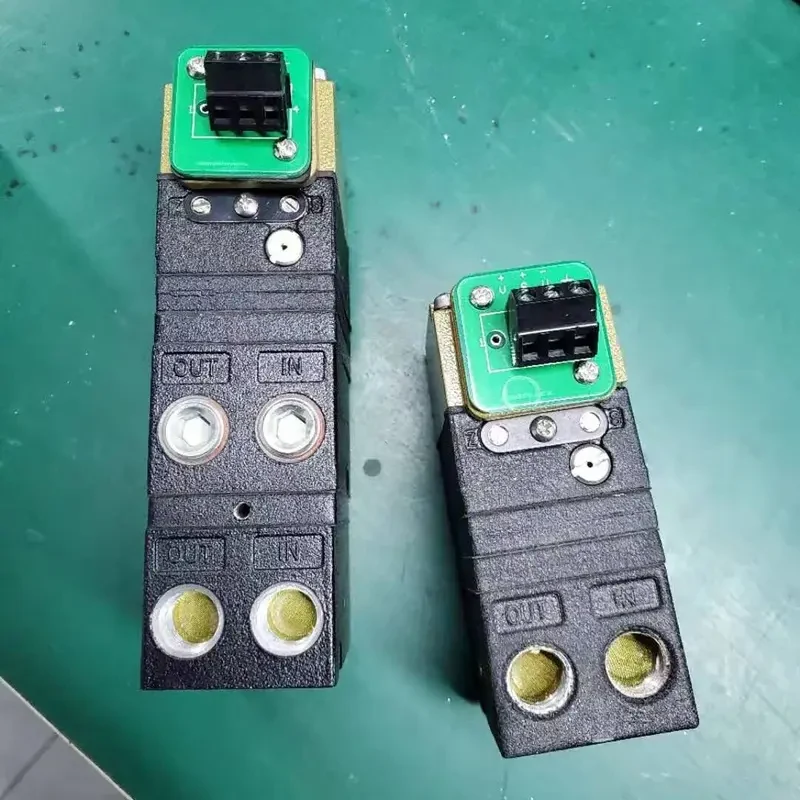
The T7800 is the precision instrument in the range. A piezoelectric ceramic actuator works as the flapper and internal electronic feedback holds the output regardless of vibration or mounting position, which is how it reaches 0.25% full scale guaranteed accuracy with 0.02% deadband.
What This Model Is
The T7800 Series transducers provide maximum versatility for precision applications. Where an older force balance transducer gives about 1% linearity, the T7800 is specified against ISA S51.1 at 0.25% full scale guaranteed and 0.15% typical, with hysteresis and repeatability at 0.1% full scale and deadband at 0.02%. Position effect and supply pressure effect are both stated as no measurable effect.
How It Works
The Model T7800 Series converts a DC input signal to a linear proportional pneumatic output. It includes the Primary Converting Section and the pneumatic Relay Section. The piezoelectric ceramic actuator in the Primary Converting Section functions as a flapper. The flapper and nozzle work together to control the signal pressure. That signal pressure acts on the upper control diaphragm in the Relay Section, and the lower control diaphragm senses the output pressure. In extended range units an additional relay section amplifies the output pressure.
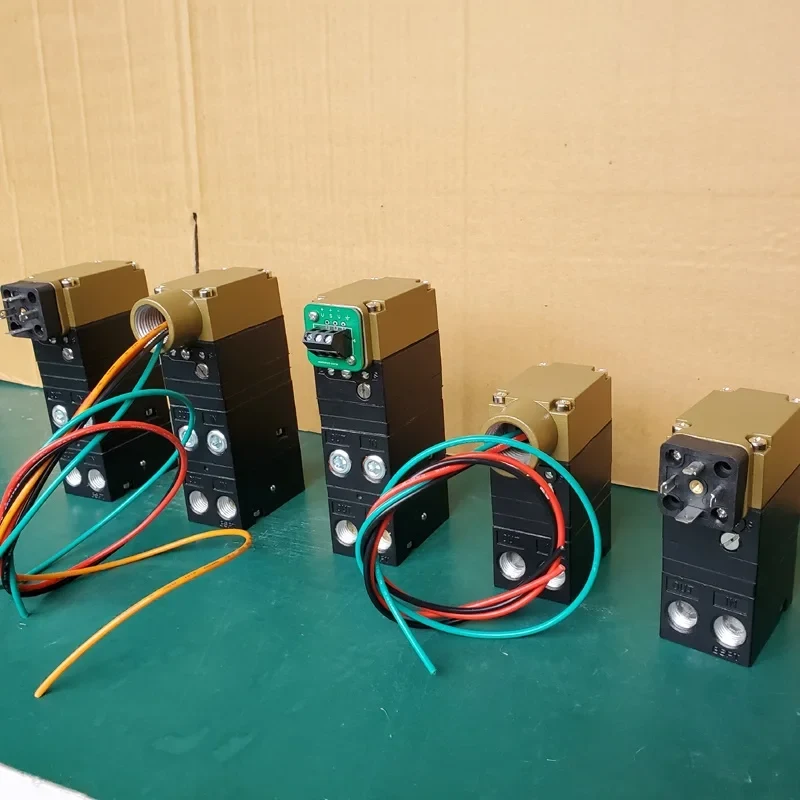
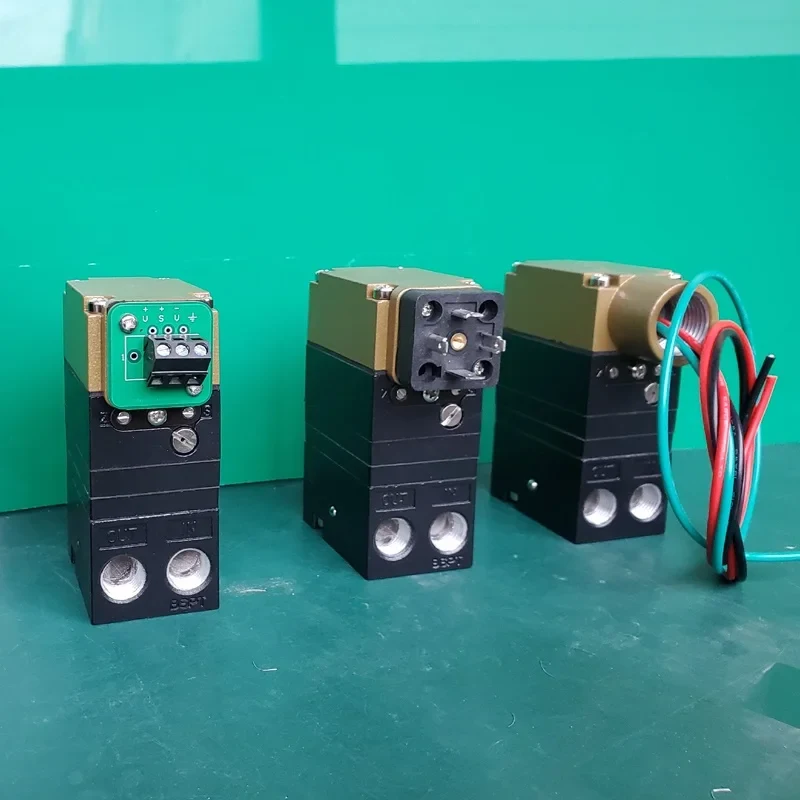
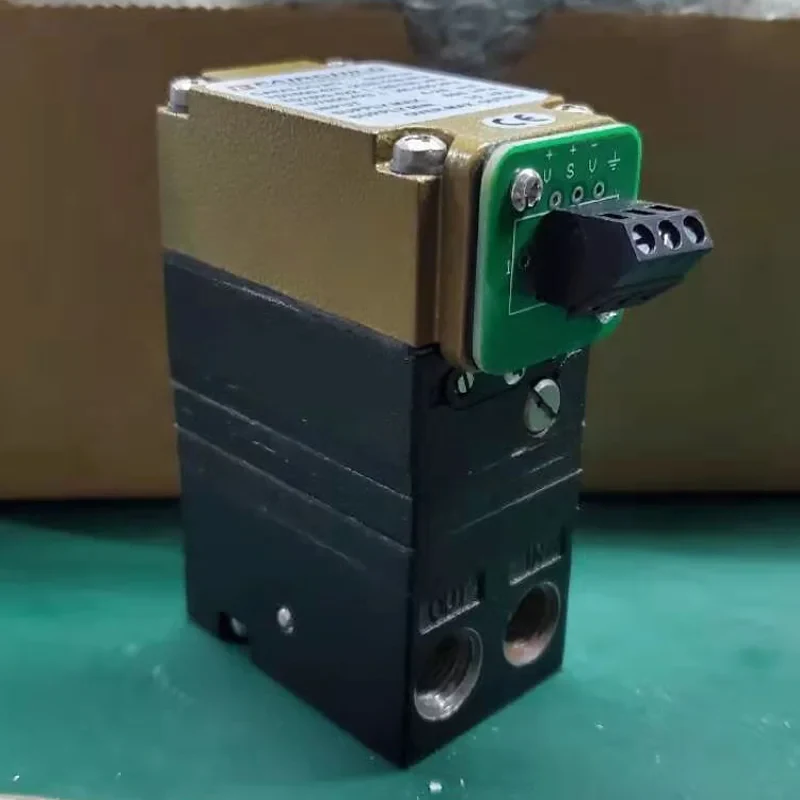
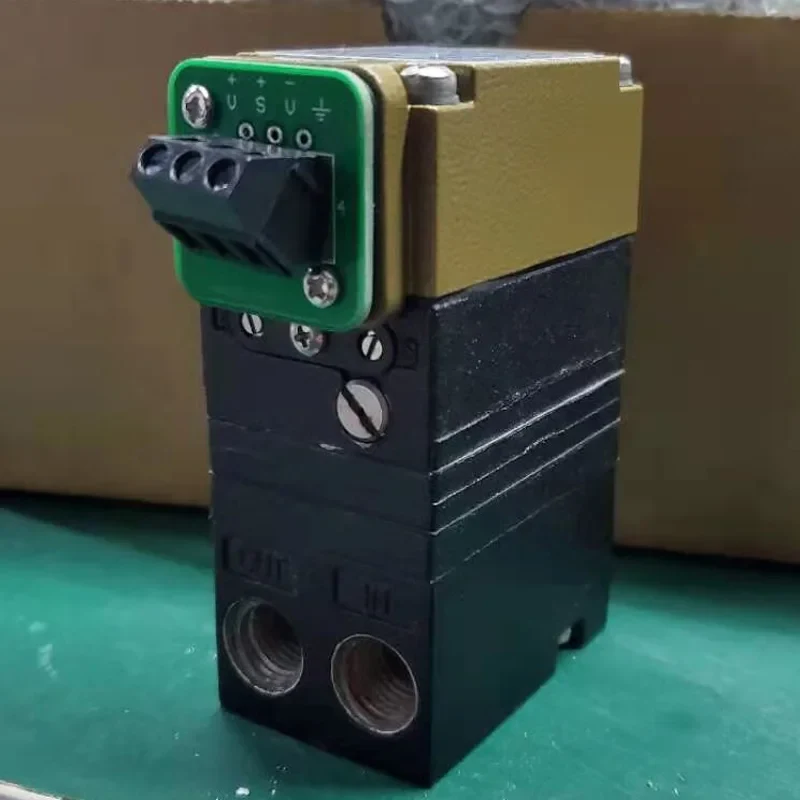
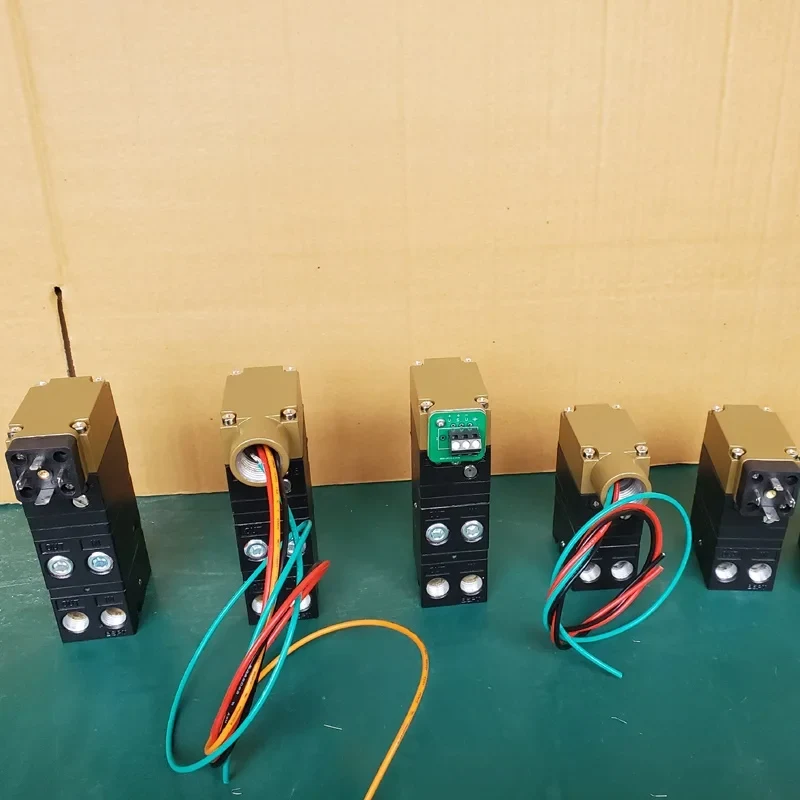
T7800 Electro Pneumatic Transducer On Our Benches
Studio and workshop photographs of the units as built, not renderings.
What You Get From This Model
Accuracy that can go into a specification
0.25% full scale guaranteed and 0.15% typical to ISA S51.1, with hysteresis and repeatability at 0.1% and deadband at 0.02% full scale.
Position and supply pressure have no measurable effect
Internal electronic feedback holds the output regardless of vibration or mounting position, so the instrument can go where the pipework allows.
Damping adjustment
The response can be tuned on the instrument rather than in the controller, which helps on a loop that is fast enough to hunt.
Certified for outdoor work
NEMA 4X, Type 4 enclosure, IP65 rated, with Canadian Registration Numbers certification for all territories and provinces.
Where It Is Used
- Precision pressure control on final control elements
- Loops specified on stated ISA accuracy
- Outdoor installations needing NEMA 4X and IP65
- Split range control of two or more functions from one signal
- Installations with vibration where position effect matters
Who Orders It
- Instrument engineers writing an accuracy figure into a datasheet
- Plants with vibration problems on existing transducers
- Outdoor and offshore installations
- Loops running split range control of two final elements
What This Model Fixes
The loop hunts and the transducer is blamed
Deadband at 0.02% full scale and the on-board damping adjustment separate a real instrument problem from a tuning problem.
The transducer reads differently after it is remounted
Position effect is stated as no measurable effect, because the output is held by internal electronic feedback rather than by a mechanical balance.
Nearby radios and drives affect the signal
RFI and EMI effect is less than 0.5% of span at 30 V/m class 3 band ABC and less than 0.5% at 10 V/m to 2 GHz.
A wiring mistake destroys the instrument
Reverse polarity protection means no damage from reversal of the normal supply current or from misapplication of up to 60 mA.
Features And Specifications
Every figure below is transcribed from the datasheet EAA publishes for this series. Anything not published is not listed.
- The T7800 Series transducers provide maximum versatility for precision applications
- Field reversible output, inversely proportional to the input signal
- RFI and EMI protection
- Internal electronic feedback with a solid state controlled piezoelectric actuator
- Damping adjustment for optimum tuning response
- Split range operation from a common signal source
- Compact size for restricted spaces
- NEMA 4X, Type 4 enclosure, IP65 rated for indoor and outdoor installation
- Canadian Registration Numbers (CRN) certification for all territories and provinces
| Set point | 3 psig [0.2 BAR] (20 kPa) | 9 psig [0.6 BAR] (60 kPa) | 15 psig [1.0 BAR] (100 kPa) | 30 psig [2.0 BAR] (200 kPa) |
|---|---|---|---|---|
| Maximum air consumption, all ranges | 3.5 SCFH (0.10 m3/HR) | 7.0 SCFH (0.20 m3/HR) | 9.5 SCFH (0.27 m3/HR) | 13.5 SCFH (0.38 m3/HR) |
| Range | Low | Middle | High |
|---|---|---|---|
| Output range | 3-15 psig [0.2-1.0 BAR] (20-100 kPa) | 3-27 psig [0.2-1.8 BAR] (20-180 kPa) | 6-30 psig [0.4-2.0 BAR] (40-200 kPa) |
| Supply pressure | 20-120 psig [1.5-8.0 BAR] (150-800 kPa) | 32-120 psig [2.2-8.0 BAR] (220-800 kPa) | 35-120 psig [2.4-8.0 BAR] (240-800 kPa) |
| Minimum span | 5 psig [0.35 BAR] (35 kPa) | 10 psig [0.7 BAR] (70 kPa) | 10 psig [0.7 BAR] (70 kPa) |
| Parameter | Value |
|---|---|
| Input range | 4-20 mA DC, 0-10 VDC, 1-9 VDC |
| Flow rate | 2.5 SCFM (4.25 m3/HR) at 25 psig [1.7 BAR] (170 kPa) supply and 9 psig [0.6 BAR] (60 kPa) output, or 9.0 SCFM (15.3 m3/HR) at 120 psig [8.0 BAR] (800 kPa) supply and 9 psig output |
| Accuracy (ISA S51.1) | 0.25% full scale guaranteed, 0.15% full scale typical |
| Hysteresis (ISA S51.1) | 0.1% full scale |
| Deadband | 0.02% full scale |
| Repeatability (ISA S51.1) | 0.1% full scale |
| Frequency response | -3 dB at 5 Hz per ISA S26.4.3.1 load configuration A |
| Operating temperature | -40 F to +160 F (-40 C to +71.2 C) |
| Storage temperature | -40 F to +180 F (-40 C to +82.2 C) |
| Required operating voltage | Two-wire current input 7.2 VDC at 20 mA (4-20 mA signal); three-wire voltage input 7.2-30 VDC, less than 3 mA |
| Signal impedance | Three-wire voltage input 10 kilohms |
| Span and zero adjustment | Screwdriver adjustments located on the front of the unit |
| Position effect | No measurable effect |
| Supply pressure effect | No measurable effect |
| Temperature effect | +0.5% +0.04% per F temperature change of span, typical |
| Vibration effect | Less than +/-1% of span at 5-15 Hz with 0.8 inch constant displacement and 15-500 Hz at 10 G |
| Reverse polarity protection | No damage from reversal of normal supply current (4-20 mA) or from misapplication of up to 60 mA |
| RFI / EMI effect | Less than 0.5% of span at 30 V/m class 3 band ABC (20-1000 MHz) per SAMA PMC 33.1 1978, and less than 0.5% of span at 10 V/m to 2 GHz per EN 61000-4-3:1998 +A1, EMC Directive 89/336/EEC, European norm EN 61326 |
| Component | Material |
|---|---|
| Body and housing | Chromate treated aluminium |
| Orifice | Nickel plated brass and sapphire |
| Trim | Stainless steel, brass and zinc plated steel |
| Elastomers | Nitrile |
| Model | Electrical connection and range |
|---|---|
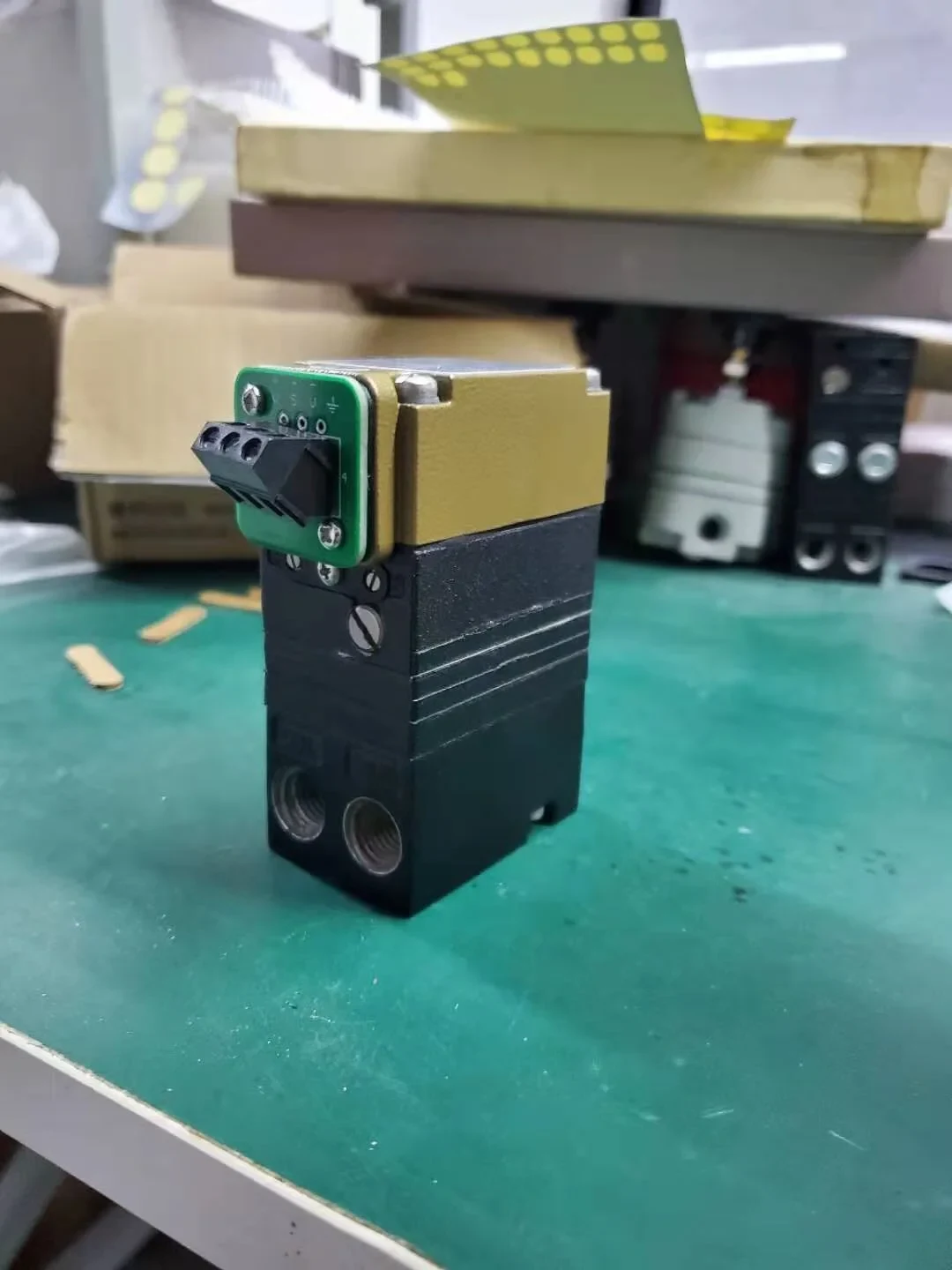
| TT7800 | Terminal block. Available in standard range and extended range. |
| TA7800 | 1/2 inch NPT conduit fitting with pigtail. Available in extended range. |
| TD7800 | DIN 43650 connection. Available in standard range and extended range. |
| TR7800 | For use with the TR manifold rack kit. Same as the TT7800 except that the terminal block is located on the rear. Available in standard and extended range. |
Selecting Installing And Calibrating
- Size the supply to the output range20-120 psig for a 3-15 psig output, 32-120 psig for 3-27 psig and 35-120 psig for 6-30 psig.
- Respect the minimum span5 psig on the 3-15 psig range and 10 psig on the 3-27 and 6-30 psig ranges.
- Set span and zero from the frontScrewdriver adjustments are located on the front of the unit, so no cover has to come off to calibrate.
- Use the damping adjustment lastCalibrate zero and span first, then use the damping adjustment for optimum tuning response.
How It Compares With The Alternatives
Within the T7800 family the difference is the electrical connection and the range class: TT7800 is the terminal block build, TA7800 the conduit pigtail build, TD7800 the DIN 43650 build and TR7800 the rack manifold build. Against the T6000 the T7800 trades some mounting flexibility for a large gain in stated accuracy.
| Model | Distinguishing specification | Best suited to |
|---|---|---|
| T7800 Electro Pneumatic Transducer | 0.25% FS accuracy, piezoelectric | Precision loops |
| T6000 Electro Pneumatic Transducer | Modular, seven mounting configurations | Racks, panels and manifolds |
| PT700 Electro Pneumatic Transducer | Piezoelectric microvalve, two-wire, ATEX | Intrinsically safe two-wire loops |
Related cases
- No OEM case published for this model yet.
Related articles
Industry applications
Other Models Worth Comparing
 Fairchild Type Transducer
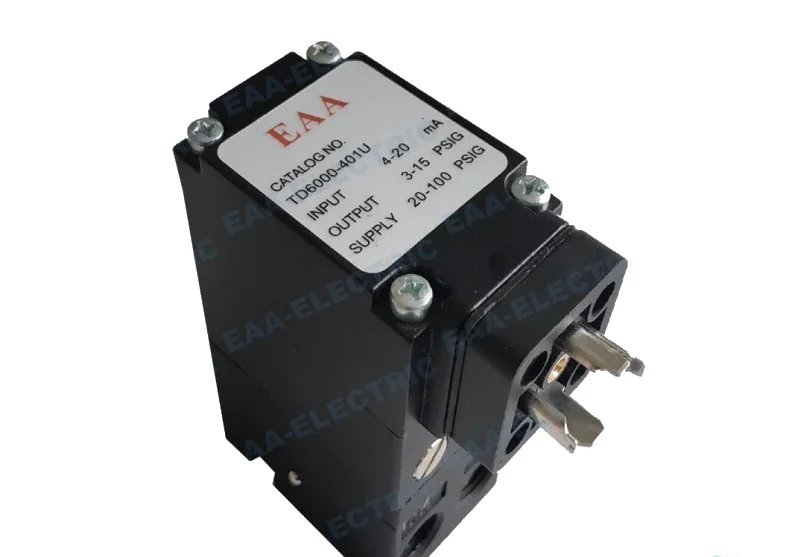
TD6000 Electro Pneumatic Transducer
T6000 series with a DIN 43650 connection, same modular mounting
View specifications →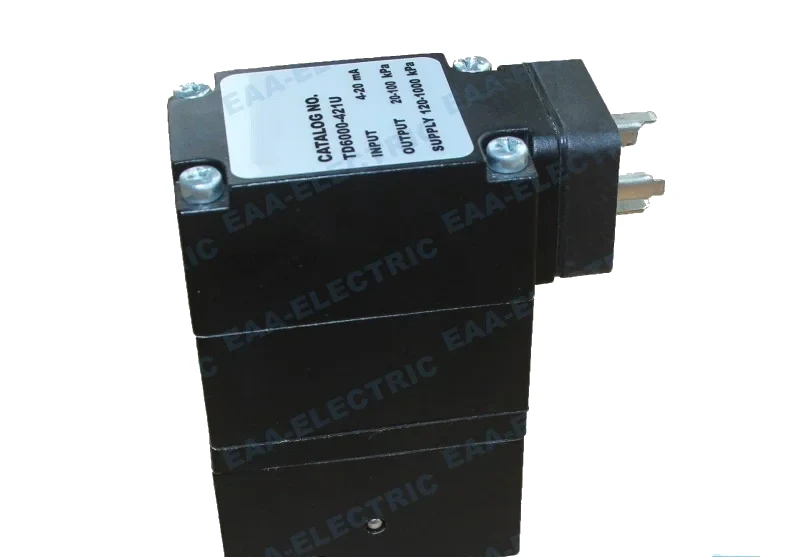 Fairchild Type Transducer
T6000 Electro Pneumatic Transducer
Modular precision transducer, six input and six output ranges, conduit termination
View specifications →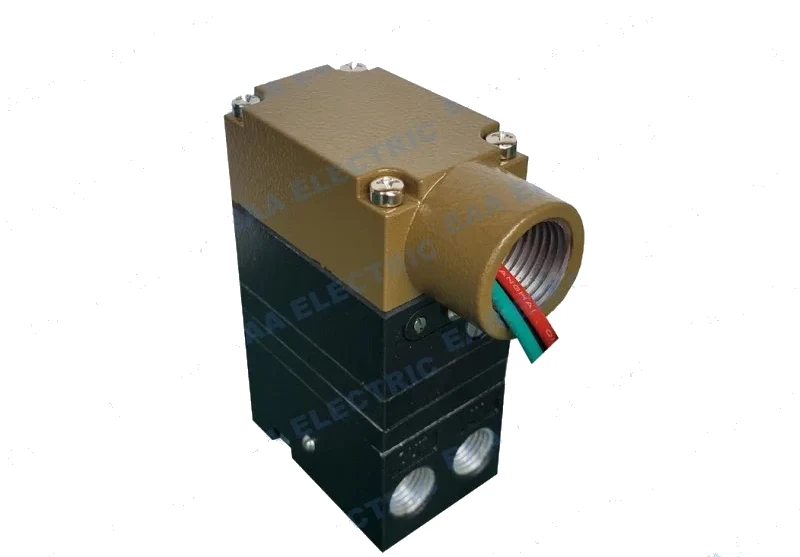 Fairchild Type Transducer
TA7800 Electro Pneumatic Transducer
Extended range T7800 with a 1/2 inch NPT conduit fitting and pigtail
View specifications →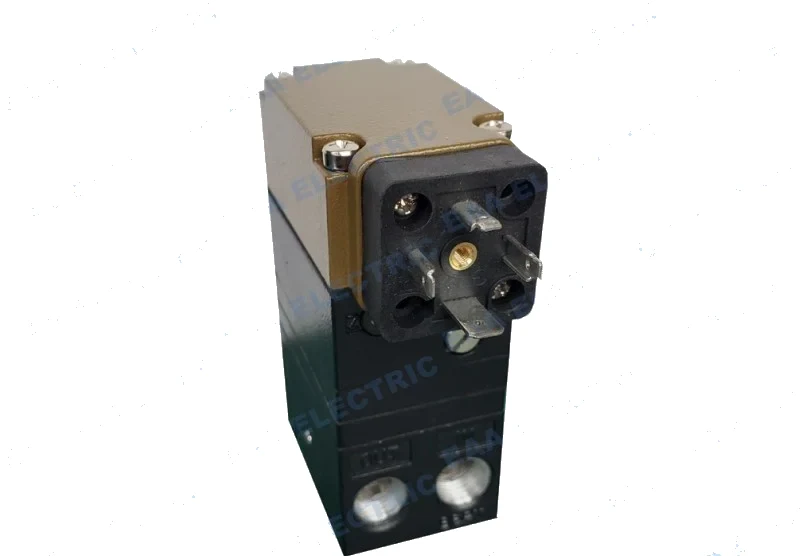 Fairchild Type Transducer
TD7800 Electro Pneumatic Transducer
T7800 with a DIN 43650 connection, 4-20 mA two-wire precision transducer
View specifications →Questions About The T7800 Electro Pneumatic Transducer
How accurate is the T7800
0.25% of full scale guaranteed and 0.15% typical to ISA S51.1, with hysteresis and repeatability at 0.1% full scale and deadband at 0.02% full scale.
What input signals does it accept
4-20 mA DC, 0-10 VDC and 1-9 VDC. A two-wire current input needs 7.2 VDC at 20 mA and a three-wire voltage input needs 7.2 to 30 VDC at less than 3 mA.
Does vibration affect the output
Less than +/-1% of span at 5-15 Hz with 0.8 inch constant displacement and at 15-500 Hz at 10 G. Position effect is stated as no measurable effect.
What temperature range does it cover
Operating from -40 F to +160 F (-40 C to +71.2 C) and storage from -40 F to +180 F (-40 C to +82.2 C).
What is it made of
Chromate treated aluminium body and housing, nickel plated brass and sapphire orifice, stainless steel, brass and zinc plated steel trim, and nitrile elastomers.
Request A Price For The T7800
Tell us the input signal, the output range and the electrical termination, and the quotation comes back against the published part number.