
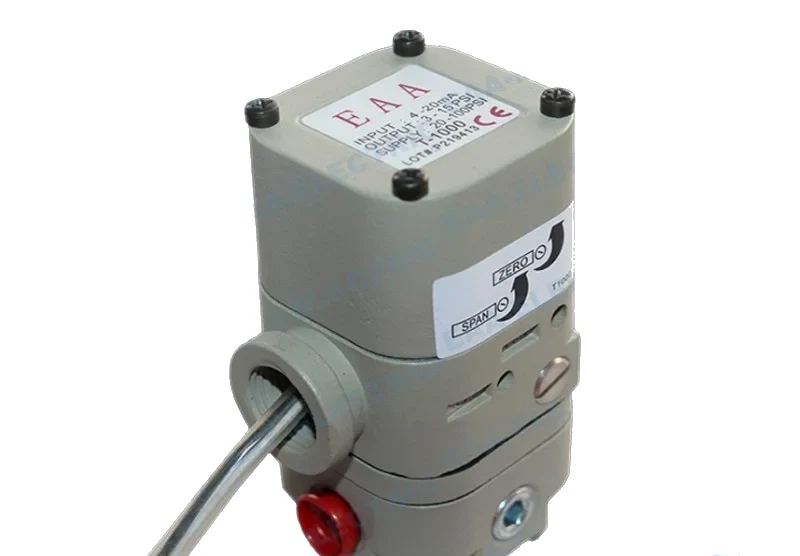
 Marsh Bellofram Type Transducer
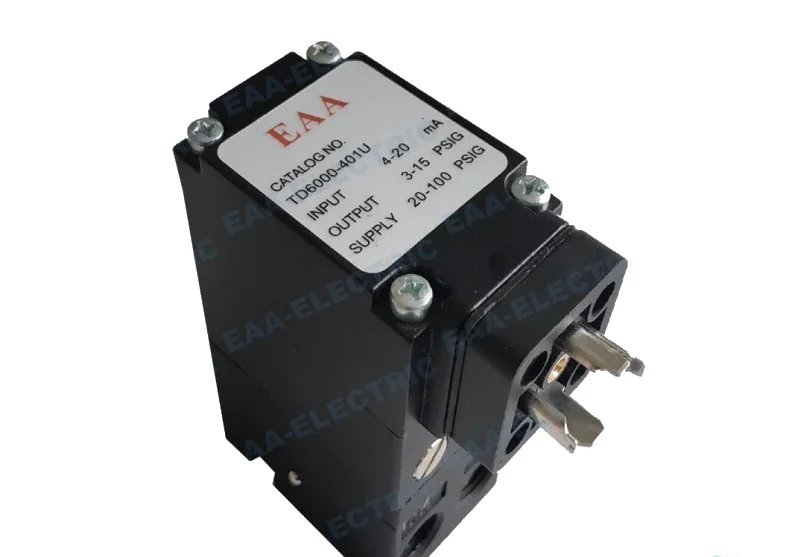 Fairchild Type Transducer
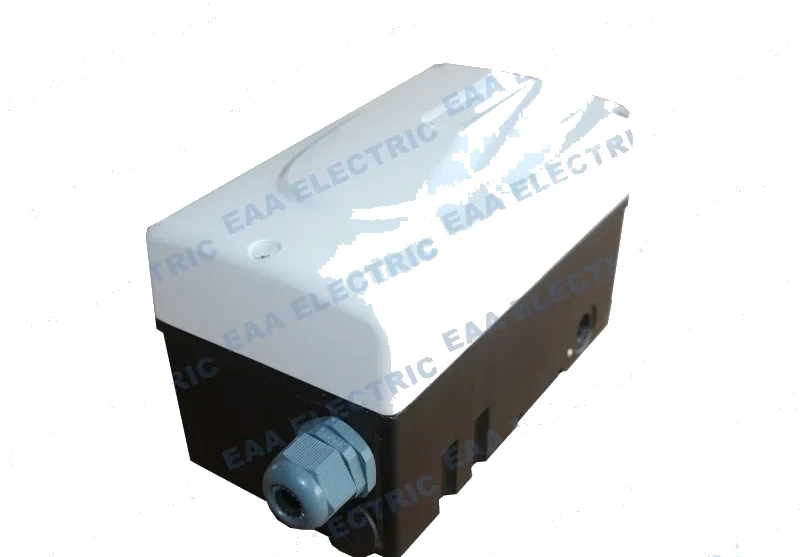 Flowserve Type Transducer
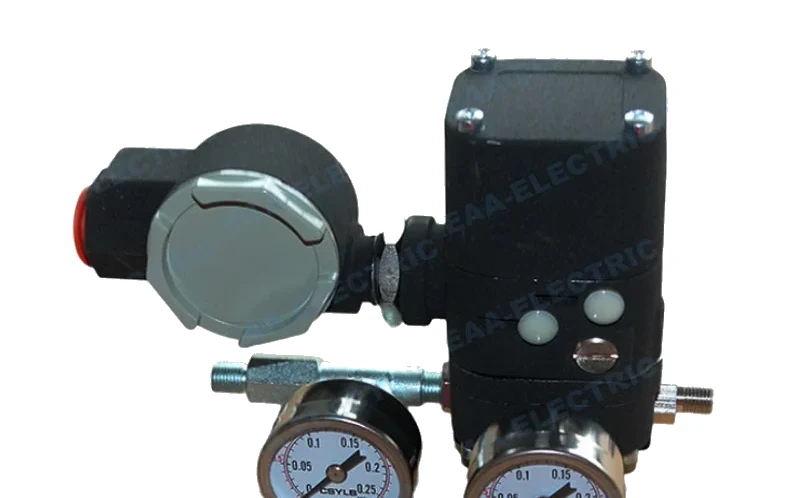 EPC Type Transducer
500ACD Electro Pneumatic Transducer
The 500ACD carries the same 4-20 mA to 3-15 psi conversion as the 500AC but terminates through a connector rather than a conduit pigtail. On a skid where every instrument is plugged rather than wired, that difference decides how long a changeout takes.
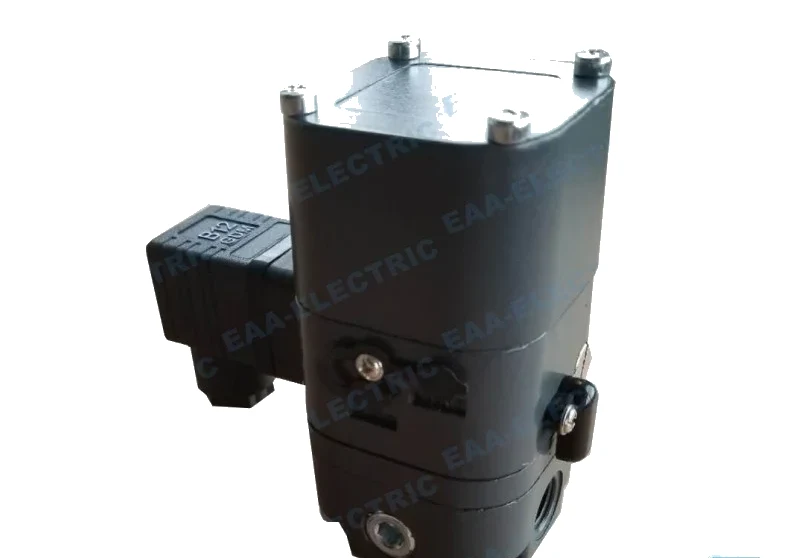
What This Model Is
Type EAA-500 I/P and E/P transducers convert a current or voltage input signal to a linearly proportional pneumatic output pressure. The ACD variant keeps the AC signal and output configuration and changes the electrical termination. The rest of the instrument, the nozzle and baffle section, the integral booster and the front-face adjustments, is unchanged.
How It Works
Calibration follows the same two-point method. The standard current signal generator outputs 4 mA and the standard pressure gauge is trimmed to a steady 20 kPa on the zero knob. The generator then outputs 20 mA and the gauge is trimmed to 100 kPa on the full-scale knob. The valve stem position is recorded at each point and the two adjustments are repeated until both hold.
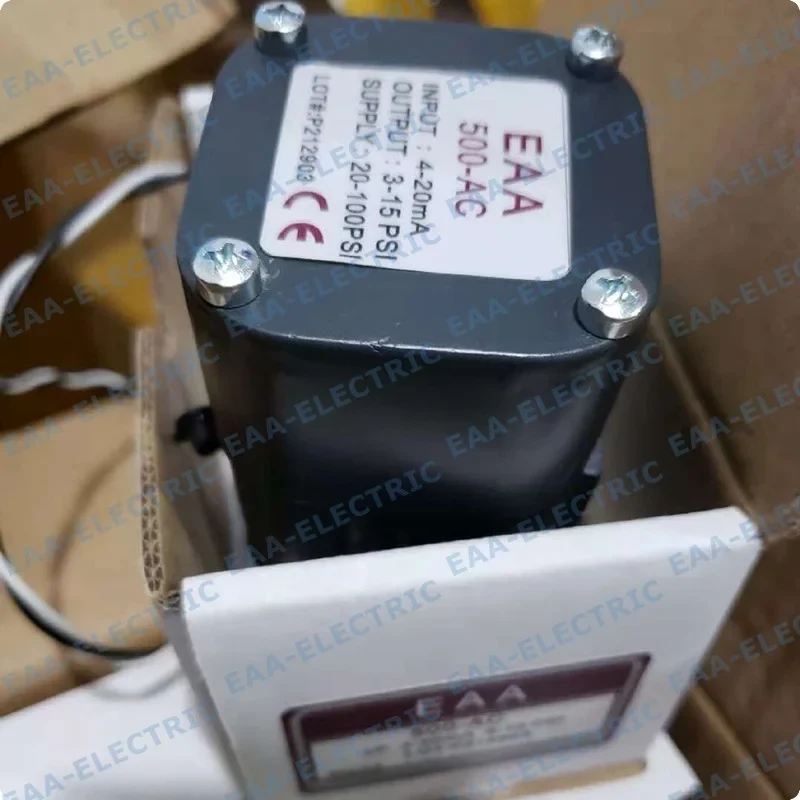
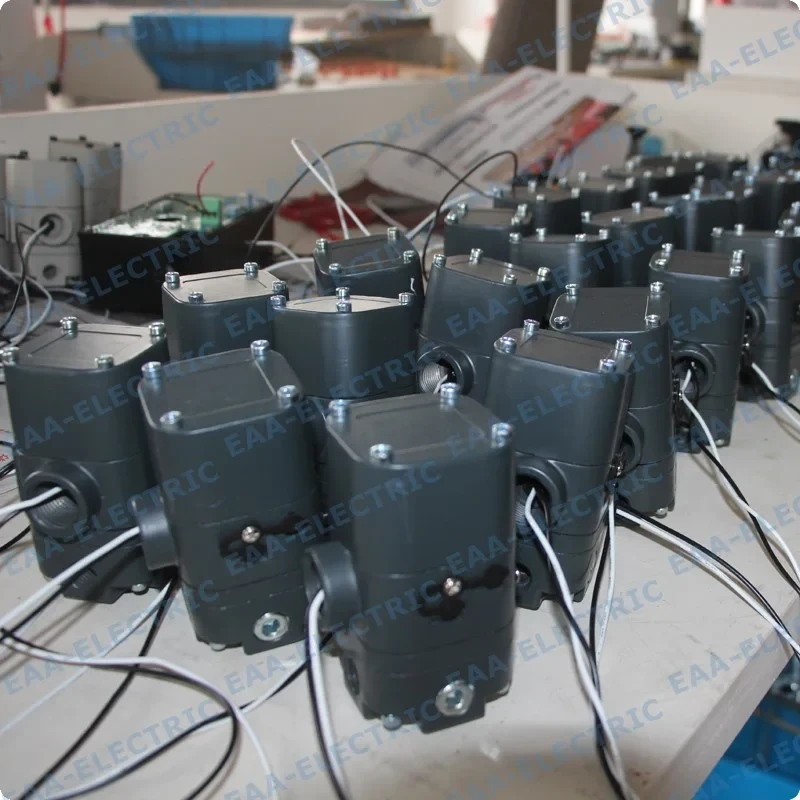
500ACD Electro Pneumatic Transducer On Our Benches
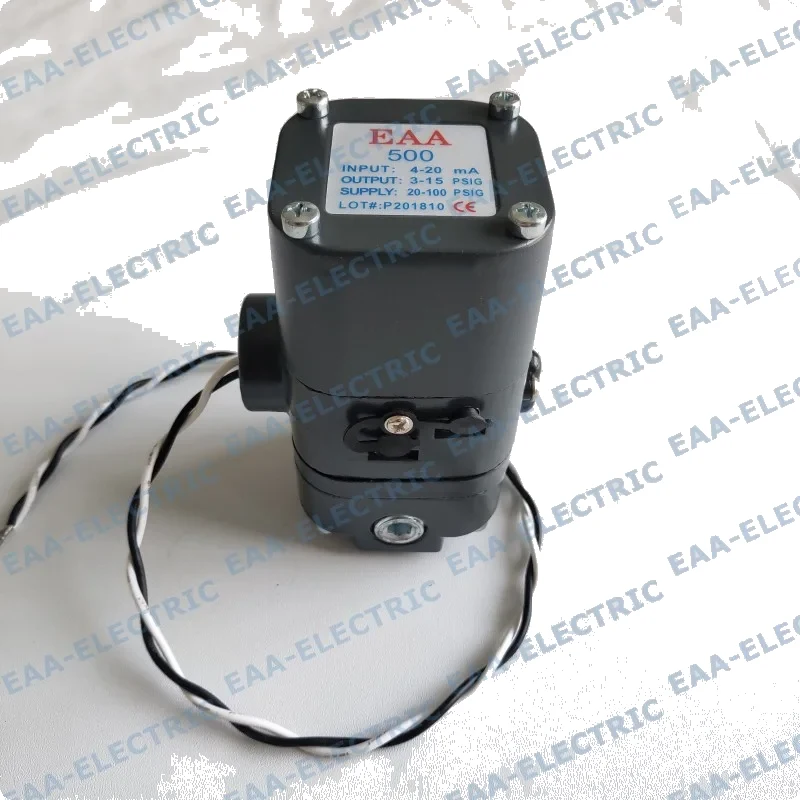
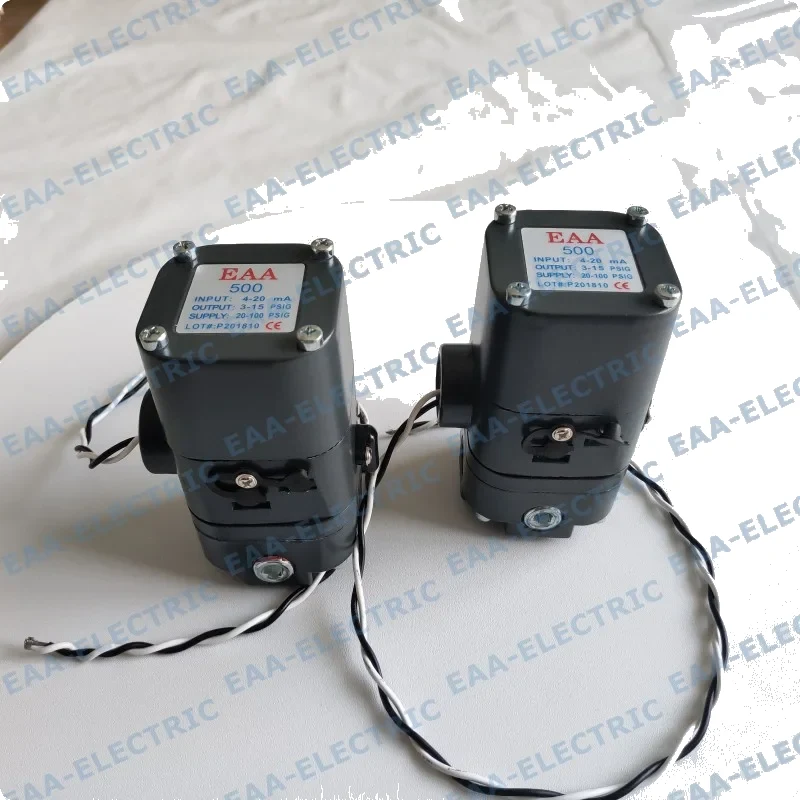
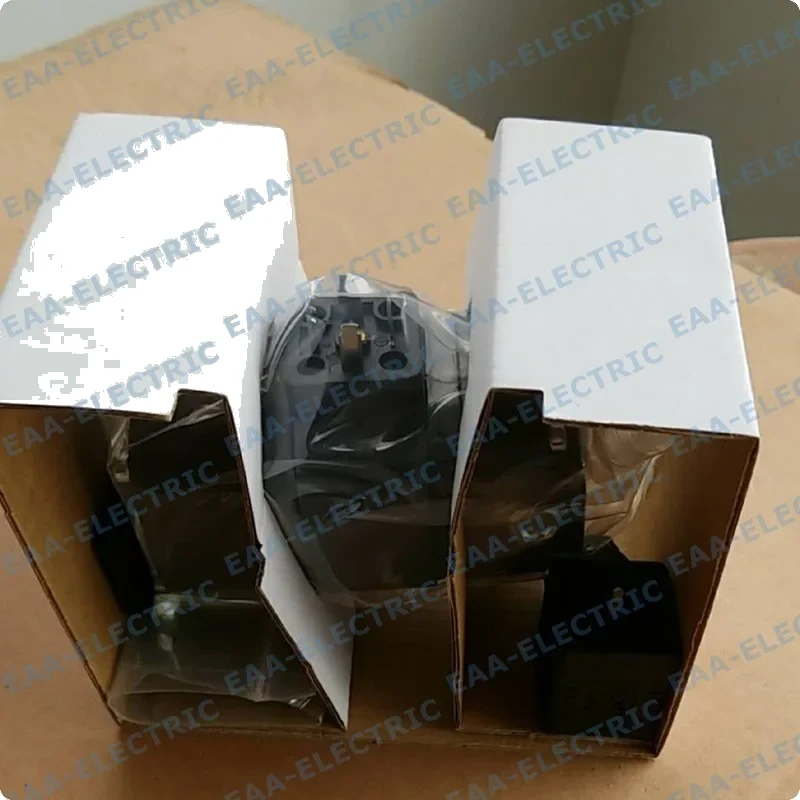
Studio and workshop photographs of the units as built, not renderings.
What You Get From This Model
Changeout without rewiring
The connector termination means an instrument swap is a plug, not a terminal box and a screwdriver.
Same calibration as the AC
Two points, 4 mA to 20 kPa and 20 mA to 100 kPa, so a technician trained on one unit is trained on both.
Suits packaged skids
Where the panel is pre-wired with connectors, the ACD matches the harness instead of forcing a conduit entry.
Linearity checked across the range
After the two end points, 8 mA, 12 mA and 16 mA are tested against valve opening so the response is known, not assumed.
Where It Is Used
- Packaged skids wired with plug-in instrument harnesses
- Valve assemblies built in a workshop and shipped complete
- Sites that want a faster instrument changeout during a shutdown
- OEM equipment where the electrical interface is standardised
Who Orders It
- Skid and package builders
- Valve automation workshops shipping assembled actuator packages
- Plants running short shutdown windows
- OEM customers specifying a connector termination across a range
What This Model Fixes
Instrument swaps eat shutdown time
A plug-in termination removes the terminal work from the critical path.
Field wiring is inconsistent between units
A standard connector makes the electrical interface the same on every valve in the package.
Linearity is never checked, only the end points
The documented procedure tests three intermediate currents and the dead band in both directions.
Features And Specifications
Every figure below is transcribed from the datasheet EAA publishes for this series. Anything not published is not listed.
- 4-20 mA input, 3-15 psi (0.2-1.0 BAR) output
- Connector electrical termination
- Integral pneumatic volume booster
- External zero and full-scale adjustment
- 1/4 NPT and 1/2 NPT porting
- Two-point calibration with a three-point linearity check
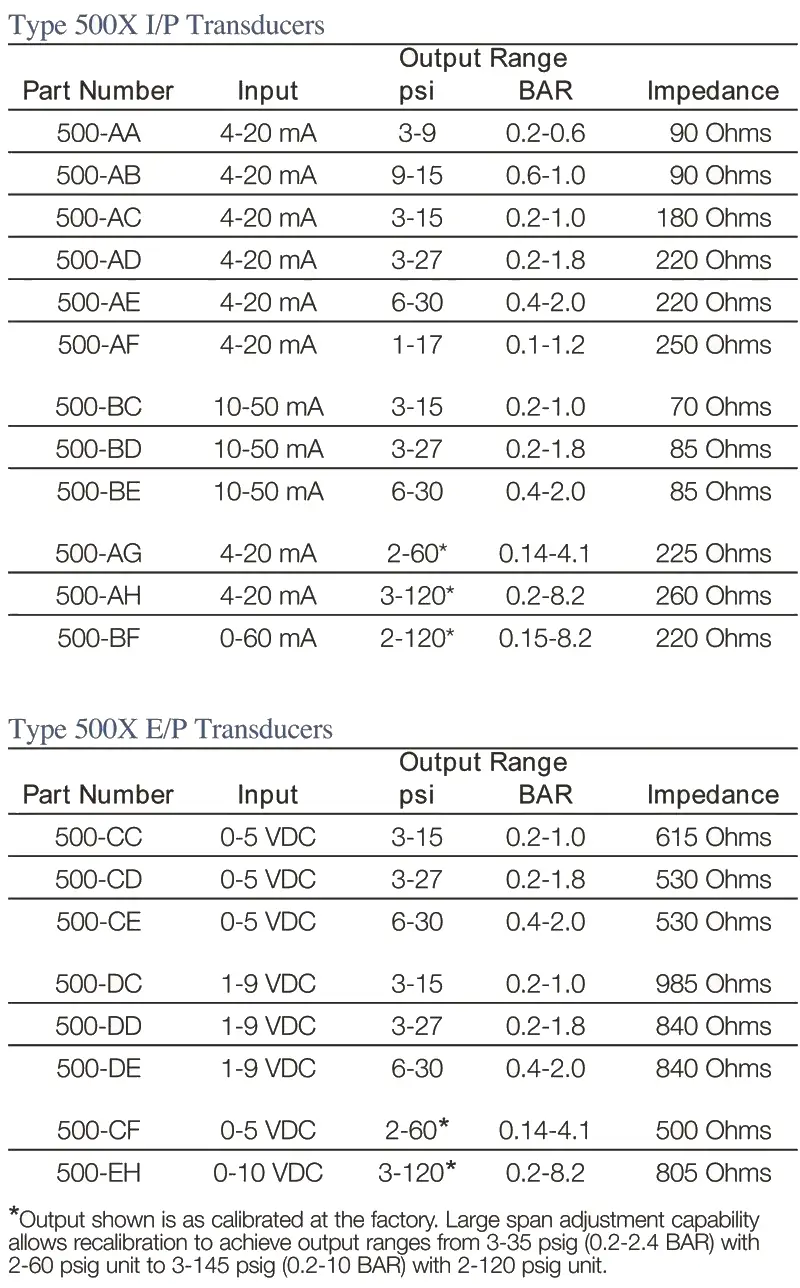
| Part number | Input | Output psi | Output BAR | Impedance |
|---|---|---|---|---|
| 500-AA | 4-20 mA | 3-9 | 0.2-0.6 | 90 Ohms |
| 500-AB | 4-20 mA | 9-15 | 0.6-1.0 | 90 Ohms |
| 500-AC | 4-20 mA | 3-15 | 0.2-1.0 | 180 Ohms |
| 500-AD | 4-20 mA | 3-27 | 0.2-1.8 | 220 Ohms |
| 500-AE | 4-20 mA | 6-30 | 0.4-2.0 | 220 Ohms |
| 500-AF | 4-20 mA | 1-17 | 0.1-1.2 | 250 Ohms |
| 500-BC | 10-50 mA | 3-15 | 0.2-1.0 | 70 Ohms |
| 500-BD | 10-50 mA | 3-27 | 0.2-1.8 | 85 Ohms |
| 500-BE | 10-50 mA | 6-30 | 0.4-2.0 | 85 Ohms |
| 500-AG | 4-20 mA | 2-60* | 0.14-4.1 | 225 Ohms |
| 500-AH | 4-20 mA | 3-120* | 0.2-8.2 | 260 Ohms |
| 500-BF | 0-60 mA | 2-120* | 0.15-8.2 | 220 Ohms |
| Part number | Input | Output psi | Output BAR | Impedance |
|---|---|---|---|---|
| 500-CC | 0-5 VDC | 3-15 | 0.2-1.0 | 615 Ohms |
| 500-CD | 0-5 VDC | 3-27 | 0.2-1.8 | 530 Ohms |
| 500-CE | 0-5 VDC | 6-30 | 0.4-2.0 | 530 Ohms |
| 500-DC | 1-9 VDC | 3-15 | 0.2-1.0 | 985 Ohms |
| 500-DD | 1-9 VDC | 3-27 | 0.2-1.8 | 840 Ohms |
| 500-DE | 1-9 VDC | 6-30 | 0.4-2.0 | 840 Ohms |
| 500-CF | 0-5 VDC | 2-60* | 0.14-4.1 | 500 Ohms |
| 500-EH | 0-10 VDC | 3-120* | 0.2-8.2 | 805 Ohms |
* Output shown is as calibrated at the factory. The large span adjustment range allows recalibration to 3-35 psig (0.2-2.4 BAR) on the 2-60 psig unit and to 3-145 psig (0.2-10 BAR) on the 2-120 psig unit.
Selecting Installing And Calibrating
- Set zeroOutput 4 mA. Check that the standard pressure gauge is steady at 20 kPa and adjust with the zero knob. Record the control valve stem position.
- Set full scaleOutput 20 mA. Check that the gauge is steady at 100 kPa and adjust with the full-scale knob. Record the stem position.
- Repeat and cross-checkRepeat the two points until they both hold, then test 12 mA, 8 mA and 16 mA and observe the linearity of the output against the valve opening.
- Measure the dead zoneRaise the current slowly from 4 mA until the stem moves visibly, note the current and the pneumatic output, then repeat in the reverse direction.
How It Compares With The Alternatives
The ACD and the AC are the same conversion in different electrical dress. Choose the AC where the field wiring runs into a conduit entry, and the ACD where the harness is built with connectors. If the actuator spring is stiffer than 20-100 kPa, move up the table to the 500-AD or 500-AE instead of changing the termination.
| Model | Distinguishing specification | Best suited to |
|---|---|---|
| 500ACD Electro Pneumatic Transducer | Connector termination | Pre-wired skids and fast changeouts |
| 500AC Electro Pneumatic Transducer | Conduit and pigtail termination | Conventional field wiring |
| 550ACT Electro Pneumatic Transducer | Terminal block, miniature body | Tight mounting spaces |
Related cases
- No OEM case published for this model yet.
Related articles
Industry applications
Other Models Worth Comparing
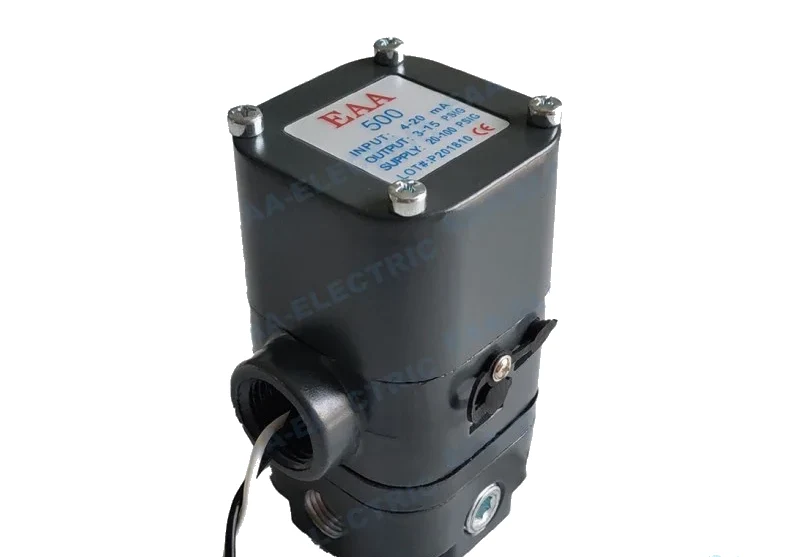 Controlair Type Transducer
500X Electro Pneumatic Transducer
Controlair pattern I/P transducer, 4-20 mA in, 3-15 to 3-120 psi out
View specifications →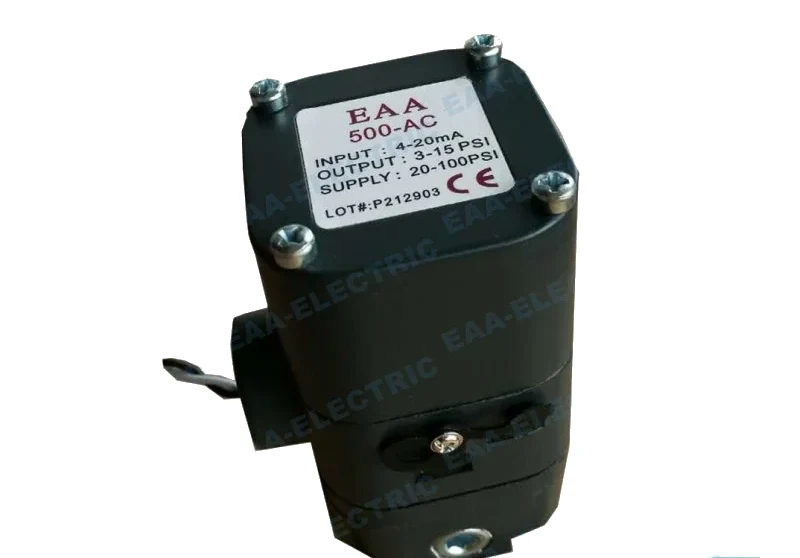 Controlair Type Transducer
500X Electro Pneumatic Converter
Controlair pattern E/P converter, 0-5 V, 1-9 V and 0-10 V inputs
View specifications →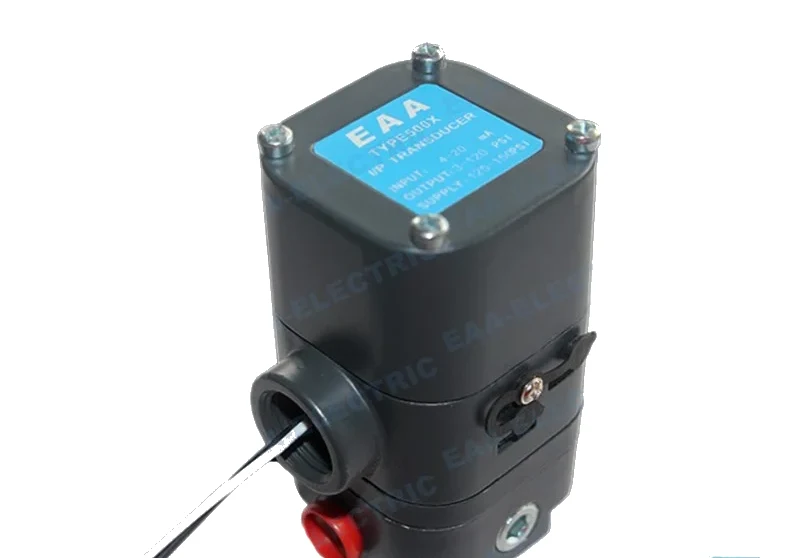 Controlair Type Transducer
500AC Electro Pneumatic Transducer
500-AC configuration, 4-20 mA in, 3-15 psi out, 180 ohms
View specifications →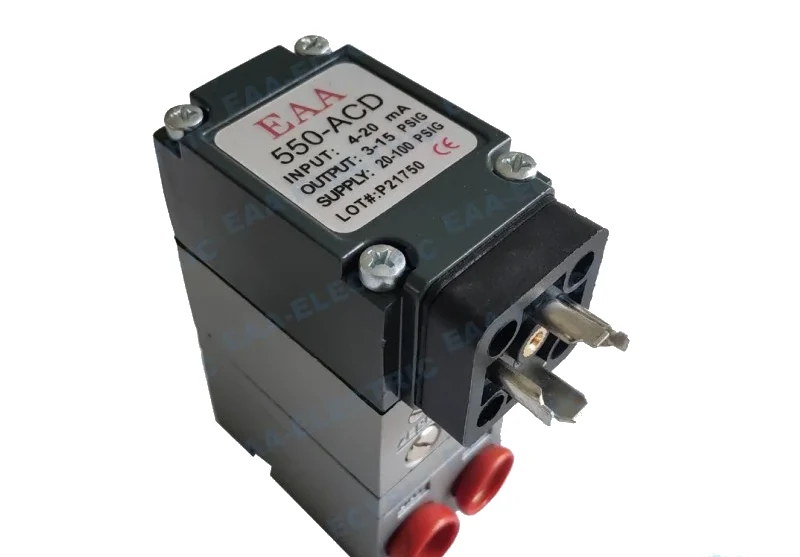 Controlair Type Transducer
550X Electro Pneumatic Transducer
Miniature EAA-550 series electronic pressure regulator, coded ordering
View specifications →Questions About The 500ACD Electro Pneumatic Transducer
How does the ACD differ from the AC
The signal range and the output range are the same, 4-20 mA to 3-15 psi. The difference is the electrical termination.
Does the calibration procedure change
No. Zero at 4 mA to 20 kPa, full scale at 20 mA to 100 kPa, then the intermediate points.
What should the output read at 12 mA
Around the middle of the calibrated range, and the point of testing it is to see that the output and the valve opening track each other rather than to hit an exact number.
Why measure the dead zone
It tells you how much signal change the valve absorbs before it moves, which is the first thing to look at when a loop hunts or responds late.
Can the unit be reconfigured to another output range
Within the span adjustment range printed on the selection table. Beyond that a different part number is required.
Request A Price For The 500ACD
Tell us the input signal, the output range and the electrical termination, and the quotation comes back against the published part number.