Two suppliers can quote the same unit price and mean completely different things. One includes your custom packaging, a 2.5 AQL inspection and delivery to the port; the other assumes its standard design, a high minimum order and ex-factory pickup. Before a price is comparable, these seven terms need to be settled in writing. We start with the one buyers ask about most: OEM vs ODM.
1. OEM vs ODM: who owns the design?
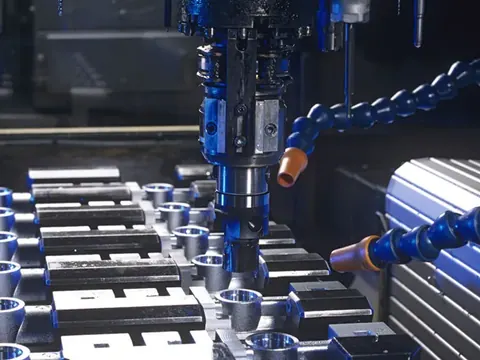
OEM (original equipment manufacturing) means the factory makes a product to your design, drawings and specifications. ODM (original design manufacturing) means the factory has already designed the product; you choose from its range and usually customise branding, colours or minor features.
| OEM | ODM | |
|---|---|---|
| Design source | Buyer | Supplier |
| Tooling and moulds | Often paid by buyer; ownership should be written down | Usually owned by supplier |
| Time to market | Longer — samples and tooling from scratch | Shorter — design already exists |
| Exclusivity | Easier to protect | Others may buy a near-identical product |
| Typical MOQ pressure | Driven by tooling and material runs | Often lower for existing models |
The practical difference between OEM and ODM is therefore about intellectual property and risk. With ODM, confirm in writing that you may sell the design in your market and that it does not copy a third party. With OEM, state who owns the tooling and that it cannot be used for other customers. A contract manufacturer is the broader term for a factory producing under another company’s brand, and covers both models.
2. MOQ: what it means and what drives it
If you have wondered what does MOQ stand for: minimum order quantity — the smallest order a supplier will accept for a product, colour or variant. MOQ is not arbitrary. It usually reflects a material purchase minimum (a roll of fabric, a batch of resin), machine set-up time or a printing plate.
That is why asking “why is the MOQ this number?” is useful. If the answer is a colour run, a standard colour may unlock a low MOQ. If it is packaging, a plain carton for the first order may help. Write the agreed MOQ per SKU, per colour and per packaging version into the PO, because suppliers sometimes quote a total MOQ while meaning per-variant.
3. Price basis: FOB, EXW or DDP
An FOB price includes the goods, export packing, delivery to the named Chinese port and export clearance. EXW excludes all of that; DDP includes freight, US clearance and duties. Insist on one basis across all quotes. Our China-to-USA pre-shipment checklist explains what each term means for your logistics.
4. Quality standard and AQL
AQL stands for acceptance quality limit (often expanded as acceptable quality level). It comes from statistical sampling standards such as ISO 2859-1 and ANSI/ASQ Z1.4. Rather than checking every unit, an inspector checks a sample sized by lot size and inspection level, and the lot passes or fails based on how many defects are found.
Buyers commonly set separate limits for critical, major and minor defects — for example zero tolerance for critical (safety) defects and looser limits for cosmetic ones. The numbers are yours to choose; what matters is that the contract states the standard, the inspection level, the AQL for each defect class and a defect list describing what counts as major or minor for your product.
5. Quality inspection: when and by whom
A quality inspection can happen at several points: incoming materials, during production, or pre-shipment when goods are finished and mostly packed. For new suppliers, a pre-shipment inspection by an independent inspector is the minimum. Agree who pays for re-inspection if the lot fails, and that the balance payment is released only after a pass.
6. Samples and golden sample
Approve a pre-production sample and keep a signed “golden sample” at both ends. This physical reference settles disputes about colour, finish and function faster than any written specification.
7. Payment milestones and lead time
A deposit with the balance before shipment is common in China sourcing; the percentages vary by supplier and relationship. Tie the balance to the inspection result, state the lead time from deposit or sample approval (not from “order”), and agree what happens if the date slips.
How the seven terms interact
These terms are not independent. A lower MOQ may come with a higher unit price; an ODM design may shorten lead time but limit exclusivity; a tighter AQL may raise the price because the factory expects more rework. When you negotiate, move one lever at a time and ask the supplier what it would change on the others. For example: “If we accept your standard colour, can the MOQ drop and the lead time stay the same?”
It also helps to separate the first order from the repeat order. Many suppliers will accept a smaller trial order at a slightly higher price if the buyer signals realistic repeat volumes. Put both price tiers in writing so the repeat-order terms are not renegotiated from scratch later.
Common mistake
Agreeing terms in chat messages and never consolidating them. Chat history is hard to enforce and easy to dispute. Turn every agreed point into a one-page terms sheet signed by both parties and referenced in the purchase order.
Checklist: the terms page to attach to your PO
- OEM or ODM, and who owns designs and tooling
- MOQ per SKU, colour and packaging version
- Price basis (Incoterm and named port) and currency
- Inspection standard, level and AQL per defect class, with defect list
- Inspection timing, inspector and re-inspection cost
- Golden sample reference
- Payment schedule tied to milestones, and lead time definition
Where to find suppliers that fit
Manufacturers that publish their processes are easier to brief. For example, the directory profile of Kemal Precision and its injection moulding and CNC buyer’s guide show the kind of detail that makes OEM quoting faster. Browse more in the product guides.
Next steps: if you are still building a shortlist, read how to find a supplier in China; if you plan to meet suppliers in person, use our Canton Fair exhibitor vetting checklist.
Want suppliers that match your OEM or ODM route?
Tell us whether you have drawings or want a ready design, your target quantity and destination. We will flag directory suppliers that fit — and what to clarify before they can quote.
Send your request on WhatsAppBrowse the supplier directoryFrequently asked questions
What is the difference between OEM and ODM?
What does MOQ stand for?
What is AQL in quality inspection?
Who owns the mould in an OEM project?
Can I get a low MOQ from a Chinese factory?
More sourcing guides on the weisourcing blog
← All blog articles · Product buyer's guides · Real inquiry articles