The food-delivery and last-mile logistics sector has driven a structural shift in two-wheel demand worldwide. Cities from London to Lagos to Lima now have substantial fleets of electric scooters and e-mopeds doing courier work — food delivery, parcel last-mile, light goods distribution. The economics are compelling: an electric scooter costs USD 600-1,800 wholesale, runs at USD 0.05-0.15 per km in electricity (vs USD 0.20-0.40 for petrol equivalents), and requires minimal maintenance (no oil, no fuel filters, no carburetor, no transmission service). For fleet operators serving courier platforms, restaurants, and parcel networks, switching from petrol scooters to electric is a 2-3 year payback decision.
This guide is the companion piece to our general electric motorcycle export guide, focused specifically on the last-mile delivery and courier use case — what makes an e-scooter suitable for delivery work, the duty-cycle differences, the spec ranges that matter, and the procurement workflow for fleet buyers.
Product range — actual catalogue images
The product images below are hosted on the manufacturer's official website (zpmotos.com) and link directly to the manufacturer's catalogue. Click any image to view the full specification page in a new tab.
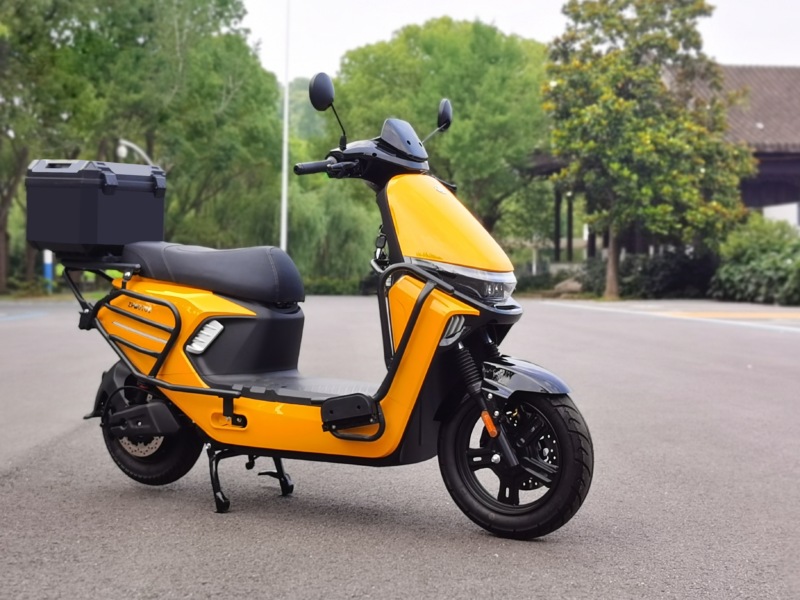
ZP19L delivery e-scooter — yellow with rear delivery box, 1500W mid-power for last-mile.
View on supplier site →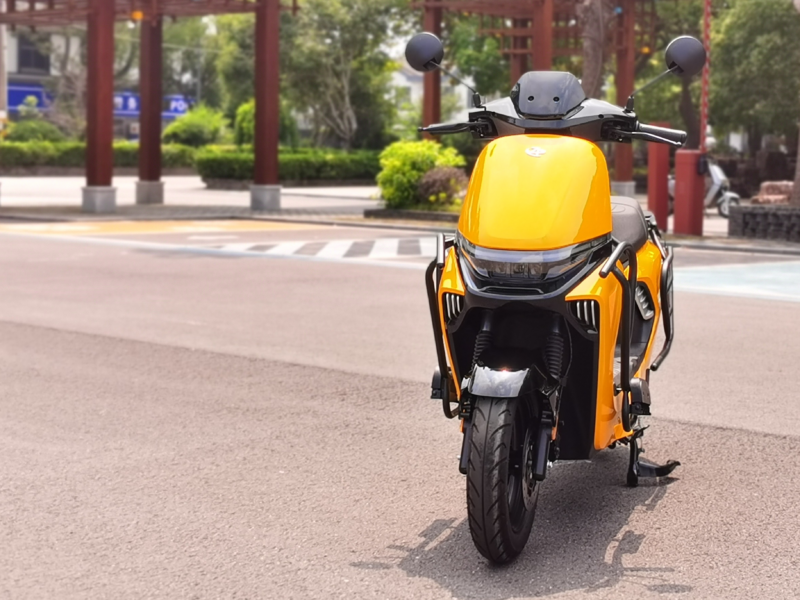
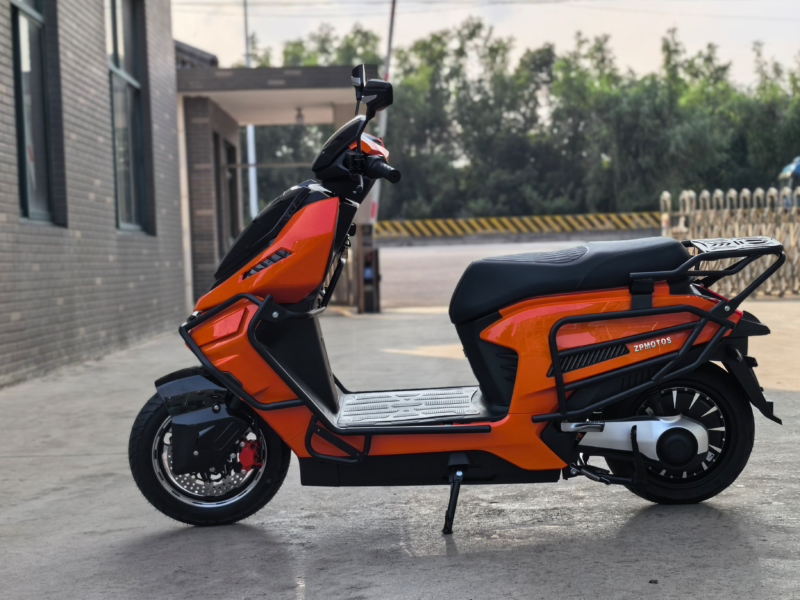
ZP24S sport-format e-scooter — 2000-3000W mid-power, urban courier and commute.
View on supplier site →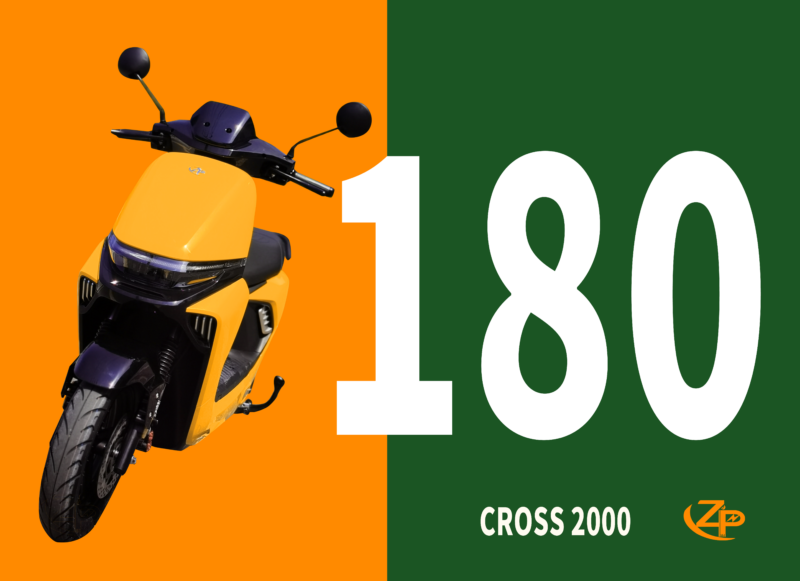
ZP19L front view — 16-inch wheel, hydraulic disc brakes, LED projector headlamp.
View on supplier site →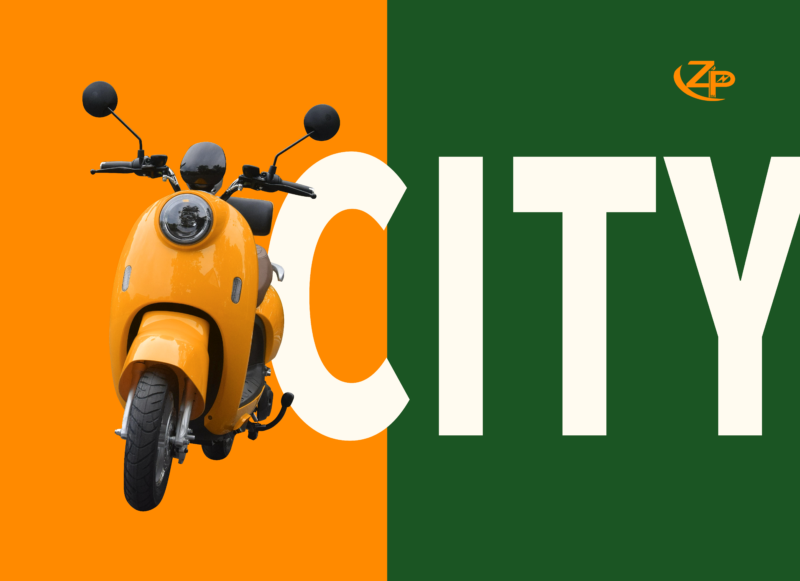
ZP18L city scooter — compact format, retro styling for short-distance city use.
View on supplier site →Why delivery duty cycle is different from personal-use
A delivery e-scooter has a fundamentally different duty cycle from a privately-owned commuter:
| Parameter | Personal commuter | Food/parcel delivery | Why it matters for spec |
|---|---|---|---|
| Daily distance | 15-40 km | 80-180 km | 4-5× battery cycles per year — battery quality is critical |
| Daily start-stop cycles | 4-12 | 60-200 | Brakes, hub motor bearings, throttle controllers wear faster |
| Carrying load | Rider only (60-90 kg) | Rider + 8-25 kg cargo | Suspension and frame stress higher; tire grade up |
| Operating hours / week | 3-8 | 40-65 | Lighting, mirrors, bodywork — durability over aesthetics |
| Annual mileage | 3,000-6,000 km | 20,000-50,000 km | Battery lifecycle, motor service interval, drivetrain renewal |
| Riding environment | Mostly clean roads | All-weather; rough pavement; frequent curb hops | IP rating on electronics; weatherproof connectors |
Spec sweet spots for delivery applications
| Specification | Recommended range for delivery | Notes |
|---|---|---|
| Motor power | 1500-3000W (mid-power) | Below 1500W underpowered with cargo + rider; above 3000W requires motorcycle license in many markets |
| Motor type | Brushless rear-hub (BLDC) | Lower maintenance than mid-drive; rear-hub better traction on inclines than front-hub |
| Top speed (governed) | 45-65 km/h | L1e-A (25 km/h) too slow for time-critical delivery; L3e (45-90 km/h) requires motorcycle homologation |
| Battery capacity | 72V / 32-50 Ah (2.3-3.6 kWh) | Minimum range 80-120 km per charge; swappable battery preferred for shift work |
| Battery chemistry | LiFePO4 (lithium iron phosphate) | 2000-3000 cycle life vs 800-1200 for NCM; safer thermal runaway behavior; small range penalty acceptable |
| Range (real-world with load) | 80-150 km | Manufacturer claims often based on 50% load and ideal conditions; real-world is 60-75% of claim |
| Charging time | 4-8 hours standard / 2-3 hours fast | Fast-charge convenient but adds USD 80-180 per unit and stresses battery |
| Brakes | Hydraulic disc front + rear | Drum/mechanical disc inadequate for fully-loaded scooter; CBS or ABS preferred for safety |
| Tire size | 16" front + rear; tubeless | Smaller wheels accelerate quicker; tubeless eliminates roadside puncture downtime |
| Cargo carrying | Rear platform 30 cm × 40 cm; front basket option; pannier mounts | Standardize cargo box mount across fleet for swap-out |
| Frame | Steel tube reinforced; adjustable rear-cargo platform | Aluminum-only frames not recommended for heavy delivery |
| Lighting | LED projector headlamp; LED tail+brake; turn signals 4 corners | Reflectors not enough for 24/7 delivery operation |
| Charging interface | Removable battery + dock-charge ; on-bike port option | Removable battery enables charging in restaurant kitchen / depot, no scooter parking required |
| Mirror & visibility | Convex bar-end mirrors; high-vis paint or reflective stripes | Standard flat mirrors inadequate for delivery rider with helmet+box |
| Storage box | Top-mounted 50-90 L delivery box | Specify mounting plate compatible with major box brands (Givi B47, Shad SH50, Roughneck etc.) |
| IP rating (electronics) | IP65 minimum on controller and battery | Riding in monsoon, snow, thunderstorm — water ingress destroys controllers fast |
Battery economics for fleet operators
Battery is the single largest operating cost for delivery e-scooters. Battery sizing math for fleet:
| Battery spec | Capacity | Cycle life | Real-world km per charge (with load) | Cycles to recoup vs replacement |
|---|---|---|---|---|
| 72V 30Ah LiFePO4 | 2.16 kWh | 2500-3000 cycles | 75-95 km | Best 1.5-yr replacement option for 80km/day fleet |
| 72V 40Ah LiFePO4 | 2.88 kWh | 2500-3000 cycles | 105-130 km | Best 2.5-yr replacement option for 100km/day fleet |
| 72V 50Ah LiFePO4 | 3.6 kWh | 2500-3000 cycles | 130-170 km | Best 3-yr replacement option for 130km/day fleet |
| 72V 30Ah NCM | 2.16 kWh | 800-1200 cycles | 85-105 km | Higher peak energy density but 1/3 cycle life vs LiFePO4 — not recommended for delivery |
Battery swap economics — when it makes sense
Battery swap stations have transformed delivery economics in mature markets (parts of China, Indonesia, Vietnam). Riders swap a depleted battery for a charged one in 30-90 seconds, eliminating the 4-8 hour charging downtime. For a fleet operator running 50+ scooters in a defined urban area, the swap-station economics work: USD 2,000-4,000 per swap station investment, USD 1.20-2.50 per swap charged to rider, breakeven at 35-50 swaps per day per station.
For smaller fleets or wider geographic coverage, traditional charging at depot is more practical — but specify dual-battery option so riders can hot-swap their own batteries between shifts.
Pricing brackets — delivery e-scooter wholesale
| Configuration | FOB China per unit | Container loadable (40HQ) | Total container value |
|---|---|---|---|
| Entry delivery — 1500W, 60V 30Ah lead-acid | USD 380-580 | 120-150 units | USD 45,000-87,000 |
| Standard delivery — 1500W, 72V 30Ah LiFePO4 | USD 720-1,050 | 110-140 units | USD 79,000-147,000 |
| Premium delivery — 2000W, 72V 40Ah LiFePO4 + ABS + LED | USD 1,150-1,650 | 100-130 units | USD 115,000-215,000 |
| Sport / fast — 3000W, 72V 50Ah LiFePO4 + ABS | USD 1,650-2,400 | 90-110 units | USD 149,000-264,000 |
| Dedicated cargo — 1500W with 90L cargo box + extended platform | USD 850-1,250 | 100-130 units | USD 85,000-163,000 |
Spare parts kit — what to ship in the same container
Delivery scooters wear at predictable rates. Including a spare-parts package in the container reduces downtime and freight costs over the next 1-2 years of operation:
| Spare component | Recommended quantity per 100 scooters | Replacement frequency |
|---|---|---|
| Brake pads (set front+rear) | 200 sets | Every 8,000-15,000 km (2-4 sets per scooter per year) |
| Tires (front+rear pair) | 120 sets | Every 12,000-18,000 km |
| Front headlamp LED | 30 units | Random; 5-10% per year |
| Tail/brake LED | 20 units | 5-7% per year |
| Throttle assembly | 15 units | 5-10% per year (delivery rider abuses throttle) |
| Brake lever assembly | 15 sets | 5-8% per year (drop damage) |
| Mirror assembly | 30 pairs | 15-20% per year (broken in transit) |
| Charger | 15 units | 10-15% per year (drop damage, surge damage) |
| Controller (motor electronic) | 5-10 units | 3-5% per year (water ingress, surge) |
| Hub motor (rear) | 2-3 units | 2-3% per year (bearing failure or coil burnout) |
| Battery pack — full | 3-5 units | For warranty replacement; LiFePO4 fleet replacement at year 2-3 |
Homologation by delivery market
| Market | Required certification | Notes |
|---|---|---|
| European Union | L1e-A (25 km/h) or L3e-A1 (45+ km/h, motorcycle) Whole Vehicle Type Approval | Most delivery riders use L1e-A; courier platforms increasingly require L3e for time-critical work |
| UK | Same as EU + UKCA marking | Post-Brexit; CE alone no longer sufficient |
| USA | Federal MVSS + state-level moped/motorcycle registration | Federal NHTSA standards plus highly varied state laws — Florida treats differently than California |
| India | FAME II eligibility for fleet incentive | Up to INR 15,000 per kWh subsidy under FAME II for compliant e-scooters |
| Indonesia | SNI certification | Required for all motorcycles incl. electric for fleet purchase |
| Brazil | INMETRO + Denatran motorcycle registration | Most courier platforms accept up to 50cc-equivalent without motorcycle license |
| Vietnam | Local emissions cert + safety inspection | Battery capacity caps at 1.5kWh for non-license operation |
| Mexico | NOM-194 + state-level moped permit | Most large cities have specific delivery e-bike rules separate from motorcycle |
Order workflow — fleet procurement
- Use case definition — daily km per scooter, max load, route profile (urban / suburban / mixed), shift structure, charging infrastructure available
- Spec inquiry — provide use-case profile to supplier; supplier proposes 2-3 model variants matching the duty cycle
- Sample order — 1-2 units of each variant by air or LCL freight for evaluation; deliver to actual riders for 30-60 day field test
- Field test data — track real-world range, brake pad wear rate, battery degradation, controller failures, rider satisfaction, maintenance issues; choose final variant based on TCO data
- First container order — 100-130 units of selected variant + spare parts kit + chargers; air-freight 5-10 critical-failure spares for early-life replacements
- Series replenishment — quarterly or 6-monthly orders for fleet expansion + replacement; adjust spec based on field data and platform requirements (food delivery vs parcel last-mile have different needs)
- End-of-life — at year 3-4 plan for battery refresh (LiFePO4 still has 60-70% capacity but range becomes problematic for delivery); whole-vehicle replacement at year 5-6 typical