📦 Real Buyer Inquiry · Norway · 2026-04
MacGregor Crane Spare Parts: Sourcing Hydraulic Pumps and Servo Valves from China — A Norwegian Buyer's Practical Guide
A Norwegian shipping company sent us a 12-line BOM for two MacGregor crane refurbishments — main motors, gearboxes, hydraulic hoist pumps, luffing pumps, servo valves, hoist motors, slew bearings. Here's what experienced procurement teams check before placing the order, and why one Chinese remanufacturer keeps showing up in this segment.
Two MacGregor cranes need refurbishment. Not new units — these are existing deck cranes coming up for major overhaul, and the procurement team in Norway has already done the disassembly inspection. They know exactly what's failing, and they know exactly what they need.
The inquiry that landed in our inbox was twelve lines of BOM. No sales preamble, no "please send your catalogue." Just the parts list, the quantities, and an implicit question: who in China can supply OEM-compatible replacements that won't fail at sea six months later?
This article walks through the inquiry, why each item matters, and the two or three things that separate a real hydraulic-pump remanufacturer from a trader in Yiwu reselling whatever turned up that week.
The actual BOM (redacted, verbatim)
The buyer asked for the following parts, in pairs of two for two cranes. Names of brands, vessels, and their counterparty have been removed; everything else is exactly as written in the original inquiry.
| Item | Description | Qty |
|---|
| 1 | Main Motor 190 kW | 2 pcs |
| 2 | 3-Split Gearbox | 2 pcs |
| 3 | Feed Pump | 2 pcs |
| 4 | Hydraulic Hoist Pump | 4 pcs |
| 5 | Hydraulic Luffing Pump | 4 pcs |
| 6 | Servo Valve | 2 pcs |
| 7 | Hydraulic Motor — Luffing | 2 pcs |
| 8 | Hydraulic Motor — Hoist | 2 pcs |
| 9 | Hydraulic Winch | (not specified) |
| 10 | Slew Bearing | (not specified) |
| 11 | Control Boards | (not specified) |
| 12 | Other associated spares as listed | — |
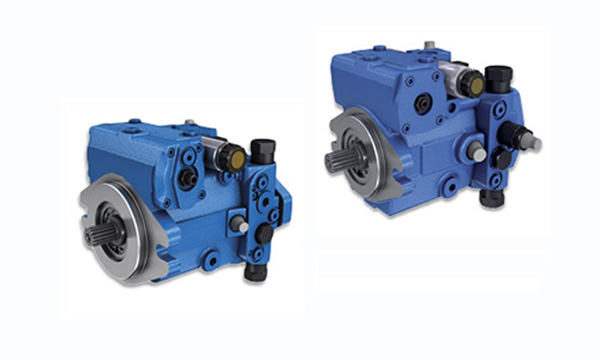
Piston pumps and motors — actual product range from SEIMT Hydraulics
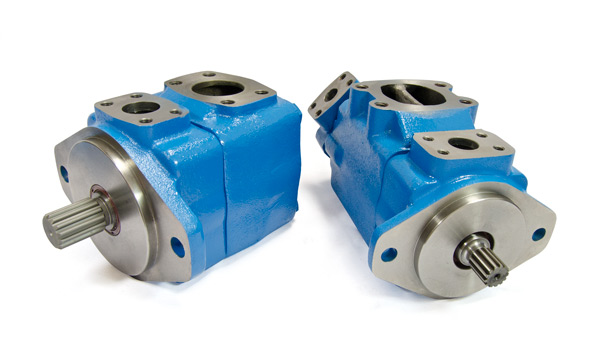
Vane pumps and motors product line — SEIMT Hydraulics
"Complete equipment for two MacGregor cranes, including main motors, gearboxes, hydraulic pumps, servo valves, hydraulic motors, winches, slew bearings, control boards, and other associated spares as listed."
— Excerpt from buyer's inquiry, Norway, April 2026
This is what a serious refit inquiry looks like. No catalogue request, no MOQ question, no "do you do OEM" preamble. The buyer already has a workshop. They just need parts.
Why hydraulic pumps drive the conversation
If you scan the BOM, the hydraulic pumps and servo valves are the items that determine whether the supplier wins or loses the order. Not the main motor — that's a relatively simple electrical sourcing job that any motor manufacturer in China can quote on. Not the slew bearing — those are commodity items now. The pumps are where craftsmanship still matters.
A MacGregor deck crane uses two distinct pump circuits:
- The hoist circuit — moves the load up and down. High torque, frequent reversals, very heavy duty cycle. Failure mode is usually seal degradation under pressure cycling, leading to internal leakage and the pump no longer holding load.
- The luffing circuit — moves the boom up and down. Lower duty cycle, but the holding-position requirement is brutal — the pump has to maintain pressure for hours while the crane sits in lifting position. Failure mode is usually creep under static pressure, where the boom drifts slightly downward over time.
The buyer asked for four hoist pumps and four luffing pumps — two per crane, plus two redundancy units in case one fails on first installation. This is normal practice in offshore refit work. The redundancy unit count is also a signal that the buyer has been bitten by quality issues before — they're not betting on getting it right the first time.
What separates a real hydraulic remanufacturer
For a refit job like this one, the supplier that wins typically demonstrates three things:
1. OEM cross-reference table
MacGregor cranes use hydraulic pumps from several OEM lineages — historically Vickers (now Eaton), Denison (now Parker Hannifin), Yuken, and a handful of Sauer-Danfoss / Bosch Rexroth pumps depending on the vintage of the crane. A Chinese remanufacturer who supplies this market should be able to produce, on the same day, a cross-reference document showing which of their part numbers replace each OEM equivalent — including matching mounting flange (ISO or SAE), shaft type (splined or keyed), port size and orientation, displacement, and pressure rating.
If the supplier asks "can you send the OEM part number first" before quoting, that's a red flag. A real remanufacturer keeps a cross-reference table on file because they get this question every week.
2. Pressure-cycle test data
Remanufactured hydraulic pumps are tested before they leave the factory. The two tests that matter are:
- Pressure-cycle test — the pump is run at rated pressure, then cycled up to peak pressure (typically 1.5× rated), then held. The number of cycles before any leakage, vibration, or noise change is the data point. For marine duty, 100,000 cycles minimum is reasonable.
- Volumetric efficiency at rated pressure — measures how much of the displacement is actually delivered under load (versus leaked internally). For a remanufactured pump, 92–95% efficiency is the realistic target. Below 90%, the pump will not perform under prolonged load.
Ask for these numbers in writing. If the supplier doesn't measure them, they're not testing what matters.
3. Documented marine track record
Marine refits are a small, gossipy industry. A supplier that has done MacGregor refit work before will be able to name (under NDA, or in general terms) which yards have used their parts, on what types of vessels, and over what period. The absence of any track record is not a deal-breaker on a single pump — but on a 12-line BOM going to two cranes simultaneously, it is.
The supplier we matched this inquiry with
From our network of 600+ verified suppliers, the closest match for this inquiry is a Ningbo-based hydraulic specialty house that publishes its product range as: Vane Pump & Parts, Hydraulic Piston Pump & Parts, with explicit positioning around remanufactured units stated as 100% OEM-compatible. Profile and direct contact below.
How to compare quotes when they all say "100% OEM-compatible"
Every Chinese hydraulic remanufacturer says their parts are "100% OEM-compatible." That phrase, by itself, is meaningless. Here's how to disambiguate:
The five questions that separate suppliers
- Cross-reference document — can you receive the supplier's full Vickers / Eaton / Denison / Yuken cross-reference table within 24 hours of asking? Real remanufacturers have this on file.
- Test report sample — can the supplier email you a sample test report for any pump in their catalogue, including pressure-cycle data and volumetric efficiency? If not, they don't test.
- Seal-kit specification — what brand of seals does the supplier use? Trelleborg, Parker, NOK, and SKF are the names that signal real OEM-grade. "We use professional seals" signals nothing.
- Bench-test photos / video — ask for photos or a 30-second video of one of their pumps under bench test. Suppliers who actually test will share this within hours; suppliers who don't will go silent.
- Marine reference — has the supplier shipped to a marine yard before, and can they name the project type (deck crane, provision crane, offshore lifting unit)? You're not asking for confidential customer names; you're asking for the project category.
What to confirm before issuing a PO
For a 12-line BOM crossing main motors, gearboxes, hydraulic pumps, and control electronics, the procurement checklist before issuing the PO usually includes:
- Lead time per line item — gearboxes and slew bearings are the long-lead items (8–12 weeks is normal); pumps and motors are 4–6 weeks; control boards 2–3 weeks. The PO should set a single Required Date and let the supplier propose the staged dispatch schedule.
- Inco term — for marine refit work, FOB China port is most common because the buyer typically has freight forwarder agreements already in place. CIF is acceptable but adds 8–12% to the line cost.
- Inspection clause — third-party inspection (SGS, BV, Lloyd's) at the factory before despatch is standard for orders above USD 50,000. The cost is borne by the supplier; the inspection report is required for L/C release.
- Warranty period — 12 months from commissioning is standard. Some Chinese suppliers offer 18 months on remanufactured units; in that case, ask what failure mode is covered. "Manufacturing defects only" is a narrower warranty than "premature wear under rated duty cycle."
- Class certification — MacGregor cranes installed on classed vessels (DNV, BV, Lloyd's, ABS, KR, NK) may require that replacement parts also carry class approval. Confirm with the vessel's class society before specifying class-approved parts; otherwise the supplier's cost goes up by 15–25% unnecessarily.
Marine sourcing logistics: Norway → China → Norway
For a Norwegian buyer ordering from China, the typical logistics flow is:
- Factory inspection at Ningbo / Qingdao (depending on the supplier's location). Lead time: 5–10 days from the supplier announcing readiness.
- Sea freight from a Chinese port (most pump suppliers use Ningbo or Shanghai) to Rotterdam, Hamburg, or Gdansk, then inland trucking to the Norwegian yard. Sea transit is 28–35 days.
- Norwegian customs clearance for refit parts is generally straightforward when the parts are itemised on the commercial invoice with HS codes 8412 (motor / pump) and 8413 (pump components). VAT and duty depend on whether the vessel is registered for ocean-going service.
- Yard delivery coordinated with the dry-dock window. Most Norwegian crane refit work happens at a fixed dock window, so the supplier's commitment to a despatch date matters more than transit time itself.
One subtle logistics note
Because Norwegian dry-dock windows are typically 4–6 weeks long and bookings happen 6–12 months in advance, missing the despatch date by even one week can mean missing the dock window entirely and re-scheduling the refit by 6 months. This is why marine procurement teams favour suppliers with a documented track record of on-time despatch over suppliers with the lowest quoted price. Cheap parts that arrive two weeks late cost the shipowner roughly USD 200,000 in lost charter revenue, which is more than the entire BOM was worth.
Frequently asked questions
What spare parts do MacGregor cranes typically need on refit?
Common refit BOMs cover main motors (typically 190 kW range for offshore deck cranes), 3-split gearboxes, feed pumps, hydraulic hoist pumps, hydraulic luffing pumps, servo valves, hoist motors, luffing motors, hydraulic winches, slew bearings, and electronic control boards. The exact combination depends on whether the crane is a deck crane, provision crane, or specialised offshore lifting unit, and on the operational hours since the previous overhaul.
Are Chinese hydraulic pumps interchangeable with original MacGregor parts?
Chinese remanufactured hydraulic pumps and replacement parts are stated by Chinese suppliers to be 100% OEM-compatible — meaning matching mounting flanges, port sizes, displacement, pressure rating, and rotation. Buyers should request the OEM cross-reference, factory test report, pressure-cycle test data, and seal-kit specifications before ordering. Whether the supplier can deliver these documents within 24–48 hours is a strong signal of capability.
How do you verify a Chinese hydraulic pump supplier's quality before placing a marine-crane order?
Three checks: (1) request the company's Vickers / Eaton / Denison / Yuken cross-reference table to confirm interchangeability across the OEM lineages; (2) ask for sample batch test reports including pressure-cycle and noise-level data; (3) ask for documented previous shipments to marine / offshore customers — preferably with photos of the despatched units in trade-show booths or yard installations. Suppliers who pass all three are a smaller subset than the catalogue universe suggests.
What documents should accompany a hydraulic pump shipment for marine use?
Marine shipments typically require: commercial invoice, packing list, certificate of origin, manufacturer's test certificate (MTC), material certificates for pressure-bearing components, MSDS for hydraulic fluids if pre-filled, and Bureau Veritas / DNV / Lloyd's class certificate when the destination buyer asks for class-approved equipment. For Norwegian yards specifically, DNV class is the most-requested certification.
What is the typical lead time for a 12-line MacGregor crane refit BOM from China?
For a mixed BOM covering motors, gearboxes, hydraulic pumps, servo valves, and control boards, the typical lead time profile is: pumps and hydraulic motors 4–6 weeks; main electrical motors 6–8 weeks; gearboxes and slew bearings 8–12 weeks; control boards 2–3 weeks. The supplier should propose a staged dispatch schedule rather than waiting for the longest-lead item to be ready.
Should I use FOB or CIF for a Norway-bound marine refit shipment?
FOB is more common for marine refit buyers because they typically have established forwarder agreements covering Asia-to-Europe lanes and customs clearance at the yard's import port. CIF is acceptable when the supplier has a documented preferred-rate agreement with a freight forwarder, but adds 8–12% to the per-line cost versus FOB.
Closing thought
The Norwegian buyer who sent us this BOM was not asking for a catalogue. They were asking, implicitly, which Chinese supplier on your network actually understands marine hydraulic refurbishment, has the test equipment, and won't ghost when the pump fails on first installation?
That's the question this article exists to answer — by walking through the BOM, the failure modes, and the verification steps that separate a real remanufacturer from a trader. If you're working on a similar refit and want to skip directly to a shortlist, the supplier card above is where to start.