weisourcing.com / products / Lifting China / Lifting Slings & Rigging Hardware

Lifting Slings, Ratchet Straps & Rigging Hardware from China — A B2B Wholesale Buyer's Guide

A practical sourcing guide for lifting and rigging equipment from China — written for industrial safety distributors, construction supply companies, heavy lifting and rigging contractors, crane rental companies, logistics and trucking fleet operators, marine and offshore buyers, mining operations, and industrial OEMs. Real product images from lifting-china.com covering round slings (color-coded by capacity per EN 1492), webbing slings, ratchet tie-down straps, lever blocks, chain hoists, lifting magnets, hooks, shackles, swivels, and supporting rigging accessories. Working Load Limit color coding system, sling-type selection (webbing / round / chain), tie-down strap LC ratings, certification standards by destination market (EN 1492 / EN 12195 / ASME B30.9 / AS 1353 / OSHA 1910.184), and the procurement workflow for lifting equipment distributors.

Manufacturer: Lifting China (lifting-china.com)
Category: Bearings, Chains & Power Transmission
Reading time: 13 min

Lifting slings, ratchet tie-down straps, hoists, chains, and rigging hardware are essential consumables across construction, manufacturing, logistics, marine, mining, and oil-and-gas operations. Unlike permanent structural hardware, slings and straps are short-life consumables — most are inspected daily, retired at any sign of damage, and have typical service lives of 1-5 years even with proper care. The combination of high consumption rates, strict safety implications, and labor-cost intensity in production has made China the dominant global supplier of polyester slings, webbing straps, and basic rigging hardware. For lifting-equipment dealers, industrial safety distributors, construction supply companies, and large industrial operators, sourcing slings and rigging from a Chinese specialist supplier delivers significant cost advantages while maintaining the load-rated certification compliance these products require.

This guide covers the Lifting China product family — round slings (duplex, multi-ply), webbing slings (flat polyester), ratchet tie-down straps, cargo lashing equipment, lever blocks (cum-a-longs), chain blocks, lifting magnets, hooks, shackles, swivels, and supporting rigging accessories. Real product images linking back to the supplier's catalog at lifting-china.com.

Product range — actual catalogue images

The product images below are hosted on the manufacturer's official website (lifting-china.com) and link directly to the manufacturer's catalogue. Click any image to view the full specification page in a new tab.
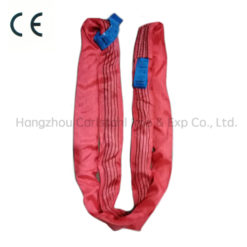
Round sling — duplex polyester construction, CE marked, color-coded by capacity (red = 5 tonne).

Round sling — duplex polyester construction, CE marked, color-coded by capacity (red = 5 tonne).

View on supplier site →
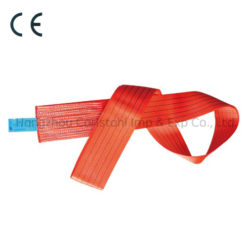
Webbing sling (flat-woven) — single-ply polyester with reinforced eyes for hook attachment.

Webbing sling (flat-woven) — single-ply polyester with reinforced eyes for hook attachment.

View on supplier site →
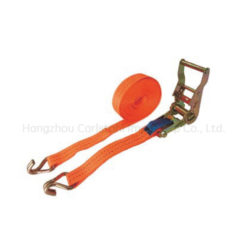
Ratchet tie-down strap — orange polyester webbing with hook ends and ratchet tensioner.

Ratchet tie-down strap — orange polyester webbing with hook ends and ratchet tensioner.

View on supplier site →

Lifting sling types and capacities

Sling typeColor code (per EN 1492)Working Load Limit (vertical)FOB China per piece (1m length)
Round sling — purplePurple1 tonne (1,000 kg)USD 4.50-12.00 per piece
Round sling — greenGreen2 tonnesUSD 6.50-16.00 per piece
Round sling — yellowYellow3 tonnesUSD 9.50-22.00 per piece
Round sling — grayGray4 tonnesUSD 12.00-28.00 per piece
Round sling — redRed5 tonnesUSD 15.00-35.00 per piece
Round sling — brownBrown6 tonnesUSD 22.00-48.00 per piece
Round sling — blueBlue8 tonnesUSD 32.00-65.00 per piece
Round sling — orangeOrange10 tonnesUSD 45.00-95.00 per piece
Round sling — orange-doubleOrange (heavy)12-20 tonnesUSD 65.00-185.00 per piece
Webbing sling 1-ply (flat)Various per capacity1-12 tonnesUSD 6.00-85.00 per piece
Webbing sling 2-ply (flat)Various per capacity2-25 tonnesUSD 12.00-180.00 per piece
Chain sling 1-leg (Grade 80)Black/yellow1.4-22 tonnes (size dependent)USD 28.00-380.00 per meter
Chain sling 2-leg (Grade 80)Black/yellow2-30 tonnesUSD 65.00-580.00 per assembly
Chain sling 4-leg (Grade 80)Black/yellow4-60 tonnesUSD 145.00-1,200 per assembly

Tie-down and lashing equipment

ProductWebbing widthLashing capacityFOB China per unit
Light ratchet strap (3-5m length)25mm (1")800-1,500 kg LCUSD 2.50-6.00 per strap
Standard ratchet strap (4-8m length)50mm (2")2,000-2,500 kg LCUSD 4.50-12.00 per strap
Heavy ratchet strap (5-12m length)50mm (2")2,500-5,000 kg LCUSD 6.00-18.00 per strap
Heavy-duty ratchet strap75mm (3")5,000-10,000 kg LCUSD 18.00-45.00 per strap
Cam-buckle tie-down (light cargo)25mm250-500 kg LCUSD 1.20-3.50 per strap
Endless ratchet (no hook ends)50mm2,000-5,000 kg LCUSD 5.00-14.00 per strap
Container lashing (corner-fitting style)50mm + corner fittings2,500-5,000 kg LCUSD 12.00-32.00 per assembly
Vehicle transport tie-down (axle/wheel)50mm + axle protector2,500-5,000 kg LCUSD 12.00-28.00 per strap

Hoists and pulling equipment

ProductCapacity rangeFOB China per unit
Lever block (cum-a-long, ratchet lever hoist)0.75-9 tonnesUSD 18.00-180.00 per unit
Chain block (manual chain hoist)0.5-20 tonnesUSD 25.00-380.00 per unit
Electric chain hoist0.5-10 tonnesUSD 280.00-2,800.00 per unit
Permanent magnet lifter100-2,000 kgUSD 65.00-680.00 per unit
Electromagnet lifter100-5,000 kgUSD 280.00-2,800.00 per unit
Beam clamp (girder clamp)0.5-10 tonnesUSD 22.00-180.00 per unit
Plate clamp (vertical lifting)0.5-10 tonnesUSD 28.00-280.00 per unit
Wire rope hoist (electric)1-50 tonnesUSD 480.00-4,800.00 per unit

Rigging hardware accessories

ItemSizesFOB China per piece
Lifting hook (clevis grab hook, Grade 80)0.5-22 tonne capacityUSD 4.50-95.00
Self-locking hook (safety hook)1-22 tonne capacityUSD 12.00-180.00
Sliding choker hook0.5-22 tonne capacityUSD 8.00-140.00
D-shackle (galvanized, drop-forged)0.5-50 tonneUSD 1.20-220.00
Bow shackle (galvanized, drop-forged)0.5-50 tonneUSD 1.50-280.00
Master link / sling ring (Grade 80)0.5-30 tonneUSD 4.50-180.00
Eye nut, swivel hoist ring1-22 tonneUSD 14.00-280.00
Wire rope clip (saddle type)3-60mm ropeUSD 0.45-22.00
Turnbuckle (jaw + jaw / hook + eye)1-32 tonneUSD 8.00-380.00

Critical compliance and certification

StandardScopeMarkets where required
EN 1492-1 / EN 1492-2Polyester webbing slings + round slingsEU mandatory; widely accepted globally
EN 13414-1Steel wire rope slingsEU mandatory
EN 818-2 / EN 818-4Lifting chain (Grade 8 / Grade T)EU mandatory
ASME B30.9Slings (US standard)USA — required for industrial use
ASME B30.10HooksUSA
ASME B30.26Rigging hardware (shackles, links, etc.)USA
OSHA 1910.184Slings (US workplace safety)USA workplace
AS 1353Flat synthetic-webbing slings (Australia)Australia / NZ
AS 4497Round synthetic slings (Australia)Australia / NZ
EN 12195-2Web lashing for cargo securementEU; widely accepted
CE markingMachinery Directive 2006/42/EC complianceEU / EEA
WLL marking on each unitWorking Load Limit must be visibly marked on each sling/strap/hookGlobal — universal requirement

Why lifting equipment certification is non-negotiable

Slings, straps, and rigging hardware are life-safety equipment — failure can kill workers, damage cargo, and trigger serious legal exposure. Every legitimate market requires certified product with traceable documentation.

For each shipment of slings or rigging hardware, supplier should provide: (1) DECLARATION OF CONFORMITY to specific standard (EN 1492-1, ASME B30.9, AS 1353, etc.); (2) BREAK-LOAD TEST CERTIFICATE — actual test on representative samples showing rupture force ≥7x WLL; (3) BATCH SERIAL TRACEABILITY — each sling/strap labeled with unique ID traceable to specific production batch; (4) WLL TAG — sewn-in or stamped tag showing capacity, length, certification standard, manufacturer, and serial number.

Lower-tier "lifting equipment" without these documents may LOOK identical but lacks verified strength and certification — workers using uncertified slings face real injury risk and employers face severe legal liability. Premium aftermarket-fit Chinese suppliers like Lifting China maintain proper certification regimes; budget tier sellers without complete documentation should be avoided regardless of price advantage.

Pricing brackets — wholesale

Order tierTotal quantityDiscountContainer utilizationLead time
Sample / specialty buyer50-500 pieces totalList price; LCLPallet or LCL15-30 days
Small distributor2,000-10,000 pieces5-15%20' container20-35 days
Mid distributor15,000-50,000 pieces15-25%40' or 40HQ container35-55 days
Large distributor / national program100,000+ pieces annually22-32%40HQ x N containers50-80 days

Common buyer profiles

Buyer typeTypical SKU mixVolume pattern
Industrial safety distributor (regional)200-400 SKUs across slings + straps + hardwareContinuous catalog stock; full container monthly
Construction supply company50-150 SKUs (focus on standard sizes)Continuous; project-driven volume swings
Heavy lifting / rigging contractor20-80 SKUs (focus on heavy capacity)Project-based; replacement of damaged units
Crane rental company30-100 SKUs (broad capacity range)Periodic replacement; condition-based retirement
Logistics / trucking fleet15-40 SKUs (mainly tie-down straps)Continuous replacement; fleet-scale volume
Marine / offshore40-100 SKUs (premium grades, specialty rigging)Annual orders; classification compliance
Mining operations30-80 SKUs (heavy capacity, harsh environment)Continuous replenishment; safety-critical inspection
Industrial OEM10-50 SKUs (specific to product/process)Production-rate orders

Order workflow — lifting equipment distributor procurement

  1. Application analysis — define target market (industrial / construction / logistics / marine); inventory current SKU mix and identify gaps
  2. Compliance specification — map destination-market requirements (EN 1492 for EU, ASME B30.9 for US, AS 1353 for Australia); demand certification documentation per shipment
  3. Sample order — 5-25 pieces of each candidate SKU; verify WLL tags, color coding, sewn eye quality, hardware finish; bench-test or witness break-load test on representative samples
  4. Quality verification — receive declaration of conformity, break-load test certificate, traceability documentation; verify with certifying body
  5. First container order — 2,000-10,000 pieces across 30-60 SKUs; mix capacity, type, and certification for your local market
  6. Quality acceptance — incoming inspection sampling per AQL 1.0% for major defects, 4.0% for minor; physical verification of WLL tags and serial numbers
  7. Series replenishment — quarterly orders aligned with seasonal demand; air-freight emergency replenishment for high-velocity SKUs; maintain 6-12 weeks inventory minimum

Lifting China on weisourcing.com

View the full supplier profile, certifications, contact details, and complete product catalogue.

Frequently asked questions

What's the difference between Working Load Limit (WLL) and Breaking Strength?
Critical distinction for lifting equipment. WORKING LOAD LIMIT (WLL) — the maximum load that should be applied to the equipment during normal use. This is the value stamped on the product tag and used for selecting equipment for a job. BREAKING STRENGTH — the actual force at which the equipment will rupture. Always significantly higher than WLL. The ratio is the SAFETY FACTOR. Industry-standard safety factors: SLINGS (synthetic webbing/round) — 7:1 ratio (WLL × 7 = breaking strength). Example: 2-tonne WLL sling has ~14-tonne breaking strength. CHAIN SLINGS (Grade 80/100) — 4:1 ratio. Higher allowable WLL relative to break strength because chain has predictable failure modes. RIGGING HARDWARE (shackles, hooks) — 4:1 to 6:1 typical; varies by application class. WIRE ROPE SLINGS — 5:1 typical for general lifting. PRACTICAL IMPLICATION: never use WLL × 1.0 as your design load. Always design with additional safety margin beyond WLL — typical practice is to limit actual load to 0.6-0.8x WLL for routine operations, allowing margin for dynamic loading, shock loads, and angular loading. PROHIBITED: using "breaking strength" as the rating for selection. The safety factor exists for good engineering reasons (material variability, environmental degradation, dynamic loading); using equipment at break-strength capacity would make routine accidents become fatal failures.
How do I select between webbing slings, round slings, and chain slings?
Each has distinct advantages. WEBBING SLING (flat) — most common general-purpose: cheapest per kg of capacity, easy to inspect (wear visible), conforms to load shape, gentle on painted/finished surfaces. Disadvantages: cuts and abrasion damage, UV degradation in sustained outdoor exposure, narrow range of bend radii. Best for: general manufacturing, light-medium construction, finished-product lifting. ROUND SLING (endless polyester sleeve) — better load distribution: continuous loop spreads stress evenly, accommodates wider load shapes (large rounded objects), tube-style construction protects internal fibers from abrasion, color-coded by capacity for easy identification. Disadvantages: slightly more expensive than webbing, internal damage harder to detect (red core fibers exposed = retire), can roll under load if not positioned properly. Best for: irregular loads, construction lifting, where color-coded capacity identification matters. CHAIN SLING (Grade 80 or 100) — heavy-duty: handles edges and abrasion better than synthetic, withstands higher temperatures (up to 200°C continuous), longer service life under abuse, individual links can be inspected and the chain can be rebuilt by replacing damaged segments. Disadvantages: heavy (40-50% heavier than synthetic for same capacity), harder on painted surfaces, requires more skill to use safely. Best for: foundries, mills, construction with sharp edges, marine, mining. PRACTICAL DECISION: start with webbing for general use; add round slings for specific shape requirements; reserve chain for heavy/abusive environments. Most well-equipped lifting operations stock all three types.
How long does a polyester sling actually last in real-world use?
Highly dependent on use pattern and care. INDUSTRY-STANDARD GUIDELINES suggest: (1) NORMAL CARE — synthetic slings should be inspected before each use, retired at first sign of damage. Even with care, expect 1-3 years of routine use. (2) HARSH CONDITIONS (abrasion, sun exposure, chemical contamination) — service life 3-12 months. (3) PROTECTED USE (indoor, controlled) — service life 3-5 years. RETIREMENT TRIGGERS — sling MUST be retired (not just inspected) if any of: heat damage (melting, fusing, hard spots); chemical damage (visible burns, color change, brittleness); mechanical damage (cuts, snags, abrasion exposing core fibers); UV damage (color fade with surface fiber breakage); water damage if sling not designed for wet use; load tag missing or unreadable; any unrepaired damage to sewn eyes or splice areas. INSPECTION PROTOCOL: (1) Daily visual inspection by user; (2) Periodic detailed inspection (monthly to quarterly depending on use intensity) by qualified person; (3) Annual formal inspection per industry standard (typically dye-penetrant or load-test for chain; visual + measurement for webbing). DOCUMENTATION: maintain inspection log per applicable standard (OSHA 1910.184 in US, EN 1492-1 in EU). Failure to inspect = legal liability for any subsequent failure. ECONOMIC IMPLICATION: budget 25-40% of original sling cost annually for replacement; faster turnover than most industrial consumables. Premium-tier slings with proper care + retirement protocol cost less per safe use cycle than budget slings replaced more frequently.
Can I use Chinese aftermarket slings for industrial lifting in regulated markets like USA or EU?
Yes, provided the supplier maintains current certification regimes. CERTIFICATION VERIFICATION: (1) For EU markets — supplier provides Declaration of Conformity per EN 1492-1 (round/webbing slings), EN 13414 (wire rope), or EN 818 (chain), plus CE marking on product. Test certificates from accredited European-recognized lab (TÜV, Bureau Veritas, SGS). (2) For US markets — supplier provides ASME B30.9 compliance documentation, plus OSHA-compatible inspection criteria. Some buyers also require third-party certification by Crosby, NMSA, or similar US-recognized programs. (3) For Australia/NZ — supplier provides AS 1353 (webbing), AS 4497 (round) compliance documentation. RED FLAGS that disqualify supplier from regulated-market use: (a) Generic "CE marked" claim without specific test report; (b) WLL stamped on tag but no traceable batch information; (c) "Made in China" with no manufacturer identification on tag; (d) Capacity ratings inconsistent with industry standards (e.g., a "5-tonne" sling rated to 5-tonne breaking strength rather than WLL); (e) No supplier identification on the tag. PROCUREMENT BEST PRACTICE: order from suppliers like Lifting China who have established export track record + audit-ready documentation. Periodic third-party verification testing (1-2% of inventory annually) maintains confidence. Avoid trading-house intermediaries who can't produce manufacturer documentation. The cost premium for properly certified slings vs uncertified is small (15-30%) relative to the workplace safety and legal risk profile.
What's the right way to use ratchet straps for vehicle / cargo securement?
Ratchet strap usage is regulated specifically for cargo securement on roads. KEY REGULATORY REQUIREMENTS: USA (FMCSA 393) — cargo must be secured to prevent shifting, with specified Working Load Limit (WLL) of straps determining minimum number of straps based on cargo weight. CANADA (NSC Standard 10) — similar to FMCSA. EU (Council Directive 2014/47) + EN 12195 — specifies lashing capacity (LC) measurement for straps. AUSTRALIA — National Transport Commission Performance Standards. CRITICAL DISTINCTIONS: LASHING CAPACITY (LC) vs WORKING LOAD LIMIT (WLL) — for cargo securement (not lifting), LC is the relevant rating. LC includes safety factor specifically for tie-down applications. STANDARD TIE-DOWN GUIDELINES: cargo weight × 0.5 minimum lashing capacity for direct securement; minimum 2 tie-downs for cargo over 1,500 kg or 3m long; weather-protected storage; visual inspection before each use. PROHIBITED PRACTICES: straps with cuts >25% of width; rust or corrosion on hardware; bent hooks; broken stitching; UV-degraded webbing (color fade with brittleness). REPLACEMENT ECONOMICS: typical professional trucker replaces tie-down straps every 12-24 months under heavy use; recreational use 5-10 years. Budget straps without proper LC certification often advertise inflated capacity ratings — failures during transport result in cargo loss, accident liability, and DOT violations. Specify only properly-certified straps from suppliers maintaining EN 12195 / CVSA / equivalent certification regimes.
What about counterfeit Crosby / Lifting Italia / Pewag products coming out of China?
Major concern in the lifting industry. Reputable Chinese manufacturers like Lifting China produce legitimate aftermarket-fit equivalents under their own brand or buyer-private-label only. Counterfeit production using Tier-1 brand markings (Crosby, Pewag, Yoke, Lifting Italia, Gunnebo, etc.) is illegal trademark infringement and creates serious legal exposure for both manufacturer and any reseller who knowingly handles counterfeit product. RED FLAGS for counterfeit hardware: (1) Tier-1 brand markings (logos, model codes, country-of-origin claims) on hardware sourced at "China-direct" prices significantly below normal Tier-1 wholesale; (2) Quality/finish slightly off from authentic Tier-1 product (proportion variations, finish quality, marking depth); (3) Product origin documentation that doesn't track to authorized distributor channels for the Tier-1 brand; (4) Supplier reluctant to provide manufacturer authorization documentation. LEGAL EXPOSURE for buyers: importing counterfeit products is illegal in most jurisdictions; products may be seized at customs; ongoing distribution creates trademark infringement liability; using counterfeit safety-critical equipment in workplace creates additional employer liability if equipment fails. PROCUREMENT APPROACH: (1) For Tier-1 brand products, purchase only through authorized distributors with documented chain of authorization; (2) For Chinese aftermarket-fit alternatives, source from suppliers like Lifting China who clearly market under their own brand; (3) Request unmarked product (no brand markings) if reselling under your own brand; (4) Be skeptical of "OEM" claims for branded products at significant discount — most are unauthorized counterfeits. The cost premium for legitimate Tier-1 or properly-branded aftermarket-fit is small relative to legal and safety exposure of counterfeits.
⚠ Important Disclaimer

Source: Product images on this page are hosted on the manufacturer's official website (lifting-china.com) and link directly back to that website. All product information was summarised from the supplier's public catalogue.

Brand mentions and trademark compliance: References to Tier-1 lifting / rigging hardware brands (Crosby, Pewag, Yoke, Lifting Italia, Gunnebo, Yale, Yoke, NSI, Mazzella) are made for the sole purpose of describing recognized industry benchmarks. Lifting China is not authorized by, affiliated with, or endorsed by any of these brand owners. Products are aftermarket-fit equivalent items manufactured under Lifting China's own brand or buyer-private-label only. Buyers are responsible for ensuring product, packaging, and labeling do not infringe any third-party trademark in their import market.

Life-safety and certification caution: Lifting and rigging equipment are life-safety products. Failure can cause worker fatalities, cargo loss, equipment damage, and significant legal exposure. All slings, straps, and rigging hardware in regulated markets must meet applicable certification standards (EN 1492, EN 12195, EN 818, EN 13414, ASME B30.9/26, AS 1353/4497) with traceable documentation per shipment. Buyer is responsible for verifying current certification status, conducting incoming inspection, maintaining inspection records per local regulation (OSHA 1910.184 in US, equivalent in other markets). Use of uncertified or expired equipment violates workplace safety regulations.

Pricing & specifications: All price ranges, capacity ratings, and tier definitions reflect general market observation. Working Load Limits and Lashing Capacities specified must match destination-market certification standards. Confirm current pricing, MOQ, lead time, certification status, and configuration directly with the supplier.

No middleman role: Weisourcing provides supplier discovery and editorial content. All transactions occur directly between buyer and supplier through the contact channels published on the supplier's official website.