weisourcing.com / products / Bag Promotion / Promotional Bags & Textile Accessories

Promotional Bags & Textile Accessories from China โ€” A Wholesale Buyer's Guide

A practical sourcing guide for promotional and advertising bags from China โ€” written for promotional product resellers, retailers building reusable-bag programs, event marketers, hospitality buyers, and brand merchandise programs. Real product images from bagpromotion.com covering non-woven shopping bags, cotton totes, RPET recycled-polyester bags, drawstring backpacks, insulated cooler bags, picnic baskets, custom-print aprons, and seasonal accessories. Material selection, customization options (silkscreen, heat-transfer, embroidery), pricing brackets across order tiers, compliance considerations (durability certification, FDA food-contact, OEKO-TEX, GRS recycled-content, EUDR cotton traceability), and the procurement workflow that establishes promotional bag distribution profitably.

Manufacturer: Bag Promotion (bagpromotion.com)
Category: Apparel, Textile & Garment
Reading time: 13 min

Promotional and advertising bags are one of the most resilient categories in the global merchandise market โ€” every retailer, every event, every corporate giveaway, every supermarket replacement program demands custom-printed bags in volumes that range from hundreds (small business swag) to millions (national supermarket reusable-bag programs). The combination of low unit cost, high-visibility branding surface, and broad legal acceptance (vs heavily-regulated single-use plastic bags in many markets) keeps promotional bag wholesale a USD 8-12 billion global category. China supplies the majority of finished promotional bags worldwide, with specialty factories handling everything from premium custom-printed cotton totes to insulated cooler bags to drawstring sport packs.

This guide covers the Bag Promotion product family โ€” non-woven shopping bags, cotton totes, RPET recycled-polyester bags, drawstring backpacks, insulated cooler bags, picnic baskets, custom-print aprons, and seasonal/promotional accessories. Real product images linking back to the supplier's catalog at bagpromotion.com.

Product range โ€” actual catalogue images

The product images below are hosted on the manufacturer's official website (bagpromotion.com) and link directly to the manufacturer's catalogue. Click any image to view the full specification page in a new tab.
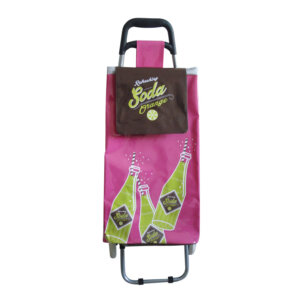
Trolley shopping bag โ€” pink

Trolley shopping bag โ€” pink "Soda" generic-design custom print, retractable handle.

View on supplier site โ†’
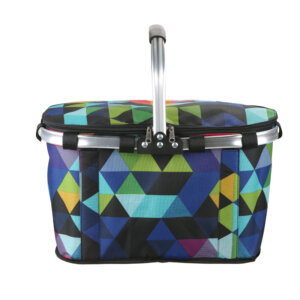
Geometric-print insulated picnic basket โ€” 41ร—24ร—23 cm, multi-color triangular pattern.

Geometric-print insulated picnic basket โ€” 41ร—24ร—23 cm, multi-color triangular pattern.

View on supplier site โ†’
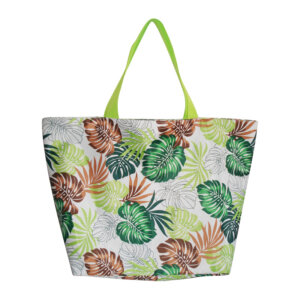
Tropical-leaf print canvas tote bag โ€” lifestyle/beach style with green handles.

Tropical-leaf print canvas tote bag โ€” lifestyle/beach style with green handles.

View on supplier site โ†’
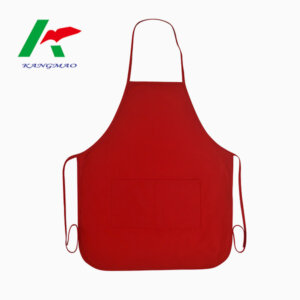
Cotton work apron โ€” red with adjustable straps and front pockets.

Cotton work apron โ€” red with adjustable straps and front pockets.

View on supplier site โ†’

Bag types and typical applications

Bag typeMaterialTypical applicationsFOB China per unit (custom-printed, MOQ)
Non-woven shopping bag (T-shirt vest)PP non-woven 70-100 gsmSupermarket, retail giveaway, mass-market promoUSD 0.12-0.45 per bag (MOQ 1,000-5,000)
Non-woven gusset shopping bagPP non-woven 80-120 gsmBoutique retail, premium grocery, giftUSD 0.22-0.85 per bag
Cotton tote bag (lightweight)4-6 oz cottonBookstores, library promo, eco-themed retailUSD 0.45-1.20 per bag
Cotton tote bag (premium)8-12 oz cotton canvasPremium retail, art galleries, lifestyle brandsUSD 1.20-3.50 per bag
RPET (recycled PET) shopping bagRPET fabric 80-150 gsmEco-conscious retailers, sustainability programsUSD 0.55-1.50 per bag
Drawstring backpack (sport)Polyester or cotton with drawcordSport events, schools, youth marketingUSD 0.65-2.20 per bag
Trolley shopping bag (rolling)Polyester / non-woven with retractable handle + wheelsSenior shoppers, urban grocery, market vendorsUSD 4.50-12.00 per bag
Insulated cooler bag (small)Polyester with PEVA + foam insulationLunch bags, beverage promos, picnic kitsUSD 1.20-3.50 per bag
Insulated cooler bag (large) / picnic basketPolyester / canvas with PEVA + thicker foamPicnic baskets, beach kits, premium giveawayUSD 4.50-15.00 per bag
Wine bag (single bottle)Non-woven, cotton, or canvasWine retail, gift packaging, hotelUSD 0.35-1.80 per bag
Custom apron (cotton)5-8 oz cotton with adjustable strapsRestaurant, retail staff, promotional, kitchenUSD 1.80-5.50 per apron
Aluminum-foil insulation bagAluminum-foil laminated PE/PETFood delivery, frozen retail, temperature-sensitiveUSD 0.85-3.20 per bag

Customization options

CustomizationDescriptionMOQ for custom variantCost premium per bag
Custom logo print (1-color)Single-color silkscreen print, basic logo500-1,000 pcsUSD 0.05-0.18 per bag
Multi-color silkscreen print (2-4 colors)Up to 4 spot colors, registered separately1,000-3,000 pcsUSD 0.12-0.55 per bag
Full-color CMYK printPhotographic / detailed print, photo-quality2,000-5,000 pcsUSD 0.25-0.85 per bag
Heat-transfer printSublimation or DTG transfer500-1,500 pcsUSD 0.18-0.65 per bag
Embroidery (logo)Stitched logo, premium look500-1,000 pcsUSD 0.45-2.20 per bag
Custom dimensionsNon-standard size, custom pattern2,000-10,000 pcsUSD 0.05-0.50 per bag (with tooling NRE USD 250-1,500)
Custom color (Pantone matched)Specific Pantone color, matched fabric or printed background2,000-5,000 pcsUSD 0.05-0.30 per bag
Reinforced handles / extra stitchingHeavier-duty handles, reinforced corners1,000-3,000 pcsUSD 0.08-0.35 per bag
RFID anti-theft pocketRFID-blocking lined pocket inside1,000-3,000 pcsUSD 0.45-1.80 per bag
Eco / recycled material specRecycled cotton, RPET, organic cotton1,000-3,000 pcsUSD 0.15-0.85 per bag

Pricing brackets โ€” wholesale

Order tierTotal quantityDiscountContainer utilizationLead time
Small business / event500-3,000 bags totalList priceAir freight or LCL15-30 days
Mid promotional buyer5,000-25,000 bags total5-15%LCL or 20' container25-40 days
Large promotional / retail buyer30,000-100,000 bags15-25%40' container35-55 days
National supermarket / brand program200,000+ bags22-35%40HQ x N containers50-90 days

Quality and compliance considerations

ComplianceRequirementMarkets where critical
Reusable bag durabilityMany jurisdictions require reusable bags for retail use; minimum 100-150 use cycles documentedEU, UK, parts of US (state-specific), Australia
BPA / phthalate-freeFor food-contact and lunch-bag applicationsEU REACH, US Prop 65, similar in other markets
FDA food-contact (for cooler/lunch bags)FDA-compliant lining materials, food-safeUSA primarily; verify other markets
OEKO-TEX Standard 100 (for textile apparel)Certified low-chemical-residue textileEU primarily, increasingly demanded globally
BSCI / Sedex social auditFactory audit for labor standardsMajor retailer suppliers (Walmart, Tesco, Carrefour, etc.)
GRS (Global Recycle Standard)Verified recycled content for RPET / recycled cottonRequired for "recycled" claims in EU; voluntary elsewhere
OBP (Ocean Bound Plastic) certificationPlastic from ocean-bound waste streamsPremium / sustainability marketing
Children's product safetyIf bag is sold for children, additional requirements (small parts, drawstring length, lead/phthalate)USA CPSIA, EU EN 71, Canada CCPSA
EUDR (EU Deforestation Regulation)For cotton: traceability of cotton fiber to non-deforestation-risk sourceEU starting Dec 2025

Why durability claims matter for "reusable bag" pricing

Many jurisdictions now require reusable bags to meet minimum durability standards if they're sold as alternatives to single-use plastic bags. Common minimums: 100 use cycles (UK), 125 cycles (EU), 100-150 cycles (various US states). This requirement materially affects bag specification โ€” a 70 gsm non-woven shopping bag may not pass 100-cycle durability testing, while 100+ gsm typically does. Pricing premium for "verified reusable" durability is typically 15-30% โ€” meaningful at scale but small compared to ban-substitution legal exposure if non-compliant bags are sold as reusable. For retail buyers, ask supplier for actual cycle-test documentation per the relevant jurisdictional standard. For supermarket reusable-bag programs that replace single-use bags, this documentation may be required for legal sale.

Common buyer profiles and order patterns

Buyer profileTypical order sizeCustomization levelBuying frequency
Small business owner / event planner500-3,000 bagsSingle-color logo print1-3 orders per year (events, seasonal)
Promotional product reseller / agency3,000-25,000 bags per orderVariable per client10-40 orders per year, multiple clients
Retail chain (regional)30,000-150,000 bagsMulti-color brand, durability-certified2-4 orders per year, plus replacement
Supermarket chain (national)250,000-2 million bagsCustom multi-color, certified durability + recycled4-8 orders per year, sustained programs
Hotel / hospitality5,000-50,000 bagsBrand color + logo2-4 orders per year
E-commerce brand10,000-100,000 bagsBrand-specific designContinuous replenishment
Restaurant / cafรฉ chain5,000-30,000 bagsBrand color + logo2-4 orders per year
NGO / sustainability program10,000-200,000 bagsMission-message print, recycled materialsQuarterly to annual

Order workflow โ€” promotional bag procurement

  1. Application clarification โ€” define use case (single-event giveaway / ongoing retail program / employee uniform / customer giveaway), durability requirement, budget per unit, total quantity
  2. Material specification โ€” choose between non-woven / cotton / RPET / specialty per cost-quality trade-off and any sustainability commitment
  3. Print artwork preparation โ€” vector logo files (AI/EPS/PDF), Pantone color specifications, layout proof; supplier typically provides production proof for approval
  4. Sample order โ€” 5-50 pcs of each candidate variant + finished print proof; review for color accuracy, print durability (rub test), bag construction quality
  5. Compliance verification โ€” for retail/supermarket programs, request durability test documentation; for food-contact, FDA compliance docs; for recycled-content claims, GRS certificate
  6. First production order โ€” typically 5,000-30,000 bags depending on application; verify packaging spec (master cartons, individual bags, ribbon-wrapped, etc.)
  7. Quality acceptance โ€” incoming inspection for print accuracy (color, registration, completeness), bag construction (handle attachment, seam strength), packaging integrity
  8. Series replenishment โ€” quarterly to bi-annual reorders for ongoing programs; new artwork / variant orders for seasonal campaigns

Bag Promotion on weisourcing.com

View the full supplier profile, certifications, contact details, and complete product catalogue.

Frequently asked questions

What's the difference between non-woven and woven bags, and which is better?
Different production processes and properties. NON-WOVEN (PP non-woven fabric) โ€” produced from polypropylene fibers bonded by heat/pressure, NOT actually woven. Properties: lightweight, water-resistant, low cost, reasonable durability for 50-150 use cycles, recyclable in PP recycling streams. Most economical option for promotional bags; dominant for supermarket, retail, and event giveaway. WOVEN BAGS โ€” actually woven from continuous fibers (cotton, polyester, RPET, jute), producing fabric with crossed warp/weft threads. Properties: stronger, more durable (200-1,000+ use cycles depending on weight), more premium feel, typically more expensive per bag. Best for: premium retail, promotional bags meant to last years, branded merchandise where durability supports brand perception. SELECTION: for one-time event giveaways or short-term retail promotion, non-woven is the obvious choice (40-60% cheaper than equivalent woven). For ongoing retail programs where bags get used 100+ times, woven cotton or RPET is a better long-term value despite higher per-unit cost. The classification of "reusable bag" in many jurisdictions specifically requires woven construction or certified high-durability non-woven โ€” verify destination-market requirements before specifying.
How do I order custom-printed bags for a specific event in 2-3 weeks?
Tight timelines are achievable with the right specification choices. FAST-TRACK PATH (15-25 day total time): (1) Choose a stock color non-woven shopping bag โ€” avoid custom-color base; (2) Use vector logo file with simple 1-2 color print โ€” no photo prints; (3) Provide finalized artwork on day 1 (no revisions during production); (4) Order 1,000-5,000 quantity (smaller orders ironically take similar time as larger but MOQ may be issue with small quantity); (5) Air-freight from China to destination (2-4 days express, USD 4-12 per kg); (6) Plan 2-4 days for any customs clearance. Total: 10-15 days production + 4-7 days shipping = 14-22 days achievable. STANDARD-TIMELINE PATH (35-55 days): for cotton bags, multi-color print, custom dimensions, more complex specs โ€” same production timeline but sea freight saves USD 30-60% on shipping cost (4-7 weeks transit). Can achieve faster with rush production fee (typically 15-25% premium). For repeat orders of same SKU, supplier may keep base bags in stock and only need to print + customize, dramatically reducing timeline (5-10 days production possible).
Are aftermarket-fit / Chinese-sourced promotional bags legal under deforestation/sustainability regulations in EU?
Increasingly complex compliance landscape. KEY EU REGULATIONS affecting promotional bag imports: (1) EUDR (EU Deforestation Regulation) โ€” effective December 2025 for cotton products; requires traceability of cotton fiber to non-deforestation-risk source. Affects all cotton totes and aprons. Compliance documentation required for import. (2) PPWR (Packaging and Packaging Waste Regulation) โ€” affects the packaging the bags ship in, less the bags themselves. (3) ESPR (Ecodesign for Sustainable Products Regulation) โ€” being phased in; will affect textile durability and recyclability claims. (4) DPP (Digital Product Passport) โ€” being phased in; will affect traceability documentation. PRACTICAL IMPLICATIONS: cotton-bag importers should specify supplier provides non-deforestation cotton with traceability documentation (often through OEKO-TEX or supplier-specific traceability programs); RPET claims need GRS certification; "reusable" claims need durability test documentation; sustainability marketing needs documented evidence. Reputable suppliers like Bag Promotion typically offer compliance documentation for major EU markets; smaller / cheap suppliers may not. The compliance landscape is evolving โ€” work with importers experienced in EU customs and sustainability documentation, and verify current rules at order time. Non-compliant imports may be seized or require costly remediation.
Can I add my own custom dimensions to a stock bag, or do I need a totally custom design?
Stock-spec dimensions are dramatically cheaper than custom dimensions. STOCK DIMENSIONS โ€” most factories offer their full catalog of non-woven shopping bags, cotton totes, drawstring bags in standard sizes (typically 5-15 size variants per bag type). MOQ low (500-2,000 pcs), lead time short (15-25 days), no tooling NRE. For 90% of promotional bag applications, stock dimensions work perfectly โ€” especially since customer doesn't typically know exact dimensions. CUSTOM DIMENSIONS โ€” for specific size requirements (luxury package fitment, specific product dimensions, regulatory requirement), custom dimensions are achievable. MOQ typically 2,000-10,000 pcs to amortize tooling. Tooling NRE typically USD 250-1,500 for cutting dies and folding fixtures. Lead time +15-30 days for tooling fabrication. PRACTICAL APPROACH: (1) For first orders or new buyers, start with stock dimensions to validate supplier quality and customer satisfaction; (2) For repeat large-volume orders where dimensions matter, custom dimensions become economical; (3) For unique applications, prototype with stock-dimension samples first to validate concept before committing to custom tooling. Most successful promotional bag programs use stock dimensions even for premium retailers โ€” the cost savings are significant and dimensional flexibility rarely affects brand perception negatively.
What's the right print method for my logo โ€” silkscreen, heat transfer, or full-color?
Three methods with different cost/quality trade-offs. SILKSCREEN PRINT โ€” single-color or multi-color (up to 4 spot colors typically) print using ink applied through screen. Properties: most durable (200+ wash cycles), most economical for solid colors, sharpest single-color logos. Best for: simple logos, high-volume orders, durability-critical applications. Cost typically USD 0.05-0.40 per bag depending on color count. HEAT TRANSFER (sublimation) โ€” print transferred via heat onto fabric. Properties: photo-quality color, suitable for detailed/photographic designs, slightly less durable than silkscreen (100-200 cycles). Best for: photo prints, detailed gradients, lower-volume orders where silkscreen NRE is uneconomical. Cost typically USD 0.18-0.65 per bag. EMBROIDERY โ€” actual stitched thread design. Properties: most premium feel, very durable (often outlasts the bag), works on heavy fabrics. Best for: premium products, brands wanting elevated perception, polo-shirt-style branding. Cost typically USD 0.45-2.20 per bag for 1,000-stitch logo, more for larger logos. SELECTION: silkscreen for most promotional bags (cost/durability optimal); heat transfer when print is photo-quality or has fine gradients; embroidery for premium/lifestyle brands. Don't over-engineer โ€” most customers don't notice the difference between silkscreen and heat transfer for typical 2-color logos, but cost difference is significant.
How do I plan inventory for a national supermarket reusable-bag program?
National supermarket programs are dominant volume in this category. PLANNING FRAMEWORK for typical 200-store national chain: (1) USAGE FORECASTING โ€” typical consumption is 2-4 reusable bags per customer per quarter (replacement rate); for 200 stores ร— 5,000 customers per store ร— 3 bags/quarter = 3 million bags per quarter or 12 million per year. (2) INITIAL LAUNCH STOCK โ€” 100-150% of first-quarter forecast in initial inventory to absorb launch enthusiasm and avoid stockouts. (3) ONGOING REPLENISHMENT โ€” quarterly orders of 80-100% of forecast quarterly consumption with 4-week lead time. (4) DURABILITY-CERTIFIED SPECS โ€” minimum cycle test certified per local jurisdiction; typical 100-150 cycle minimum. (5) MULTI-DESIGN PROGRAM โ€” typically 2-4 design variants per quarter (seasonal themes, brand campaigns); allows fresh appearance + ongoing customer collection appeal. (6) LOGISTICS โ€” direct delivery to regional distribution centers (typically 5-15 DCs), not store-by-store; unit packaging and master-carton specs match retail handling. (7) COMPLIANCE PACKAGE โ€” durability certs, FDA food-contact (if applicable to bag liner), social audit (BSCI/Sedex), recycled-content certs (if making sustainability claims). For new entrants to supermarket programs: start with single-region pilot (USD 200,000-800,000 program value) to validate operations and cost structure before national scale. National program scale economics: typical 100-200% margin retention for retailer (cost USD 0.30-0.80 per bag, sells USD 0.99-2.49 per bag); supplier margin 12-22% gross at this volume tier.
โš  Important Disclaimer

Source: Product images on this page are hosted on the manufacturer's official website (bagpromotion.com) and link directly back to that website. All product information was summarised from the supplier's public catalogue.

Trademark and brand caution: Custom-printed promotional bags often display customer brand logos and trademarks. Buyer is responsible for ensuring they have rights to print any logo, trademark, or copyrighted material on bags. Supplier is not responsible for verifying buyer's rights to use third-party intellectual property. For private-label / OEM orders, buyer indemnifies supplier against IP infringement claims. Reputable suppliers refuse to print obvious counterfeit-brand merchandise.

Compliance and regulatory caution: Promotional bag regulations vary significantly by jurisdiction and are evolving rapidly. Single-use plastic bag bans, reusable bag durability requirements, recycled-content claims, deforestation regulations (EUDR for cotton), and sustainability marketing requirements all affect what can be legally sold in specific markets. Verify current regulations for destination market before committing to specific bag specifications. Non-compliant imports may be seized or require costly remediation.

Pricing & specifications: All price ranges, MOQ values, and customization premiums reflect general market observation. Confirm current pricing, MOQ, lead time, and configuration directly with the supplier.

No middleman role: Weisourcing provides supplier discovery and editorial content. All transactions occur directly between buyer and supplier through the contact channels published on the supplier's official website.