weisourcing.com / products / Pawbilt / Smart Pet Products

Smart Pet Feeders, Water Fountains & Connected Pet Products from China — A Wholesale Buyer's Guide

A practical sourcing guide for smart pet products from China — written for pet supply distributors, online pet retailers, pet specialty store buyers, big-box retail merchandisers, and veterinary supply distributors. Real product images from pawbilt.com covering smart automatic pet feeders (basic timer through WiFi smart with HD camera and two-way audio), smart water fountains (filtered circulation with smart pump and low-water sensors), combination feeder + water fountain stations, GPS pet trackers and smart collars with health monitoring, smart pet doors with RFID/microchip recognition, automated litter boxes (basic through premium app-controlled), pet treat dispensers, and connected pet health monitoring devices. Smart feeder specifications by tier (mid-tier USD 35-95, premium USD 65-180), water fountain considerations, ecosystem integration trends, certifications (FCC, CE, UL, FDA, BPA-free, RCM, BIS), and the procurement workflow for private-label vs supplier-branded smart pet products.

Manufacturer: Pawbilt (pawbilt.com)
Category: Pet, Agriculture & Specialty Foods
Reading time: 14 min

Smart pet feeders, automatic water fountains, GPS pet trackers, smart pet doors, automated litter boxes, and connected pet care products represent the fastest-growing category in the global pet supplies market. The smart pet products segment is growing 25-35% annually as: (1) pet ownership continues rising globally; (2) work-from-home and longer commutes drive demand for pet-care automation; (3) consumer adoption of smart-home ecosystems extends to pet products; (4) Asian and Latin American markets are growing rapidly. China is the dominant manufacturing source for smart pet products with comprehensive coverage from low-cost economy through premium app-connected products.

This guide covers the Pawbilt product family — smart automatic pet feeders (single-bowl, dual-bowl, scheduled and app-controlled, with cameras), smart water fountains (filtered water with circulation pump), combination feeder + water stations, GPS pet trackers and smart collars, automated litter boxes, smart pet doors with RFID/microchip recognition, pet treat dispensers, and connected pet health monitoring devices. Real product images linking back to the supplier's catalog at pawbilt.com.

Product range — actual catalogue images

The product images below are hosted on the manufacturer's official website (pawbilt.com) and link directly to the manufacturer's catalogue. Click any image to view the full specification page in a new tab.
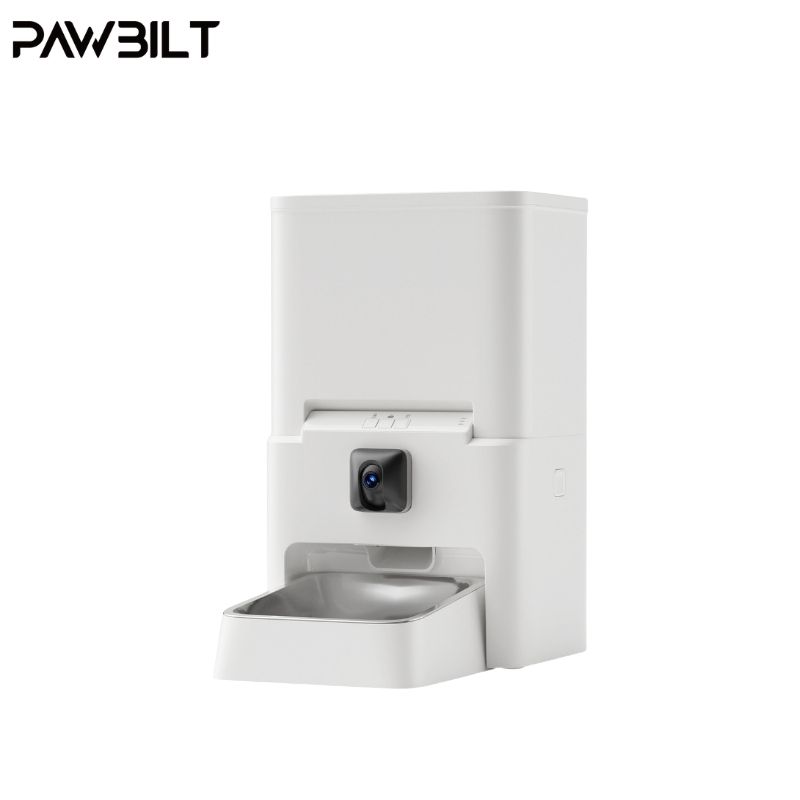
Smart pet feeder with built-in camera and stainless bowl — automatic scheduled feeding with mobile app monitoring.

Smart pet feeder with built-in camera and stainless bowl — automatic scheduled feeding with mobile app monitoring.

View on supplier site →
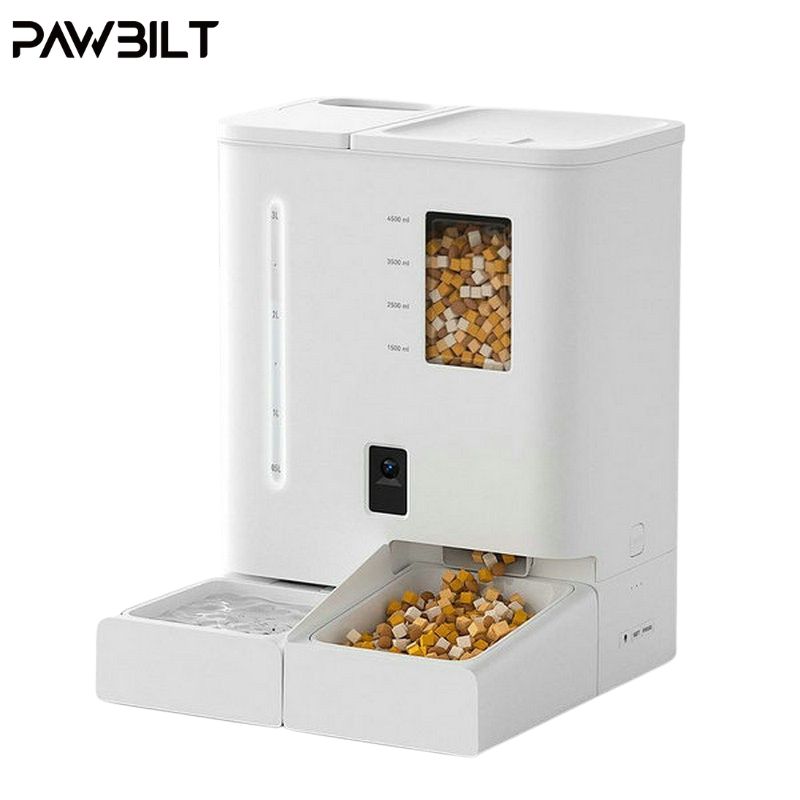
Combination smart feeder + water fountain — integrated kibble dispenser with side-mount water station for cats and small dogs.

Combination smart feeder + water fountain — integrated kibble dispenser with side-mount water station for cats and small dogs.

View on supplier site →
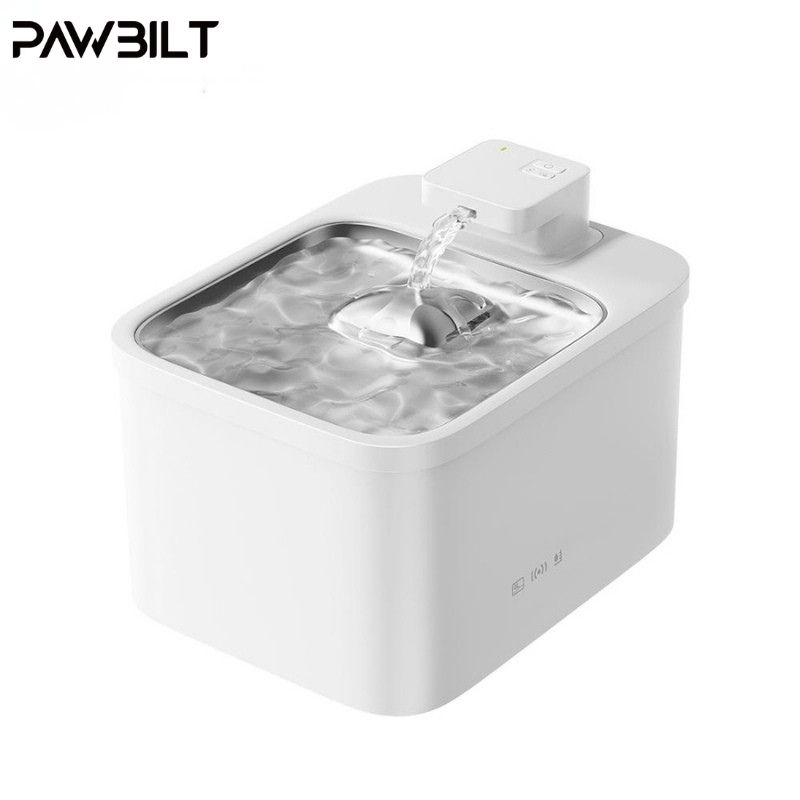
Smart pet water fountain — circulating filtered water station with low-water sensor and quiet pump operation.

Smart pet water fountain — circulating filtered water station with low-water sensor and quiet pump operation.

View on supplier site →

Smart pet product categories

Product familyKey featuresCommon applicationsFOB China typical price
Basic auto pet feederProgrammable timer, single bowl, no appCost-conscious pet owners, small dogs/catsUSD 18-45 each
WiFi smart pet feederApp control, scheduled feeding, voice recordingMid-tier consumer, busy professionalsUSD 35-95 each
Smart feeder with cameraWiFi + 720p/1080p camera, two-way audioPet monitoring, premium consumerUSD 65-180 each
Smart feeder + water comboIntegrated feeder + water fountainPremium pet care, busy householdsUSD 75-220 each
Smart water fountainFiltered circulation, low-water sensorCats (preferred), small dogsUSD 25-95 each
GPS pet trackerReal-time location, geofence, appOutdoor cats, dogs, livestockUSD 45-180 each
Smart pet door (microchip/RFID)RFID collar reader, scheduled accessMulti-pet households, predator avoidanceUSD 95-280 each
Self-cleaning litter box (basic)Manual rake, simple operationCost-conscious cat ownersUSD 65-180 each
Smart self-cleaning litter boxApp control, automatic cleaning, weight monitoringPremium cat care, multi-cat householdsUSD 220-650 each
Pet treat dispenser (smart)App-triggered treat dispensing, often with cameraPet engagement during owner absenceUSD 55-150 each
Smart collar / health monitorActivity tracking, temperature, locationPremium pet care, pet health monitoringUSD 65-220 each
Auto pet bath / dryerSelf-service bathing equipmentSpecialty market, retail pet storesUSD 380-1,200 each

Smart feeder specifications

SpecificationMid-tier (USD 35-95)Premium (USD 65-180)
Capacity2-6 liters food storage4-10 liters food storage
Portion size control5-50g per portion adjustable5-100g per portion, fine-tunable
Feeding schedule4-6 meals per day programmable10+ meals per day, custom schedules
App connectivityWiFi 2.4GHz; iOS + AndroidWiFi + optional 4G; full ecosystem
Camera720p basic (premium models)1080p HD with night vision
AudioVoice recording playbackTwo-way audio, customizable
PowerUSB-C or barrel jack; battery backup optionDual power (mains + battery), UPS-style
Sensor inputsFood level, jam detectionPet weight, eating duration, water level
Material (food contact)FDA-grade ABS or PP plastic304 stainless steel bowl, BPA-free plastic
Easy cleaningRemovable bowlDishwasher-safe components
App featuresScheduling, manual feed, historyPlus camera streaming, two-way audio, voice commands, smart-home integration (Alexa, Google)

Smart water fountain considerations

SpecificationStandard (USD 25-50)Premium (USD 55-95)
Capacity1.5-2.5 liters2.5-4 liters
Pump operationContinuousSmart pump (motion-activated, sleep mode)
Pump noise level30-40 dB20-30 dB (very quiet)
Filter typeActivated carbon basicMulti-stage (carbon + ion exchange + sediment)
Filter replacement interval2-4 weeks4-6 weeks; automatic alert
MaterialBPA-free plasticStainless steel or premium ceramic
FeaturesBasic indicator lightApp-connected, low-water alert, water consumption tracking
Easy cleaningDisassembles for hand washMost parts dishwasher-safe

Connected pet products are an ecosystem play

The smart pet products market increasingly favors ecosystem integration over standalone devices. CONSUMER PREFERENCE: smart pet products that integrate with home ecosystems (Alexa, Google Home, Apple HomeKit) provide added value through voice control and routines (e.g., "Hey Google, feed Buddy now"); products with mobile apps allow remote monitoring and control regardless of location; products that integrate with each other (feeder + water + camera + door) provide convenience that single-purpose products cannot match. PROCUREMENT IMPLICATIONS: (1) Brand strategy — premium pet brands invest in ecosystem development; commodity brands compete on features and price; (2) Long-term consumer relationship — ecosystem-integrated products create switching costs; consumers stay with brand longer; (3) Recurring revenue — apps enable subscription services (premium features, AI-powered insights); (4) Data value — connected products generate consumer behavior data valuable for product development. For distributors and resellers, choosing products that fit broader ecosystem strategy (rather than single-purpose products) creates better long-term commercial relationships.

Compliance and certification

StandardApplies toMarkets
FCC Part 15WiFi/Bluetooth electronicsUSA
CE markingEU electronics market accessEU
UL listingElectrical safety (US)USA premium retail
FDA 21 CFR 174-177Materials in food/water contactUSA pet food/water contact products
EU Regulation 1935/2004Materials in food/water contactEU pet food/water contact
BPA-free certificationPlastic in pet food/water contactPremium consumer markets globally
RoHSElectronics restricted substancesEU and most international
RCMAustralia / NZ regulatoryAustralia, New Zealand
BISIndia regulatoryIndia
UN 38.3Lithium battery transportGlobal air/sea freight
WiFi Alliance CertifiedWiFi compatibilityPremium WiFi-enabled products

Pricing brackets — wholesale

Order tierTotal quantityDiscountContainer utilizationLead time
Sample / pilot50-300 piecesList price; LCLLCL or partial20-35 days
Small distributor500-3,000 pieces5-12%20' container (~1,500-3,000 mid-size pieces)30-50 days
Mid distributor / retailer5,000-25,000 pieces12-22%40' or 40HQ (~5,000-10,000 pieces)40-65 days
Large retailer / chain50,000+ pieces20-32%Multiple 40HQ; quarterly shipments50-90 days
Private label / OEM3,000+ pieces per SKUCustom OEM pricing + toolingCustom packaging design60-150 days first batch; 45-70 days repeat

Order workflow — smart pet products procurement

  1. Market positioning — define target tier (economy / mid / premium), distribution channel (online retail, pet specialty, big-box, vet)
  2. Product selection — choose specific products fitting market positioning; verify supplier capability for full product range needed
  3. Branding strategy — supplier private label vs own brand; for own brand, OEM custom packaging and possibly product modifications
  4. Sample order — typically 50-200 pieces per SKU; verify build quality, app functionality, durability through use testing
  5. Certification verification — FCC for US, CE for EU, RCM for Australia, etc.; UN 38.3 for any battery-powered devices
  6. Pre-production approval — for OEM/branded products, supplier produces production proof for customer approval
  7. First commercial order — typical 1,000-10,000 units per SKU for distributor launch
  8. Quality acceptance — incoming inspection per AQL plan (typical 1.5-2.5%); functional test of WiFi/Bluetooth and app pairing
  9. Series replenishment — monthly to quarterly based on sales velocity; for high-volume, framework agreement with predictable lead times

Pawbilt on weisourcing.com

View the full supplier profile, certifications, contact details, and complete product catalogue.

Frequently asked questions

What's the typical product life and return rate for smart pet feeders?
Smart pet products have specific durability and return considerations. PRODUCT LIFE: typical mid-tier smart feeder 3-5 year service life; premium 5-7 year service life. Failure modes: (1) MECHANICAL — feeder dispensing mechanism wear (most common after 12-24 months heavy use); (2) ELECTRICAL — WiFi module aging, button/sensor failures; (3) APP/SOFTWARE — supplier discontinues app support. RETURN/DEFECT RATES typical for smart pet products: Year 1: 1-3% returns for premium products, 3-7% for economy; primarily DOA (dead on arrival, defects in shipping/manufacturing) and customer not-as-described returns. Year 2-3: 1-2% additional failures (in-warranty repair/replace). Year 4+: out-of-warranty failures - most consumers replace rather than repair. CRITICAL FAILURE TYPES: (1) Food spoilage from feeder failure - food sitting too long without refrigeration triggers customer complaints; (2) Pet injury from malfunction - very rare but high-impact, requires liability awareness; (3) Data/privacy concerns from camera and app - increasingly regulated (especially EU GDPR). PROCUREMENT IMPLICATIONS: (1) Build 5-8% defect/return reserve into pricing model; (2) Verify supplier provides repair/replacement capability and warranty enforcement; (3) Verify app and ecosystem will be supported through expected product lifetime; (4) Maintain spare parts inventory for in-warranty repairs. MITIGATION: choose suppliers with established quality systems and reference customers with low return rates; verify destination market certification (FCC, CE, etc.) before shipping; for premium products, consider extended warranty options. Reputable suppliers like Pawbilt provide quality support with returns / RMA processes for the distribution channel.
How do I source private-label smart pet products vs branded?
Two different procurement strategies with different cost and capability tradeoffs. PRIVATE LABEL (CUSTOMER OWN BRAND): customer designs branding, packaging, sometimes product modifications; supplier produces under customer brand. PROCESS: (1) Define brand identity (logo, colors, packaging design); (2) Negotiate product modifications if any (color schemes, custom features, packaging changes); (3) Submit branding artwork; (4) Tooling investment for packaging (USD 1,500-15,000 typical for custom plastic packaging); (5) MOQ requirements typically higher (3,000-10,000+ per SKU). ADVANTAGES: (1) Brand equity belongs to customer; (2) Higher margins (cut out reseller markup); (3) Differentiation in market; (4) Long-term brand value. DISADVANTAGES: (1) Higher upfront cost (tooling, branding investment); (2) Higher MOQ; (3) Longer initial lead time; (4) Brand-building requires marketing investment. SUPPLIER OWN-BRAND (RESALE): supplier produces own-branded product; reseller buys at wholesale and sells. PROCESS: (1) Choose products from supplier catalog; (2) MOQ typically lower (often 100-500 pieces); (3) Standard packaging; (4) Faster time-to-market. ADVANTAGES: (1) Lower upfront investment; (2) Faster launch; (3) Tested product (already proven in market); (4) Easier to test multiple products. DISADVANTAGES: (1) Margin sandwiched between supplier brand and customer's competitors; (2) No brand differentiation; (3) Brand value belongs to supplier. SELECTION RULE: (1) Established distribution business with marketing capability → private label for long-term value; (2) Startup or testing market → supplier own-brand for fast iteration; (3) Multiple SKUs across categories → mix (own brand on hero products, supplier brand on supporting products). HYBRID APPROACH: many distributors use supplier brand for initial market entry then transition to private label as volume builds. Reputable suppliers like Pawbilt support both models with clear MOQs and timing.
What's the difference between BPA-free, food-grade, and pet-grade plastics?
Different terms with distinct regulatory meaning. BPA-FREE — plastic does not contain bisphenol A. BPA was historically used in polycarbonate plastics; concerns about endocrine disruption led to widespread elimination. Properties: BPA-free is now standard for any product touching food or water for humans or pets; cost premium minimal (~3-8%); important consumer marketing claim. Common BPA-free plastics: PP (polypropylene), PE, PETG, Tritan, BPA-free polycarbonate substitutes. FOOD-GRADE PLASTIC — meets FDA 21 CFR or EU Regulation 1935/2004 requirements for food contact. Properties: specific chemistry approved for food contact; documented through Food Contact Notification (FCN) or substance approval; specific migration limits per food/temperature combination. Important: just being "BPA-free" doesn't make a plastic food-grade. Common food-grade plastics: PP, HDPE, PETG, food-grade PC. PET-GRADE PLASTICS — informal term; usually means food-grade plastic deemed safe for pet food/water contact. Properties: same FDA/EU standards as human food contact for most species; some specific concerns for cats (sensitivity to certain chemicals). Premium pet products often advertise "human-grade" or "food-grade" plastics for premium positioning. CRITICAL DISTINCTIONS: (1) NEVER use industrial-grade plastic for food/water contact (different chemistry, no migration testing); (2) Verify each component contacts food/water gets food-grade designation; (3) Pet products in cat applications - some manufacturers add "cat-safe" testing for specific concerns. PROCUREMENT VERIFICATION: (1) Request supplier's material declarations citing specific FDA 21 CFR section or EU regulation; (2) For premium positioning, verify FCN (Food Contact Notification) or specific approval; (3) Material change controls — verify supplier doesn't substitute non-food-grade plastic in production. Reputable suppliers like Pawbilt use food-grade plastics for product-contact components and provide documentation.
How do connected pet products handle privacy and data security concerns?
Connected pet products increasingly face regulatory and consumer privacy concerns. DATA TYPES COLLECTED: (1) USAGE DATA — feeding times, water consumption, activity levels, location (GPS); (2) MEDIA DATA — camera video/audio streams; (3) IDENTITY DATA — customer email, login credentials, billing info; (4) BIOMETRIC DATA — pet weight, temperature where measured. REGULATORY ENVIRONMENT: (1) GDPR (EU) — applies if EU customers; data subject rights, breach notification, consent management; (2) CCPA (California) — applies to large California-based operations; (3) Children's privacy laws don't typically apply to pet products but may overlap (camera in homes with children); (4) State privacy laws (Virginia VCDPA, Colorado CPA, etc.) increasingly applicable. RISK AREAS: (1) CAMERA STREAMS — security/surveillance applications increasingly regulated; required to encrypt streams and protect access; (2) HOME NETWORK ACCESS — smart pet products attached to home WiFi can become attack vectors; require security update support; (3) CLOUD STORAGE — video footage stored in cloud requires data protection; (4) THIRD-PARTY DATA SHARING — selling user behavior data raises significant privacy concerns. CUSTOMER EXPECTATIONS: (1) End-to-end encryption for camera streams; (2) Local-only processing options where feasible; (3) Clear privacy policies; (4) Easy data deletion / account closure; (5) Regular firmware updates for security. PROCUREMENT IMPLICATIONS: (1) Verify supplier provides ongoing firmware security updates - critical for long-term value; (2) Verify destination market regulatory compliance; (3) For EU/California customers, verify GDPR/CCPA support; (4) Verify supplier doesn't sell user data without explicit consent. RISK MITIGATION: choose suppliers with established privacy practices and transparent data handling policies; if reselling, ensure your privacy policy aligns with supplier's data handling. Reputable suppliers like Pawbilt maintain clear privacy practices and provide compliance documentation for major export markets.
How is the smart pet products market trending, and what should I source for 2026-2027?
Smart pet products market evolution shows clear trends. CURRENT MARKET STATE (2026): (1) MAINSTREAMING — smart pet feeders, water fountains, basic GPS trackers have moved from premium to mainstream tier with $50-100 typical retail prices; (2) ECOSYSTEM CONSOLIDATION — fewer independent apps, more integration with Apple HomeKit, Google Home, Alexa; (3) AI INTEGRATION — pet behavior analysis, anomaly detection, health insights becoming standard for premium tier; (4) SUSTAINABILITY DEMAND — eco-friendly materials, recyclable packaging, energy efficiency features. EMERGING CATEGORIES (2026-2027 SOURCING OPPORTUNITY): (1) AI-POWERED HEALTH MONITORING — pet activity + biometric tracking with health insights; (2) AUTONOMOUS PET SERVICES — robotic cleaners, automated grooming, self-cleaning sleeping spaces; (3) PET-SPECIFIC SMART HOMES — pet doors with facial recognition, climate control responding to pet location; (4) VR/AR PET EXPERIENCES — entertainment products for indoor pets; (5) REGENERATIVE PET MEDICINE — at-home health monitoring with vet integration. DECLINING CATEGORIES: (1) Single-purpose basic devices being replaced by multi-function smart products; (2) Apps without ecosystem integration losing market share; (3) Products without app support entirely losing premium tier. SOURCING STRATEGY: (1) Focus on premium and mid-tier (better margins, growing market); (2) Choose suppliers with strong R&D pipeline (continuous product innovation); (3) Prioritize ecosystem-integrated products (consumer prefers); (4) Watch sustainability trend (eco materials, recyclable packaging); (5) Build relationships with capable Chinese suppliers who can deliver custom features. INVENTORY PLANNING: smart pet category turnover is faster than traditional pet products (12-24 month product lifecycle vs 5-10 years for traditional); plan smaller initial orders with aggressive replenishment based on market signals. Reputable suppliers like Pawbilt continue developing new products aligned with these trends.
What's the typical certification timeline for selling smart pet products in major markets?
Smart pet products require electronics + materials certifications taking 4-12 weeks per market. UNITED STATES: (1) FCC Part 15 - radiated and conducted emissions testing; required for any wireless device. Process: 4-8 weeks; cost USD 3,000-12,000 per product. (2) UL listing (optional but premium) - electrical safety testing. Process: 8-16 weeks; cost USD 8,000-25,000. (3) FDA registration - voluntary for pet products but required for some food-contact materials. EUROPEAN UNION: (1) CE marking - self-declaration based on harmonized standards (radio equipment per RED 2014/53/EU, EMC Directive 2014/30/EU, RoHS 2011/65/EU). Process: 4-8 weeks for testing and documentation; cost USD 5,000-18,000. (2) GDPR compliance - documentation rather than certification; for connected products ongoing. AUSTRALIA / NEW ZEALAND: (1) RCM (Regulatory Compliance Mark) - self-declaration based on testing; covers EMC, electrical safety, radio. Process: 3-6 weeks; cost USD 2,500-8,000. (2) ACMA registration for radio equipment - online registration. INDIA: (1) BIS certification - mandatory for many electronics. Process: 12-24 weeks; cost USD 8,000-35,000 (significant burden). (2) WPC (Wireless Planning) for radio equipment. CANADA: (1) ISED (Innovation, Science and Economic Development) certification for radio. Process: 4-8 weeks; cost USD 2,500-8,000. (2) CSA approval for electrical safety (similar to UL). JAPAN: (1) Telec / Giteki for radio. Process: 4-8 weeks. PROCUREMENT TIMELINE: budget 12-20 weeks total for major market launches; multiple-market launch typically 16-26 weeks. COST OPTIMIZATION: (1) Choose supplier with existing certifications that cover destination markets (saves time and cost); (2) For new products, factor certification cost into budget (typically USD 15,000-50,000 across major markets); (3) Use harmonized standards where possible (CE often accepted as basis for other markets); (4) Some certifications transferable between similar products (saves cost on follow-on SKUs). Reputable suppliers like Pawbilt maintain current certifications for major export markets.
⚠ Important Disclaimer

Source: Product images on this page are hosted on the manufacturer's official website (pawbilt.com) and link directly back to that website. All product information was summarised from the supplier's public catalogue.

Brand mentions and trademark compliance: References to Tier-1 smart pet brands (Petsafe, PetKit, PetCube, Furbo, Whisker, Sure Petcare) are made for the sole purpose of describing functional benchmarks. Pawbilt is not authorized by, affiliated with, or endorsed by any of these brand owners. Products are aftermarket-fit cross-reference manufactured under Pawbilt's own brand or buyer-private-label only.

Privacy and data security: Connected pet products generate consumer data subject to GDPR (EU), CCPA (California), and other privacy regulations. Distributors are responsible for ensuring compliance with destination market privacy laws. Verify supplier maintains appropriate data handling practices and provides compliance documentation.

Pet safety responsibility: Pet products in food/water contact applications must use food-grade materials (FDA 21 CFR or EU 1935/2004 compliant). Verify materials certifications for products sold in regulated markets.

Pricing & specifications: All price ranges and tier definitions reflect general market observation. Smart pet product market is rapidly evolving with significant pricing changes. Confirm current pricing, MOQ, lead time, and certifications directly with the supplier.

No middleman role: Weisourcing provides supplier discovery and editorial content. All transactions occur directly between buyer and supplier through the contact channels published on the supplier's official website.