Marine hydraulics is one of the most punishing application environments in industrial fluid power. Saltwater corrosion, constant vibration, temperature extremes, intermittent duty cycles with heavy peak loads, and 24/7 operational expectations make marine hydraulic equipment fail at much higher rates than equivalent land-based industrial machinery. For ship operators, marine equipment dealers, and shipyard service contractors, sourcing aftermarket-fit replacement pumps, motors, and rebuild parts at sustainable costs is a constant battle — genuine OEM marine hydraulic spares carry 5-8× landside pricing due to the small specialty market and the long marine equipment service-life expectations.
SEIMT Hydraulics produces aftermarket-fit cross-reference pumps, motors, and rebuild parts specifically configured for marine duty — saltwater-grade seals, corrosion-protected casings, and the specific control modes (load-sense, pressure-compensated, torque-limited) that marine applications require. This guide covers the marine application matrix, the equipment that needs hydraulic spares, the cross-reference logic, and the specifications that distinguish marine-grade from generic industrial hydraulic products.
Product range — actual catalogue images
The product images below are hosted on the manufacturer's official website (seimthydraulics.com) and link directly to the manufacturer's catalogue. Click any image to view the full specification page in a new tab.
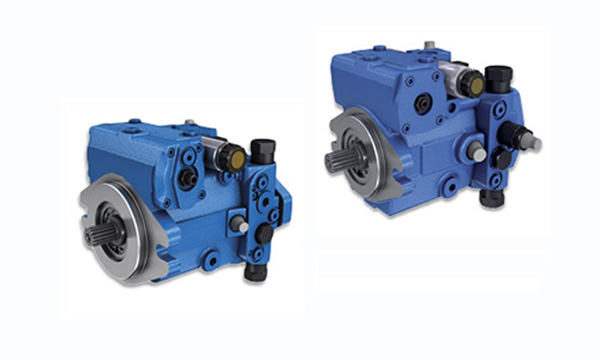
Variable axial piston pump — load-sense control for marine deck crane hydraulic packs.
View on supplier site →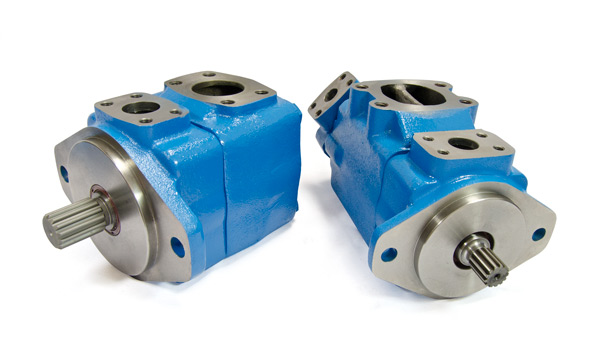
Vane pump + motor for shipboard auxiliary circuits — fuel transfer, anchor windlass.
View on supplier site →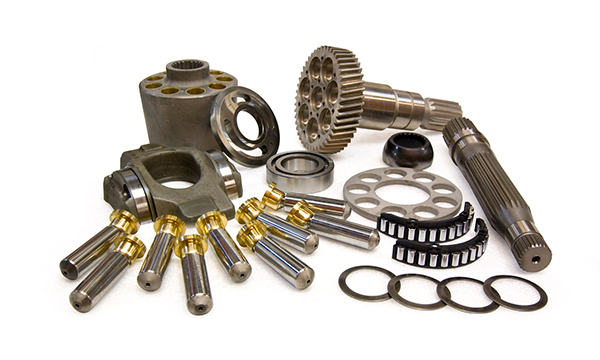
Piston pump spare-part assemblies — saltwater-grade rebuild kits for marine OEM equipment.
View on supplier site →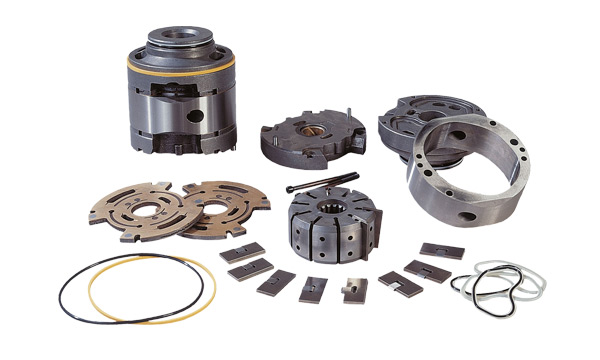
Vane pump rebuild parts — corrosion-protected components for harsh marine environment.
View on supplier site →Marine hydraulic applications — what needs replacement parts
| Application | Typical pump type | Pressure | Common OEM brands | Service interval |
|---|---|---|---|---|
| Deck crane (cargo / fishing) | Axial piston, variable, load-sense | 280-320 bar | MacGregor, Liebherr Marine, Palfinger Marine | 10,000-15,000 hr |
| Anchor windlass + chain stopper | Axial piston or radial piston | 250-280 bar | Rolls-Royce Marine, Sirko, Pusnes | 15,000-20,000 hr |
| Mooring winch | Axial piston, closed-loop hydrostatic | 280-320 bar | Wärtsilä, Brattvaag, Ulstein | 10,000-15,000 hr |
| Hatch cover system | Vane or piston, fixed displacement | 140-210 bar | MacGregor, Cargotec, Hyundai Marine | 15,000-25,000 hr |
| Steering gear (rudder) | Axial piston, variable | 175-280 bar | Rolls-Royce, Aquamaster, Tenfjord | 20,000-30,000 hr (CMS) |
| Hydraulic thruster | Axial piston, closed-loop | 320-420 bar | Schottel, Kongsberg, Voith | 10,000-15,000 hr |
| Bow thruster (CPP) | Axial piston, variable, dual | 280-350 bar | Wärtsilä, Schottel | 15,000-20,000 hr |
| Fishing trawl winch | Axial piston, closed-loop | 320-400 bar | Brattvaag, Triplex, Karmoy | 8,000-12,000 hr |
| Lifeboat / FRC davit | Vane pump, fixed | 140-210 bar | Norsafe, Schat-Harding, Vestdavit | 5,000-10,000 hr (SOLAS) |
| Stabilizer fin actuator | Axial piston, variable | 250-320 bar | Rolls-Royce / Brown Brothers, Quantum | 10,000-15,000 hr |
Marine-grade specifications — what makes a pump "marine"
"Marine-grade" hydraulic equipment differs from generic industrial in five specific specifications:
| Specification | Generic industrial | Marine-grade | Why it matters |
|---|---|---|---|
| Casing material | Cast iron, painted | Cast iron with marine epoxy primer + topcoat, or cast aluminum-bronze for severe service | Saltwater spray corrodes painted cast iron in 1-2 years |
| Shaft seals | Single NBR lip seal | Double seal (Viton + NBR) with grease-packed cavity, or PTFE | Saltwater + low-quality hydraulic oil destroys NBR within 12-24 months |
| Internal corrosion protection | Standard machining surfaces | Phosphate or zinc-flake-coated internal surfaces; bronze valve plates | Stagnant moisture in unused pumps causes pitting on cylinder block |
| Bearing grease | Standard lithium grease | Marine-grade calcium-sulfonate or PFPE grease | Standard grease leaches out in saltwater spray |
| External hardware | Zinc-plated bolts | Stainless steel A4-70 or A4-80 bolts, brass-plug drains | Zinc-plated hardware rusts solid within 6-18 months in marine environment |
The cost premium for marine-grade vs generic industrial pump is typically 18-35% — well worth paying for marine applications where pump replacement requires lifting equipment, service technician travel to vessel, and operational downtime that costs USD 5,000-50,000 per day depending on vessel type.
Cross-reference logic for marine OEM brands
The marine hydraulic OEM landscape is concentrated — five companies (MacGregor / Cargotec, Rolls-Royce Marine / now Kongsberg, Wärtsilä, Schottel, Brattvaag) account for the majority of installed shipboard hydraulic equipment. Their pumps and motors typically come from a smaller number of underlying suppliers: Bosch Rexroth, Parker Hannifin, Eaton-Vickers, Yuken, Kawasaki KPM. Cross-reference therefore happens at two levels:
- Direct OEM cross-reference — your specific MacGregor / Rolls-Royce / Wärtsilä equipment uses a particular Rexroth / Parker / Eaton pump model. SEIMT cross-references at this level: their part number maps to the underlying pump OEM's part number.
- Marine-specific configuration — generic industrial pumps don't come with marine-grade seals and coatings standard. SEIMT's marine-spec products are the equivalent industrial pump configured with marine seals and protective coatings, suitable for direct replacement of marine OEM units.
Pricing brackets for marine hydraulics
| Pump category | Marine OEM dealer price | Underlying industrial OEM price | Marine-grade aftermarket FOB China | Typical savings vs marine OEM |
|---|---|---|---|---|
| Mid piston pump (60-90cc, 320 bar) marine | USD 9,500-18,000 | USD 3,200-6,500 | USD 1,200-2,500 | 78-87% |
| Large piston pump (140-200cc) marine | USD 14,000-26,000 | USD 5,800-10,000 | USD 2,400-4,500 | 78-86% |
| Variable piston pump w/ load-sense, marine | USD 12,000-22,000 | USD 4,500-9,000 | USD 2,000-3,800 | 80-87% |
| Closed-loop hydrostatic pump (transit/winch) | USD 15,000-32,000 | USD 6,500-13,000 | USD 3,000-6,000 | 78-85% |
| Vane pump (low-pressure marine auxiliary) | USD 1,800-4,500 | USD 800-1,500 | USD 350-750 | 78-83% |
Why marine hydraulic spares are so expensive at OEM level
Marine OEM brand pricing reflects three factors: (1) Small specialty market — only ~50,000 commercial vessels worldwide vs millions of land-based machines, so marine OEMs amortize fixed costs over much smaller volumes; (2) Service network costs — marine OEMs maintain global field service organizations to handle in-port emergency repairs; (3) Documentation and certification — marine equipment typically requires Classification Society approval (DNV, ABS, BV, LR, ClassNK) that adds 8-15% to base equipment cost. For routine spares replacement on equipment already 5+ years old, the certification value is largely captured in the original equipment installation; aftermarket-fit cross-reference at 78-87% savings vs marine OEM dealer is economically irresistible for ship operators tracking total cost of ownership.
Classification Society considerations
For Class-mandated equipment — steering gear, anchor handling, lifeboat davits — replacement parts may need to maintain Class approval. Three approaches:
- OEM-equivalent rebuild within Class — work with vessel's Classification Society on pre-approval of the cross-reference; some Classes accept "equivalent material specification + functional test" instead of full re-approval. Plan 30-90 days for pre-approval.
- Like-for-like component replacement — for pumps inside an already-Class-approved hydraulic pack, replacement of the pump itself (without modifying the pack design) often doesn't require new Class approval. Verify with vessel's Classification Surveyor before committing.
- Off-Class spares for non-Class equipment — for cargo cranes (not Class-mandated for typical bulker / general cargo vessels), trawl winches, mooring winches, hatch cover, and most auxiliary hydraulics: aftermarket-fit cross-reference is freely usable without Class involvement.
For most marine spares applications, Class approval is not the limiting factor — vessel operator confidence and proven track record in similar applications matters more. SEIMT and similar specialist Chinese factories have substantial track records with shipyard service contractors and ship owners in major maritime markets (Norway, Greece, Singapore, Korea, Japan).
Order workflow — marine spares procurement
- Equipment identification — provide vessel name + IMO number, marine equipment OEM brand and model, target replacement pump/motor model, with photos of nameplate
- Cross-reference + quote — supplier returns within 48-72 hours with their part number, technical drawing, marine-spec specification, FOB price, and lead time
- Sample / proof-of-concept — for first-time orders, 1-2 units air-shipped or by ocean LCL for inspection and pre-installation testing
- Pre-shipment test — supplier runs full pressure test, flow test, and leak test at their factory; sends test certificate plus video demonstration before shipment
- Sea freight — typically 18-45 days transit. For urgent on-vessel repairs, air freight is available (5-10 days but at 8-15× sea freight cost — economically defensible only for vessel-down emergencies)
- Installation — at next port call or during regular dry-dock; supplier can dispatch field service engineer for 5-7 days at USD 250-450/day plus travel for first installation