weisourcing.com / products / Hightime Motor / Electric Trolling Motors

Electric Trolling Motors from China — A Marine Recreation Wholesale Buyer's Guide

A practical sourcing guide for electric trolling motors from China — written for sporting goods retailers, marine equipment dealers, fishing-tackle distributors, and outdoor recreation chains. Real product images from hightimemotor.com covering transom-mount trolling motors (28-65 lb thrust), bow-mount with foot control or hand control (45-100+ lb thrust), kayak compact variants, saltwater corrosion-resistant models, brushed and brushless DC motor designs, and lithium-battery-compatible electronics. Thrust sizing rules (2 lb per 100 lb boat weight + 30-40% margin), brushed-vs-brushless economics, container loading per variant, certifications (FCC/CE EMC, RoHS, NMMA, EU Recreational Craft Directive), and the procurement workflow that establishes trolling motor distribution profitably.

Manufacturer: Hightime Motor (hightimemotor.com)
Category: Sports, Fitness, Toys & Leisure
Reading time: 13 min

Electric trolling motors are auxiliary propulsion systems for fishing boats, kayaks, dinghies, and small recreational craft — providing quiet, low-speed positioning that doesn't spook fish, ideal for fishing applications where the main outboard would be too loud or too fast. The category divides into bow-mount (front-of-boat, often with foot pedal control), transom-mount (rear-of-boat, hand controlled), and engine-mount variants. Battery-powered electric motors typically rate at 30-100+ pounds of thrust, drawing 30-60+ amps from 12V or 24V battery banks. For sporting goods retailers, marine equipment dealers, fishing-tackle distributors, and outdoor recreation chains, sourcing electric trolling motors directly from a Chinese specialist manufacturer delivers significant cost savings vs Tier-1 brands (Minn Kota, MotorGuide, Newport Vessels) at comparable performance for typical recreational fishing applications.

This guide covers the Hightime Motor product family — transom-mount trolling motors (28-65 lb thrust), bow-mount with foot-control (45-100+ lb thrust), kayak / saltwater compact variants, brushed and brushless motor designs, lithium-compatible electronics, and accessory items. Real product images linking back to the supplier's catalog at hightimemotor.com.

Product range — actual catalogue images

The product images below are hosted on the manufacturer's official website (hightimemotor.com) and link directly to the manufacturer's catalogue. Click any image to view the full specification page in a new tab.
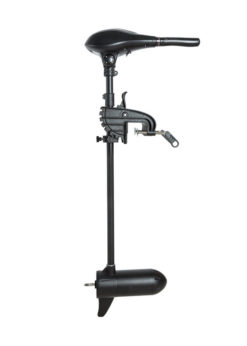
Premium electric trolling motor — bow-mount style with foot-control and articulated arm.

Premium electric trolling motor — bow-mount style with foot-control and articulated arm.

View on supplier site →
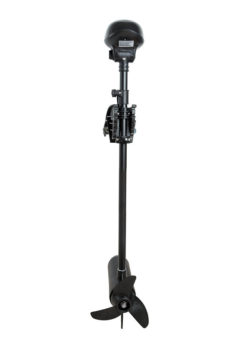
Transom-mount electric trolling motor — with bullet-shaped underwater housing for thrust efficiency.

Transom-mount electric trolling motor — with bullet-shaped underwater housing for thrust efficiency.

View on supplier site →
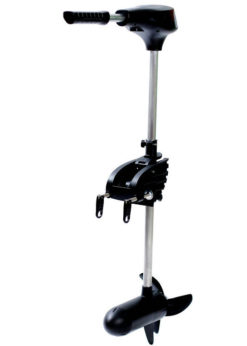
Electric trolling motor with extended shaft — for deeper-water fishing applications.

Electric trolling motor with extended shaft — for deeper-water fishing applications.

View on supplier site →
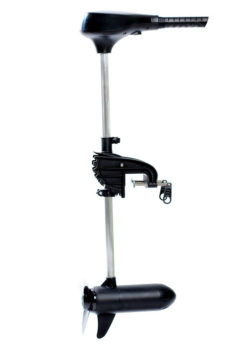
Compact electric trolling motor — recreational fishing variant for kayaks and small craft.

Compact electric trolling motor — recreational fishing variant for kayaks and small craft.

View on supplier site →

Trolling motor categories

CategoryThrust rangeVoltageBest for boat typeFOB China typical price
Transom mount (small / freshwater)28-36 lb thrust12VKayaks, canoes, dinghies, jon-boats up to 14ftUSD 65-145 per unit
Transom mount (mid)40-55 lb thrust12VBass boats up to 18ft, freshwater fishing boatsUSD 110-220 per unit
Transom mount (large)55-75 lb thrust24VLarger fishing boats 18-22ftUSD 180-340 per unit
Bow mount with foot control45-65 lb thrust12V or 24VBass boats with hands-free positioning needUSD 220-480 per unit
Bow mount with hand control55-80 lb thrust24VLarger fishing boats; less common configurationUSD 280-580 per unit
Bow mount premium (GPS / self-deploy)80-112 lb thrust36VPremium tournament bass boats; saltwaterUSD 480-1,200 per unit
Saltwater variant (corrosion-resistant)55-110 lb thrust24V or 36VSaltwater fishing, coastalUSD 320-980 per unit
Kayak compact (clamp-mount)30-55 lb thrust12VFishing kayaks, paddle boardsUSD 95-280 per unit
Engine-mount (auxiliary on outboard)40-85 lb thrust12V or 24VBoats with main outboard; auxiliary trollingUSD 240-580 per unit

Specifications and feature differentiation

FeatureEntry-level (28-36 lb)Mid-tier (45-55 lb)Premium (75+ lb)
Motor typeBrushed DCBrushed DC (premium variants brushless)Brushless DC (BLDC)
Speed control5 forward / 2-3 reverse5 forward / 3 reverseVariable speed, electronic, GPS-integrated
Shaft materialAluminum or fiberglassAluminum or stainlessAircraft-grade composite or stainless
Shaft length30-36 inches36-50 inches42-72 inches (telescoping option)
Propeller2-blade or 3-blade plastic3-blade composite or stainless3-blade weedless / Ferdi-prop
Battery indicatorNone or basic LEDLED bar (4-5 levels)Digital with voltage / amp display
Saltwater ratingNo (freshwater only)Optional saltwater variantStandard saltwater specification
GPS / autopilotNot availableOptional in premium tierStandard with anchor / contour follow / waypoint
Self-deploy / stowManualManualElectric (push-button) deploy/stow
Lithium battery compatibleYes (basic)YesOptimized — lithium-aware electronics
Warranty1-year limited2-year limited3-year (premium)

Power and battery sizing

Boat / craftRecommended thrustVoltageBattery capacity (typical)Run time at 50% throttle
Kayak (single rider)30-36 lb12V50-80 Ah AGM or 50 Ah lithium3-6 hours
Kayak (tandem) / canoe36-45 lb12V80-100 Ah AGM or 60-80 Ah lithium4-7 hours
Jon boat / dinghy 12-14ft40-55 lb12V100 Ah AGM or 80 Ah lithium4-7 hours
Fishing boat 14-16ft45-55 lb12V2 × 100 Ah AGM in parallel or 100 Ah lithium5-8 hours
Bass boat 16-18ft55-70 lb24V (2 × 12V series)2 × 100 Ah AGM (24V) or 100-150 Ah lithium5-8 hours
Larger fishing boat 18-22ft70-100 lb24V or 36V3 × 100 Ah AGM (36V) or 150-200 Ah lithium4-7 hours
Pontoon / utility 22ft+80-112 lb36V3 × 100 Ah AGM (36V) or 200 Ah lithium4-6 hours

Lithium battery compatibility — increasingly important

The trolling motor market is rapidly transitioning from lead-acid (AGM) to lithium iron phosphate (LiFePO4) batteries. Lithium advantages: 50-70% weight savings, 2-4x cycle life, more usable capacity (90% depth-of-discharge vs 50% for AGM), more consistent performance through discharge curve. Lithium considerations: higher upfront cost, requires lithium-compatible charger, requires Battery Management System (BMS) integration. Premium trolling motors increasingly include lithium-aware electronics — voltage curves matched to LiFePO4 discharge profile. For new boats and replacement scenarios, lithium-compatible motors are increasingly the standard. Older trolling motors typically work fine with lithium batteries from a power-delivery perspective; the question is whether speed control and battery indicators read correctly with the different voltage curve.

Container loading and packaging

Product variantBox size (LxWxH)Box weightContainer utilization (40' HQ)
Transom mount 30 lb110 × 25 × 25 cm~7 kg~700-1,000 units typical
Transom mount 55 lb120 × 30 × 30 cm~12 kg~500-700 units
Bow mount 55 lb140 × 35 × 35 cm~18 kg~350-500 units
Bow mount premium 80+165 × 40 × 40 cm~28 kg~200-300 units
Kayak compact90 × 20 × 20 cm~5 kg~1,200-1,500 units
Master carton (factory packaging)2-4 units per carton typicalVariesReduces handling time

Pricing brackets — wholesale

Order tierTotal quantityDiscountContainer utilizationLead time
Small dealer / retail20-100 units totalList price; air freight or LCLLCL or air15-25 days
Mid dealer / regional200-800 units total5-15%Partial 20' container25-40 days
Large dealer / national1,000-5,000 units15-25%40' or 40HQ container35-60 days
Big-box retail / OEM private label10,000+ units22-32%Multiple 40HQ containers45-90 days

Compliance and certification

StandardApplies toMarkets where critical
FCC Part 15 / CE EMCElectronic speed controllers (electromagnetic interference)USA, EU
RoHSMaterial content (lead, cadmium, etc.)EU + most international markets
NMMA / ABYC standardsMarine product safety (US)US marine retailer requirement
ISO 8665 (small craft)Small craft engine power and torque measurementEU recreational craft
EU Recreational Craft Directive 2013/53/EURecreational marine equipment safetyEU
Australian standard AS/NZS 1788Marine equipmentAustralia / NZ
IPX7 / IP67Water ingress protectionAll markets — quality differentiator

Order workflow — trolling motor distribution

  1. Application analysis — define target customer segment (entry-level kayak, mid-tier fishing, premium tournament, saltwater) and inventory mix per segment
  2. Specification clarification — for each SKU define: thrust, voltage, mount type (transom / bow / kayak / engine), shaft length, propeller type, electronic features, packaging
  3. Certification verification — verify FCC/CE EMC compliance, RoHS declaration; for US distribution NMMA/ABYC alignment helpful for big-box retailers
  4. Sample order — 2-5 units of each candidate SKU; bench-test thrust output against rating, verify control electronics function, salt-spray test for marine variants
  5. Field test — install on representative boat for 30-60 days; document run-time, control responsiveness, any failure modes
  6. First container order — typically 200-1,000 units mixed across 8-15 SKUs based on local market segment demand
  7. Series replenishment — quarterly orders aligned with seasonal demand (peak demand typically pre-fishing-season in spring)
  8. Warranty support — establish parts-supply for warranty claims (props, shaft seals, control modules, batteries); typical warranty rate 2-5% in first year

Hightime Motor on weisourcing.com

View the full supplier profile, certifications, contact details, and complete product catalogue.

Frequently asked questions

How does a Chinese aftermarket-fit trolling motor compare to Minn Kota or MotorGuide?
Premium-tier Chinese trolling motor manufacturers like Hightime Motor deliver products at 60-80% of Tier-1 (Minn Kota Powerdrive / Ulterra / Terrova; MotorGuide Tour / Xi5 / X5; Newport Vessels) thrust and feature performance at 35-55% of Tier-1 retail pricing. The performance parity for mainstream applications is achievable because: (1) MOTOR DESIGN — brushed DC and brushless DC technology is mature; the same magnet and winding suppliers serve both Tier-1 and Tier-2 manufacturers. (2) ELECTRONIC CONTROLS — speed-control electronics use standard MCU and MOSFET designs; well-implemented at premium tier. (3) MECHANICAL CONSTRUCTION — premium-tier Chinese motors use comparable shaft materials, propeller designs, and waterproofing techniques. WHERE TIER-1 RETAINS ADVANTAGE: (1) Premium GPS / autopilot features (Spot-Lock, Heading Lock, AutoPilot) — Minn Kota and MotorGuide have invested heavily in proprietary algorithms and GPS integration; some Chinese premium variants approach but rarely match. (2) Brand recognition and dealer network — established North American brands have decades of customer relationships. (3) Tournament-grade performance for serious bass-fishing — top-tier US brands have refined performance for tournament use. FOR MAINSTREAM RECREATIONAL FISHING (which is most of the market), premium Chinese trolling motors deliver fully-equivalent performance at 35-55% of Tier-1 retail. Quality verification: insist on bench-test data showing thrust output matches rating; verify warranty handling capability before commercial commitment.
What thrust rating do I actually need for my boat — and how do I avoid being undersized?
Industry standard rule of thumb: 2-pound thrust per 100 pounds of fully-loaded boat weight (boat + battery + gear + passengers). Calculate fully-loaded weight, divide by 100, multiply by 2 = minimum thrust requirement. Then add 30-40% margin for wind/current/heavy fishing gear. EXAMPLES: (1) Kayak with rider + gear, total 350 lb → 7 lb minimum, plus 40% margin = 10 lb thrust adequate; 30 lb motor is significant overkill but provides extended battery life at low throttle. (2) Bass boat 18ft, total fully-loaded 2,500 lb → 50 lb minimum, plus margin = 65-70 lb thrust recommended; this is why 24V 70-lb is the bass boat standard. (3) Pontoon 22ft, total fully-loaded 4,500 lb → 90 lb minimum, plus margin = 100-112 lb thrust needed; this is why premium 36V 112-lb is the pontoon standard. UNDERSIZING SIGNALS in actual use: (a) motor maxes out at full throttle without making meaningful headway against wind/current; (b) battery drains rapidly because motor runs at high duty cycle; (c) motor overheats during sustained operation. OVERSIZING is rarely a problem — provides extended battery life, faster repositioning, and better wind/current handling. The cost premium for next-thrust-tier is small (typically USD 50-150) compared to the user satisfaction benefit. Recommend customers oversize by 25-40% when in doubt.
Are aftermarket-fit electric trolling motors safe and reliable for tournament-grade fishing?
For mainstream tournament use (club tournaments, regional fishing events), premium aftermarket-fit Chinese motors deliver adequate reliability. For serious-money tournament use (BASS Elite, FLW, MLF top-tier), Tier-1 brands remain dominant — partly performance, mostly trust and dealer support. RELIABILITY DIFFERENTIATORS: (1) BLDC motors (brushless) significantly outlast brushed motors in sustained-use applications — premium Chinese tier is typically BLDC, budget tier is brushed. (2) Quality of waterproofing — premium tier IP67-rated, budget tier IP65 or worse. (3) Internal electronics and BMS integration for lithium battery — premium tier handles lithium batteries cleanly, budget tier may have voltage-curve issues. (4) Propeller hub strength — quality differs in metallurgy and mounting design. PRACTICAL FAILURE RATES (industry observation): premium Chinese tier 1-3% failure in first year, comparable to mid-tier Minn Kota / MotorGuide. Budget Chinese tier 5-12% failure in first year. For dealers building reputation, specify premium tier exclusively — the price premium (USD 50-150 per unit) is small relative to warranty cost and customer satisfaction. For value-tier dealers competing on price, budget tier can work but warranty cost and return rate must be priced into margins. WARRANTY HANDLING CAPABILITY is the key differentiator — Tier-1 brands have established service networks; Chinese aftermarket-fit requires the dealer to handle warranty claims directly with supplier or carry exchange inventory.
What's the difference between brushed and brushless trolling motors, and which should I stock?
Major performance and durability differences. BRUSHED DC MOTORS — traditional design with carbon brushes contacting commutator on rotating shaft. Properties: simpler control electronics (basic PWM speed control), lower cost, shorter service life (brushes wear out, typically 200-500 operating hours), efficiency 70-80%. Best for: entry-level retail, occasional-use applications. Cost: 25-40% cheaper than equivalent BLDC. BRUSHLESS DC MOTORS (BLDC) — electronically commutated with permanent magnets on rotor; controller electronics handle commutation. Properties: longer service life (1,500-5,000+ operating hours), higher efficiency (85-95%), better performance through full speed range, requires more sophisticated control electronics, smoother operation. Best for: mid-tier and premium markets, serious fishing applications. Cost: 25-40% premium over brushed equivalent. STOCK MIX FOR DEALERS: depends on market segment. Entry-level retail (e.g., big-box stores serving casual users): 60-80% brushed at price-leader positioning. Specialty fishing retail: 30-50% brushed (entry-level customers), 50-70% BLDC (mainstream and premium customers). Premium / tournament-focused dealers: 80-100% BLDC. INDUSTRY TREND: BLDC share is increasing rapidly as production costs fall and customer awareness of efficiency advantages grows. Within 5-7 years, BLDC will likely dominate all but the lowest entry-level tier. Plan inventory transition accordingly.
How do I handle warranty claims for trolling motors as a Chinese-sourced distributor?
Warranty handling is the highest-friction operational issue for Chinese-sourced electric goods distribution. SUPPLIER WARRANTY TERMS for premium tier: typically 1-year (entry), 2-year (mid), 3-year (premium) covering manufacturing defects only. EXCLUSIONS commonly include: water ingress damage (despite IP rating, customer impact during use), corrosion in salt water (saltwater rating may be limited), motor burnout from sustained overload, propeller damage, battery-related issues, normal wear (brushes, seals). PRACTICAL WARRANTY WORKFLOW for distributors: (1) MAINTAIN EXCHANGE INVENTORY — typical 3-5% of annual sales as exchange stock; replace defective units quickly to maintain customer satisfaction; ship defective units back to supplier in batches monthly. (2) DOCUMENTATION — photos of failure mode, serial numbers, customer purchase date; supplier requires this for warranty processing. (3) PARTS INVENTORY — common consumables (props, shaft seals, control modules, mounting hardware) — typical 8-12% of annual sales as parts inventory. (4) TECHNICAL TRAINING — train staff to diagnose simple issues (battery problem vs motor problem; controller setting vs hardware failure); avoid sending good units back as "warranty failures." (5) SUPPLIER RELATIONSHIP — work with suppliers offering reasonable warranty processing; some suppliers offer credit-back vs replacement-unit; both are workable, depends on cash-flow needs. EXPECTED COST OF WARRANTY: 2-5% of revenue for premium tier; 5-12% for budget tier. Plan margin to absorb this cost — budget tier products with low margin may be unprofitable after warranty costs are realized. Track warranty rate by SKU monthly; problem SKUs should be discontinued or replaced.
What accessories and parts should I stock alongside trolling motors?
Accessory and parts revenue typically 15-30% of trolling motor revenue. PROPELLERS — most-replaced consumable: standard 2-blade and 3-blade for entry/mid-tier; weedless and Ferdi-prop variants for premium; multiple sizes per motor model. Stock 8-15% of unit sales as replacement props. BATTERY COMPONENTS — battery hold-down trays, battery cables, terminals, in-line fuses, smart chargers compatible with lithium and AGM. Many trolling motor sales include battery accessories. MOUNTING HARDWARE — replacement mounting brackets, transom plates, bow brackets; both factory-spec and universal-fit options. SHAFT SEALS AND BUSHINGS — wear items requiring periodic replacement; service-life typically 200-1000 hours. CONTROL CABLES — for hand-control models with cable-actuated speed; multiple lengths for different boats. CHARGER UNITS — 12V, 24V, 36V smart chargers compatible with both AGM and lithium battery types; major upsell opportunity. DEPLOYMENT ROPES AND HARDWARE — for bow-mount with manual deploy; quick-disconnect fittings, replacement ropes. CIRCUIT BREAKERS — in-line breakers for 50A, 60A, 100A circuits; safety-required for installation. STORAGE COVERS — boat covers and motor-specific covers for off-season storage. INVENTORY STRATEGY: maintain 25-40% accessories revenue ratio relative to motor sales; carry deep stock on universal items (props, cables, hardware), shallower stock on motor-specific items. For new product launches, plan parts inventory ramp-up 60-90 days before unit launch to support warranty and accessory sales from launch.
⚠ Important Disclaimer

Source: Product images on this page are hosted on the manufacturer's official website (hightimemotor.com) and link directly back to that website. All product information was summarised from the supplier's public catalogue.

Brand mentions and trademark compliance: References to Tier-1 trolling motor brands (Minn Kota, MotorGuide, Newport Vessels, Watersnake, Haswing) are made for the sole purpose of describing functional benchmarks. Hightime Motor is not authorized by, affiliated with, or endorsed by any of these brand owners. Products are aftermarket-fit cross-reference parts manufactured under Hightime Motor's own brand or buyer-private-label only.

Marine application safety: Trolling motor installation requires proper boat-specific mounting, electrical-system integration, and battery management. Improperly installed marine equipment can cause battery fires (improper fuse / circuit breaker), boat damage (improper mounting), or electrical injuries. Verify all required local regulations (US Coast Guard, EU Recreational Craft Directive 2013/53/EU, AS/NZS 1788, NMMA standards) for the destination market and intended boat-class application.

Battery safety: Lithium battery installations in marine applications require specific safety considerations (BMS, marine-rated lithium batteries, proper venting, fire suppression in enclosed spaces). Lead-acid battery installations require ventilation for hydrogen gas. Distributors should provide installation guidance to customers including battery type compatibility and safety requirements.

Pricing & specifications: All price ranges, thrust ratings, and tier definitions reflect general market observation. Real-world performance depends on boat configuration, water conditions, battery state-of-charge, and operator usage patterns. Confirm current pricing, MOQ, lead time, and configuration directly with the supplier.

No middleman role: Weisourcing provides supplier discovery and editorial content. All transactions occur directly between buyer and supplier through the contact channels published on the supplier's official website.