weisourcing.com / products / CNSS Nozzle / Industrial Spray Nozzles

Industrial Spray Nozzles from China — A B2B Wholesale Buyer's Guide

A practical sourcing guide for industrial spray nozzles from China — written for OEM equipment manufacturers, process plant operators, MRO procurement, industrial distributors, and project engineering firms. Real product images from cnss-nozzle.com covering full-cone nozzles (solid stream and full-cone patterns for cooling/washing/gas scrubbing), hollow-cone atomizing nozzles (evaporative cooling, fog, gas absorption, fire suppression), flat-fan nozzles (surface coating, painting, agriculture, conveyor cooling), spiral nozzles (clog-resistant full-cone), air-atomizing nozzles (compressed-air assisted fine atomization), high-pressure cleaning nozzles (industrial cleaning, surface prep), solid stream / jet nozzles (cutting, long-throw cleaning), mist/fog nozzles (humidification, dust suppression), rotating tank-cleaning nozzles, eductor jet-pump nozzles, and specialty spray-dryer atomizers. Material selection (brass through stainless 304L/316L/321/347, Hastelloy C-276, Inconel 625, titanium, polymers PP/PVDF/PTFE, tungsten carbide, ceramic), application-driven selection methodology, certifications (ISO 9001, NSF/ANSI 61, FDA, ATEX), and the procurement workflow for industrial spray nozzle distribution and OEM supply.

Manufacturer: CNSS Nozzle (cnss-nozzle.com)
Category: Industrial Machinery
Reading time: 13 min

Industrial spray nozzles are essential components in dozens of industrial processes — spray drying, cooling tower atomization, evaporative cooling, dust suppression, gas scrubbing, chemical injection, surface coating and painting, fire suppression, agricultural spraying, food processing wash-down, and paper mill operations. The global industrial spray nozzle market is dominated by Tier-1 brands like Spraying Systems Co. (USA, "TeeJet" and "FloMax"), Lechler (Germany), BETE (USA), and Delavan (USA), with premium Chinese specialty suppliers competing on cost while approaching Tier-1 quality. For OEM equipment manufacturers, process plant operators, MRO buyers, distributors, and project engineering firms, sourcing industrial spray nozzles directly from a Chinese specialist manufacturer delivers significant cost savings while maintaining adequate-to-premium quality.

This guide covers the CNSS Nozzle product family — full-cone nozzles (solid stream and full-cone patterns), hollow-cone nozzles (atomizing spray), flat-fan nozzles (uniform line spray), spiral nozzles (full-cone via spiral path), air-atomizing nozzles (compressed-air driven), high-pressure nozzles (for cleaning), specialty nozzles (gas-scrubbing eductor, spray drying, fog), and complete spray header assemblies. Real product images linking back to the supplier's catalog at cnss-nozzle.com.

Product range — actual catalogue images

The product images below are hosted on the manufacturer's official website (cnss-nozzle.com) and link directly to the manufacturer's catalogue. Click any image to view the full specification page in a new tab.
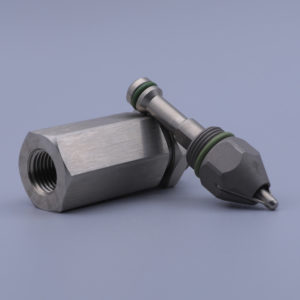
Stainless industrial spray nozzle assembly — precision-machined nozzle body with insertable spray tip for industrial cleaning, cooling, and process applications.

Stainless industrial spray nozzle assembly — precision-machined nozzle body with insertable spray tip for industrial cleaning, cooling, and process applications.

View on supplier site →
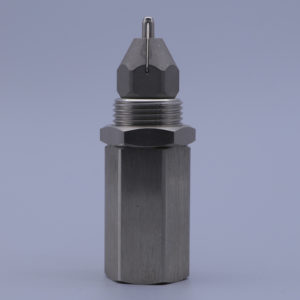
Industrial nozzle with hex body and integrated check valve — for high-pressure pipe injection systems and process spray applications.

Industrial nozzle with hex body and integrated check valve — for high-pressure pipe injection systems and process spray applications.

View on supplier site →
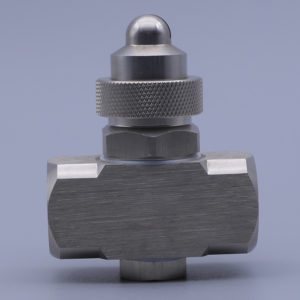
Precision spray nozzle assembly — stainless steel construction for chemical-resistant industrial spray applications.

Precision spray nozzle assembly — stainless steel construction for chemical-resistant industrial spray applications.

View on supplier site →

Spray pattern categories

Pattern typeSpray characteristicsCommon applicationsFOB China price
Full-cone (solid)Solid circular spray; medium dropletCooling, washing, gas scrubbing, dust suppressionUSD 5-65 each
Hollow-cone (atomizing)Annular ring spray; fine dropletEvaporative cooling, fog cooling, gas absorption, fire suppressionUSD 6-75 each
Flat-fanLinear flat spray (50-110° fan angle)Surface coating, painting, agriculture, conveyor coolingUSD 4-45 each
Spiral (full-cone via spiral)Full-cone pattern; clog-resistant designWhere dirty water/solids may block nozzleUSD 12-95 each
Air-atomizingCompressed-air assisted atomization; very fine dropletHumidification, gas conditioning, very fine atomizationUSD 28-180 each
High-pressure cleaningConcentrated jet at high pressureIndustrial cleaning, surface preparationUSD 8-95 each
Solid stream / JetCoherent stream; long throwCutting, cleaning, drilling, fire monitorUSD 6-65 each
Mist / FogVery fine droplets (5-50 micron)Humidification, dust suppression, cooling towerUSD 18-180 each
Tank cleaning (rotating)Rotating spray; reaches all interior surfacesTank/vessel cleaning (food, chemical, pharmaceutical)USD 65-650 each
Eductor (jet-pump)Liquid jet entrains air/gasTank agitation, mixing, gas scrubbingUSD 28-220 each
Sandwich / spillbackVariable capacity via recirculationFurnace combustion, oil burnersUSD 35-280 each
Spray dryer (premium)Precision atomization for spray dryingFood powder production, ceramic spray dryingUSD 380-2,800 each

Material selection guide

MaterialPropertiesBest applications
BrassStandard; cost-effective; some corrosion resistanceGeneral industrial; water applications
Stainless 303 (free-machining)Easy to machine; moderate corrosionStandard food/water applications
Stainless 304LGood general corrosion resistanceMost industrial including food contact
Stainless 316LBetter chloride/acid resistanceMarine, chemical, food processing with salt
Stainless 321 / 347High-temperature stabilityHigh-temperature gas scrubbing, furnace
Hastelloy C-276Excellent chemical resistanceAggressive chemical injection, acid scrubbing
Inconel 625High-temperature and corrosionCombustion, exhaust, high-temp chemical
TitaniumLightweight; excellent corrosionPremium chemical/marine applications
Polypropylene (PP)Chemical-resistant polymerAcid/alkali applications; not high-temp
PVDF (Kynar)Excellent chemical resistance polymerAggressive chemicals; pharmaceutical
PTFE (Teflon)Best chemical resistance polymerMost aggressive chemicals; food/pharma
Tungsten carbideHighest wear resistanceAbrasive slurry, sand spray, cleaning
Ceramic (alumina)High wear resistance; chemical inertAbrasive slurry, very long service life

Selecting the right nozzle: pattern, capacity, pressure, materials

Spray nozzle selection requires matching application requirements: (1) PATTERN — choose based on coverage needs (full-cone for solid coverage, flat-fan for linear, hollow-cone for atomization); (2) FLOW RATE — measure existing demand; size nozzle by manufacturer flow chart; (3) PRESSURE — most industrial 2-7 bar (30-100 psi); high-pressure cleaning 70-700 bar; (4) MATERIAL — match to fluid chemistry and temperature; (5) DROPLET SIZE — affected by pressure (higher pressure = finer droplets) and nozzle design; (6) SPACING — typical 200-400 mm between nozzles for coverage uniformity. CONNECTION TYPES: BSP, NPT thread (standard); flange (for large headers); special connection (manufacturer-specific). Reputable suppliers like CNSS Nozzle provide flow charts and selection assistance.

Nozzle specifications

SpecificationTypical rangeNotes
Flow rate0.1-1000+ LPMSized by orifice diameter and pressure
Pressure rating0.5-700 bar typicalStandard 2-7 bar; high-pressure cleaning to 700 bar
Spray angle15-180°Varies by pattern and design
Droplet size5-2,000 micronPressure and nozzle design dependent
Operating temperature-40°C to +600°CMaterial-dependent
Connection threadBSP, NPT, BSPP, flangeSpecify per system
Orifice diameter0.3-15 mm typicalDetermines flow rate

Pricing brackets — wholesale

Order tierTotal quantityDiscountLead time
Sample / pilot50-300 piecesList price15-30 days
Small distributor500-3,000 pieces5-12%25-50 days
Mid distributor / OEM5,000-25,000 pieces12-22%35-70 days
Large OEM / process plant50,000+ pieces20-30% framework45-90 days
Custom design / specialty1,000+ per SKUCustom OEM pricing60-120 days first batch

Order workflow — spray nozzle procurement

  1. Application specification — define fluid (water, chemical, slurry), temperature, pressure available, target flow rate, required pattern, target spray angle, droplet size if critical
  2. Selection consultation — supplier engineering team recommends nozzle types based on application; provide flow charts for fine-tuning
  3. Sample order — typically 5-20 nozzles per type for application testing; verify pattern, flow rate, droplet characteristics in actual conditions
  4. Application validation — 30-90 day field test; verify performance, wear rate, durability vs replacement frequency
  5. Commercial order — typical 500-5,000 nozzles for OEM/distributor; framework agreement for ongoing use
  6. Quality acceptance — incoming inspection per AQL plan; verify flow rate at standard pressure (calibration test); dimensional verification
  7. Series replenishment — quarterly orders aligned with consumption; for high-wear applications, build inventory buffer

CNSS Nozzle on weisourcing.com

View the full supplier profile, certifications, contact details, and complete product catalogue.

Manufacturer · Industrial Machinery

CNSS Nozzle

cnss-nozzle.com

CNSS Nozzle (China) — manufacturer of industrial spray nozzles for OEM, process plant, and MRO applications. Pattern types: full-cone (solid stream and full-cone for cooling, washing, gas scrubbing, dust suppression), hollow-cone atomizing (evaporative cooling, fog, gas absorption, fire suppression), flat-fan (surface coating, painting, agriculture, conveyor cooling, 50-110° fan angles), spiral (clog-resistant full-cone for dirty fluids), air-atomizing (compressed-air assisted for very fine droplets), high-pressure cleaning (70-700 bar), solid stream / jet (cutting, long-throw cleaning), mist/fog (5-50 micron droplets for humidification, dust suppression, cooling tower), rotating tank cleaning (CIP for food/chemical/pharmaceutical tanks), eductor jet-pump (tank agitation, mixing, gas scrubbing), sandwich/spillback (variable capacity for furnace combustion and oil burners), spray dryer precision atomizers. Materials: brass standard, stainless 303/304L/316L for industrial/food/marine, 321/347 for high-temperature, Hastelloy C-276 for aggressive chemicals, Inconel 625 for high-temp+chemical, titanium for premium chemical/marine, polymers (PP, PVDF, PTFE) for chemical resistance, tungsten carbide and ceramic (alumina) for abrasive applications. Connection threads: BSP, NPT, BSPP, flange. Pressure ratings 0.5-700 bar, temperature -40°C to +600°C. Certifications: ISO 9001, NSF/ANSI 61 for potable water, FDA 21 CFR / EU 1935/2004 for food contact, ATEX for explosive atmospheres, UL for fire safety.

View full profile →

Frequently asked questions

How does Chinese spray nozzle quality compare to Spraying Systems, Lechler, BETE?
For mainstream industrial applications, premium Chinese spray nozzles approach Tier-1 specifications at significantly lower cost. Performance parity is achievable because: nozzle manufacturing involves precision machining and surface finishing (well-understood and reproducible), same raw materials available globally (304L/316L stainless, brass, tungsten carbide, ceramics), and CNC machining technology produces consistent geometry. WHERE TIER-1 RETAINS ADVANTAGES: (1) PROPRIETARY DESIGNS — Spraying Systems' "FloMax", BETE's specialty patterns have decades of development; (2) APPLICATION ENGINEERING — Tier-1 brands have application engineers who help customers select; Chinese suppliers improving but smaller engineering teams; (3) SPECIALTY APPLICATIONS — spray drying, complex multi-fluid atomization remains Tier-1 territory; (4) GLOBAL SERVICE — Tier-1 has worldwide stocking and technical support. FOR MAINSTREAM USE (full-cone cooling, hollow-cone atomization, flat-fan washing, standard chemical injection), premium Chinese nozzles deliver 90-95% of Tier-1 performance at 30-50% of cost. ECONOMIC ANALYSIS: typical 316L full-cone nozzle: Spraying Systems USD 25-45 vs equivalent Chinese USD 8-18; 4-5x cost savings for adequate quality. PROCUREMENT STRATEGY: spray drying / critical process → Tier-1; standard cooling/washing/dust suppression → premium Chinese; commodity replacement → mid-tier Chinese.
How do I select the right nozzle for my application?
Spray nozzle selection follows structured methodology. STEP 1 — DEFINE THE APPLICATION: (1) What fluid is being sprayed (water, chemical, slurry, fuel oil); (2) What's the purpose (cooling, washing, dust suppression, atomization, gas scrubbing); (3) What pattern is needed (full coverage, linear, atomization). STEP 2 — IDENTIFY KEY PARAMETERS: (1) FLOW RATE — measure total required liters/minute; (2) PRESSURE — what pressure is available at nozzle (account for piping losses); (3) DROPLET SIZE — application-specific (fog cooling needs 50-100 micron, cleaning needs 200-500 micron, atomization needs 10-50 micron); (4) TEMPERATURE — fluid temperature affects material selection. STEP 3 — SELECT PATTERN: (1) Solid spray coverage → full-cone; (2) Linear coverage → flat-fan; (3) Atomization → hollow-cone or air-atomizing; (4) Cleaning/jet → solid stream; (5) Dirty fluid → spiral. STEP 4 — SELECT MATERIAL: (1) Water → brass or 304L; (2) Chemical → 316L, Hastelloy, or polymer; (3) Abrasive → tungsten carbide or ceramic; (4) High temperature → 321/347 SS or Inconel. STEP 5 — SIZE NOZZLE: use manufacturer flow chart to match orifice size to required flow at available pressure. STEP 6 — VERIFY WITH SAMPLE: order 5-20 samples and test in actual application. Reputable suppliers like CNSS Nozzle provide selection charts and engineering support.
What's the typical service life of an industrial spray nozzle?
Service life depends heavily on application. CLEAN WATER APPLICATIONS: typical 1-3 year service life; primary failure modes: (1) Mineral scale buildup affecting flow pattern; (2) Wear of orifice (slight enlargement increases flow, weakens pattern). CHEMICAL APPLICATIONS: 6 months - 2 years depending on chemistry; failure modes: (1) Chemical corrosion of material; (2) Surface erosion from chemical attack. ABRASIVE SLURRY APPLICATIONS: 1-12 months depending on slurry; failure modes: (1) Erosive wear of orifice geometry; (2) Pattern deformation as orifice wears; (3) Material loss until replacement needed. HIGH-PRESSURE CLEANING: 200-2,000 hours typical; high-pressure operation accelerates wear. SPRAY DRYING: typical 100-500 hours for critical applications; precision-required so replace frequently. GAS SCRUBBING/EROSION: typical 6 months - 2 years; chemistry and particulate matter dependent. REPLACEMENT INDICATORS: (1) Flow rate increases beyond +10% of original (worn orifice); (2) Spray pattern asymmetry visible; (3) Reduced atomization quality (visible droplet size change); (4) Visual wear on orifice. MATERIAL UPGRADE PATH for shorter-than-expected life: (1) Replace brass with stainless; (2) Replace 304 with 316L for chemicals; (3) Replace 316L with Hastelloy for aggressive chemicals; (4) Replace stainless with tungsten carbide/ceramic for abrasives. ECONOMICS: typical industrial plant replaces 10-100% of nozzles per year; replacement cost typical 1-3% of plant operating budget. INVENTORY: keep 1-3 month supply of high-consumption nozzles; specialty nozzles ordered as needed.
What are the typical certifications and quality standards for industrial spray nozzles?
CERTIFICATIONS: (1) ISO 9001 — basic quality management system, expected; (2) NSF/ANSI 61 for water-contact nozzles in potable water systems; (3) FDA / EU 1935/2004 for food contact applications; (4) ATEX for explosive atmosphere applications; (5) UL for fire safety nozzles; (6) ASME for pressure-rated assemblies. PERFORMANCE STANDARDS: (1) Flow rate accuracy ±5% typical for standard nozzles; ±2% for premium tier; (2) Spray angle ±5° typical; (3) Droplet size distribution per manufacturer specification. TEST DOCUMENTATION typically provided: (1) Material certificates per batch; (2) Flow rate calibration certificate per nozzle (premium) or per batch (standard); (3) Visual inspection for surface finish; (4) Dimensional certificate. INDUSTRY-SPECIFIC requirements: (1) PHARMACEUTICAL — cGMP compliance for spray drying, tank cleaning; (2) FOOD/BEVERAGE — 3-A Sanitary Standards, FDA materials; (3) NUCLEAR — specific qualifications for nuclear plant use; (4) AEROSPACE — AS9100 for aerospace component manufacturers. PROCUREMENT VERIFICATION: (1) Request material certificates with each shipment; (2) Random sample flow rate testing; (3) Application-specific testing before large commitments; (4) For critical applications, third-party performance certification.
How do I source custom or specialty spray nozzles?
Custom nozzle development for specialty applications follows structured process. APPLICATION ENGINEERING: (1) Detailed application analysis — fluid properties, temperature, pressure, required spray characteristics, environmental conditions; (2) Performance specification — flow rate, pressure drop, spray pattern, droplet distribution, materials of construction. DESIGN PHASE: (1) Conceptual design based on application requirements; (2) Material selection per chemistry; (3) Connection design per system requirements; (4) Performance modeling. PROTOTYPING: (1) Initial prototype manufacturing (typical 4-8 weeks); (2) Performance testing in supplier facility (verify flow rate, pattern, droplet size); (3) Customer application testing (typical 30-90 days). REFINEMENT: based on test results, design refinement and optimization; second prototype if needed. TOOLING AND PRODUCTION: (1) Production tooling investment (USD 1,000-15,000 typical for custom nozzles); (2) First commercial batch (typical 100-500 nozzles); (3) Production setup. ONGOING SUPPLY: (1) Specifications documented and frozen; (2) Quality control procedures established; (3) Ongoing supply with predictable lead time. TYPICAL TIMELINE: 4-12 months from application definition to ongoing production. COST PREMIUM: custom nozzles typically 2-4x standard nozzle cost in low volumes; competitive with standard at high volumes. EXAMPLES OF CUSTOM DEVELOPMENT: (1) Specific corrosive chemical injection (need Hastelloy with unusual geometry); (2) Specialty spray drying for unique product; (3) High-temperature gas scrubbing with unusual connection; (4) Tank cleaning with non-standard geometry. Reputable suppliers like CNSS Nozzle have engineering teams for custom development.
What's the typical inventory and replenishment strategy for industrial spray nozzles?
Inventory strategy depends on consumption pattern and criticality. HIGH-CONSUMPTION (cleaning, dust suppression, cooling): (1) Carry 1-3 month consumption on-hand; (2) Standardize on common patterns/sizes to reduce SKU count; (3) Establish framework agreement with supplier for predictable lead times. MID-CONSUMPTION (chemical injection, process spray): (1) Carry 3-6 month consumption; (2) Reorder when stock reaches 50% of safety stock; (3) Multiple suppliers for risk management. LOW-CONSUMPTION (specialty, custom): (1) Order to demand with 30-90 day lead time visibility; (2) Maintain critical spares for downtime-sensitive applications; (3) Long-term framework with primary supplier. CRITICAL SPARES: identify nozzles where failure causes immediate downtime; carry adequate spares (often 100-300% of expected consumption); these are insurance, not operating inventory. CAPITAL OPTIMIZATION: (1) Standardize on common types to reduce SKU count; (2) Negotiate volume discounts with primary supplier; (3) Avoid hoarding low-consumption items. SUPPLY CHAIN RISK MANAGEMENT: (1) Primary supplier 60-70% volume; (2) Secondary supplier 30-40% for risk management; (3) Verify supplier maintains stock of common products; (4) For critical applications, qualify alternative supplier as backup. CONSUMPTION TRACKING: (1) Monitor actual consumption vs forecast; (2) Identify consumption trends (often increasing as plant ages); (3) Plan replenishment with appropriate lead time. Reputable suppliers like CNSS Nozzle support distributor inventory planning with predictable production schedules.
⚠ Important Disclaimer

Source: Product images on this page are hosted on the manufacturer's official website (cnss-nozzle.com) and link directly back to that website. All product information was summarised from the supplier's public catalogue.

Brand mentions and trademark compliance: References to Tier-1 spray nozzle brands (Spraying Systems Co., TeeJet, FloMax, Lechler, BETE, Delavan, BEX) are made for the sole purpose of describing functional benchmarks. CNSS Nozzle is not authorized by, affiliated with, or endorsed by any of these brand owners. Products are aftermarket-equivalent manufactured under CNSS Nozzle's own brand or buyer-private-label only.

Application engineering: Industrial spray nozzle selection requires matching application requirements (fluid chemistry, temperature, pressure, flow rate, droplet size, materials). Improper selection can cause poor performance, premature wear, or process failures. Verify selection with manufacturer flow charts and application testing before large commitments.

Pricing & specifications: All price ranges reflect general market observation. Real-world spray nozzle pricing varies with material selection (brass through tungsten carbide/ceramic), volume, and customization. Confirm current pricing, MOQ, lead time, and material specifications directly with the supplier.

No middleman role: Weisourcing provides supplier discovery and editorial content. All transactions occur directly between buyer and supplier through the contact channels published on the supplier's official website.