The steering and front-end system is the most safety-critical chassis subsystem on any vehicle — its components transmit driver intent through to the road, absorb impacts and bumps, maintain wheel alignment, and provide the geometric precision that keeps a car going where the driver points it. A failed tie rod end can cause loss of steering control. A failed ball joint can cause wheel separation. A misaligned steering rack causes premature tire wear and unstable handling. Yet steering and front-end parts are also the highest-velocity wear category in the entire chassis after brakes — every vehicle needs steering rack tie rod ends, ball joints, control arm bushings, and stabilizer link replacement on regular service intervals.
This guide is the third focused companion in our Kingrun Auto series — distinct from the general aftermarket-fit parts catalog and the brake and wheel-end specialty guide — focused on the steering rack, tie rods, ball joints, control arms, stabilizer links, steering knuckles, and the supporting components that make front-end work the second-most-frequent service category in any general workshop.
Product range — actual catalogue images
The product images below are hosted on the manufacturer's official website (kingrunauto.com) and link directly to the manufacturer's catalogue. Click any image to view the full specification page in a new tab.

Steering knuckle assembly — pair (LH+RH) with ball joint and hardware kit pre-installed.
View on supplier site →
Complete front-end overhaul kit — control arms, tie rods, sway bar links, ball joints.
View on supplier site →
Wheel hub assembly with integrated ABS sensor ring — front-axle ready-press fit.
View on supplier site →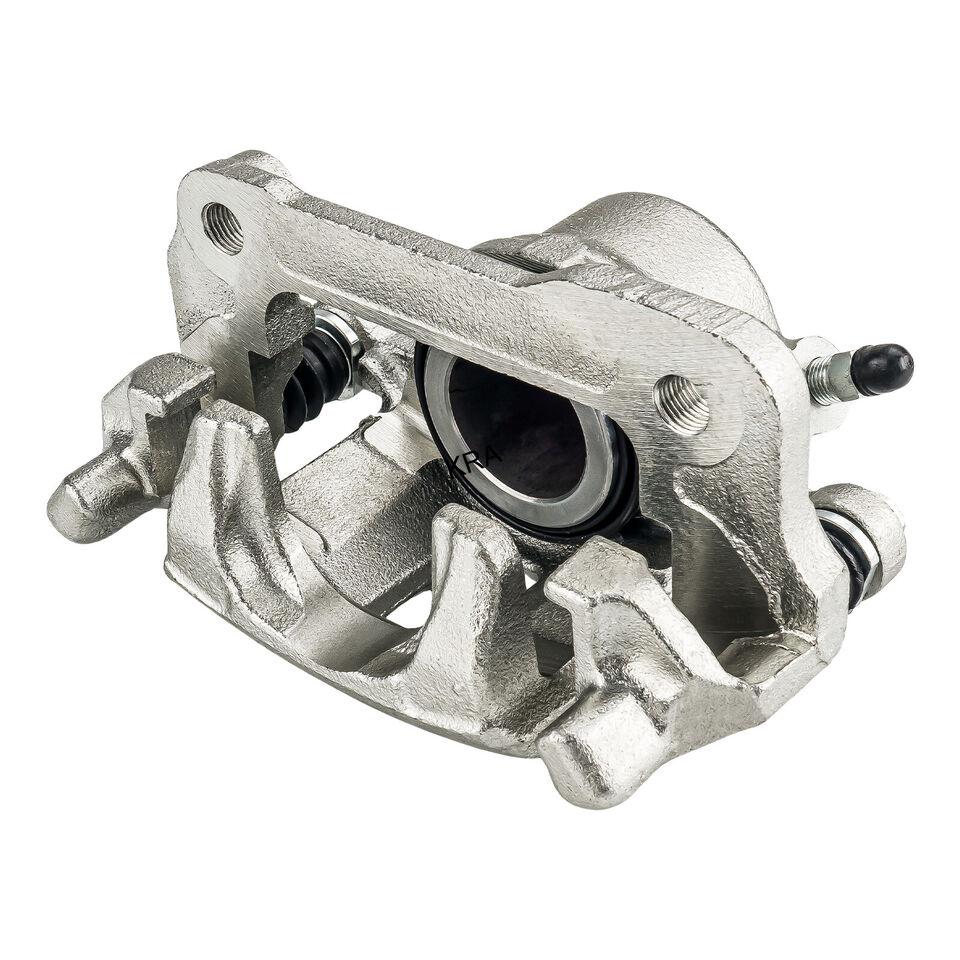
Brake caliper assembly — front-axle, integrated with steering knuckle and wheel hub system.
View on supplier site →Steering & front-end component categories
| Component | Typical service interval | FOB China premium | OE dealer |
|---|---|---|---|
| Outer tie rod end (each) | 60,000-120,000 km | USD 4-15 | USD 35-120 |
| Inner tie rod (each) | 80,000-150,000 km | USD 6-22 | USD 55-180 |
| Ball joint (lower or upper) | 80,000-150,000 km | USD 6-25 | USD 45-180 |
| Lower control arm with ball joint | 100,000-180,000 km | USD 18-65 | USD 145-380 |
| Upper control arm | 100,000-180,000 km | USD 14-55 | USD 95-280 |
| Stabilizer / sway bar link | 50,000-100,000 km | USD 4-15 | USD 28-95 |
| Stabilizer bar bushing kit | 80,000-150,000 km | USD 6-22 | USD 35-110 |
| Steering knuckle assembly | Replacement only on damage | USD 38-95 | USD 280-680 |
| Steering rack (manual) | 10-15 years or seal failure | USD 65-180 | USD 380-850 |
| Steering rack (hydraulic, w/ pump) | 10-15 years | USD 95-280 | USD 580-1,400 |
| Steering rack (electric / EPS) | 12-18 years | USD 180-580 | USD 950-2,800 |
| Power steering pump (hydraulic) | 8-12 years | USD 45-150 | USD 280-650 |
| Strut mount / top mount (each) | 80,000-150,000 km | USD 8-32 | USD 65-180 |
| Strut bearing (each) | With strut mount replacement | USD 4-15 | USD 28-85 |
| Bushing kit (control arm, multi-piece) | 80,000-180,000 km | USD 12-45 | USD 95-280 |
Why steering and front-end parts are high-velocity inventory
Service-cluster economics
Steering and front-end work has a distinct economic pattern: components rarely fail in isolation. When a customer arrives complaining about steering wheel vibration, alignment drift, or front-end clunk, the typical workshop diagnosis identifies 3-7 components needing replacement simultaneously. Examples:
- Front-end clunk — typically: ball joints (both sides) + sway bar links (both sides) + bushings = 5 components
- Steering wheel vibration at 80-100 km/h — typically: tie rod ends (both sides) + wheel balance + alignment = 2 component sets
- Alignment drift / pulling — typically: control arm bushings (one side) + tie rod ends + sway bar link = 4-6 components
- Premature inner tire wear — typically: control arm + ball joint + bushings (one side) = 3 components
This service-cluster pattern means steering parts move in higher volume than the visible customer demand suggests. Workshop accountants typically see 3-7 line items per steering service ticket vs 2-4 for typical brake service. For inventory planning, allocate 25-35% of total chassis-parts stock to steering and front-end components.
Cross-reference structure for steering aftermarket
| Component | Typical OE part-number variations | Cross-reference logic |
|---|---|---|
| Tie rod end | Vehicle-specific OE# (e.g., 1J0419811A for VW Mk4) | By chassis platform; multiple vehicles share the same part |
| Ball joint | OE# tied to control arm assembly | By exact OEM control arm fitment |
| Control arm | OE# specific to vehicle/year/model variant | Cross-reference by OEM number; verify left vs right hand drive |
| Stabilizer link | Length and end-fitting type | Multiple cross-fits common; verify length specification |
| Steering rack | Manual/hydraulic/electric variant codes | Critical: verify exact assembly code; mismatched racks cause electrical or hydraulic faults |
| Steering knuckle | Vehicle-specific cast part | Cross-reference by OEM number; verify ABS sensor port location |
Quality tier definitions for steering parts
| Tier | Ball joint construction | Boot material | Service life vs OE | Price ratio vs OE |
|---|---|---|---|---|
| Premium aftermarket-fit (KRA premium) | Forged steel ball stud, sintered bearing socket, lubricated lifetime grease | Polyurethane or chloroprene (ozone-resistant) | 85-100% of OE | 15-25% of OE |
| Standard aftermarket | Forged steel ball stud, basic bearing socket | Standard rubber boot | 55-75% of OE | 10-18% of OE |
| Budget | Cast steel ball stud, basic socket | Basic rubber boot (UV-degrading) | 30-50% of OE | 5-10% of OE |
Why boot material matters more than people realize
The rubber boot protecting a ball joint or tie rod end is the single most important indicator of long-term quality. Premium-tier aftermarket parts use polyurethane or chloroprene boots specifically formulated for ozone, UV, and temperature resistance — these boots routinely outlast the bearing surface they protect. Budget-tier parts use generic rubber boots that crack within 2-4 years in temperate climates and 12-18 months in tropical/equatorial climates. A cracked boot allows water and grit into the ball joint, accelerating bearing wear from "10 years" to "18 months." For workshops in salt-belt or coastal markets, premium-tier with polyurethane boots is the only economically rational choice — the cost premium is recouped many times over by avoiding repeat warranty claims.
Steering rack — the diagnostic decision tree
Steering rack replacement is one of the most expensive single-component repairs in the chassis, so accurate diagnosis is critical:
| Symptom | Most likely cause | Action |
|---|---|---|
| Power steering whine on cold start | Low PS fluid or air in system | Top off fluid, bleed system; rack rarely the cause |
| Power steering fluid leak | Rack seal or PS pump seal | Identify leak source; rack seal replacement requires rack rebuild or replacement |
| Steering wheel "kicks" over bumps | Worn rack mounting bushings | Replace rack mounting bushings; rack itself may be fine |
| Excessive steering play (1-2 inches at wheel) | Tie rod ends, inner tie rods, OR rack pinion gear wear | Inspect tie rods first; only replace rack if internal play confirmed |
| Power steering loss intermittently | EPS sensor or control unit (electric racks) | Diagnose with scan tool; rack-replacement only if internal motor failure |
| Heavy steering at low speed | PS pump weak or fluid issue | Test PS pump pressure; rack rarely the issue |
| Hard knock when going over speed bumps | Inner tie rod or rack mount bushing | Inspect inner tie rods + rack mounts; rack itself rare |
Rule of thumb: in 80%+ of "rack replacement" diagnoses by inexperienced workshops, the actual problem is tie rod ends, inner tie rods, or rack mounting bushings — not the rack itself. Stocking the smaller components allows accurate diagnosis without committing to expensive rack replacement.
Container loading economics
| Order tier | MOQ (mixed SKUs) | Discount | Container utilization | Lead time |
|---|---|---|---|---|
| Sample / dealer trial | 5-20 sets each SKU | List price; air courier | DHL / FedEx | 3-7 days |
| Workshop direct buy | 200-500 sets total | 5-15% | LCL or pallet | 10-20 days |
| Small distributor | 1500-3000 sets total | 15-25% | 20' container | 20-35 days |
| Mid distributor | 5000-12000 sets total | 25-35% | 40' or 40HQ container | 30-50 days |
| Large distributor / private label | 15000+ sets total | 35-48% | 40HQ x N containers | 50-75 days |
A 40HQ container of mixed steering and front-end parts holds approximately 5,000-12,000 units depending on size mix (small ball joints and tie rod ends pack densely; control arms and steering knuckles are heavier and bulkier). For a new distributor, typical first container mixes 50-100 SKUs covering top tie rod ends, ball joints, stabilizer links, and control arms for the local vehicle parc.
Order workflow — steering & front-end specialist procurement
- Vehicle parc analysis — identify the top 25-40 vehicle make/model/year combinations in your local market by registration data; this generates the cross-reference priority list
- SKU mix planning — for each top vehicle, identify outer tie rod end + inner tie rod + ball joints + stabilizer links + control arms = 5-7 priority SKUs per vehicle. Total: 150-280 priority SKUs covering 80%+ of front-end demand
- Quality tier specification — premium tier exclusively for ball joints, tie rod ends, and inner tie rods (boot quality matters); standard tier acceptable for stabilizer links and basic bushings; budget tier only for end-of-life vehicle market
- Sample order — 5-15 sets each of top 30-50 SKUs by air courier; functional test on actual customer vehicles, document boot durability over 30-60 days
- First container order — 1500-3500 sets across 80-150 SKUs based on local vehicle parc analysis
- Series replenishment — monthly air-freight replenishment for fast-movers (top 20% SKUs are 80% of volume); quarterly container replenishment for full inventory refresh