
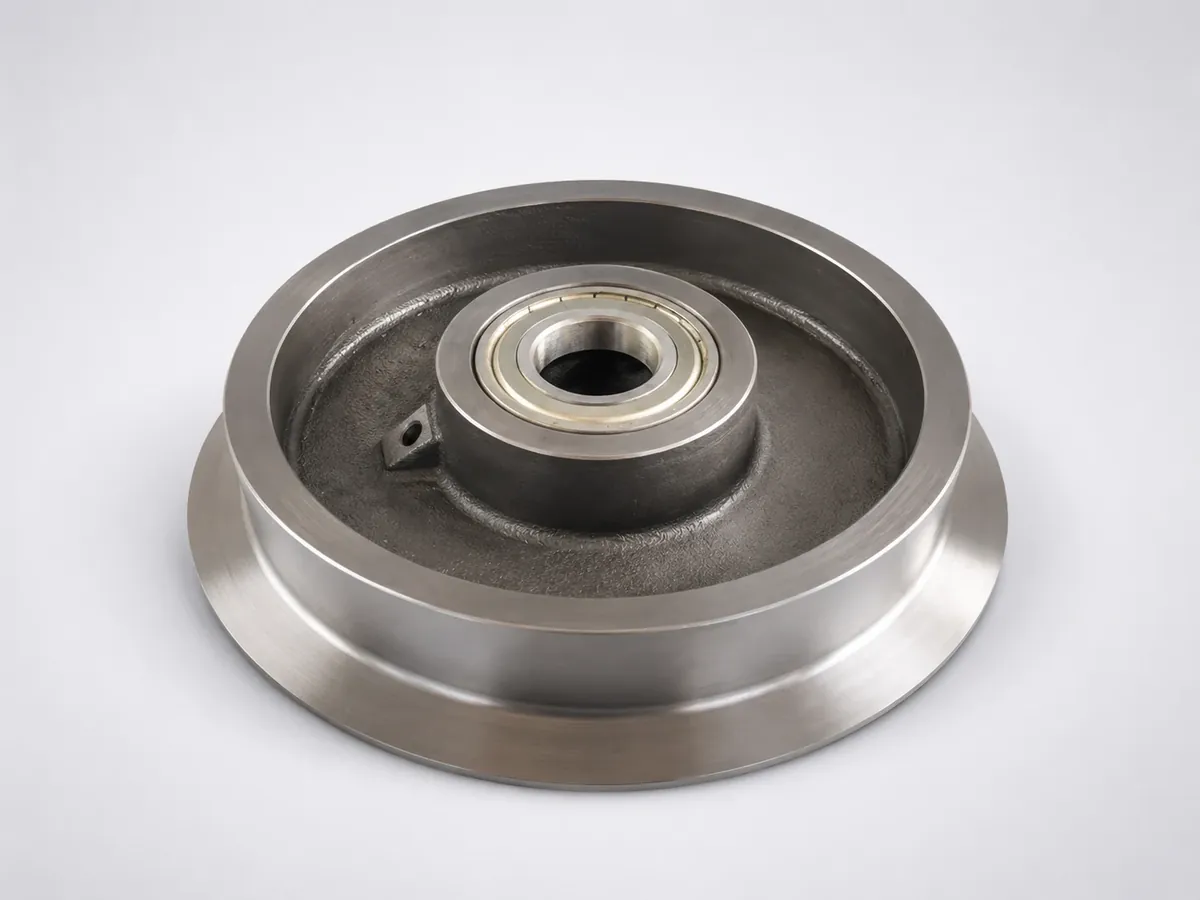
What This Part Is And Why It Is Made This Way
Iron wheels and pulleys are chosen for damping and for cost, but they turn, so hub concentricity and mass distribution decide whether they run quietly. The casting and the machining have to be planned together.
Wheels and transmission parts are cast in grey or ductile iron and machined on the bore, the hub and the running surface.
What You Get From This Route
Grey iron damping keeps drive lines quieter than a steel equivalent.
Hub bore and running surface machined on one setup.
Ductile grades available where shock loading rules out grey iron.
Application Scenarios
- Belt and chain drive pulleys
- Industrial equipment wheels
- Flywheels and drive discs
- Transmission housings and drive components
Who It Is For
- Drive system manufacturers
- Equipment builders sourcing rotating iron parts
- Maintenance teams replacing worn pulleys
Technical Features
- Grey iron and ductile iron grades
- Green sand, resin sand and shell routes
- Machined bore, hub and running surface
- Weight 0.2 kg - 2000 kg
What Buyers Run Into Without This Specification
- A grey iron pulley cracks under shock loading.
- Hub runout causes belt wear and noise.
- Replacement wheels do not match the original hub dimensions.
Published Material Weight And Process Data
Figures below are the published capability for cast iron. Part specific values — tolerance on individual features, finish, packing — are confirmed at drawing review and marked TBC until then.
| Grey Iron | EN-GJL-150 / 200 / 250 / 300 |
|---|---|
| Ductile Iron | EN-GJS-400 / 450 / 500 / 600 / 700 / 800 |
| ADI | ADI800-10 / ADI1200-3 |
| Weight Range | 0.2 kg - 2000 kg |
| Process | Green sand process; resin sand process; shell process |
| Selection Basis | Grade and moulding route matched to customer drawing and application scenario |
| Part Specific Tolerance | TBC — confirmed against the customer drawing |
| Minimum Order Quantity | TBC — depends on the process route selected |
| Lead Time | TBC — confirmed with the production base at quotation |
How The Part Is Made And Checked
- Green Sand — High volume production of repeat parts at the lowest tooling cost.
- Resin Sand — Larger parts and complex cavities where dimensional stability matters more than cycle time.
- Shell Process — Better surface and dimensional accuracy for mid size batches.
Quality management is based on ISO 9001 and covers supplier management, raw material inspection, production process control and final inspection. Inspection results are archived and traceable.
Options And Alternatives
Parts are produced to the customer drawing rather than to a fixed catalogue item, so material grade, machining scope, surface treatment and packing are all specified per order. Machining, dimensional control, surface treatment and necessary pre-assembly can be added to the same supply route.
Where another process family would suit the part better — for example a forging in place of a casting for a shock loaded connector — that comparison is raised during drawing review rather than after tooling is committed.
How To Specify This Part
Say whether the drive sees shock loads or steady loads. Shock duty moves the specification from grey iron to ductile iron, and it is a far cheaper change to make on the drawing than in the field.
- Send the drawing with material, quantity, quality standard and target delivery date.
- State the inspection class and the zones it applies to, rather than a general note.
- Confirm the packing requirement and the lifting equipment available at the destination.
Related Guides
Other Parts In This Range
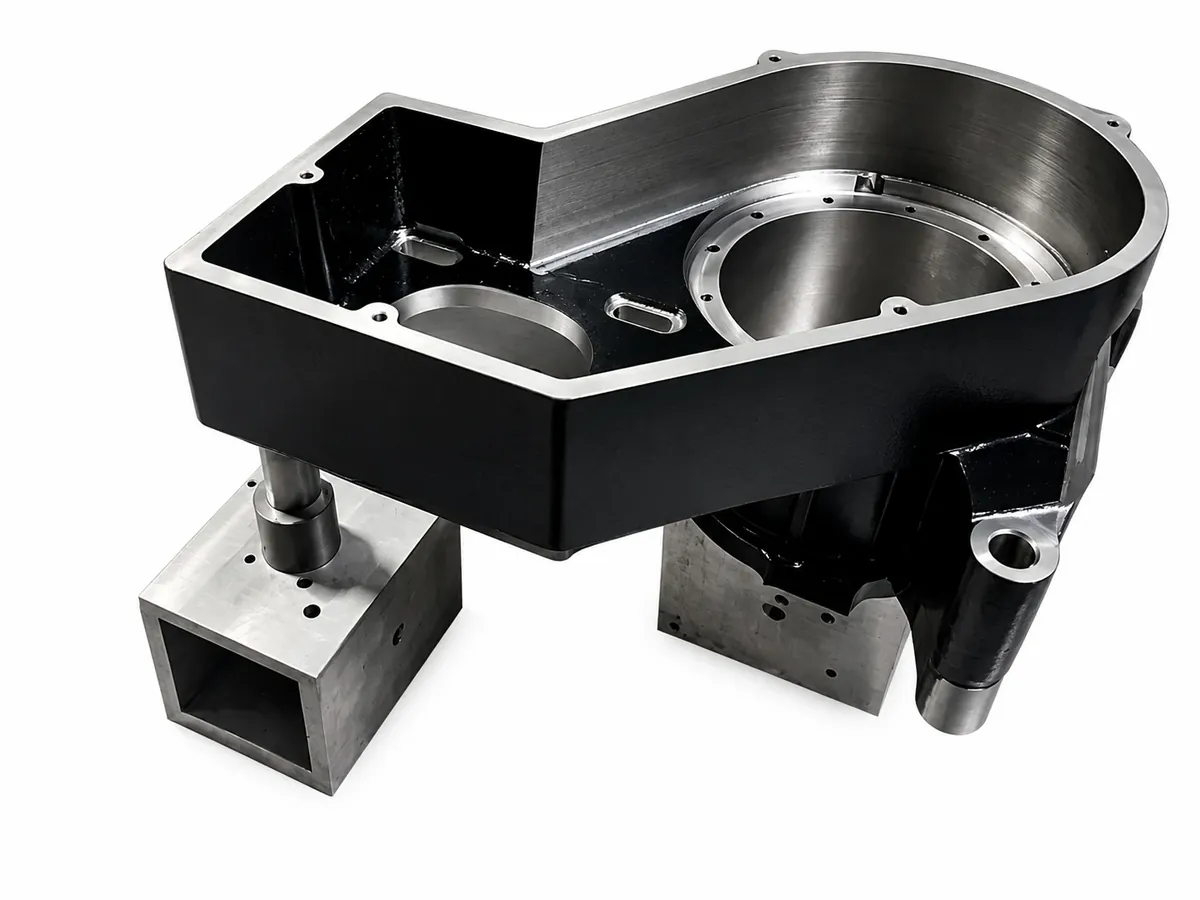
Mechanical Wear and Conveying Components
Screws, flights and wear surfaces
View specifications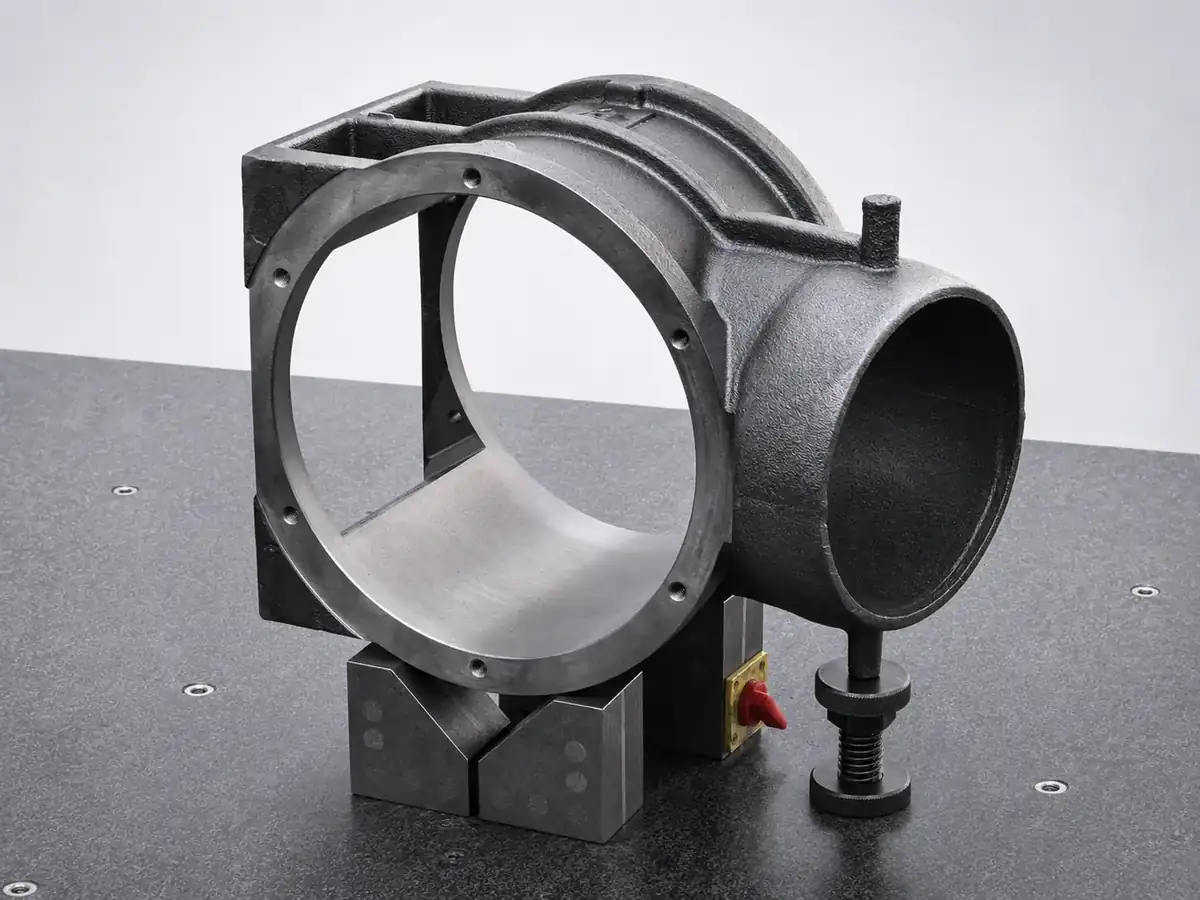
Ductile Iron Structural Brackets
Ductile iron support structures
View specifications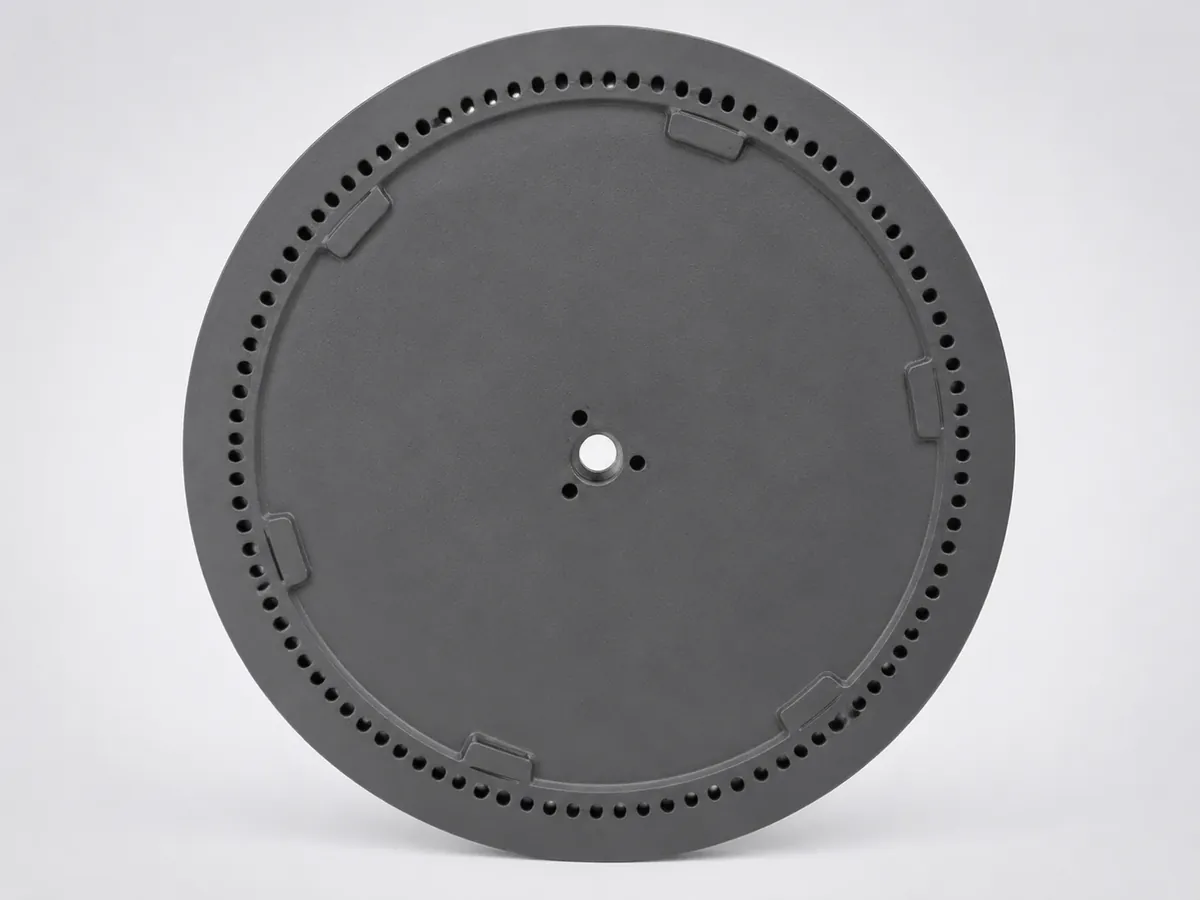
Disc Type Iron Castings
Flat discs, plates and covers
View specifications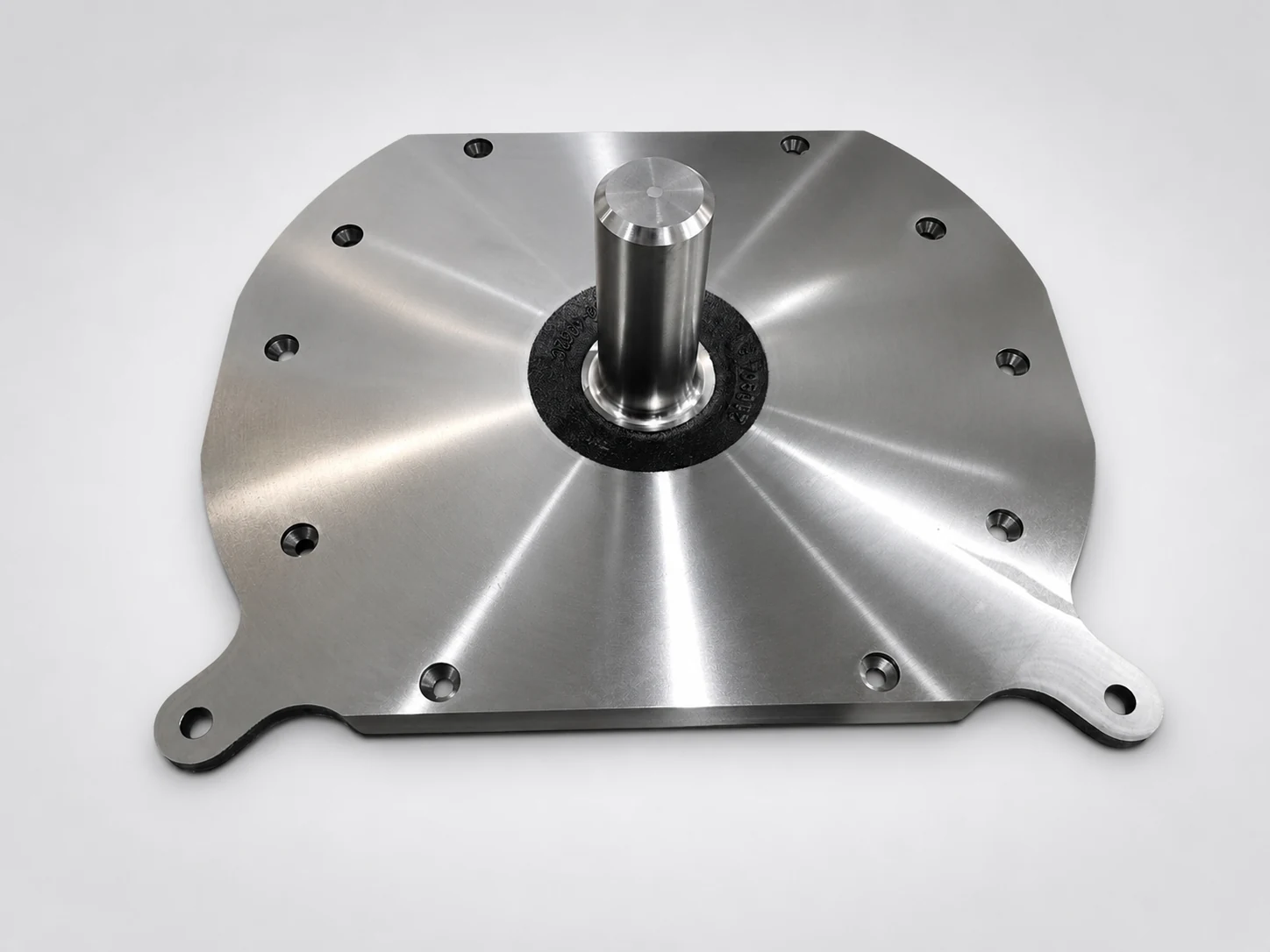
Disc Base Iron Castings
Base plates with integral bosses
View specificationsWheel and Transmission Components — Frequently Asked Questions
Grey iron or ductile iron for a pulley?
Grey iron suits steady duty where damping matters; ductile iron is proposed where shock loading or higher strength is required. The choice is confirmed against the application during drawing review.
Are wheels supplied machined?
Yes. CNC machining and dimensional control are coordinated with the casting.
What do you need to prepare a quotation?
Drawings, material, quantity, quality standard and target delivery date.
Which inspection is included?
The inspection scope is agreed during drawing review. Better surface and dimensional accuracy for mid size batches.
Get A Quotation For Wheel and Transmission Components
Send the drawing and the application. We will confirm the process route, the production base and the inspection scope before quoting.