
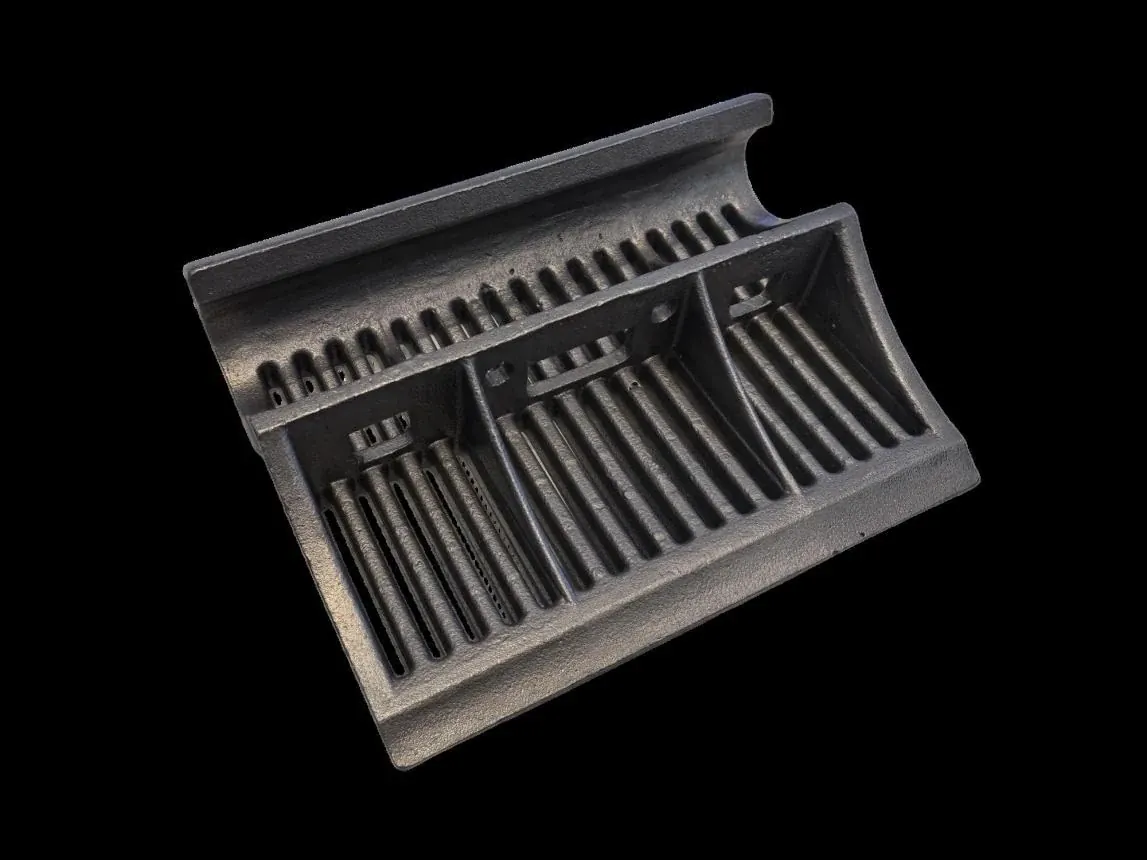
Choosing Heat Resistant Alloys for Grate Bars and Furnace Castings
Grate bars are consumables, so the alloy decides the operating budget. This guide explains the grades Eurona works with and how the working condition narrows the choice.
In a waste to energy or biomass plant, grate bars are replaced on a schedule rather than on failure. That makes alloy selection a cost decision measured over a year, not a purchase decision measured per piece.
The Grades in Practical Use
Grate bars and heat resistant castings are produced in 1.4777, 1.4776, 1.4823, 1.4743, 1.4855, LH26 and EN-GJL-200 with 3% chromium.
These are not interchangeable. They differ mainly in how they behave above 1000 °C, where oxidation resistance and creep — not room temperature strength — set the replacement interval.
Start From the Working Condition
The typical maximum working temperature for biomass furnace castings is around 1050 °C to 1150 °C, depending on the material and the actual cooling and working conditions.
Two furnaces running the same nominal temperature can consume bars at very different rates, because fuel changes the ash chemistry that attacks the casting. Wood chip, pellet and agricultural residue behave differently.
Give the supplier the fuel, the working temperature and the current replacement interval. Those three facts narrow the grade choice faster than any specification document.
Verifying That You Received the Grade You Paid For
Alloy substitution is the most common cause of early grate bar failure, and it is invisible on delivery. Material control for high alloy parts covers chemical analysis on each melt, sampling from the product body rather than from a separate test bar, and third party testing for special elements.
Body sampling matters. A separately cast test coupon can pass while the part itself is out of specification.
Casting Route Affects Life Too
Shell moulding, lost wax and lost foam casting are all used for these parts. Shell moulding normally reaches CT9 to CT10 and lost wax normally CT8, with surface roughness around Ra 12.5.
Dimensional accuracy matters for a consumable because a bar that does not sit correctly in the grate frame runs hotter than designed and fails early, regardless of alloy.
Process Families Covered In This Guide
Continue Reading
Casting or Forging How to Choose for a Load Bearing Part
The decision between a casting and a forging is usually made on shape complexity and load type rather than on price. This guide sets out the practical criteria.
Process GuideSelecting an Aluminium Casting Process by Batch Size and Wall Thickness
Four aluminium casting routes with very different cycle times, tolerances and tooling costs. The published figures make the choice straightforward once batch size is known.
Buying GuideWhat NDT and Quality Documents to Specify on a Casting Order
Most acceptance disputes come from an inspection scope that was never agreed. This guide covers what to specify and when to specify it.
Product GuideHow to Specify a Screw Pump Rotor That Lasts
Rotor life depends on hardness, helical profile and arc surface finish. Each is measurable, and each is routinely left off the enquiry.
Buying GuideA Four Stage Process for Sourcing Machinery Parts From China
The stages an overseas parts order actually passes through, and the decisions that belong in each one.
Questions On This Topic
Why do identical bars last different times in different plants?
Fuel chemistry, actual bed temperature and airflow all vary between installations. The alloy is selected against the working temperature and operating condition, so the same grade can give different life in different furnaces.
How can I confirm the alloy on delivery?
Chemical analysis is carried out on each melt with samples taken from the product body, and third party testing can be arranged for special elements.
Apply This To Your Own Part
Send the drawing and the duty. The drawing review will confirm the process route, the material and the inspection scope before anything is quoted.