
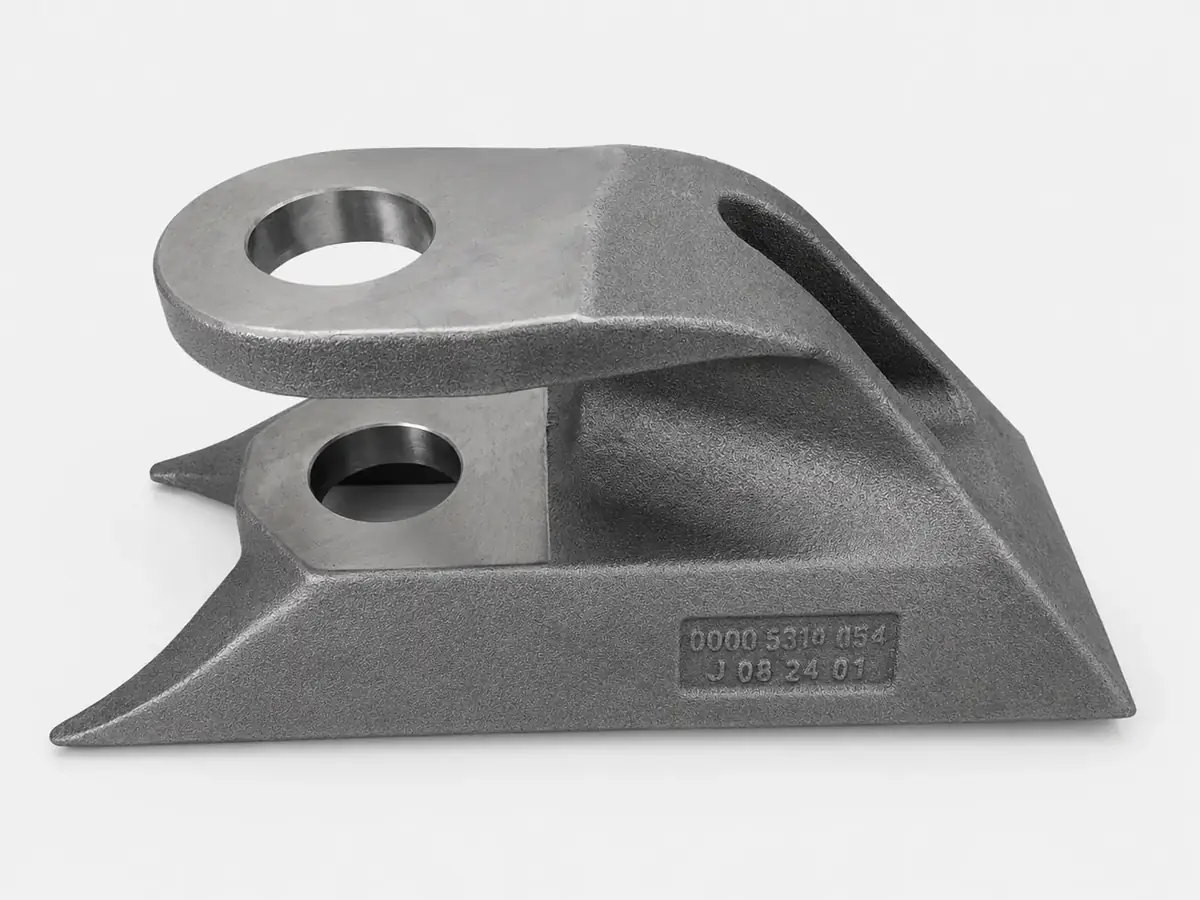
What This Part Is And Why It Is Made This Way
Construction machinery lives outdoors under shock loading, which punishes any part with a hidden defect. Precision casting gives a dense, consistent structure in shapes that would otherwise be welded together.
These parts are cast in structural and quenched and tempered grades including 42CrMo4 and S355, in the 1 kg to 80 kg quick-drying range or the wider lost wax range.
What You Get From This Route
Quenched and tempered grades available for shock loaded duty.
Consistent as cast geometry across seasonal production peaks.
One part replaces a welded sub assembly on the machine.
Application Scenarios
- Excavator attachment components
- Loader linkage parts
- Compaction and road equipment parts
- Engineering machinery mounting components
Who It Is For
- Construction machinery OEMs
- Attachment manufacturers
- Aftermarket suppliers of machine components
Technical Features
- Materials including 42CrMo4, S355, 20Mn5
- Quick-drying investment route 1 kg - 80 kg
- Silica sol lost wax route 0.01 kg - 300 kg
- Applications in engineering machinery and connectors
What Buyers Run Into Without This Specification
- Welded attachment parts crack under shock loading in the field.
- Seasonal demand peaks cannot be covered by a single machining source.
- Field failures are expensive because machines are far from service centres.
Published Material Weight And Process Data
Figures below are the published capability for precision casting. Part specific values — tolerance on individual features, finish, packing — are confirmed at drawing review and marked TBC until then.
| Material | 1.4304 / 1.4308 / ASTM 8620 / 2Cr13 / 20Mn5 / 42CrMo4 / S355 |
|---|---|
| Weight Range | 0.01 kg - 300 kg |
| Process | Silica sol lost wax process |
| Tolerance Grade | CT5 - CT9 |
| Surface Roughness | Ra 3.2 - Ra 6.3 |
| Size Range | 2 mm - 2000 mm |
| Quick-Drying Route | 1 kg - 80 kg in G20Mn5+N / S355 / 42CrMo4 / G26CrMo4+QT1 / S690QL / GE300 |
| Part Specific Tolerance | TBC — confirmed against the customer drawing |
| Minimum Order Quantity | TBC — depends on the process route selected |
| Lead Time | TBC — confirmed with the production base at quotation |
How The Part Is Made And Checked
- Merged Scope — The precision casting scope now includes the former investment casting business, so one route covers both silica sol lost wax and quick-drying investment casting.
- Application Fit — Parts where appearance, assembly and dimensional consistency are demanding.
- Materials Covered — Carbon steel, low alloy steel, stainless steel and quenched and tempered grades.
Quality management is based on ISO 9001 and covers supplier management, raw material inspection, production process control and final inspection. Inspection results are archived and traceable.
Options And Alternatives
Parts are produced to the customer drawing rather than to a fixed catalogue item, so material grade, machining scope, surface treatment and packing are all specified per order. Machining, dimensional control, surface treatment and necessary pre-assembly can be added to the same supply route.
Where another process family would suit the part better — for example a forging in place of a casting for a shock loaded connector — that comparison is raised during drawing review rather than after tooling is committed.
How To Specify This Part
Say whether the part sees shock loading or steady loading. Shock duty usually moves the choice towards a quenched and tempered grade or towards forging, and that decision is worth making before tooling is cut.
- Send the drawing with material, quantity, quality standard and target delivery date.
- State the inspection class and the zones it applies to, rather than a general note.
- Confirm the packing requirement and the lifting equipment available at the destination.
Related Guides
Other Parts In This Range
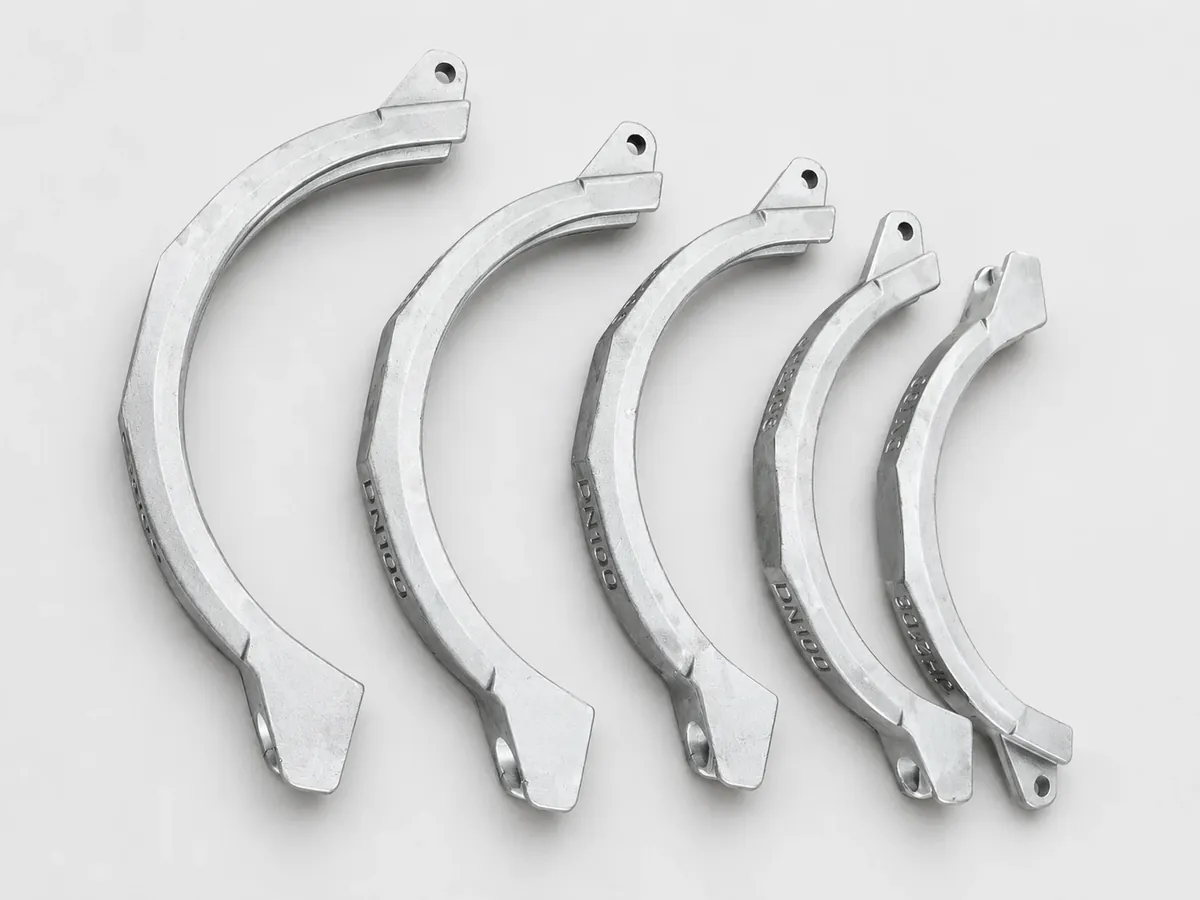
Thin Wall and Curved Components
Light sections and swept profiles
View specifications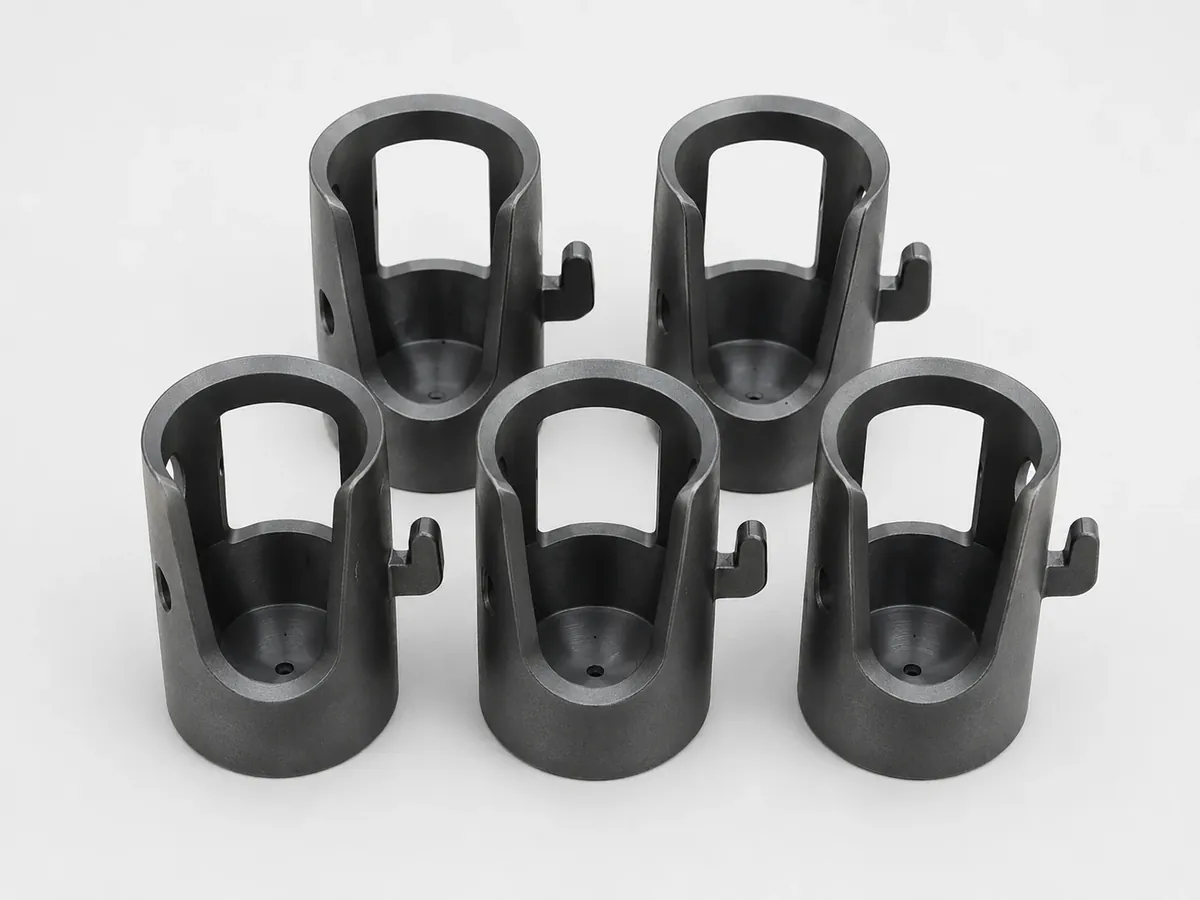
Lifting and Connection Components
Eyes, links and load carrying connectors
View specifications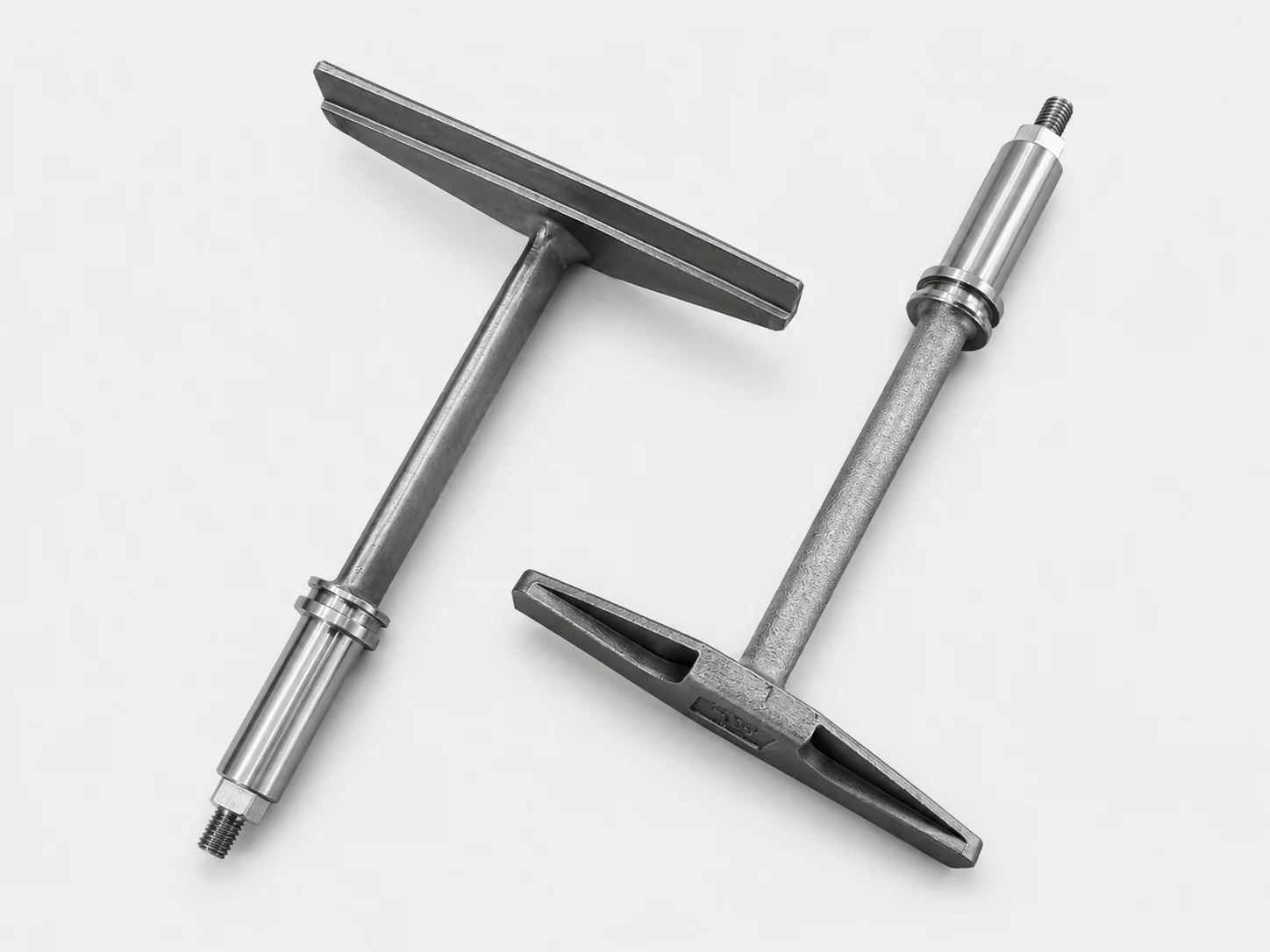
Shaft and Operating Components
Levers, spindles and actuating parts
View specifications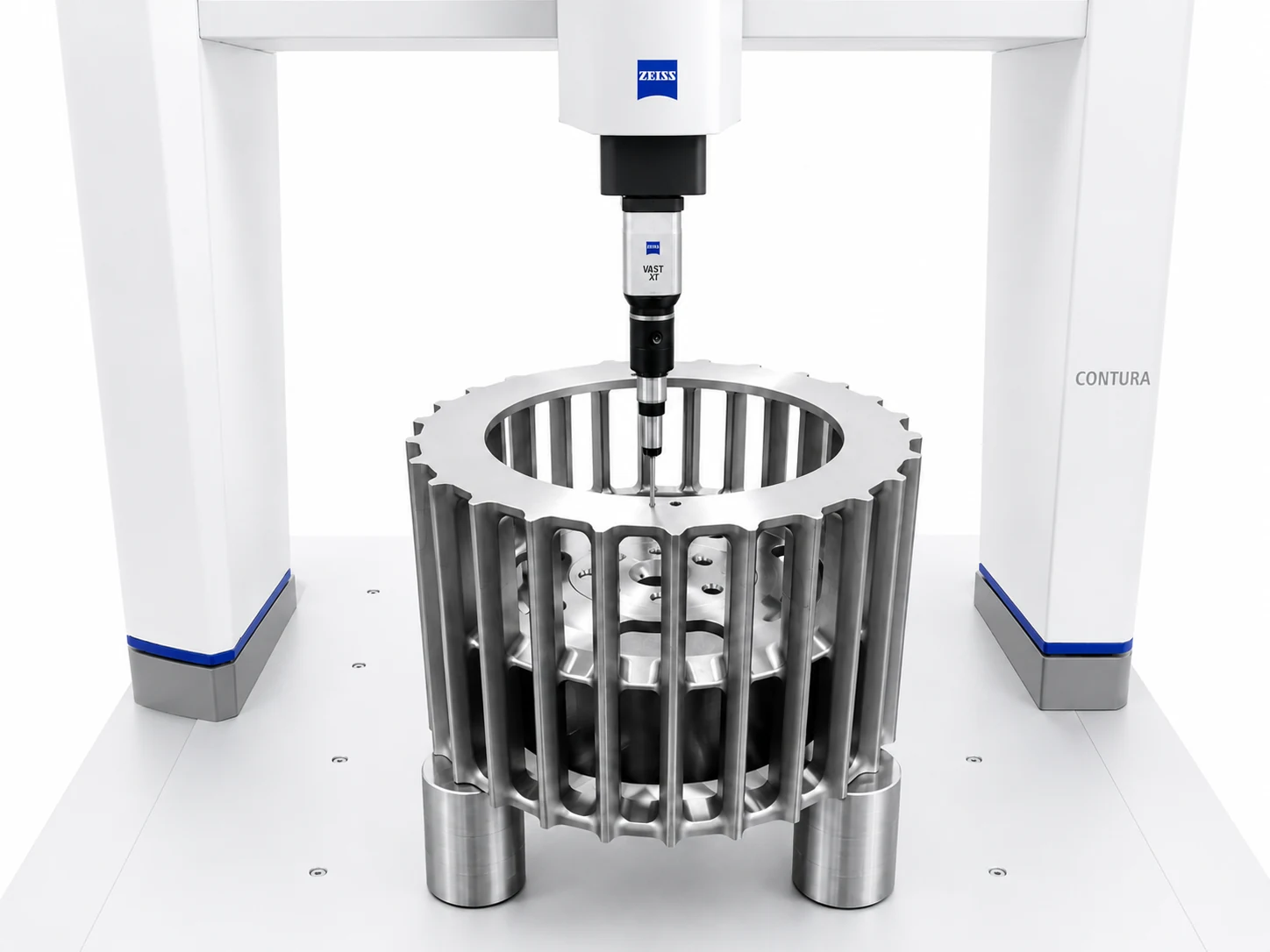
Inspection and Assembly Components
Parts qualified on the measuring machine
View specificationsConstruction Machinery Parts — Frequently Asked Questions
Would forging be better than casting for this part?
Where the duty is shock loaded and safety critical, forging is often proposed because it forms a continuous metal flow line. The comparison is made during drawing review.
Which grades are used for construction machinery parts?
Grades such as 42CrMo4, S355, G20Mn5+N and S690QL are used across the precision casting scope.
What do you need to prepare a quotation?
Drawings, material, quantity, quality standard and target delivery date.
Which inspection is included?
The inspection scope is agreed during drawing review. Carbon steel, low alloy steel, stainless steel and quenched and tempered grades.
Get A Quotation For Construction Machinery Parts
Send the drawing and the application. We will confirm the process route, the production base and the inspection scope before quoting.