What This Part Is And Why It Is Made This Way
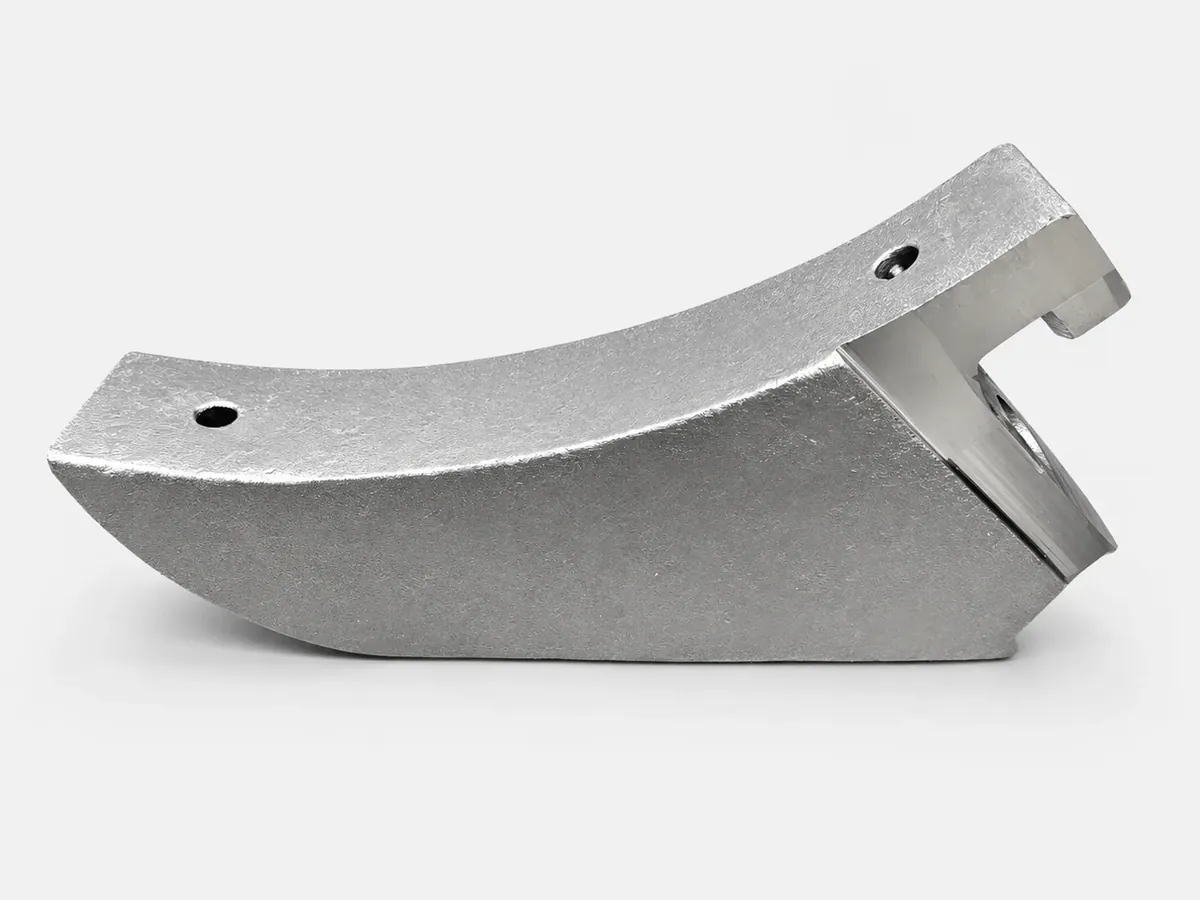
A free form surface is expensive to machine and almost impossible to fabricate, which makes it the clearest case for precision casting. The shape comes from the wax pattern, so complexity adds little to the unit cost.
Complex curved parts are produced by silica sol lost wax casting and verified by 3D scanning where point measurement is not meaningful.
What You Get From This Route
Geometric complexity is carried by the pattern, not by machine time.
3D scanning gives an objective record of a surface that cannot be gauged.
Consistent surface Ra 3.2 - Ra 6.3 across the whole contour.
Application Scenarios
- Flow guiding components
- Ergonomic and formed equipment parts
- Aerodynamic or hydrodynamic profiles
- Sculpted structural transitions
Who It Is For
- Designers working with CAD surface models
- OEMs whose parts cannot be produced by machining economically
- Engineering teams qualifying a new surface design
Technical Features
- Silica sol lost wax process
- 3D scanning verification
- Ra 3.2 - Ra 6.3 as cast
- Weight 0.01 kg - 300 kg
What Buyers Run Into Without This Specification
- Five axis machining of a free form surface costs more than the part is worth.
- There is no practical way to inspect the surface with hand tools.
- Each fabricated sample comes out slightly different.
Published Material Weight And Process Data
Figures below are the published capability for precision casting. Part specific values — tolerance on individual features, finish, packing — are confirmed at drawing review and marked TBC until then.
| Material | 1.4304 / 1.4308 / ASTM 8620 / 2Cr13 / 20Mn5 / 42CrMo4 / S355 |
|---|---|
| Weight Range | 0.01 kg - 300 kg |
| Process | Silica sol lost wax process |
| Tolerance Grade | CT5 - CT9 |
| Surface Roughness | Ra 3.2 - Ra 6.3 |
| Size Range | 2 mm - 2000 mm |
| Quick-Drying Route | 1 kg - 80 kg in G20Mn5+N / S355 / 42CrMo4 / G26CrMo4+QT1 / S690QL / GE300 |
| Part Specific Tolerance | TBC — confirmed against the customer drawing |
| Minimum Order Quantity | TBC — depends on the process route selected |
| Lead Time | TBC — confirmed with the production base at quotation |
How The Part Is Made And Checked
- Merged Scope — The precision casting scope now includes the former investment casting business, so one route covers both silica sol lost wax and quick-drying investment casting.
- Application Fit — Parts where appearance, assembly and dimensional consistency are demanding.
- Materials Covered — Carbon steel, low alloy steel, stainless steel and quenched and tempered grades.
Quality management is based on ISO 9001 and covers supplier management, raw material inspection, production process control and final inspection. Inspection results are archived and traceable.
Options And Alternatives
Parts are produced to the customer drawing rather than to a fixed catalogue item, so material grade, machining scope, surface treatment and packing are all specified per order. Machining, dimensional control, surface treatment and necessary pre-assembly can be added to the same supply route.
Where another process family would suit the part better — for example a forging in place of a casting for a shock loaded connector — that comparison is raised during drawing review rather than after tooling is committed.
How To Specify This Part
Supply a 3D model as well as a 2D drawing, and nominate a scanning tolerance band for the free surface. A colour deviation map against the model is a far better acceptance criterion than a list of measured points.
- Send the drawing with material, quantity, quality standard and target delivery date.
- State the inspection class and the zones it applies to, rather than a general note.
- Confirm the packing requirement and the lifting equipment available at the destination.
Related Guides
Other Parts In This Range
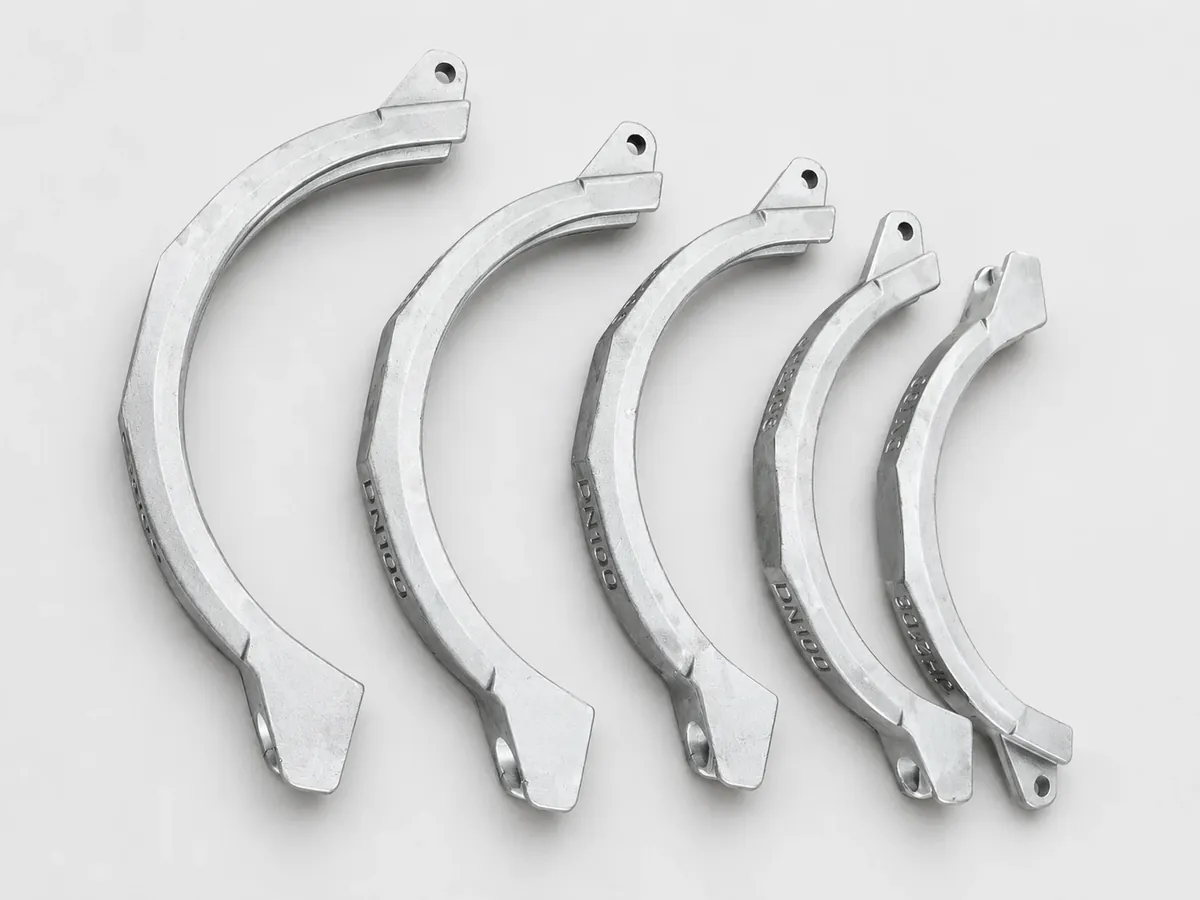
Thin Wall and Curved Components
Light sections and swept profiles
View specifications
Lifting and Connection Components
Eyes, links and load carrying connectors
View specifications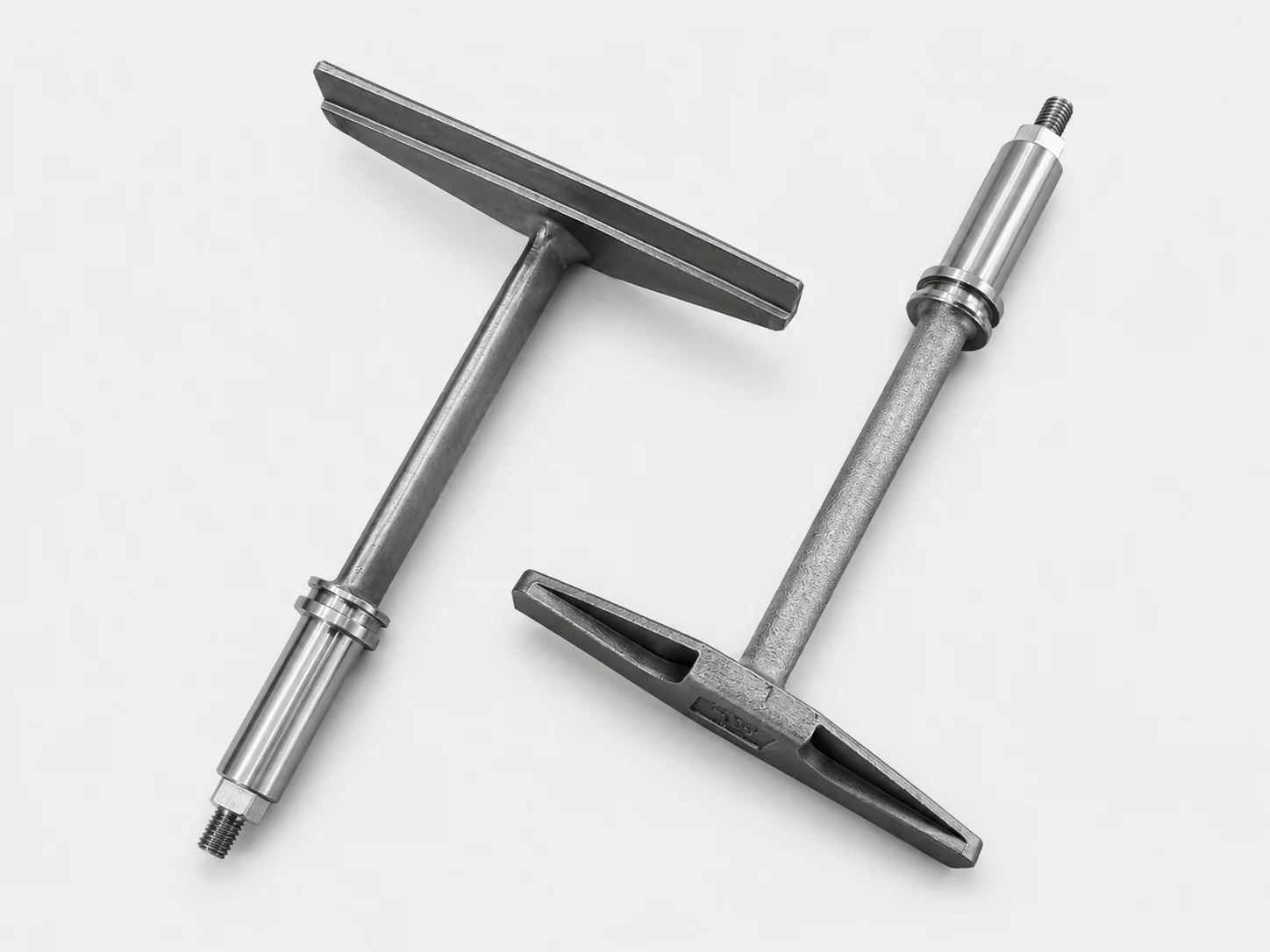
Shaft and Operating Components
Levers, spindles and actuating parts
View specifications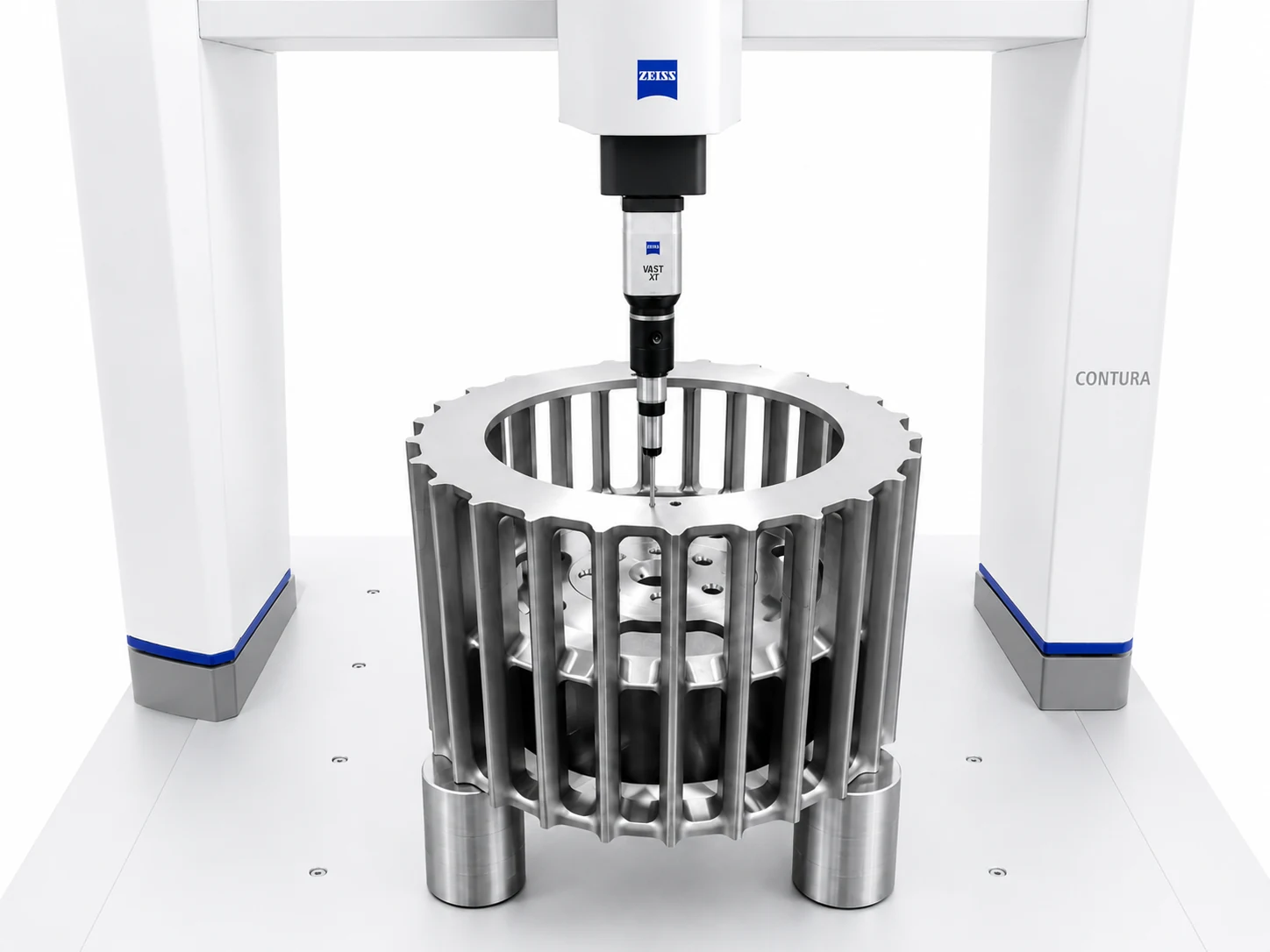
Inspection and Assembly Components
Parts qualified on the measuring machine
View specificationsComplex Curved Surface Parts — Frequently Asked Questions
Can you work from a 3D model?
Yes. 3D models support both pattern development and 3D scanning verification of complex surfaces and contours.
How are free form surfaces accepted?
3D scanning is used for complex surfaces and contours, and the reporting method is agreed during the drawing and standard review.
What do you need to prepare a quotation?
Drawings, material, quantity, quality standard and target delivery date.
Which inspection is included?
The inspection scope is agreed during drawing review. Carbon steel, low alloy steel, stainless steel and quenched and tempered grades.
Get A Quotation For Complex Curved Surface Parts
Send the drawing and the application. We will confirm the process route, the production base and the inspection scope before quoting.