
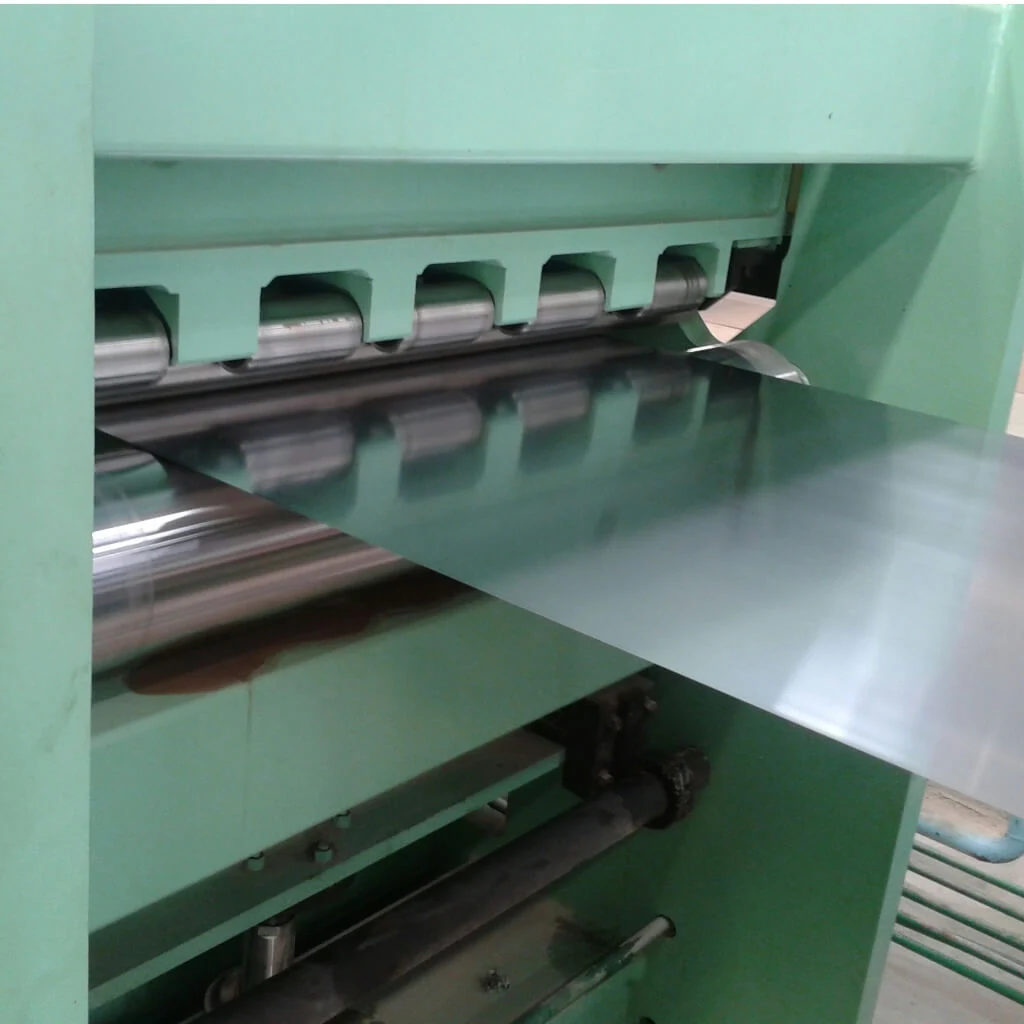
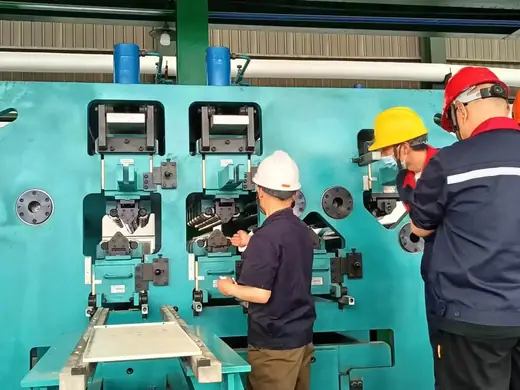
Tension Leveling Machine for Aluminum Plate and Strip
The machine stretches the plate with tension and continuous bending to improve its shape. Inlet and outlet tension rolls stabilise tension, the roll group raises it, and the straightening unit corrects the strip in two stages so residual deformation is distributed and then removed.
- Two tension rolls at inlet and outlet
- Tension amplified by the roll group
- Two rows of bending components with balancing rollers
- Two stage deformation and correction sequence
Key Benefits
What it fixes on aluminum plate.
Three Dimensional Defects Removed
Bilateral wave, unilateral wave, middle wave, two rib wave, warping, buckling and latent poor shape are all addressed.
Internal Stress Made Uniform
Alternating deformation in the first stage distributes residual deformation, which the second stage then corrects fully.
Better Mechanical Properties
Improving shape also improves the mechanical properties of the plate for forming operations downstream.
Where It Is Used
Applications.
- Aluminum plate and strip production
- Automotive body, door and roof component material
- Iron and steel plant leveling sections
- Plate preparation before forming and coating
Who It Is For
- Aluminum plate producers
- Automotive material suppliers
- Plants correcting shape problems from rolling
- Project teams adding leveling capacity
Problems It Solves
- Uneven longitudinal extension across the plate width
- Rolling stress disorder from poor roll shape or roll gap
- Shape defects appearing after cutting
- Formability problems in downstream operations
Technical Features
Machine arrangement.
Tension Stabilisation
Two tension rolls at inlet and outlet stabilise tension and reduce fluctuation before the bending section.
Straightening Unit
The unit carries two rows of bending components together with balancing rollers.
Two Stage Correction
Alternating deformation in stage one evenly distributes residual deformation, and stage two fully corrects it.
Specifications
Machine scope and configuration are agreed per project.
| Machine Type | Tension leveling machine for aluminum plate |
|---|---|
| Tension Rolls | 2 sets, inlet and outlet |
| Bending Rows | 2 rows with balancing rollers |
| Correction Stages | 2 |
| Defects Removed | Bilateral wave, unilateral wave, middle wave, two rib wave, warping, buckling |
| Typical Products | Plate for car bodies, doors, roofs and similar components |
Materials
- Welded and machined machine frame
- Alloy steel work and bending rolls
- Tension drive and hydraulic package
Manufacturing Process
Product Study
Alloy, thickness, width and incoming flatness set the configuration.
Frame Manufacturing
Frames are machined so roll centres stay true under bending load.
Roll Manufacture
Work, bending and balancing rolls are produced and ground as a set.
Assembly And Test
Roll parallelism, tension control and drive response are verified before shipment.
Quality Control
- Frame machining inspection
- Roll hardness and geometry verification
- Tension and hydraulic system testing
- Assembly alignment record
Customization Options
- Width and thickness range for your plate programme
- Roll configuration for the flatness target
- Automation and drive interface
- Installation into an existing line
Use Guide
- Set elongation based on measured incoming flatness
- Keep tension inside the specified band for the alloy
- Check balancing roller settings after product changes
- Inspect roll surfaces regularly, aluminum picks up easily
How It Compares
Leveling approaches for aluminum plate.
| Roller leveling without tension | Tension plus bending redistributes internal stress so the plate stays flat after cutting. |
|---|---|
| Single stage correction | Two stage correction distributes residual deformation before removing it, which holds the result. |
| Manual flattening | In line leveling removes the handling step and the damage that comes with it. |
Related Products
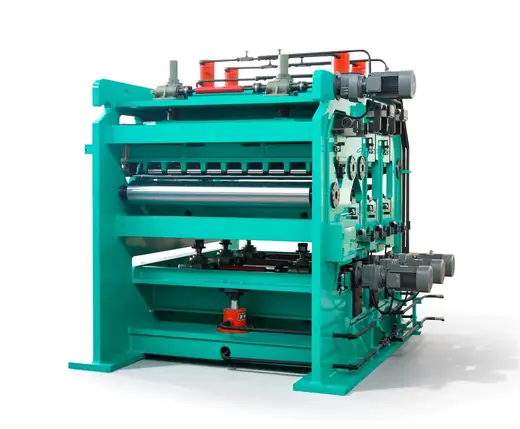
Tension Leveler for Aluminum Coil
Stress homogenising tension leveler for 0.2-4.0 mm aluminum strip at up to 500 m/min.
View Details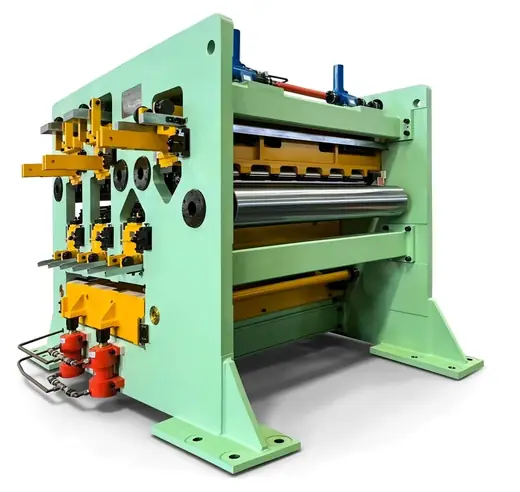
Levelling Machine for Galvanizing Lines
Two stage tension levelling machine removing three dimensional shape defects from carbon steel strip.
View Details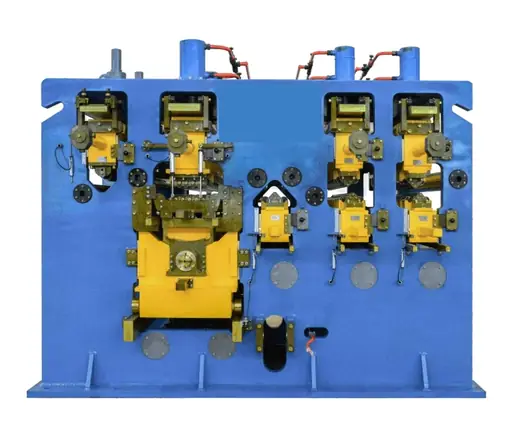
Leveling Machine for Color Coating Lines
Tension and bending leveler preparing carbon steel strip for the coating section.
View Details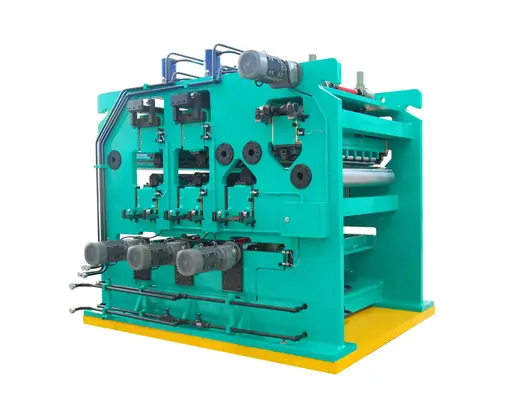
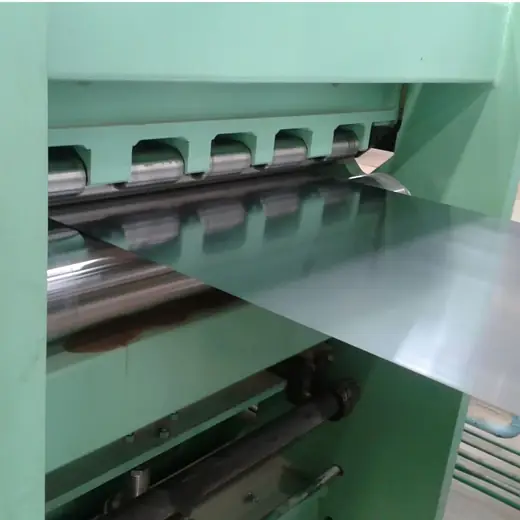
Tension Leveller With Two Bending and Two Levelling Stages
Two bending and two levelling stage leveller for carbon steel in galvanizing lines.
View DetailsRelated Project References
Tension Leveler For A 1550 mm Galvanizing Line
A tension leveler configuration for carbon steel strip on a 1550 mm galvanizing line, with the chrome plated roll set to keep it consistent.
Read More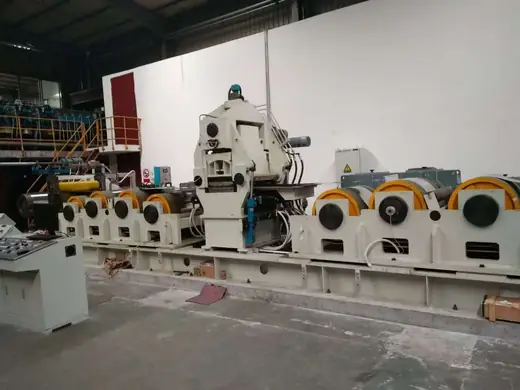
Leveler For An 850 mm Cut To Length Line
A compact leveler for a narrow cut to length line producing blanks for electrical parts and automotive components.
Read MoreRelated Technical Articles
Tension Leveler For Steel Coil Working Principle And Specifications
Double bending and double straightening, the three stage sequence inside the machine, and the specification envelope it works in.
Read More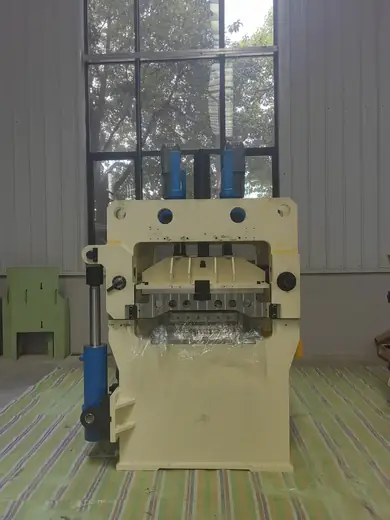
Maintaining A 23 Roll Tension Leveler For Aluminum Plate
Overload, roll wrapping and lubrication are the three operating mistakes that destroy work rolls on aluminum lines.
Read MoreTension Leveling Machine for Aluminum Plate FAQ
Which defects does the machine remove?
Bilateral wave, unilateral wave, middle wave, two rib wave, warping, buckling and latent poor plate shape.
How does the two stage process work?
In the first stage the plate undergoes alternating deformation so residual deformation is evenly distributed. The second stage corrects it fully, improving shape and mechanical properties.
Why do these defects appear in the first place?
During rolling, poor roll shape and roll gap shape cause uneven longitudinal extension across the width and disordered rolling stress.
Can it be installed in an existing line?
Yes. Send the line layout, available length, speed and tension data.
Do you supply the roll spares?
Yes, the complete roll set is produced here, so replacements match the original drawing.
What do you need for a quotation?
Alloy, thickness and width range, incoming and target flatness, line speed and whether this is new or a replacement.
Level Your Aluminum Plate In Line
Send your alloy and plate programme and our engineers come back with a configuration.