
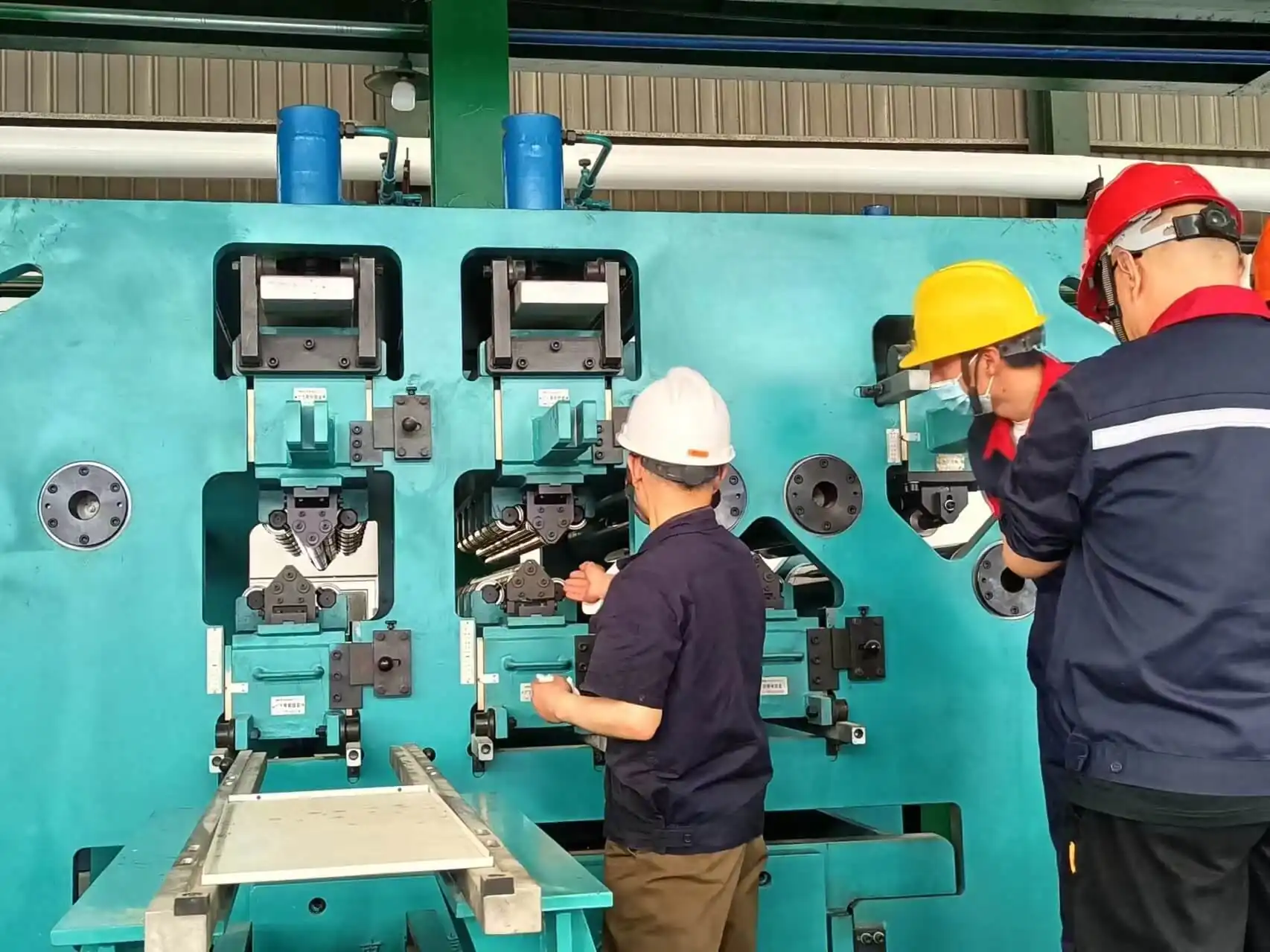
Tension Leveler For Steel Coil Working Principle And Specifications
Double bending and double straightening, the three stage sequence inside the machine, and the specification envelope it works in.
What The Machine Is For
A tension leveler, sometimes called a tension bending straightener, combines strip tension with repeated alternating bending. That combination eliminates complex three dimensional flatness defects, homogenises internal residual stress and improves both flatness and mechanical properties.
It is integrated into hot dip galvanizing, continuous annealing, colour coating and tinning lines, for carbon steel, stainless steel and titanium alloy strip.
Three Stages Inside One Machine
Tension stabilisation comes first. Inlet and outlet tension rolls build stable strip tension and minimise fluctuation, and the roll cluster amplifies that tension further.
Alternating bending deformation follows. Two groups of upper and lower bending assemblies generate repeated positive and negative bending, redistributing residual stress across the strip width to eliminate the local uneven longitudinal elongation that causes flatness defects.
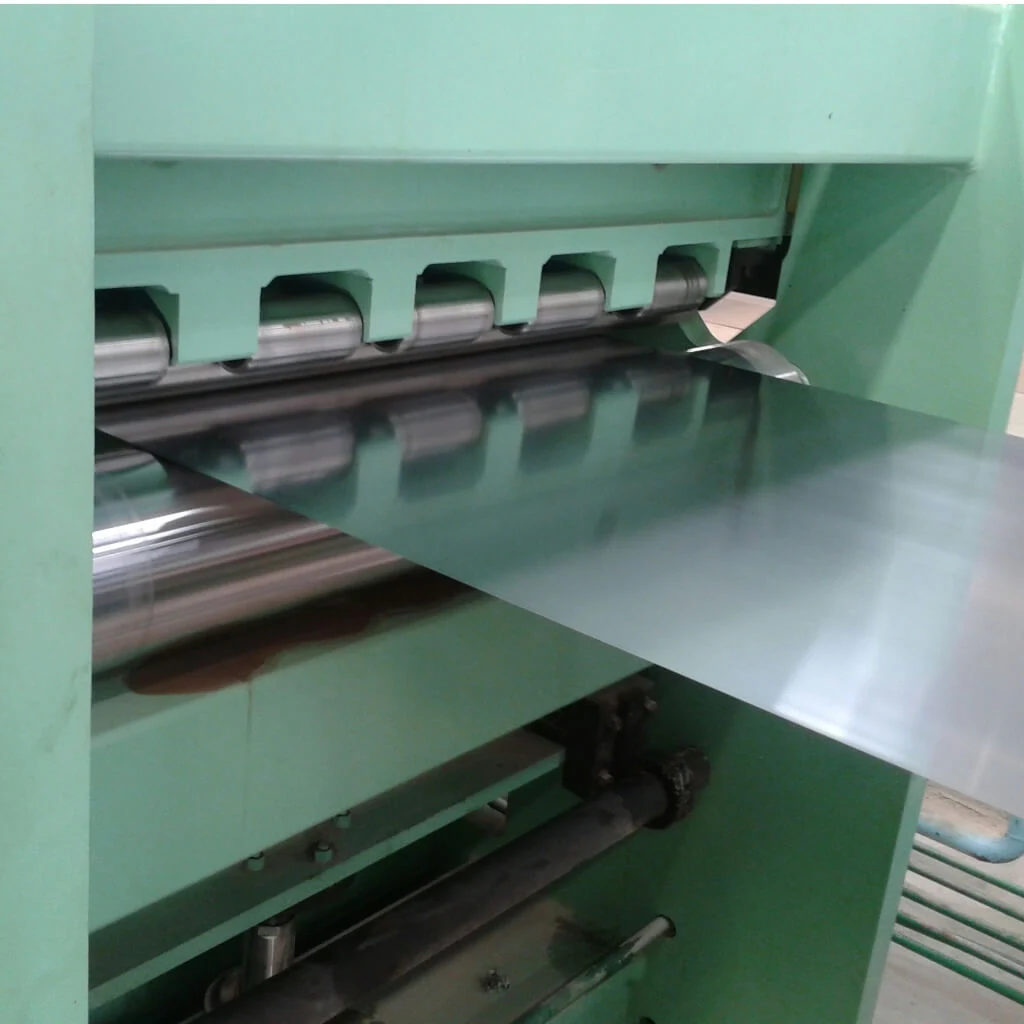
Final leveling correction completes the sequence. Follow up leveling roll sets calibrate the shape so the internal stress field becomes uniform and target flatness is stable.
The Defects It Removes
Unilateral wave, bilateral wave, centre wave, two edge rib wave, camber, buckling and latent shape imperfections all come from the same source: improper roll contour and roll gap deviation during the preceding rolling operation.
Those leave uneven width wise longitudinal extension and disordered rolling stress in the coil. Tension leveling is the process that fixes them before downstream operations inherit the problem.
Specification Envelope
The machine is built around a double bending and double straightening single drive mechanical architecture. Within that, the working envelope covers a wide range of steel coil work.
Optional accessories include a hydraulic roll changing device, which is worth specifying if your shutdown windows are short.
- Strip material: soft or semi soft carbon steel, cold rolled carbon steel, stainless steel, titanium
- Strip thickness 0.15-6.0 mm
- Strip width 650-1880 mm
- Strip running speed up to 750 m/min
- Incoming flatness 30-50 I, finished flatness 3-5 I
Products Mentioned In This Article
Tension Leveler for 1550 mm Galvanizing Lines
1550 mm galvanizing line tension leveler with two bending rows and balancing rollers.
View Details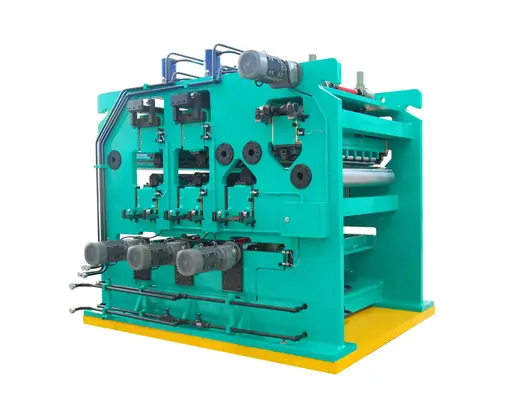
Tension Leveller With Two Bending and Two Levelling Stages
Two bending and two levelling stage leveller for carbon steel in galvanizing lines.
View Details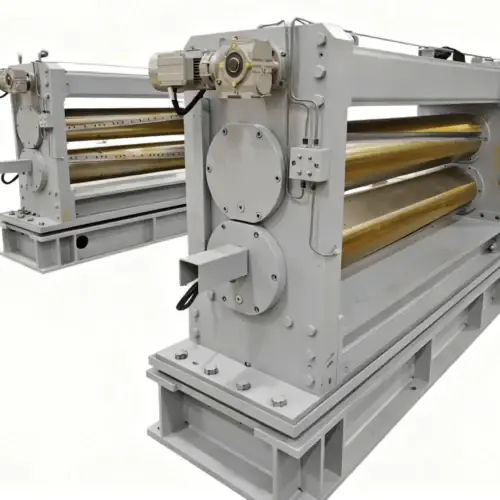
Tension Leveler Machine for 850 mm Cut to Length Lines
Compact leveler for narrow 850 mm cut to length lines with hydraulic servo roll control.
View Details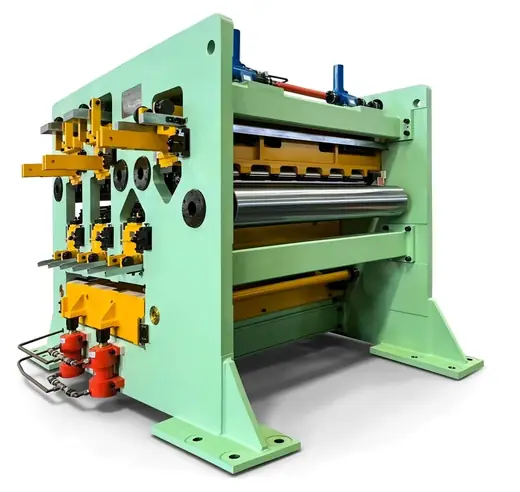
Levelling Machine for Galvanizing Lines
Two stage tension levelling machine removing three dimensional shape defects from carbon steel strip.
View DetailsReader Questions
What flatness can we expect?
Incoming strip flatness of 30 to 50 I is brought down to 3 to 5 I on the finished strip, within the stated thickness and width range.
How fast can the machine run?
Strip running speed up to 750 m/min in this configuration, with the roll set and drive sized accordingly.
Which materials can it handle?
Soft and semi soft carbon steel, cold rolled carbon steel, stainless steel and titanium, with settings adjusted per material.
Is a roll changing device worth it?
If your maintenance windows are short, yes. A hydraulic roll changing device is available as an optional accessory.
Specify A Leveler For Steel Coil
Send your coil programme and flatness target and we come back with a configuration.