
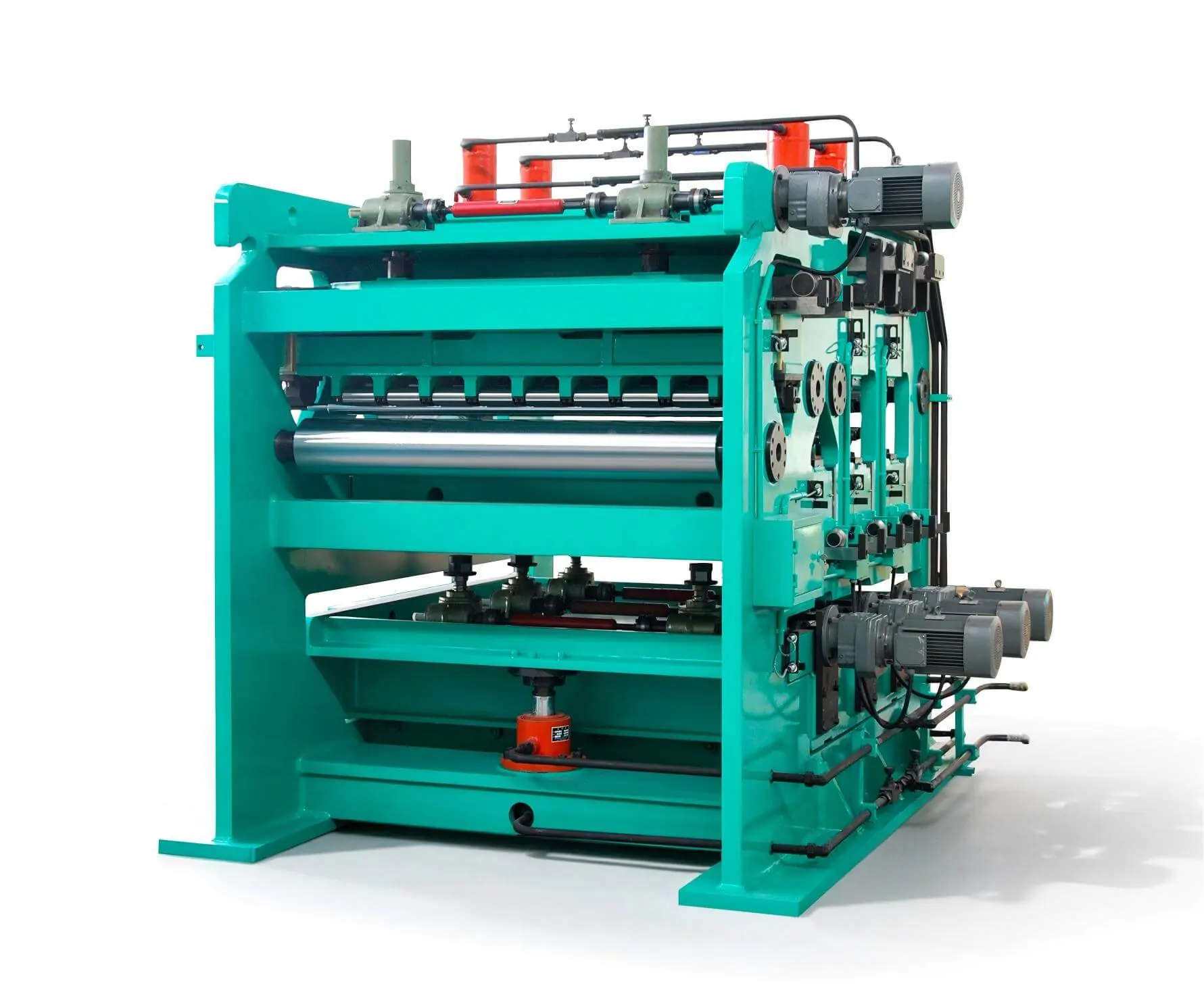
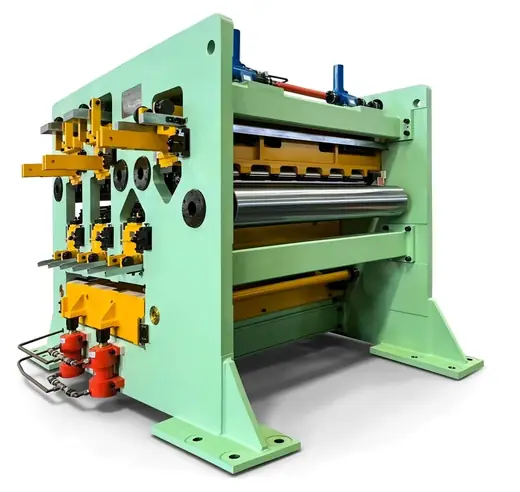
Tension Leveler for Aluminum Coil up to 2500 mm Wide
For wide aluminum strip a tension leveler is not just a flattening device, it is a stress homogenising process unit. Combined tension and repeated alternating bending redistribute residual stress so the finished coil holds 3-5 I flatness and behaves predictably in stamping, bending and coating.
- Strip thickness 0.2-4.0 mm
- Strip width 1250-2500 mm
- Incoming flatness 30-50 I improved to 3-5 I
- Maximum line speed 500 m/min
Key Benefits
What tension leveling does for an aluminum coil programme.
Flatness Held To 3-5 I
Incoming flatness of 30-50 I is brought down to 3-5 I, which is the band high grade aluminum sheet buyers specify.
Residual Stress Evened Out
Cyclic positive and negative bending offsets uneven longitudinal elongation across the strip width, which is the root cause of most shape defects.
Better Formability Downstream
A uniform internal stress field improves material formability for the stamping, bending and coating operations that follow.
Where It Is Used
Where the machine is installed.
- Aluminum strip tension leveling lines
- Continuous annealing lines for aluminum
- Feed preparation for rail transit and automotive sheet
- Building material and appliance sheet production
Who It Is For
- Aluminum rolling plants producing wide strip
- Processors supplying automotive and rail transit sheet
- Appliance and building material sheet producers
- Plants replacing a leveler that cannot hold flatness at full width
Problems It Solves
- Unilateral wave, bilateral wave and centre wave in wide coil
- Two edge rib wave, camber and buckling
- Latent shape defects that appear only after cutting
- Roll profile and roll gap deviation carried over from rolling
Technical Features
Three stages inside the machine.
Tension Stabilisation
Inlet and outlet tension rolls build stable strip tension and suppress fluctuation, and the intermediate roll cluster amplifies tension so the strip stays under constant tensile stress through the whole process.
Alternating Bending
Two groups of upper and lower bending assemblies apply cyclic positive and negative bending, distributing residual deformation evenly across the width.
Final Leveling Correction
Leveling roll units downstream perform the final calibration so the outgoing flatness is stable coil after coil.
Specifications
Scope of supply covers on board wiring terminating at the main machine junction box and hydraulic piping only, unless agreed otherwise.
| Strip Thickness | 0.2-4.0 mm |
|---|---|
| Strip Width | 1250-2500 mm |
| Incoming Flatness | 30-50 I |
| Finished Flatness | 3-5 I |
| Maximum Line Speed | 500 m/min |
| Bending Assemblies | Two groups, upper and lower |
| Electrical Scope | On board wiring terminating at main machine junction box |
| Hydraulic Scope | Hydraulic piping only |
Materials
- Welded and stress relieved machine frame
- Alloy steel work, intermediate and back up rolls
- Hydraulic bending cylinders and tension roll drives
Manufacturing Process
Process Design
Strip programme, incoming flatness and target flatness set the roll configuration and tension range.
Frame And Housing
Frames are welded, stress relieved and machined so roll centres hold position under bending load.
Roll Set Manufacturing
Work rolls, intermediate rolls and back up rolls are ground as a matched set.
Assembly And Commissioning Support
The machine is assembled and checked, and installation and commissioning guidance is provided on site.
Quality Control
- Frame machining inspection after stress relief
- Roll hardness, runout and profile records
- Hydraulic and tension system pressure test
- Roll gap parallelism check on assembly
Customization Options
- Width and thickness range to your coil programme
- Roll count and diameter for the flatness target
- Interface to your existing line drives and automation
- Scope split for electrical and hydraulic works
Use Guide
- Set elongation from the incoming flatness reading, not from a fixed recipe
- Keep tension inside the specified band, aluminum is sensitive to over tension
- Check bending cylinder response as part of planned maintenance
- Regrind work rolls before surface wear prints onto the strip
How It Compares
How this compares with other flatness routes for aluminum.
| Roller leveler without tension | Tension leveling redistributes residual stress instead of only bending the visible defect out, so the flatness survives cutting. |
|---|---|
| Stretch leveling | Continuous operation at up to 500 m/min suits coil to coil production lines rather than batch stretching. |
| Correcting shape at the rolling mill | A dedicated leveler handles incoming flatness of 30-50 I that the mill cannot remove economically. |
Related Products
Levelling Machine for Galvanizing Lines
Two stage tension levelling machine removing three dimensional shape defects from carbon steel strip.
View Details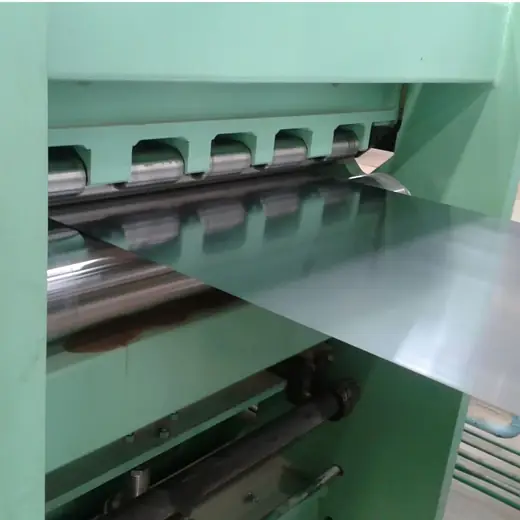
Tension Leveling Machine for Aluminum Plate
Two stage tension and bending machine removing three dimensional shape defects from aluminum plate.
View Details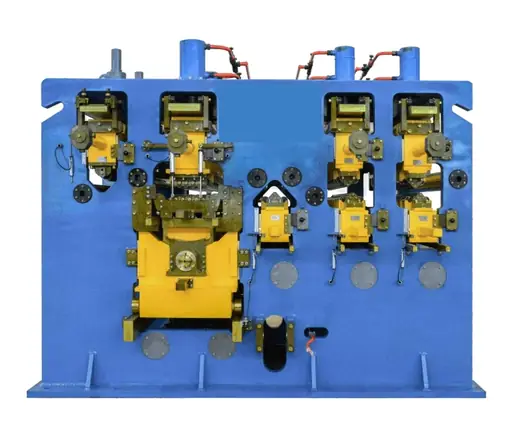
Leveling Machine for Color Coating Lines
Tension and bending leveler preparing carbon steel strip for the coating section.
View Details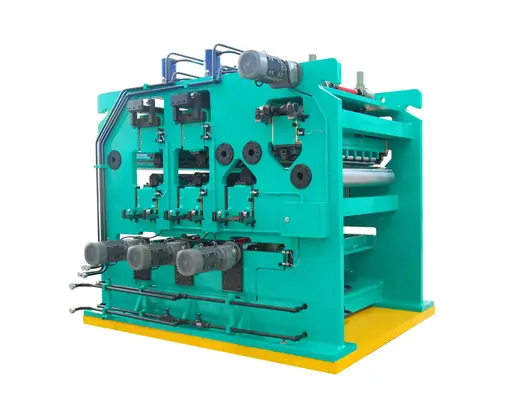
Tension Leveller With Two Bending and Two Levelling Stages
Two bending and two levelling stage leveller for carbon steel in galvanizing lines.
View DetailsRelated Project References
Tension Leveler For A 1550 mm Galvanizing Line
A tension leveler configuration for carbon steel strip on a 1550 mm galvanizing line, with the chrome plated roll set to keep it consistent.
Read More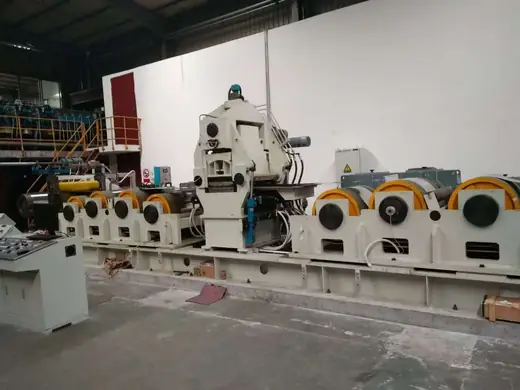
Leveler For An 850 mm Cut To Length Line
A compact leveler for a narrow cut to length line producing blanks for electrical parts and automotive components.
Read MoreRelated Technical Articles
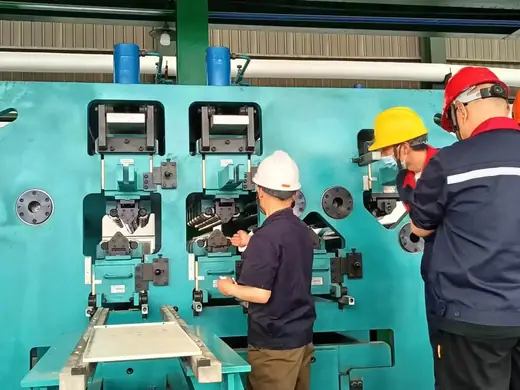
Tension Leveler For Steel Coil Working Principle And Specifications
Double bending and double straightening, the three stage sequence inside the machine, and the specification envelope it works in.
Read More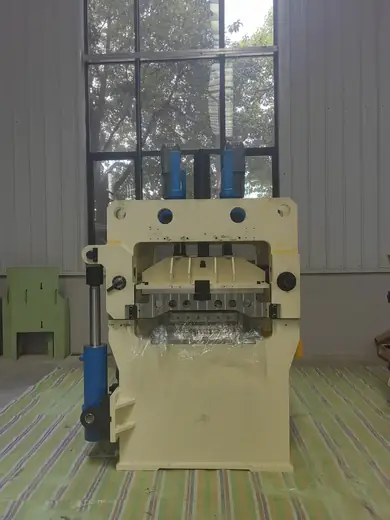
Maintaining A 23 Roll Tension Leveler For Aluminum Plate
Overload, roll wrapping and lubrication are the three operating mistakes that destroy work rolls on aluminum lines.
Read MoreTension Leveler for Aluminum Coil FAQ
What flatness improvement can we expect?
Incoming flatness of 30-50 I is typically brought down to 3-5 I on the finished strip, within the stated width and thickness range.
What strip sizes does it cover?
Thickness 0.2-4.0 mm and width 1250-2500 mm, at a maximum line speed of 500 m/min.
What is included in the electrical scope?
On board wiring that terminates at the main machine junction box, and hydraulic piping. Line level electrics and hydraulics power packs are agreed separately.
Can it be integrated into a continuous annealing line?
Yes, that is a standard installation. We need the line layout, available length, speed and tension data to confirm the configuration.
Do you supply the roll spares afterwards?
Yes. Work rolls, intermediate rolls, back up rolls and cassettes are produced in the same shop and match the original drawing.
What information is needed for a quotation?
Strip thickness and width range, alloy and temper, incoming and target flatness, line speed and whether this is a new line or a replacement.
Specify A Leveler For Your Aluminum Line
Send your alloy, gauge and width range with the flatness you need and our engineers come back with a configuration.