
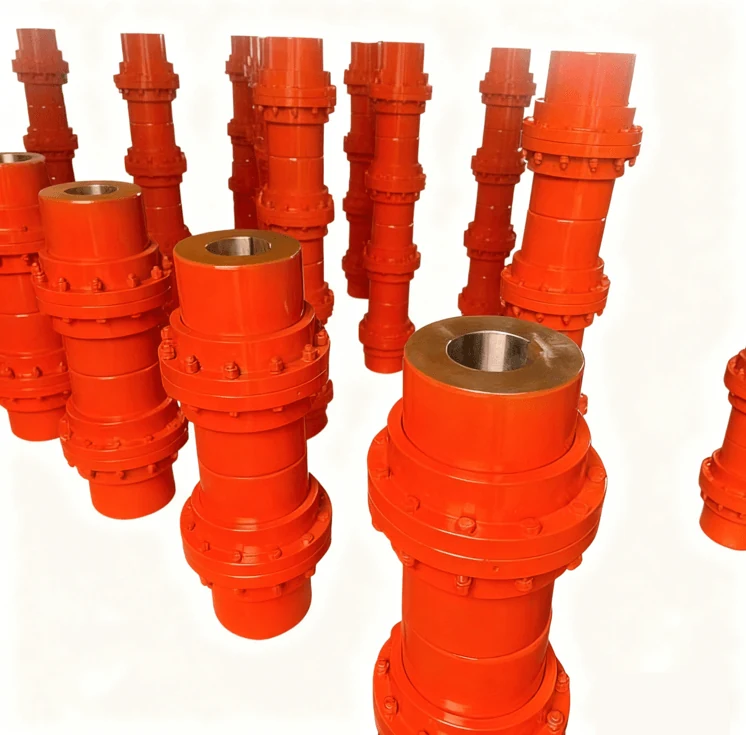
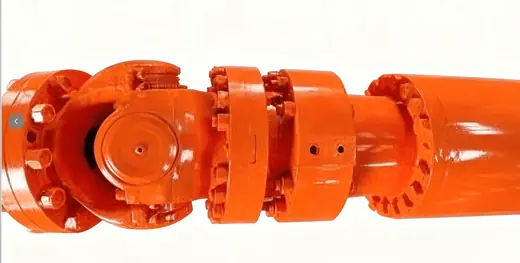
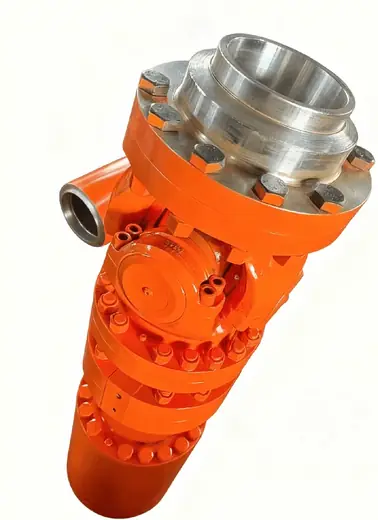
Heavy Duty Universal Joints for Metallurgical Drive Trains
In a metallurgical plant the drive train runs under extreme load, high temperature and continuous duty, and a single joint failure takes the line down. These joints are built to survive that environment rather than to meet a general industrial specification.
- High strength steel in the 850 MPa class
- Precision ground surfaces around 0.2 micron
- Geometric accuracy in the 0.005 mm class
- For continuous casters, rolling mills and heavy duty conveyors
Key Benefits
What reliability is worth on a mill drive.
Unplanned Downtime Avoided
The joint is a pivotal link in the drivetrain, and its failure means production loss and repair cost far beyond the component price.
Built For Punishing Conditions
Materials and surface finish are selected for extreme loads, high temperatures and continuous operation.
Precision That Lasts
Ground surfaces in the 0.2 micron class and 0.005 mm geometric accuracy keep the joint running smoothly through its service life.
Where It Is Used
Where they are installed.
- Continuous casting machine drives
- Rolling mill main and auxiliary drives
- Heavy duty conveyor drives
- High load drive trains in metallurgical plants
Who It Is For
- Steel plants with critical drive positions
- Maintenance teams holding strategic spares
- Rebuild shops overhauling mill drives
- Buyers qualifying a supplier for heavy joints
Problems It Solves
- Catastrophic production loss from a drive failure
- Joint wear under high temperature and shock
- Exorbitant repair costs after an unplanned stop
- Poor surface finish causing rapid wear in replacement joints
Technical Features
Manufacturing specification.
High Strength Steel
Material in the 850 MPa class carries the torque that continuous casters and rolling mills produce.
Precision Ground Surfaces
Surface finish around 0.2 micron with geometric accuracy in the 0.005 mm class reduces wear at the contact faces.
Controlled Coating Thickness
Surface treatment thickness is held in the 0.08-0.25 mm band where coatings are applied.
Specifications
Interfaces follow the drive. Manufacturing data is listed below.
| Material Strength Class | 850 MPa class high strength steel |
|---|---|
| Surface Finish | Around 0.2 micron |
| Geometric Accuracy | 0.005 mm class |
| Coating Thickness | 0.08-0.25 mm where applied |
| Applications | Continuous casters, rolling mills, heavy duty conveyors |
| Operating Environment | Extreme loads, high temperature, continuous operation |
Materials
- High strength forged steel
- Hardened and ground contact surfaces
- Sealed high temperature grease package
Manufacturing Process
Duty Assessment
Torque, speed, angle, temperature and duty cycle at the position are reviewed.
Forging And Rough Machining
Bodies are forged and rough machined before heat treatment.
Heat Treatment
Strength and surface hardness are developed to the specified class.
Precision Grinding And Assembly
Surfaces are ground to 0.2 micron class finish and the joint is assembled and sealed.
Quality Control
- Material certificate for the steel grade
- Hardness and strength verification
- Surface finish and geometric inspection
- Assembly and seal integrity check
Customization Options
- Interface dimensions to your drive
- Sealing for high temperature areas
- Length and stroke to the installed position
- Strategic spare packages for critical drives
Use Guide
- Hold a spare for each critical drive position
- Re grease with high temperature grease at the specified interval
- Inspect for play and seal condition during shutdowns
- Record temperature at the joint if failures repeat
How It Compares
Against general purpose joints.
| General industrial universal joints | Material class, surface finish and sealing are specified for metallurgical conditions rather than general machinery. |
|---|---|
| Repairing a worn joint | A new joint restores geometric accuracy in the 0.005 mm class, which a field repair cannot. |
| Running to failure | Planned replacement avoids the production loss and repair cost a drive failure creates. |
Related Products
Ball Cage CV Universal Joints for Heavy Industry
Fixed and plunging ball cage CV joints from 380 N·m to 1,000,000 N·m, working angles to 75 degrees.
View Details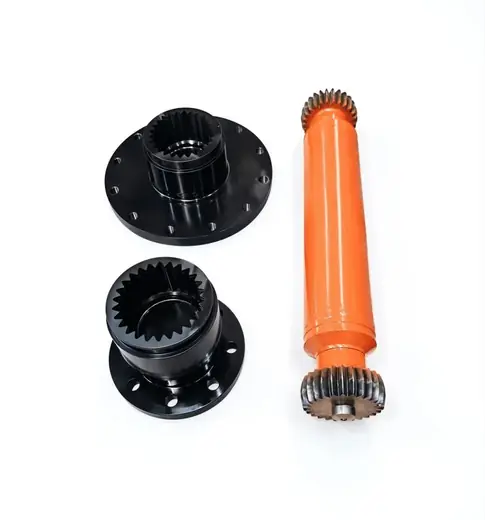
Drum Type Spline Couplings
Crowned tooth spline couplings carrying 15-20 percent more torque than straight tooth designs.
View Details
Ball Cage CV Joints for Metallurgical Drives
BJ, DOJ and BC series six ball CV joints with IT4 grade raceways for metallurgical drive lines.
View Details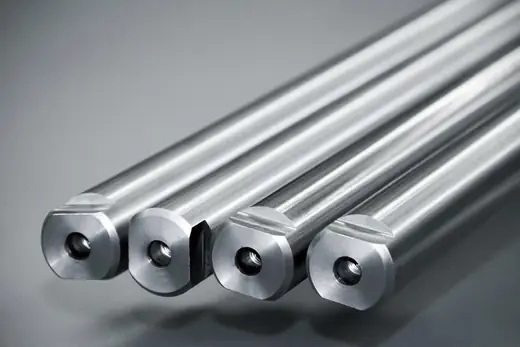
BJ150 Coupling for the Metallurgical Industry
High torque BJ150 coupling in alloy steel with precision ground bearings and advanced sealing.
View DetailsHeavy Duty Universal Joints FAQ
What conditions are these joints designed for?
Extreme loads, high temperatures and continuous operation, in applications from continuous casters and rolling mills to heavy duty conveyors.
What material do you use?
High strength steel in the 850 MPa class, with hardened and precision ground contact surfaces.
How precise are the surfaces?
Surface finish around 0.2 micron with geometric accuracy in the 0.005 mm class.
Can you make them to our existing dimensions?
Yes. Send the interface drawing or the joint you are replacing and we produce to match.
Do you supply seals and repair kits?
Yes, for the joints we manufacture, so a shutdown replacement does not always need a complete joint.
What is needed to quote?
Torque, speed, working angle, installed length, operating temperature and quantity.
Protect Your Critical Drives
Send the drive data for your critical positions and we quote joints and spare packages.