
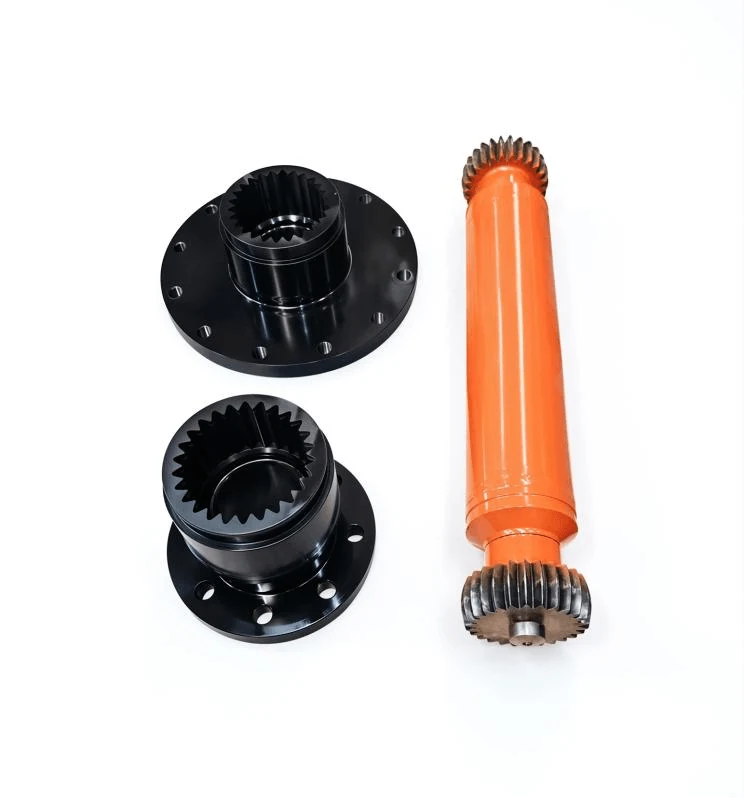

Drum Type Spline Couplings for Metallurgy and Mining Drives
A drum type spline coupling transmits high torque between shafts that move relative to each other. The crowned tooth profile lets the coupling take angular displacement that a straight tooth coupling cannot, which is why it is used on rolling mills and feeding machinery where shock loads and misalignment are constant.
- Transmits 15-20 percent more torque than straight tooth couplings
- Angular displacement up to 6 degrees maximum
- 1 to 1.5 degrees recommended for normal running
- High strength alloy steel with precision ground gear profiles
Key Benefits
What the drum shaped tooth gives you.
More Torque In The Same Envelope
Under identical working conditions torque capacity is 15 to 20 percent higher than an old straight tooth coupling of the same size, so an upgrade does not need new housings.
Misalignment Taken By The Coupling
Radial, axial and angular displacement from thermal expansion, foundation settling and operating loads is absorbed in the teeth instead of loading the bearings.
Built For Dust And Heat
Materials and sealing are selected for shock loads, elevated ambient temperature and abrasive dust laden air.
Where It Is Used
Where these couplings work.
- Rolling mill main and auxiliary drives
- Feeding machinery in metallurgical plants
- Mining conveyors and crushing equipment
- Heavy machinery drive lines with shock loading
Who It Is For
- Mill maintenance teams replacing straight tooth couplings
- Mining operations with high shock drive trains
- OEMs specifying couplings for new heavy equipment
- Plants standardising spare coupling stock across several drives
Problems It Solves
- Tooth wear and fatigue in straight tooth couplings at angle
- Bearing damage caused by misalignment passed through a rigid coupling
- Torque limits reached after a line speed or load increase
- Seal failure and contamination in dusty plants
Technical Features
Design points that matter when you select one.
Crowned Tooth Profile
The drum shaped tooth allows up to 6 degrees of angular displacement against a 1 degree limit on straight tooth couplings, a 50 percent increase over the normal working recommendation.
Precision Ground Gears
Ground gear profiles spread the load across more teeth, which is where the 15 to 20 percent torque gain comes from.
Advanced Sealing
Sealing keeps grease in and abrasive dust out, which is the usual failure path for couplings in mining and rolling plants.
Specifications
Size is selected from transmitted torque, shaft diameters and the angular displacement expected in service.
| Torque Capacity | 15-20 percent above equivalent straight tooth couplings |
|---|---|
| Maximum Angular Displacement | 6 degrees |
| Recommended Working Angle | 1 to 1.5 degrees |
| Material | High strength alloy steel |
| Tooth Finish | Precision ground gear profile |
| Typical Sectors | Rolling mills, feeding machinery, mining |
Materials
- High strength alloy steel hubs and sleeves
- Case hardened and ground tooth flanks
- Grease retaining seal package
Manufacturing Process
Torque Check
Rated and peak torque, speed and shock factor are reviewed before the size is fixed.
Machining
Hubs and sleeves are turned and the bore and keyway cut to your shaft data.
Gear Cutting And Grinding
Crowned teeth are cut then ground so the contact pattern is even across the tooth face.
Assembly
The coupling is greased, sealed and match marked as a set.
Quality Control
- Material certificate for the alloy steel
- Hardness testing on tooth flanks
- Contact pattern check on the assembled coupling
- Bore, keyway and runout inspection before packing
Customization Options
- Bore and keyway to your shaft drawing
- Size selected for your torque and shock factor
- Seal specification for dusty or hot installations
- Match marked sets for planned shutdown replacement
Use Guide
- Keep the running angle between 1 and 1.5 degrees where possible
- Re grease at the plant interval, more often in dusty areas
- Inspect the seals whenever the drive is opened
- Replace hub and sleeve as a matched pair, not individually
How It Compares
Against the couplings it usually replaces.
| Straight tooth gear couplings | 15 to 20 percent more torque in the same size and up to 6 degrees of angular displacement instead of 1 degree. |
|---|---|
| Rigid flange couplings | Absorbs thermal and settling movement that a rigid coupling would push into the bearings. |
| Elastomer couplings | Handles far higher torque and heat, which elastomer elements cannot sustain in a rolling mill drive. |
Related Products
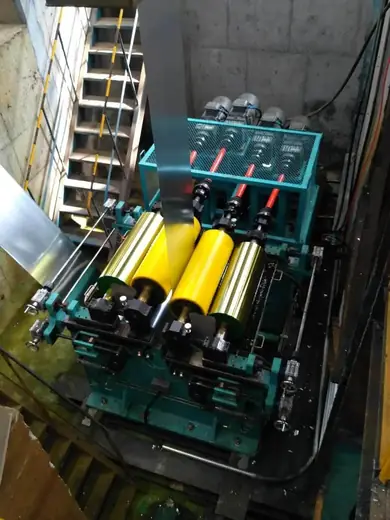
Ball Cage CV Universal Joints for Heavy Industry
Fixed and plunging ball cage CV joints from 380 N·m to 1,000,000 N·m, working angles to 75 degrees.
View Details
Ball Cage CV Joints for Metallurgical Drives
BJ, DOJ and BC series six ball CV joints with IT4 grade raceways for metallurgical drive lines.
View Details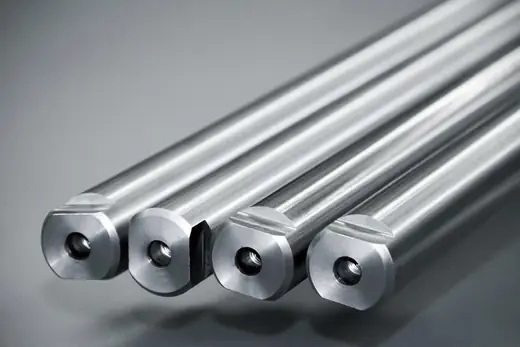
BJ150 Coupling for the Metallurgical Industry
High torque BJ150 coupling in alloy steel with precision ground bearings and advanced sealing.
View Details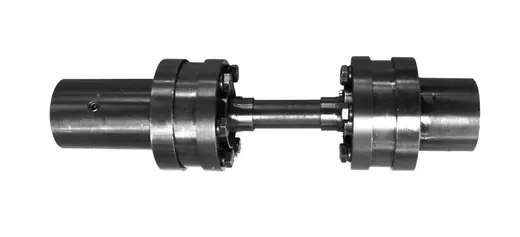
Driveshaft Universal Joint
Cardan type driveshaft joints for continuous casting, hot and cold rolling drive systems.
View DetailsDrum Type Spline Couplings FAQ
How much more torque than our current coupling?
Under identical working conditions a drum type spline coupling transmits 15 to 20 percent more torque than an old straight tooth coupling of the same size.
What angular displacement is safe?
The maximum is 6 degrees. For normal continuous operation we recommend 1 to 1.5 degrees, which is already a 50 percent increase over the 1 degree limit of straight tooth couplings.
Can you machine the bore to our shaft?
Yes. Send the shaft diameter, keyway and fit requirement and we finish the bore before shipment.
What material do you use?
High strength alloy steel with precision ground gear profiles and a sealing package suited to dusty plants.
Do you supply seals as spares?
Yes. Seal kits for the couplings we manufacture can be stocked at your plant so a shutdown replacement does not need a new coupling.
What do you need for a quotation?
Transmitted torque and speed, shaft diameters and keyways, the working angle and the ambient conditions at the drive.
Size A Coupling For Your Drive
Send torque, speed, shaft dimensions and working angle and we come back with a size and a quotation.