
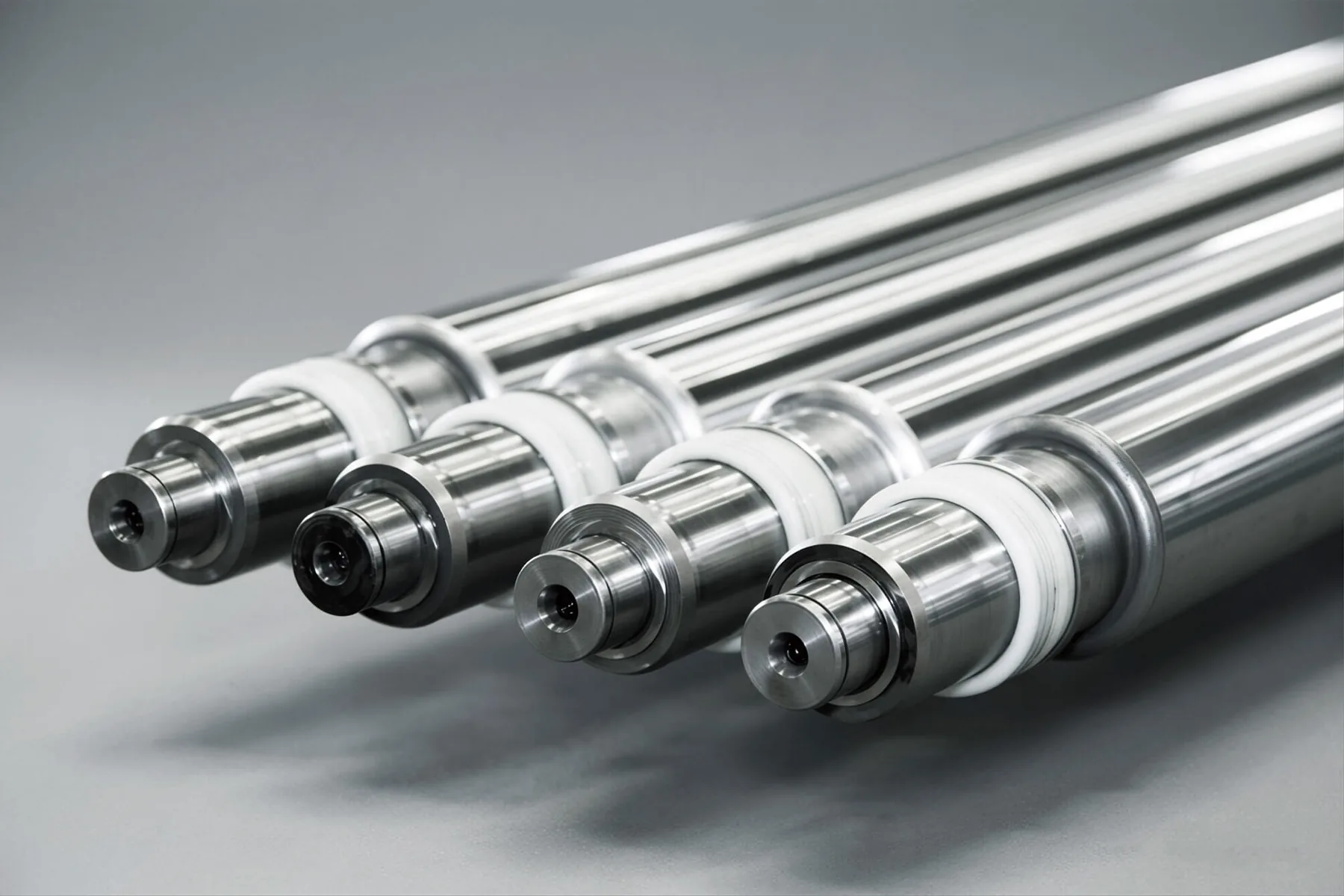
The Role Of Leveling Line Rolls In Finished Strip Qualification Rate
Roll deflection, hardness and bending adjustment are the three levers that decide how much of your output passes inspection.
Support Is The Foundation
In high load, long cycle metal processing, roll deflection, structural deformation and uneven stress distribution are the main causes of unqualified strip. Everything else is downstream of those three.
Leveling line rolls are designed to support functional rolls and intermediate rolls, restraining bending and deformation under continuous tension processing. Structural stability keeps the line running consistently, which removes the baseline quality defects caused by roll system instability.
Hardness And Its Distribution
Mechanical properties translate directly into processing accuracy. Our leveling line rolls carry a surface quenched hardness of HRC 63 to 65 with a deep hardened layer of 3 to 5 mm, and hardness is distributed uniformly across the roll surface rather than concentrated in a band.
Roll neck and barrel are optimised for strength and impact toughness together, giving wear resistance, anti peeling performance and anti overload capacity. That combination prevents surface damage and dimensional deviation during high speed, large scale production.
- Surface quenched hardness HRC 63-65
- Hardened layer depth 3-5 mm
- Uniform hardness distribution across the barrel
- Neck and barrel optimised for strength and impact toughness
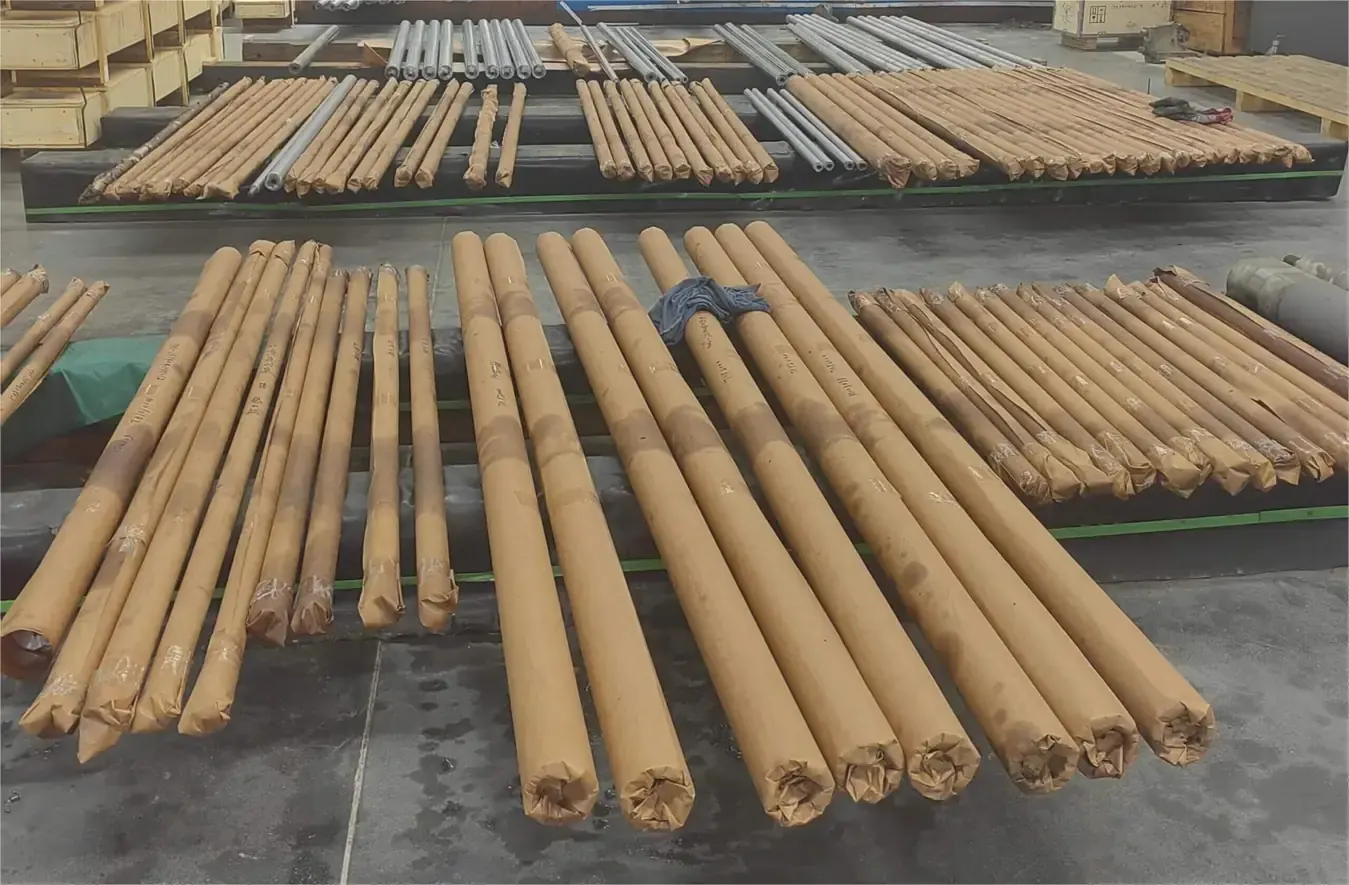
Bending Adjustment Is The Third Lever
Rolls work with positive and negative bending adjustment, which lets the operator fine tune thickness uniformity and overall flatness from the desk rather than through a roll change.
That capability only exists if the rolls themselves can take it. A roll without the toughness for repeated bending adjustment limits what the control system can do, no matter how good the automation is.
Where The Qualification Rate Comes From
Consistent flatness and surface finish on every coil is what raises the overall qualification rate of finished products. That is the sum of stable support, uniform hardness and usable bending range.
Treating the roll as a commodity consumable and buying on price alone removes at least one of those three, usually the one you cannot see until the coil is inspected.
Products Mentioned In This Article
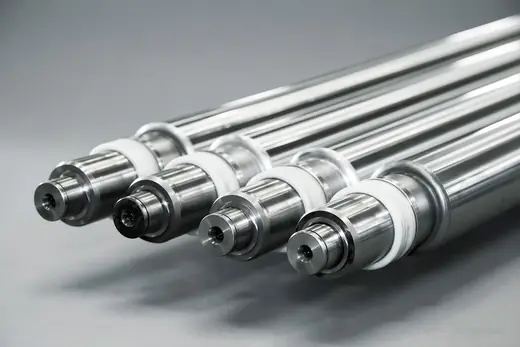
Precision Leveling Line Rolls
Leveling line rolls with uniform high hardness and a deep integral hardened layer.
View Details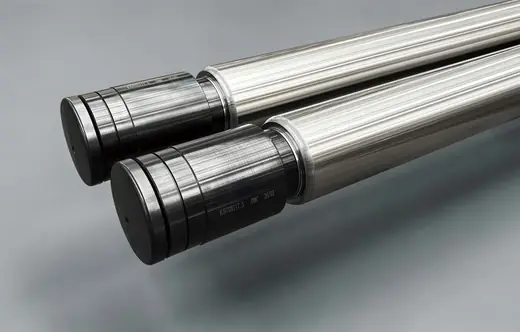
Leveller Rolls for Leveling Lines
Support rolls in stainless or carbon steel preventing work roll deflection on leveling lines.
View Details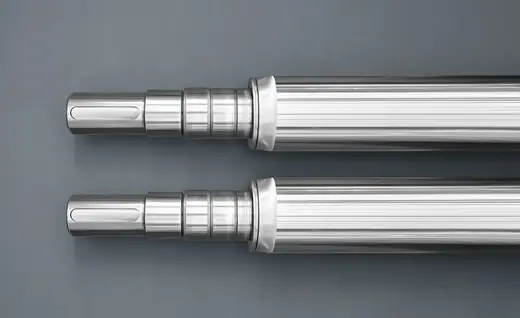
High Precision Straightening Rolls
Precision ground alloy steel straightening rolls for longer runs between roll changes.
View Details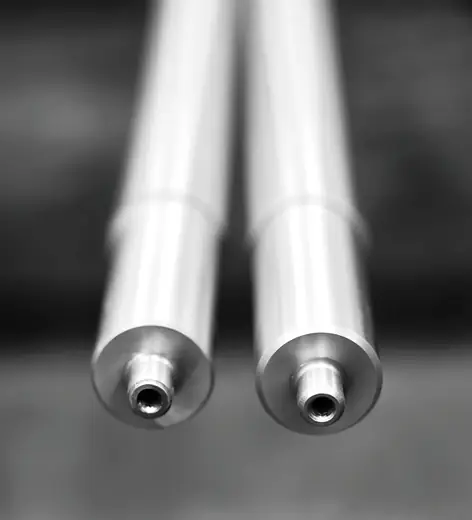
Work Roll With High Wear Resistance
Premium alloy steel work rolls, precision ground for long campaigns and consistent strip quality.
View DetailsReader Questions
What hardness should leveling rolls have?
Surface quenched hardness of HRC 63 to 65 with a hardened layer 3 to 5 mm deep, distributed uniformly across the roll surface.
Why does hardness uniformity matter?
Uneven hardness wears into a band along the barrel. That changes the roll gap geometry and the defect appears on the strip.
What is anti overload capacity?
The ability of the roll to survive shock events such as a strip jam without spalling or bending. Neck and barrel toughness is what provides it.
How does bending adjustment help?
Positive and negative bending lets the operator correct thickness uniformity and flatness without a roll change, but only if the rolls can take the bending range.
Raise Your Qualification Rate
Send your roll drawing and current defect pattern and our engineers propose a roll specification.