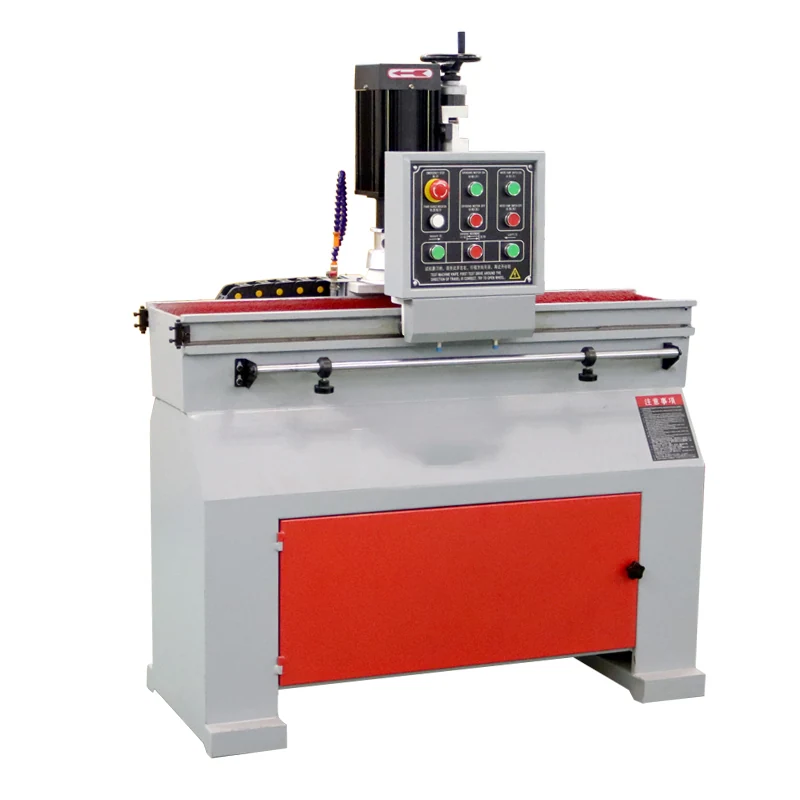
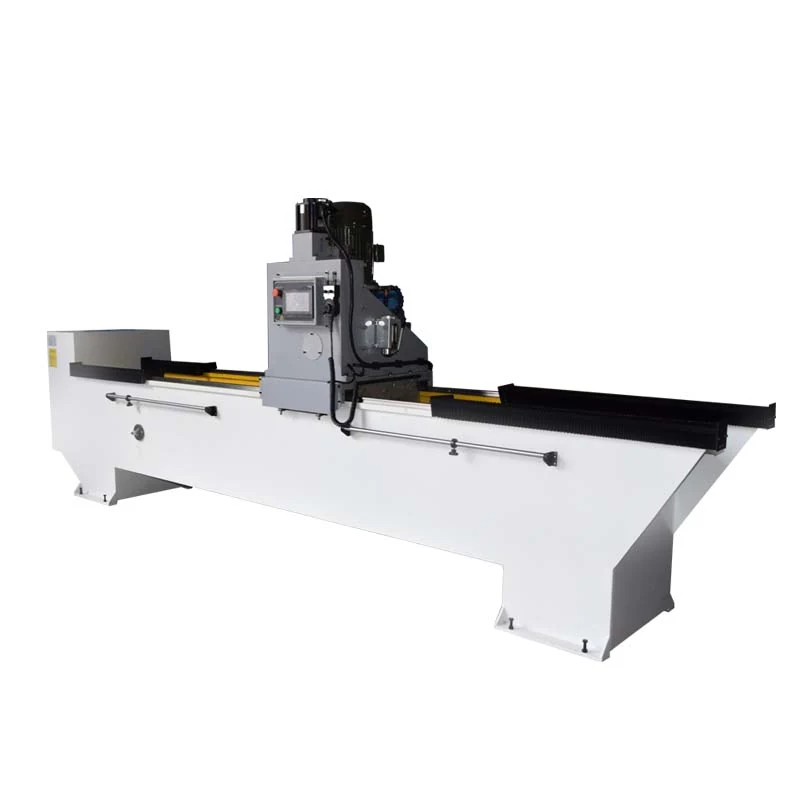
A long straight knife is thin, hard and has an enormous surface to lose heat from and almost none where it matters. Overheat the edge and the temper goes, which no amount of further grinding recovers.
Hold the Blade Without Bending It
Mechanical clamps concentrate force at points and bow a thin blade, so you grind a curve into a blade that was straight. A magnetic table supporting the blade along its full length, 180 x 2000 mm on the WK2000, holds it flat without introducing the shape you are trying to remove.
Set the Head Angle From the Drawing
Head adjustment on the WK2000 runs from minus 90 to plus 90 degrees and on the WK700 from 0 to 90 degrees. Set it from the blade specification, not from the worn edge, so repeated regrinds do not slowly walk the geometry away from where it started.
Traverse Speed Controls Heat Input
Both machines traverse the head from 1 to 20 metres per minute. Slower passes on harder blade steels give the grinding zone less time to build heat per unit length, and coolant more chance to remove it. Faster passes suit softer material and light stock removal.
- Hard blade steel: slower traverse, lighter passes, generous coolant
- Soft blade steel: faster traverse, watch for loading of the wheel
- Heavy stock removal: multiple light passes rather than one deep cut
Multiple Light Passes Beat One Heavy Cut
The temptation on a badly worn blade is to take the damage out in one pass. That puts all the heat into the edge at once. Several light passes take the same amount of material off and leave the temper intact.
Check Straightness Along the Full Length
Measure the edge at several points along the blade after the first pass, not just at the middle. A blade that is straight at the centre and low at the ends has usually been lifted at one point on the table, and catching that early saves the whole blade.
Deburr Before the Blade Goes Back
Grinding raises a burr on the back of the edge. Left in place it breaks off unevenly during the first cuts and takes edge material with it. A light deburr before refitting the blade is the last step and it is worth the two minutes.