
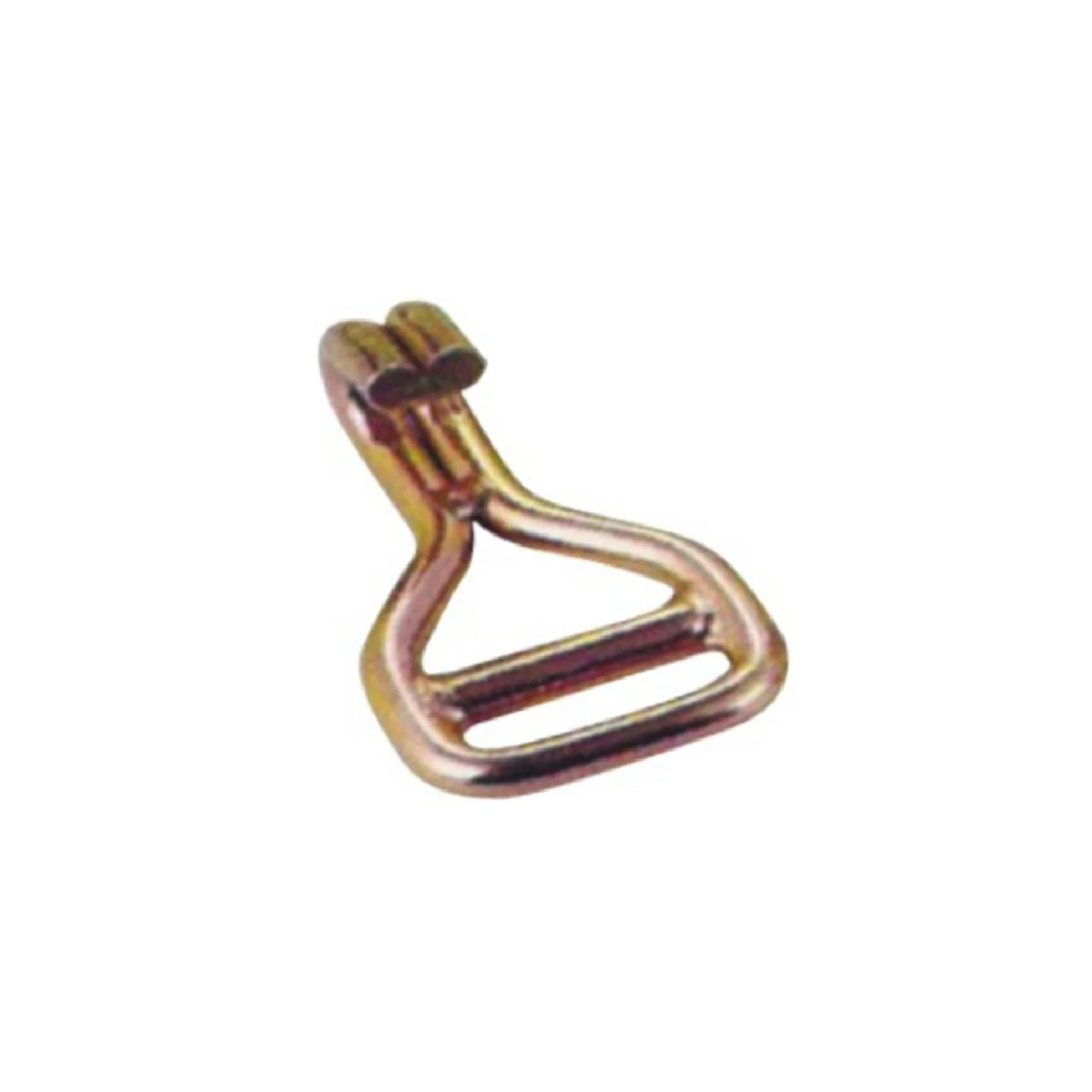
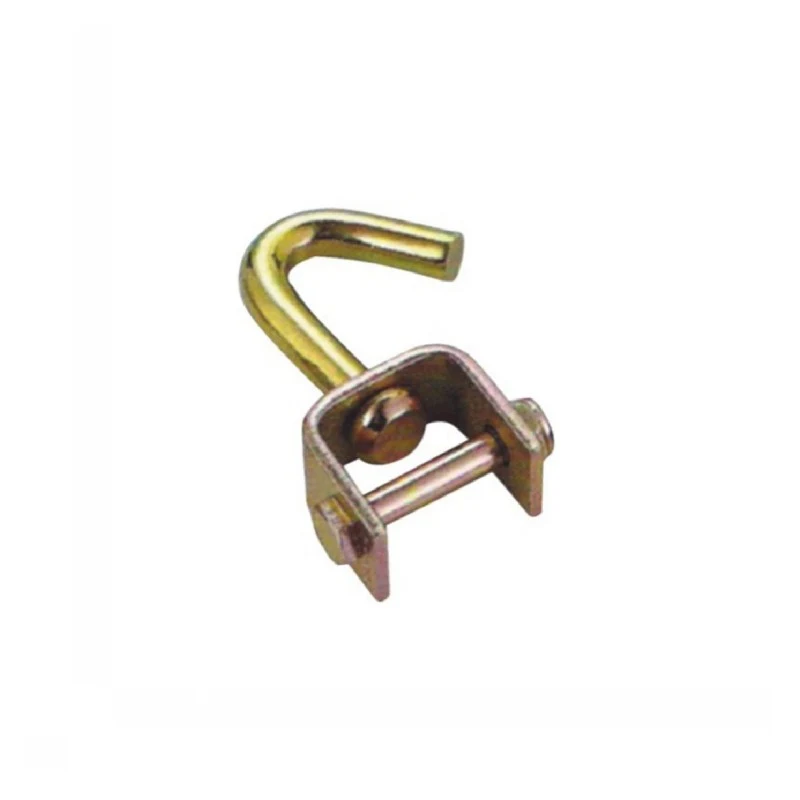
WELDED J HOOK
A welded J hook made from carbon steel with a straight shank and a single hook end, designed for use in ratchet tie-down systems and winch straps. Available in 1.5 inch and 2 inch sizes with a working load limit of 3000 kg / 6600 lbs and 5000 kg / 11000 lbs respectively. The hook is manufactured to BS standards and features a welded construction for strength and rigidity in heavy-duty securing applications.
- Size
- 2"WELDED J HOOK BS:5000KG/11000LBS 1.5"WELDED HOOK BS:3000KG/6600LBS
- Catalogue Family
- Tie Down Hardware
- Certificates
- EN 10204 3.1 material test certificate on request
CAD files are supplied on request via WhatsApp or email rather than published for open download.
What Welded J Hook Gives You
- Welded construction provides a strong, rigid connection between shank and hook for consistent load transfer
- Straight shank design allows for secure attachment to ratchet straps and winch cables without twisting
- Single hook end grips the load or anchor point firmly under tension
- Available in 1.5 inch and 2 inch sizes to match common ratchet strap and winch hardware
- Rated to BS standards with clear working load limit markings for traceability
- Cost-effective alternative to forged hooks for non-critical or high-volume tie-down use
- Compatible with standard ratchet tie-down systems and winch straps
Where Welded J Hook Is Used
- Securing heavy machinery and industrial equipment on flatbed trailers during transport
- Tying down steel coils, pipes, and construction materials on trucks and railcars
- Mounting on ratchet straps for temporary or semi-permanent load restraint in logistics
- Using in winch systems for off-road recovery where a secure anchor point is needed
- Supporting load anchoring in construction and infrastructure projects with fixed tie-down points
Buyers This Product Is Built For
- Logistics and freight operators specifying tie-down hardware for commercial transport
- Truck and trailer fleet managers sourcing reliable, low-cost hook hardware
- Construction site supervisors requiring durable anchoring points for rigging
- Manufacturers building ratchet tie-down kits for resale or OEM use
- Industrial maintenance teams needing replacement hooks for existing systems
Problems This Product Removes
- Replacing a forged hook with a lower-cost welded alternative without sacrificing basic load capacity
- Eliminating the need to source separate hook and shank components when a single welded unit is sufficient
- Providing a consistent, factory-welded hook that avoids loose or misaligned joints
- Offering a standardised hook size that matches common ratchet strap and winch hardware
- Reducing procurement complexity by supplying a single item that replaces a two-part assembly
- Avoiding over-engineering for applications where a forged hook is not required
Technical Features
- Welded construction with a straight shank and single J hook end
- Made from carbon steel with a welded joint for structural integrity
- Available in 1.5 inch and 2 inch sizes with working load limits of 3000 kg / 6600 lbs and 5000 kg / 11000 lbs
- Rated to BS standards for load capacity and marking
- Working load limit stamped on the hook body for field traceability
- Straight shank allows for clean attachment to ratchet straps and winch cables
- No moving parts or rotating elements, reducing maintenance and inspection needs
Welded J Hook Specifications
Values published in the Kailipu catalogue for this item. Anything not listed is available on request.
| Size | 1.5 inch and 2 inch |
|---|---|
| Working Load Limit | 3000 kg / 6600 lbs and 5000 kg / 11000 lbs |
| Material | Carbon steel |
| Construction | Welded |
| Standard | BS |
| Surface Finish | Standard black finish |
| Marking | Working load limit stamped on body |
Materials And Finishes
- Carbon steel used for the shank and hook body
- Welded joint with full penetration to ensure load path continuity
- Standard black finish applied after welding for corrosion resistance
How This Product Is Made
Quality Control On Every Batch
- Visual inspection of the weld for cracks, porosity, or incomplete fusion
- Dimensional check against the published size table
- Proof load test on production batches to verify working load limit
- Breaking strength validation to confirm the 4:1 design factor
- Working load limit marking checked for legibility and correct placement
- Material Test Certificate to EN 10204 3.1 supplied on request
- Third-party inspection accepted at the China warehouse before shipment
Customisation Options
- Custom tonnage stamping on the hook body
- Private label and OEM marking available
- Custom surface finish including zinc plating or powder coating on request
- Custom sizes and configurations built to a supplied drawing
- Custom carton and pallet packing to match warehouse or retail requirements
How It Compares With The Alternatives
An honest read on where this pattern wins and where another one would serve you better.
| Alternative | Honest Trade Off |
|---|---|
| Forged J hook | Welded version is lower cost and sufficient for non-critical applications but lacks the impact resistance and fatigue life of a forged hook |
| Double J hook | Single J hook is lighter and simpler for basic tie-downs; double hook adds redundancy but increases cost and complexity |
| Screw pin hook | Welded hook has no moving parts and requires no pin or cotter, reducing failure points in high-vibration environments |
| Swivel hook | Fixed welded hook is more compact and cost-effective but cannot rotate, which may cause line twisting under load |
How To Use And Inspect Welded J Hook
- Verify the stamped working load limit matches the expected load before use
- Ensure the hook is not twisted or deformed before attaching to a strap or cable
- Do not exceed the rated working load under dynamic or shock loading conditions
- Inspect the weld joint and hook for cracks or deformation after each use
- Replace the hook immediately if the marking is illegible or the weld shows damage
- Use only with ratchet straps or winch cables that match the hook size and capacity
Often Ordered With This Item
Browse The Category
Industries Using This Product
Sourcing Support For This Product
Welded J Hook FAQ
What is the working load limit for the 1.5 inch and 2 inch welded J hooks?
Are these hooks made to a specific standard?
Can the working load limit be custom stamped?
Is zinc plating or powder coating available?
Do you supply Material Test Certificates?
Can you build custom sizes to a drawing?
How are the hooks packed for export?
Need A Quote On Welded J Hook
Send the sizes, the finish and the quantity on WhatsApp or by email. You get a priced reply within 24 hours and a straight answer on stock.
We reply within 24 hours on WhatsApp or by email. Send a drawing, a photo or a bill of materials and we will quote it as it stands.