
G43 vs G70 Hooks Explained
G43 and G70 hooks are both forged carbon steel components designed for tie-down and transport duties, but they serve different strength levels and are matched to specific chain grades. This guide explains how to choose between them based on application, finish, chain size, and sourcing requirements.
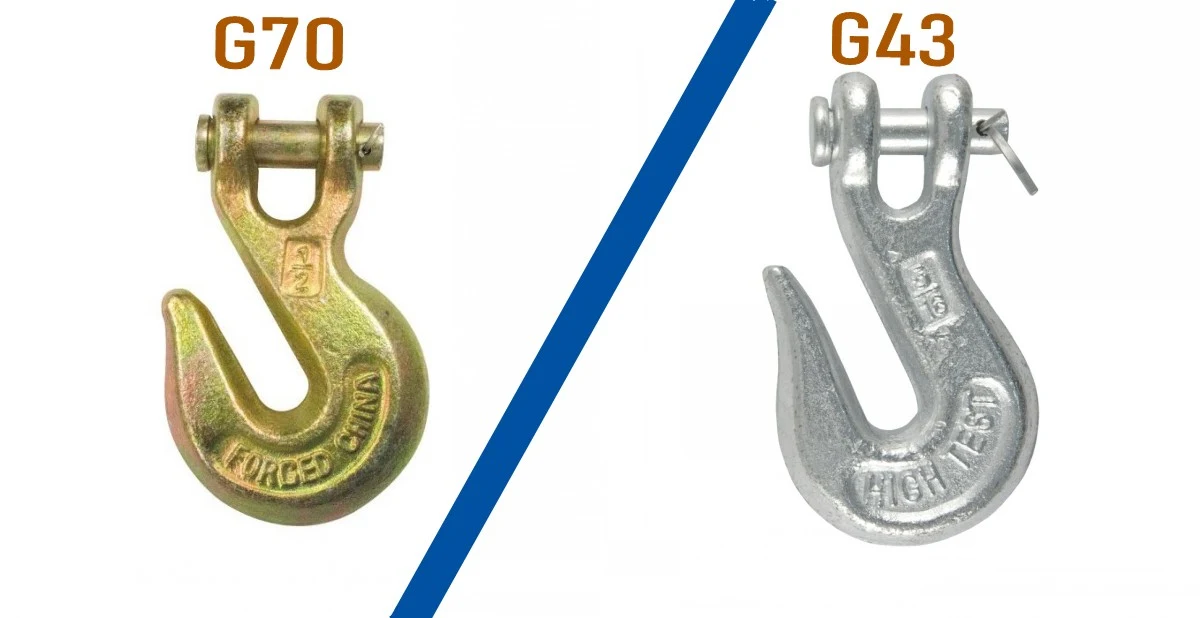
What G43 and G70 Hooks Actually Are
Both G43 and G70 hooks are forged carbon steel components designed for use with matching chain grades-G43 with Grade 43 chain, G70 with Grade 70 chain. They are not interchangeable. The grade marking is not a suggestion; it defines the system. These hooks are used in cargo securement, vehicle recovery, and equipment tie-downs where the hook is a frequent point of handling. Using a hook outside its rated chain system compromises the entire assembly's strength and safety. Always verify that the hook, chain, and binder share the same grade before assembly.
Where G43 Hooks Belong
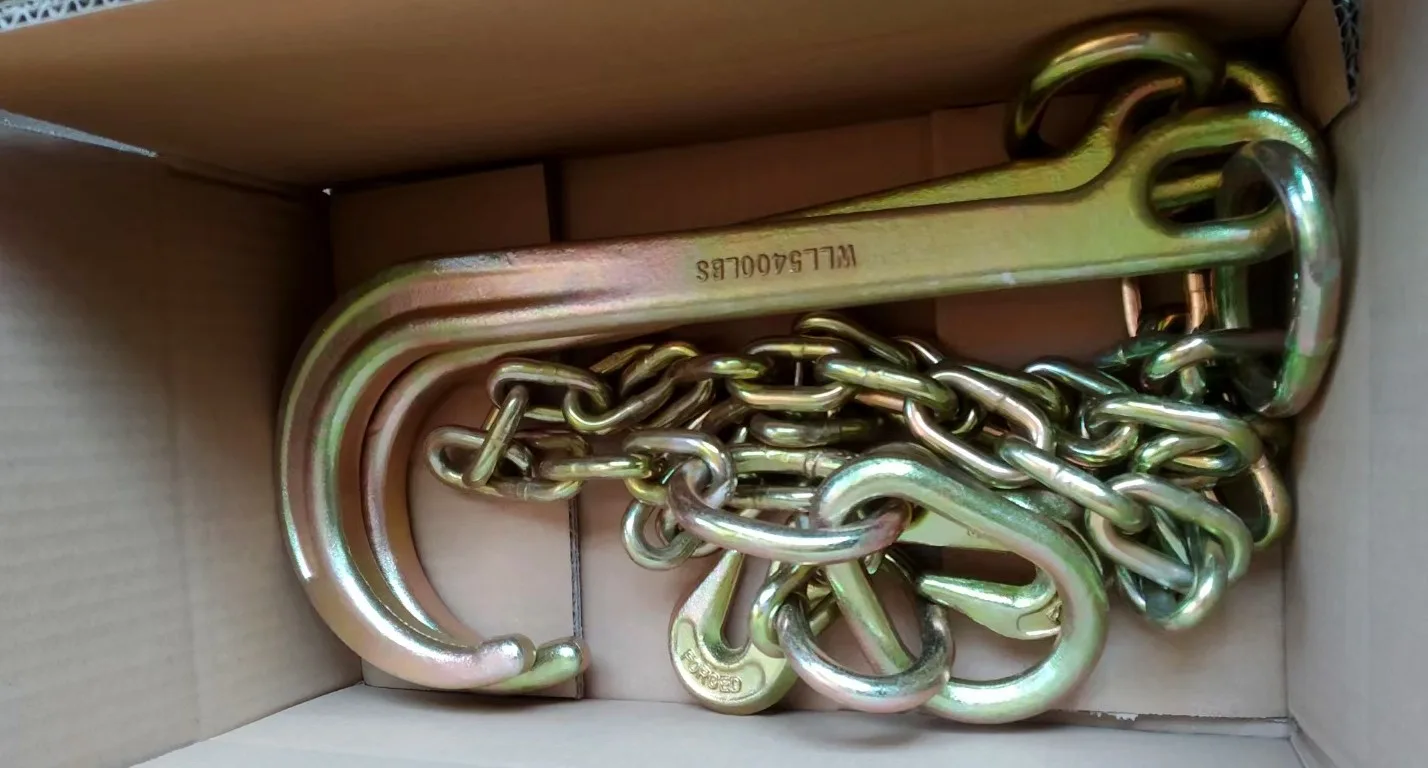
G43 hooks are intended for medium-duty applications where durability is needed but full transport-grade strength is not required. Typical uses include securing farm equipment, light machinery, and tools on utility trailers and construction sites. They are common in agricultural suppliers, equipment rental businesses, and local transport fleets. Their plain or zinc-plated finish suits general-purpose environments. The 1/4 inch to 3/8 inch chain size range aligns with light to medium load transport. For distributors, G43 offers a lower-cost entry point with strong turnover in non-compliance-sensitive markets.
Where G70 Hooks Belong
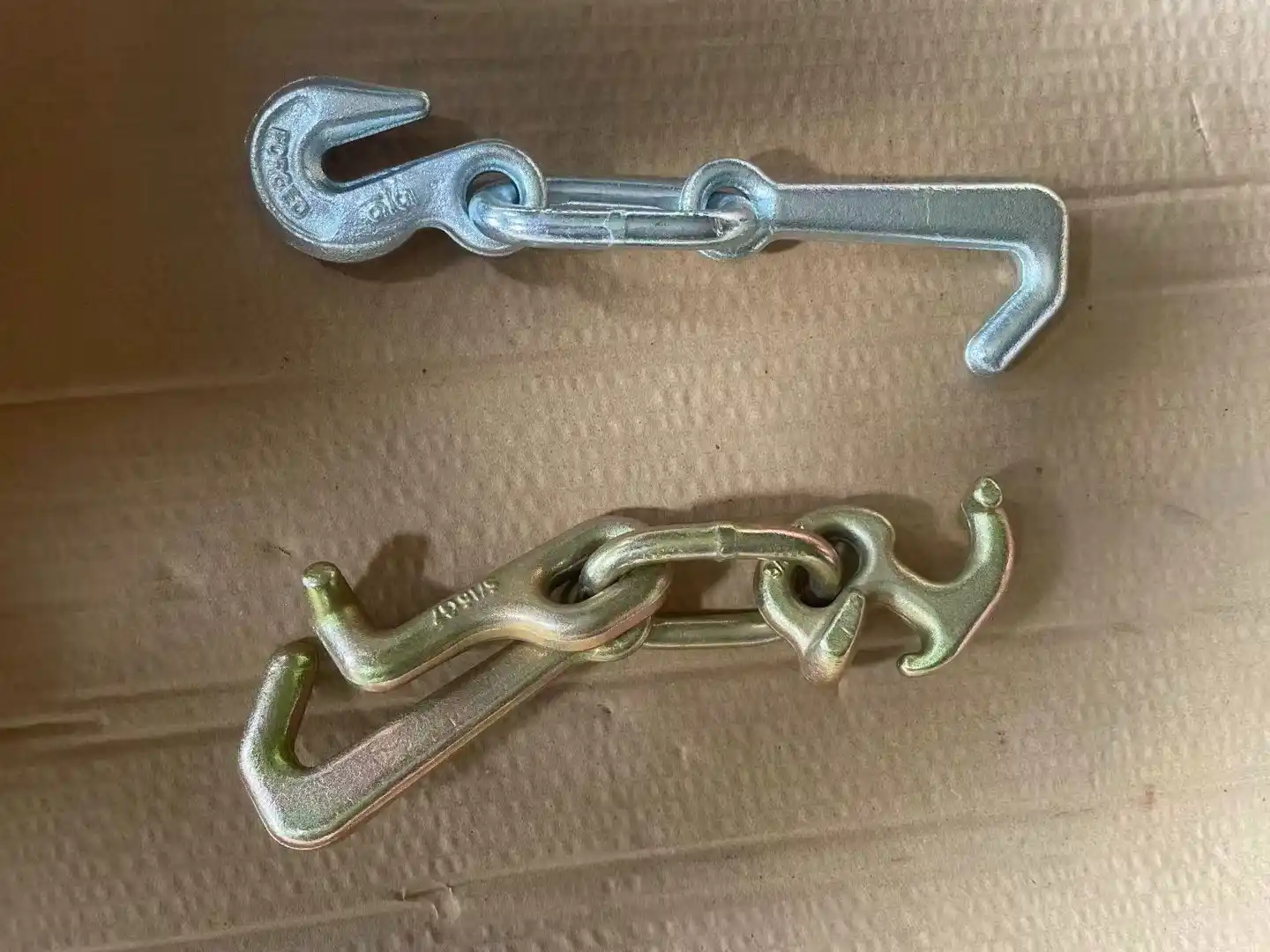
G70 hooks are built for heavy-duty transport and towing. Their gold chromate finish provides corrosion resistance and is DOT recognised, which makes them essential in compliance-driven markets. They are used in flatbed trailer tie-down systems, vehicle recovery, heavy cargo transport, and industrial load securing. When paired with ratchet or lever binders, they deliver reliable performance under high tension. Distributors serving fleet operators, logistics providers, and towing service companies should stock G70 hooks as a standard offering. The 5/16 inch to 1/2 inch chain size range reflects their use in higher-load scenarios.
The Direct Comparison
On strength, G43 is medium-duty and G70 is high-strength. On finish, G43 comes plain or zinc plated; G70 has gold chromate that is DOT recognised. On chain size, G43 covers 1/4 inch to 3/8 inch; G70 covers 5/16 inch to 1/2 inch. On cost, G43 is more economical; G70 carries a higher price for added strength. On environment, G43 suits light-duty and general use; G70 suits heavy transport, towing, and construction. On the buyer, G43 fits general distributors and agri-equipment suppliers; G70 fits transport hardware wholesalers and towing product importers.
How to Read the Finish on Arrival
The finish is a field indicator but not proof of rating. Gold chromate on a hook signals the G70 system and is DOT recognised, but it is not a substitute for the grade stamp. A plain or zinc-plated hook typically indicates G43. However, anyone can apply a finish. Always check the grade stamp on the part and request the Material Test Certificate for the batch. Confirm that the chain in the same assembly carries the matching grade. A gold hook on Grade 43 chain is still a Grade 43 assembly.
Matching the Hook to the Rest of the Assembly
A tie-down assembly is only as strong as its weakest component. The hook, chain, and binder must all belong to the same grade system. Buying these from separate suppliers increases the risk of mismatched components. When sourcing, confirm the chain grade, hook grade, and binder together. We mark the assembled unit with the WLL and traceability details so the end user can verify the rating. If assembling in-house, keep G43 and G70 components physically separated to avoid accidental mixing.
How to Split the Range as a Distributor
Most distributors carry both grades, weighted by customer base. Stock G43 in smaller chain sizes for agricultural and rental customers who prioritise price and availability. Stock G70 in mid to larger sizes for fleet operators, logistics firms, and towing service providers who demand compliance and strength. Start with high-turnover patterns like clevis grab hooks and clevis slip hooks in both grades before expanding to specialty designs. Eye hooks and safety-latch versions can be added once you identify which sizes are most frequently ordered.
What to Ask a Supplier Before You Order
Ask which chain grade the hook is intended to pair with and confirm it in writing on the quotation. Ask for the chain size range each hook pattern covers to match your existing inventory. Confirm whether the grade is stamped on the part and what the marking says. Request a Material Test Certificate for the batch if your customers are audited. Ask whether the supplier can quote hooks, chain, and binders together-this is the only way to ensure the entire assembly is rated consistently and safely.
Ordering note. G43 hooks pair with Grade 43 chain for medium-duty tie-down; G70 hooks pair with Grade 70 chain for heavy transport and towing Gold chromate signals the G70 system and is DOT recognised; plain or zinc plated signals G43 G43 typically covers 1/4 inch to 3/8 inch chain and G70 covers 5/16 inch to 1/2 inch An assembly is rated by its weakest rated component so hook chain and binder must share one gra