
The Ultimate Guide to Retractable Straps
Retractable straps are not a single product but a category of ratchet tie-down systems with distinct grades, finishes and applications. This guide explains what each component does, how to match the strap to the load, and what to ask a supplier before placing an order.
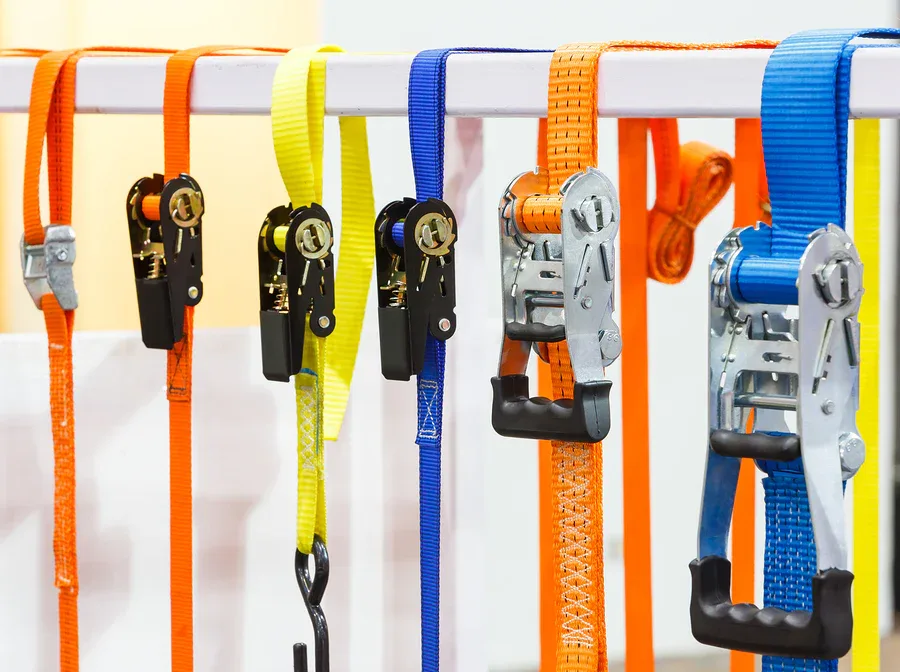
What Retractable Straps Actually Are
Retractable straps, also known as ratchet tie-downs, are tensioning systems made of polyester webbing and a ratcheting mechanism. They are used to secure cargo on trailers, flatbeds, and in transport containers. The webbing wraps around the load, and the ratchet allows incremental tightening to maintain tension. These systems are not single-use fasteners; they are rated assemblies where the webbing, ratchet, and hooks must all be compatible. A mismatched component reduces the overall working load limit. The system is designed for repeated use, not one-off fastening.
How the Components Work Together
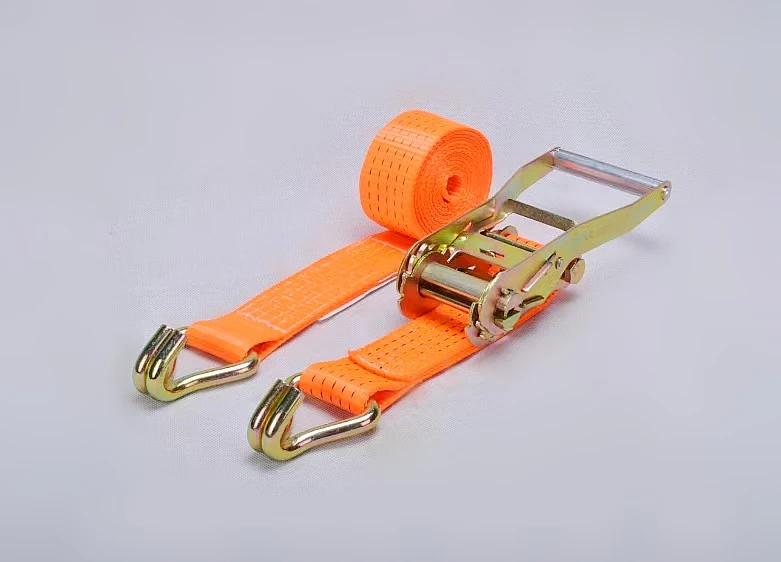
The webbing carries the load and must be rated for the intended duty. The ratchet mechanism provides mechanical advantage to tighten the strap and locks the tension in place. Hooks at each end anchor the strap to fixed points on the vehicle or load. The ratchet's internal gear and pawl system prevent back-off during transit. If the ratchet fails, the entire system fails. The webbing must be free of twists and the hooks must be properly seated. A single damaged component-frayed webbing, worn ratchet teeth, or a bent hook-can compromise the entire assembly. Always inspect all parts before use.
50mm 5000kgs Ratchet Tie Down with Alu. handle and Doube J Hook
Grades and Working Load Limits
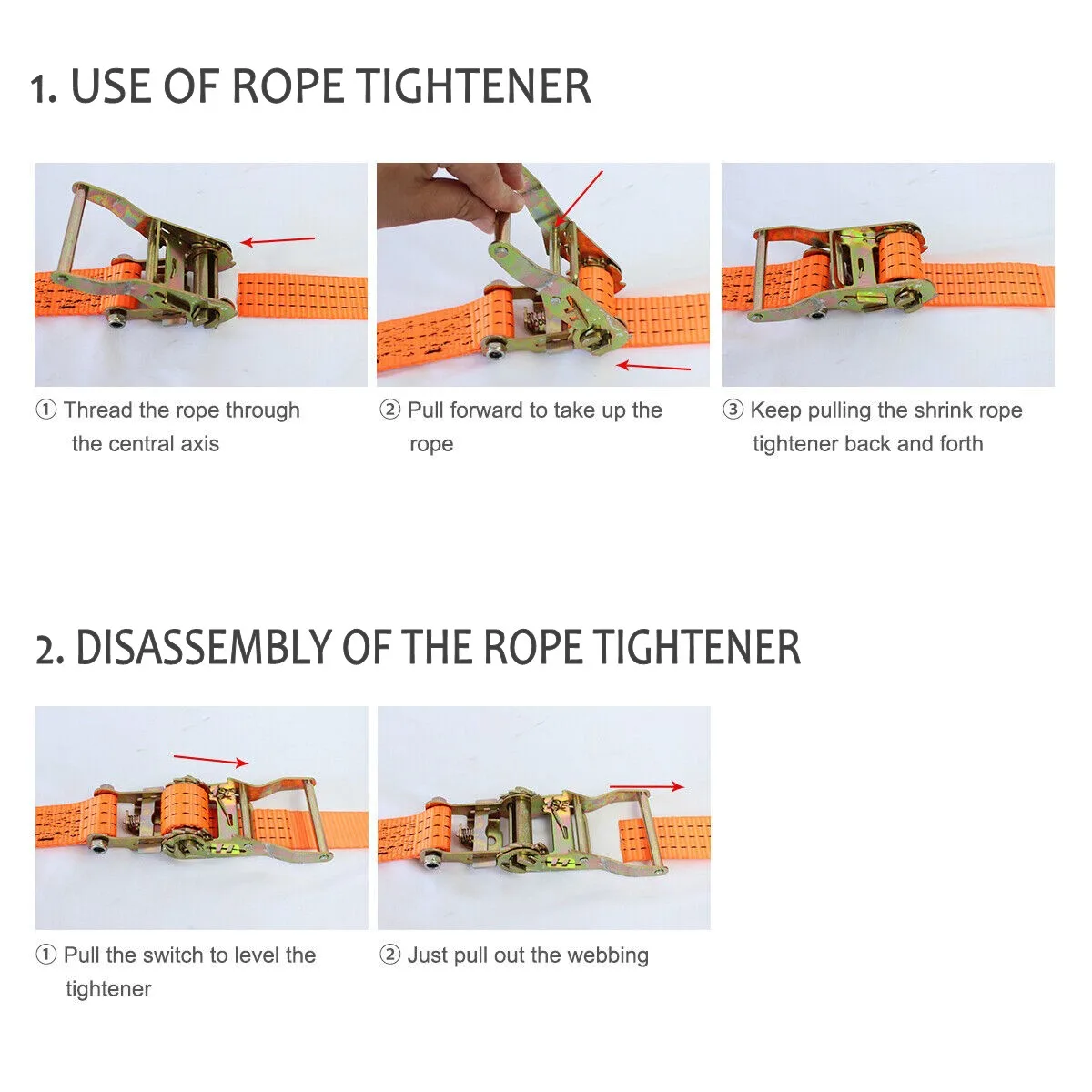
Retractable straps are available in multiple grades, with working load limits defined by the webbing strength and hardware rating. The most common grades are Grade 43 and Grade 70, which are defined in standards such as EN 12195-2 and ASME B30.26. Grade 43 is used for medium-duty applications, while Grade 70 is for heavy transport and towing. The working load limit is stamped on the ratchet and the webbing. The system is proof load tested and breaking strength validated. The design factor for polyester webbing slings is 7:1 as standard, in line with EN 1492-1. Always confirm the grade and WLL on the product before ordering.
50mm 5000kgs Ratchet Tie Down with Alu. handle and Doube J Hook
Finishes and Environmental Suitability
The finish on the ratchet and hooks affects corrosion resistance and visibility. Zinc plating is standard for indoor or dry environments. Powder coating provides better protection in outdoor or marine conditions. Electrophoretic black is used for industrial settings where appearance and wear resistance matter. The finish is not a substitute for the grade marking. A zinc-plated ratchet on a Grade 70 system is still a Grade 70 system. The finish does not change the strength rating. For buyers in coastal or high-humidity areas, specify a corrosion-resistant finish and ask for the material test certificate to verify the coating thickness and adhesion.
50mm 5000kg Ratchet Tie Down with Rubber Handle and Flat Hook
Types of Retractable Straps and Their Uses
Light-duty straps are used for bicycles, small furniture, and tools. Medium-duty straps handle appliances, motorcycles, and medium-sized equipment. Heavy-duty straps are for machinery, vehicles, and industrial loads. Axle straps secure vehicles by their axles and are used in transport fleets. Endless loop straps, without hooks, are used for bundling or securing multiple items together. The strap length and width must match the load size and distribution. For example, a 2-meter strap is not suitable for a 5-meter load. Always choose the length and width based on the actual load dimensions and the anchor point spacing.
50mm 5000kg Ratchet Tie Down with Rubber Handle and Flat Hook
How to Select the Right Strap for Your Load
Start by identifying the load weight and the transport environment. Use a Grade 43 system for loads under 2 tons in dry conditions. Use Grade 70 for loads over 2 tons, or in wet, salty, or high-vibration environments. Confirm the working load limit is sufficient for the load and the number of straps used. For multiple straps, the total capacity is the sum of individual WLLs. Never exceed the WLL of any component. Check that the ratchet, hooks, and webbing all carry the same grade. If you are securing a load with multiple straps, ensure they are all from the same grade system. A mixed-grade assembly is only as strong as its weakest part.
50mm 5000kg Ratchet Tie Down with Rubber Handle and Flat Hook
What to Ask a Supplier Before You Order
Ask whether the webbing, ratchet, and hooks are all rated to the same grade. Confirm the working load limit is stamped on the ratchet and the webbing. Ask for the Material Test Certificate for the batch. Request proof load testing and breaking strength validation. Ask whether the system is designed for repeated use and whether the ratchet mechanism is tested for fatigue. Confirm the finish type and its suitability for your environment. Ask if custom lengths, widths, or finishes are available. And ask if the supplier can quote a complete assembly with matching components, so you do not have to source parts from different suppliers.
50mm Ergo Ratchet Tie Down LC 2500KG
How to Maintain and Store Retractable Straps
After each use, inspect the webbing for frays, cuts, or abrasions. Check the ratchet for wear, especially the teeth and pawl. Ensure the hooks are not bent or cracked. Clean the ratchet with a dry cloth; do not use solvents. Store the straps in a cool, dry place away from direct sunlight and chemicals. Avoid folding or rolling the webbing tightly, as this can create stress points. Never store a strap under tension. If the webbing shows any damage, do not use it. Replace the entire assembly if any component fails. For long-term storage, keep the ratchet unlocked and the webbing loose to prevent internal stress on the mechanism.
50mm Ergo Ratchet Tie Down LC 2500KG
Ordering note. Retractable straps are rated assemblies where the webbing, ratchet, and hooks must all match in grade and working load limit Grade 43 is for medium-duty use; Grade 70 is for heavy transport and towing, with a 7:1 design factor for webbing Zinc plating, powder coating, and electrophoretic black are finishes that affect corrosion resistance but not strength rating Always inspect the webbing, ratchet